Peanut Allergy Treatment Market Size, Share & Industry Analysis, By Drug Class (Antihistamines, Epinephrine, Immunotherapies), By Route Of Administration, By Distribution Channel, By Region, and Regional Forecast, 2026-2034
 Download Free Sample
Peanut Allergy Treatment Market Size & Industry Overview
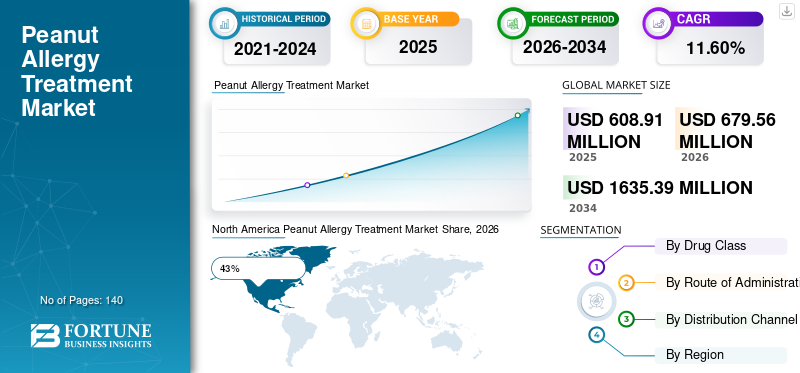
The peanut allergy treatment market size was valued at USD 608.91 Million in 2025. The market is projected to grow from USD 679.56 Million in 2026 to USD 1635.39 Million by 2034, exhibiting a CAGR of 11.60% during the forecast period.

The peanut allergy treatment market is experiencing significant transformation due to the increasing prevalence of food allergies, expanding clinical research programs, and the growing adoption of advanced immunotherapy solutions. Healthcare providers, biotechnology companies, specialty clinics, and pharmaceutical manufacturers are focusing on treatment approaches that reduce allergic reactions and improve long-term patient outcomes. The market is witnessing strong demand for oral immunotherapy, epinephrine-based emergency treatments, and novel biologic therapies. peanut allergy treatment market Analysis indicates that increasing awareness among parents, pediatric specialists, and allergy care centers is encouraging earlier diagnosis and structured treatment plans. peanut allergy treatment market trends also show rising investments in precision medicine and patient-specific allergy management programs.
The United States represents the most developed market for peanut allergy treatment due to a large diagnosed patient population, advanced healthcare infrastructure, and strong regulatory support for innovative therapies. Allergy treatment centers across the country are increasingly adopting oral immunotherapy programs and specialized monitoring systems. peanut allergy treatment market Research Report findings indicate that pediatric treatment remains the dominant segment because peanut allergies are frequently diagnosed during childhood.
Growing collaborations between biotechnology firms and healthcare institutions are accelerating product development in the country. The presence of specialized allergists, favorable reimbursement frameworks, and increasing adoption of disease-modifying therapies continue to strengthen the USA peanut allergy treatment industry Report landscape. Healthcare providers are also investing in digital patient monitoring and personalized treatment pathways to improve safety and treatment adherence.
Download Free sample to learn more about this report.
Peanut Allergy Treatment Market Key Takeaways
 Global Market Size & Forecast
- 2025 Market Size: USD 608.91 Million
- 2026 Market Size: USD 679.56 Million
- 2034 Forecast Market Size: USD 1,635.39 Million
- CAGR: 11.60% from 2026–2034
 Market Share
- North America dominated with a revenue share of 43% in 2025.
- Epinephrine held the largest drug class share at approximately 46%.
- Oral administration accounted for the largest route of administration share at approximately 58%.
 Key Regional Highlights
North America
North America led the market with a 43% share in 2025, supported by strong allergy awareness and advanced treatment infrastructure.
Europe
Europe accounted for 28% of the market, driven by increasing adoption of allergy management therapies and established healthcare systems.
Asia-Pacific
Asia-Pacific held a 21% share, supported by improving healthcare access and growing awareness of food allergy treatments.
U.S
The U.S. market is supported by high awareness of peanut allergies, strong demand for epinephrine devices, and advanced treatment options.
Japan
Japan accounted for 18% of the Asia-Pacific market, supported by improving allergy diagnosis and growing access to specialized treatment.
Read More

peanut allergy treatment market Latest Trends
One of the most important peanut allergy treatment market trends is the shift from emergency reaction management toward long-term desensitization therapies. Oral immunotherapy products are gaining wider acceptance among physicians because they aim to increase peanut tolerance rather than simply treat symptoms after exposure. Clinical research organizations are supporting multiple studies focused on improving treatment efficacy and reducing adverse reactions.
Download Free sample to learn more about this report.
Another major trend involves the development of biologic therapies and skin-based immunotherapy platforms. Companies are exploring innovative delivery systems that improve patient convenience and compliance. peanut allergy treatment market insights also reveal growing interest in pediatric-focused treatment programs, wearable allergy monitoring technologies, and combination therapies that integrate biologics with immunotherapy. Increased awareness campaigns conducted by healthcare organizations are contributing to greater diagnosis rates and expanding the addressable patient population. Furthermore, pharmaceutical companies are strengthening research pipelines through partnerships, licensing agreements, and regional expansion strategies, creating new peanut allergy treatment market opportunities across developed and emerging healthcare markets.
peanut allergy treatment market Dynamics
DRIVER
Rising Prevalence of Food Allergies and Increasing Adoption of Immunotherapy
The primary growth driver in the peanut allergy treatment market is the increasing prevalence of peanut allergies among children and young adults. Medical professionals are reporting higher diagnosis rates due to improved screening programs and greater awareness among parents. As a result, demand for effective treatment options continues to increase across hospitals, specialty clinics, and allergy treatment centers. peanut allergy treatment market growth is further supported by the growing acceptance of oral immunotherapy and biologic therapies designed to improve long-term tolerance.
Healthcare providers are emphasizing preventive treatment strategies instead of relying solely on emergency interventions. Pharmaceutical manufacturers are investing heavily in research programs aimed at developing safer and more effective therapies. In addition, government health agencies and advocacy organizations are promoting education initiatives that encourage early diagnosis and treatment. These factors collectively strengthen the peanut allergy treatment market outlook and support continued industry expansion.
RESTRAINT
High Treatment Costs and Concerns Regarding Adverse Reactions
Despite favorable growth prospects, the peanut allergy treatment market faces limitations related to treatment affordability and safety concerns. Advanced immunotherapy programs often require long treatment durations, frequent physician visits, and specialized monitoring procedures. These requirements increase overall healthcare costs and may limit accessibility for certain patient groups.
Another major restraint involves the possibility of allergic reactions during treatment. Some patients experience adverse effects that require close clinical supervision, creating additional operational challenges for healthcare providers. peanut allergy treatment market Analysis suggests that patient hesitation regarding side effects may slow adoption in certain regions. Limited reimbursement support in developing countries and uneven access to allergy specialists also restrict market penetration. These factors continue to influence purchasing decisions among healthcare institutions and treatment providers.
OPPORTUNITY
Expansion of Personalized Allergy Therapies and Biologics
The growing focus on personalized medicine creates substantial opportunities within the peanut allergy treatment market. Biotechnology companies are developing targeted therapies that address specific immune responses and improve treatment outcomes. Personalized treatment plans supported by genetic and immunological data are expected to enhance patient safety and effectiveness.
Emerging biologic therapies represent another significant opportunity. These products are designed to reduce allergic reactions while improving patient tolerance levels. peanut allergy treatment market Forecast studies indicate strong interest among healthcare providers in combining biologics with traditional immunotherapy approaches. Expanding healthcare infrastructure in Asia-Pacific, Latin America, and the Middle East is also creating new commercial opportunities. Companies investing in innovative drug delivery technologies, pediatric treatment programs, and strategic partnerships are expected to benefit from evolving market requirements.
CHALLENGE
Regulatory Complexity and Long Clinical Development Timelines
One of the biggest challenges affecting the peanut allergy treatment industry Analysis is the lengthy approval process associated with allergy therapeutics. Regulatory agencies require extensive clinical evidence to demonstrate product safety and effectiveness. This increases development costs and delays commercialization timelines for manufacturers.
Clinical trial recruitment presents another challenge because peanut allergy patients often require specialized monitoring throughout the study process. peanut allergy treatment market Research Report findings indicate that maintaining patient compliance during long-term trials can be difficult. In addition, competition among biotechnology companies is intensifying as multiple organizations pursue similar treatment approaches. Manufacturers must continuously invest in research, regulatory compliance, and post-market surveillance activities to remain competitive within the evolving market environment.
peanut allergy treatment market Segmentation
By Drug Class
Antihistamines account for approximately 22% of the peanut allergy treatment market share. These medications are commonly used to manage mild allergic symptoms such as itching, skin irritation, and nasal congestion following accidental peanut exposure. Healthcare providers frequently prescribe antihistamines as part of a broader allergy management strategy. Their widespread availability and established safety profile contribute to continued market demand.
The segment remains important because antihistamines provide immediate symptom relief and are often included in emergency preparedness plans. peanut allergy treatment market insights indicate that oral antihistamine formulations are particularly popular among pediatric patients. Pharmaceutical manufacturers continue to develop improved formulations with reduced sedative effects and enhanced patient convenience. Although antihistamines do not address the underlying allergy, they remain a critical component of comprehensive treatment protocols used across healthcare systems worldwide.
Epinephrine represents the largest segment with an estimated 46% market share. Epinephrine auto-injectors remain the standard emergency treatment for severe allergic reactions and anaphylaxis. Physicians consistently recommend that diagnosed peanut allergy patients carry epinephrine devices due to the unpredictable nature of accidental exposure.
Demand for epinephrine products continues to grow because schools, workplaces, airlines, and public facilities are expanding emergency preparedness programs. peanut allergy treatment market size assessments indicate strong purchasing activity from healthcare providers and public health organizations. Manufacturers are introducing user-friendly devices designed to improve administration accuracy and patient confidence. Continued awareness campaigns emphasizing rapid response to severe allergic reactions are supporting sustained growth within this segment.
Immunotherapies: immunotherapies account for nearly 32% of the peanut allergy treatment market share and represent one of the most rapidly evolving segments. These therapies aim to increase patient tolerance to peanut allergens through controlled exposure protocols. Oral immunotherapy, epicutaneous immunotherapy, and biologic-supported treatment approaches are attracting significant clinical interest.
peanut allergy treatment market trends highlight growing physician preference for therapies that modify disease progression rather than solely treating symptoms. Increasing clinical evidence supporting long-term desensitization outcomes is encouraging broader adoption among allergy specialists. Biotechnology companies are expanding research pipelines to develop safer and more effective immunotherapy products. The segment is expected to benefit from ongoing innovation, regulatory approvals, and increasing patient demand for durable treatment solutions.
To know how our report can help streamline your business, Speak to Analyst
By Route of Administration
Oral administration holds approximately 58% of the market due to the popularity of oral immunotherapy programs and oral antihistamine products. Patients and healthcare providers often prefer oral treatments because they are convenient, non-invasive, and suitable for long-term management strategies. peanut allergy treatment market Report evaluations indicate that oral administration is particularly common in pediatric treatment programs where ease of use is a major consideration.
Injectable administration continues to play a critical role, particularly for epinephrine products and emerging biologic therapies. Hospitals and specialty clinics rely on injectable treatments for emergency intervention and advanced therapeutic protocols. The introduction of novel delivery technologies is improving patient adherence and treatment effectiveness. As manufacturers continue to develop innovative formulations, both oral and injectable routes are expected to remain essential components of the peanut allergy treatment market outlook.
By Distribution Channel
Hospital pharmacies account for approximately 52% of market share due to their role in dispensing specialized therapies, biologics, and emergency allergy medications. Many patients initiate treatment through hospitals and specialty clinics where allergy specialists can provide comprehensive monitoring and education. peanut allergy treatment industry Report findings show that hospital-based distribution remains particularly important for newly approved therapies.
Retail pharmacies represent a growing channel as awareness increases and more patients seek convenient access to treatment products. Community pharmacies are expanding allergy management services and improving patient education initiatives. Online pharmacy platforms are also gaining traction in certain markets, supporting accessibility and prescription fulfillment. Distribution networks continue to evolve as manufacturers focus on expanding market reach and improving patient access to peanut allergy treatments.
peanut allergy treatment market Regional outlook
North America Peanut Allergy Treatment Market Share, 2026 (%)
To get more information on the regional analysis of this market, Download Free sample
North America
North America remains the leading regional market, accounting for approximately 43% of global market share. The region benefits from high diagnosis rates, advanced healthcare infrastructure, and strong adoption of innovative allergy treatments. Healthcare providers across the United States and Canada are increasingly integrating immunotherapy programs into routine clinical practice. peanut allergy treatment market opportunities continue to expand as awareness initiatives encourage earlier diagnosis and treatment intervention.
The presence of major biotechnology companies and active clinical research programs further supports market expansion. Government agencies, healthcare organizations, and patient advocacy groups are working together to improve allergy management standards. Demand for emergency treatment products and disease-modifying therapies remains particularly strong among pediatric populations.
Europe
Europe holds nearly 28% of the peanut allergy treatment market share and continues to benefit from increasing healthcare investments and expanding allergy awareness programs. Countries throughout the region are strengthening diagnostic capabilities and encouraging adoption of evidence-based treatment protocols. peanut allergy treatment market growth is supported by favorable regulatory environments and ongoing clinical research activities.
Healthcare providers are increasingly incorporating immunotherapy into treatment pathways for pediatric and adolescent patients. Pharmaceutical companies are also expanding partnerships with research institutions to accelerate product development. Rising awareness regarding food allergy risks is encouraging broader adoption of preventive and therapeutic interventions throughout the region.
Germany peanut allergy treatment market
Germany represents approximately 24% of the European market and remains one of the most influential countries in regional allergy treatment development. The country's advanced healthcare infrastructure supports widespread access to allergy diagnostics, specialist consultations, and innovative therapies. peanut allergy treatment market Research Report assessments highlight strong demand for oral immunotherapy programs among pediatric populations.
Academic research institutions and biotechnology companies actively collaborate on allergy treatment innovation. Healthcare providers are increasingly focused on personalized treatment strategies that improve patient outcomes and reduce emergency incidents. Germany's emphasis on evidence-based medicine and clinical research continues to support market expansion and adoption of advanced therapeutic approaches.
United Kingdom peanut allergy treatment market
The United Kingdom accounts for nearly 19% of the European peanut allergy treatment market. Increasing awareness of food allergies among parents, schools, and healthcare professionals is driving demand for improved treatment options. Allergy clinics across the country are expanding access to structured immunotherapy programs and specialist care services.
The market is also benefiting from strong research activity and growing investment in biotechnology innovation. peanut allergy treatment market Analysis indicates increasing adoption of advanced treatment protocols designed to improve long-term tolerance and patient safety. Public health initiatives aimed at allergy education continue to support diagnosis rates and treatment accessibility across the country.
Asia-Pacific
Asia-Pacific accounts for approximately 21% of global market share and represents one of the fastest-developing regions for peanut allergy treatment. Rapid healthcare modernization, growing awareness of food allergies, and improving diagnostic capabilities are supporting market expansion. peanut allergy treatment market trends indicate rising demand for specialized allergy services in urban healthcare centers.
Regional governments and healthcare organizations are investing in pediatric healthcare infrastructure and preventive medicine initiatives. Pharmaceutical companies are expanding their presence through strategic partnerships and distribution agreements. Increasing patient awareness and healthcare accessibility are expected to create substantial opportunities across major Asia-Pacific markets.
Japan peanut allergy treatment market
Japan represents approximately 18% of the Asia-Pacific market and benefits from a highly developed healthcare system. Peanut allergy diagnosis and treatment services are becoming increasingly sophisticated, particularly within pediatric healthcare facilities. peanut allergy treatment market insights suggest that physicians are showing growing interest in immunotherapy-based treatment approaches.
Research institutions and biotechnology companies are actively exploring innovative therapies designed to improve safety and treatment effectiveness. Rising consumer awareness and strong healthcare standards continue to support adoption of advanced allergy management solutions. The market is also benefiting from increased collaboration between academic researchers and pharmaceutical manufacturers.
China peanut allergy treatment market
China accounts for approximately 31% of the Asia-Pacific peanut allergy treatment market. Rapid expansion of healthcare infrastructure and increasing awareness of food allergy conditions are driving market development. Major hospitals and specialty clinics are investing in advanced diagnostic technologies and allergy treatment programs.
Growing urbanization and changing dietary habits have contributed to greater recognition of food allergy challenges. peanut allergy treatment market Forecast assessments indicate increasing interest in innovative therapies and biologic treatment approaches. Domestic pharmaceutical companies and international biotechnology firms are expanding research activities and strategic partnerships throughout the country to address growing healthcare demand.
Rest of World
The Rest of World region accounts for approximately 8% of the global peanut allergy treatment market share. Countries in Latin America, the Middle East, and Africa are gradually improving healthcare access and allergy diagnosis capabilities. Growing awareness regarding food allergy risks is supporting demand for emergency treatment products and specialist care services.
Healthcare systems across these regions are investing in training programs and diagnostic infrastructure to improve patient outcomes. peanut allergy treatment market opportunities are emerging as pharmaceutical companies expand distribution networks and introduce innovative treatment options. Continued healthcare modernization and increasing awareness are expected to strengthen regional market development over the coming years.
List of Top peanut allergy treatment Companies
- Aimmune Therapeutics (Nestlé Health Science)
- DBV Technologies
- Sanofi
- ALK-Abelló
- Prota Therapeutics
- Camallergy
- Aravax
- Genentech
Top Two Companies by market Share
- Aimmune Therapeutics (Nestlé Health Science) – 29%
- DBV Technologies – 18%
Investment Analysis and Opportunities
Investment activity within the peanut allergy treatment market is increasing as biotechnology companies pursue innovative therapeutic platforms and next-generation immunotherapy solutions. Venture capital firms, pharmaceutical manufacturers, and strategic healthcare investors are focusing on companies with strong clinical pipelines and differentiated treatment technologies. peanut allergy treatment market opportunities are particularly strong in oral immunotherapy, biologics, and skin-based delivery systems.
Investors are also targeting companies developing personalized treatment approaches and advanced allergy diagnostics. Strategic partnerships between pharmaceutical firms and research institutions are accelerating product development and commercialization efforts. Emerging markets offer additional opportunities due to expanding healthcare infrastructure and increasing awareness of food allergy management. As demand for long-term treatment solutions continues to rise, investment activity is expected to remain concentrated around innovative technologies capable of improving patient outcomes and treatment adherence.
New Product Development
Innovation remains a defining characteristic of the peanut allergy treatment market. Manufacturers are developing next-generation immunotherapies designed to improve safety profiles and enhance patient tolerance levels. Oral immunotherapy products continue to evolve through improved dosing protocols and combination treatment strategies. peanut allergy treatment market trends indicate growing interest in biologic-supported therapies that reduce allergic responses while improving treatment effectiveness.
Companies are also exploring epicutaneous delivery systems, wearable treatment technologies, and precision medicine approaches. Research efforts increasingly focus on reducing treatment-related adverse events and improving patient compliance. Advances in biomarker identification and immune response monitoring are supporting development of personalized therapeutic programs. These innovations are helping manufacturers differentiate their product portfolios while addressing unmet clinical needs within the allergy treatment landscape.
Five Recent Developments (2023-2025)
- Aimmune Therapeutics expanded clinical evaluation programs for advanced peanut desensitization therapies.
- DBV Technologies reported positive progress in late-stage studies involving its peanut allergy skin patch platform.
- Sanofi increased research collaborations focused on immune-modulating allergy treatments.
- Aravax advanced development of targeted immunotherapy candidates designed to improve treatment safety.
- Prota Therapeutics strengthened clinical research initiatives aimed at next-generation oral immunotherapy solutions.
Report Coverage
The peanut allergy treatment market Report provides comprehensive analysis of industry structure, treatment categories, competitive dynamics, technological developments, and regional performance. The report evaluates market trends across antihistamines, epinephrine products, and immunotherapy segments while examining demand patterns among hospitals, specialty clinics, and retail distribution channels. peanut allergy treatment market Research Report coverage includes assessment of regulatory frameworks, investment activity, innovation strategies, and emerging therapeutic approaches.
Request for Customization to gain extensive market insights.
The study also examines regional opportunities, competitive positioning, and market expansion strategies adopted by leading companies. Detailed segmentation analysis provides insights into route of administration, distribution channels, and country-level developments. peanut allergy treatment industry Analysis further explores pipeline products, strategic partnerships, clinical research trends, and evolving healthcare requirements. The report is designed to support manufacturers, investors, healthcare providers, distributors, and industry stakeholders seeking actionable business intelligence and long-term market insights.
Frequently Asked Questions
According to Fortune Business Insights, the global Peanut Allergy Treatment market was valued at USD 608.91 million in 2025 and is projected to reach USD 1,635.39 million by 2034.
The market is expected to grow at a CAGR of 11.60% during the forecast period of 2026–2034.
Epinephrine was the leading drug class segment, accounting for approximately 46% of the market, driven by its role as the standard emergency treatment for severe allergic reactions and anaphylaxis.
Key players include Aimmune Therapeutics (Nestlé Health Science), DBV Technologies, Sanofi, ALK-Abelló, Prota Therapeutics, and Camallergy.
Major trends include the shift toward long-term desensitization through oral immunotherapy and the growing development of biologic and skin-based immunotherapy platforms. North America led the market with approximately a 43% share.



- 2021-2034
- 2025
- 2021-2024
- 140
-

(Offer valid till 15th Oct 2026)
Get 30-60 hrs Free Customization
Expand Regional and Country Coverage, Segments Analysis, Company Profiles, Competitive Benchmarking, and End-user Insights.













.webp)






-
US +1 833 909 2966 ( Toll Free )
-
Get In Touch With Us