 Download Free Sample



Get a Quote
Receive a tailored pricing based on your needs.
- Choose license type
- Multiple user options
- Custom scope & coverage
- Fast turnaround
"Designing Growth Strategies is in our DNA"
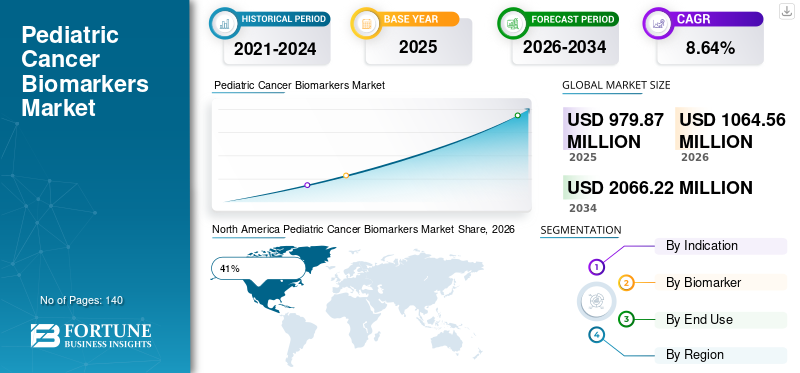
The global pediatric cancer biomarkers market size was valued at USD 979.87 million in 2025. The market is projected to grow from USD 1064.56 million in 2026 to USD 2066.22 million by 2034, exhibiting a CAGR of 8.64% during the forecast period.

The pediatric cancer biomarkers market is expanding steadily due to the increasing focus on precision oncology, early-stage diagnosis, and personalized treatment approaches in pediatric healthcare. Biomarkers are becoming essential tools in identifying genetic mutations, monitoring treatment responses, and improving survival outcomes among children diagnosed with cancer. The pediatric cancer biomarkers market report highlights growing demand for molecular diagnostics, genomic sequencing, and liquid biopsy technologies across hospitals, oncology centers, and research institutions. Rising awareness regarding early detection of leukemia, neuroblastoma, lymphoma, and central nervous system tumors is strengthening the pediatric cancer biomarkers market growth trajectory. The pediatric cancer biomarkers industry analysis also indicates that advancements in biomarker-based testing platforms are improving clinical decision-making and patient management globally.
The United States pediatric cancer biomarkers market is witnessing strong adoption of advanced molecular diagnostic technologies due to the presence of specialized pediatric oncology centers, robust clinical research programs, and increasing government-backed cancer screening initiatives. The pediatric cancer biomarkers market insights for the USA emphasize growing investments in genomic medicine and companion diagnostics for childhood cancers. Demand for biomarker-driven therapies continues to rise among hospitals and biotechnology companies. Increased collaboration between academic institutions and diagnostic manufacturers is further supporting pediatric cancer biomarkers market opportunities in the country. Leukemia and CNS tumor diagnostics remain major application areas driving technological innovations and laboratory testing advancements across the United States.
Download Free sample to learn more about this report.
 Global Market Size & Forecast
 Market Share
 Key Regional Highlights
North America
North America led the market with a 41% share, supported by advanced oncology research and diagnostic infrastructure.
Europe
Europe accounted for 29% of the market, driven by growing adoption of molecular diagnostics and precision oncology.
Asia-Pacific
Asia-Pacific held a 22% share, supported by expanding healthcare infrastructure and increasing investments in pediatric cancer research.
U.S
The U.S. remains a key market, supported by advanced pediatric oncology facilities and growing adoption of biomarker-based diagnostics.
Japan
Japan accounted for approximately 26% of the Asia-Pacific market, supported by advanced healthcare infrastructure and growing adoption of molecular diagnostic technologies.
Read More

The pediatric cancer biomarkers market trends are increasingly centered on non-invasive diagnostic solutions, multi-omics technologies, and AI-integrated biomarker analysis systems. Liquid biopsy technologies are gaining substantial traction due to their ability to detect tumor-associated biomarkers from blood samples with minimal discomfort for pediatric patients. Healthcare providers are prioritizing biomarker panels capable of simultaneously identifying multiple genetic alterations associated with childhood cancers.
Download Free sample to learn more about this report.
Another important trend shaping the pediatric cancer biomarkers industry report is the integration of digital pathology and cloud-based data management systems. These platforms enable clinicians to analyze biomarker patterns more efficiently and support collaborative research initiatives across healthcare institutions. Biomarker discovery programs are expanding rapidly, particularly for rare pediatric tumors where treatment options remain limited. The pediatric cancer biomarkers market forecast also reflects increasing adoption of personalized medicine approaches and companion diagnostics to improve therapeutic outcomes.
Rising Demand for Precision Medicine and Early Pediatric Cancer Diagnosis.
The growing adoption of precision medicine in pediatric oncology is one of the strongest growth drivers for the pediatric cancer biomarkers market. Healthcare providers are increasingly relying on biomarker-based diagnostics to improve the accuracy of cancer detection, reduce diagnostic delays, and identify targeted therapies for pediatric patients. The pediatric cancer biomarkers market research report indicates that genomic profiling technologies are becoming integral components of pediatric cancer treatment protocols. Biomarkers help clinicians classify tumor subtypes more effectively and support personalized therapeutic strategies that improve treatment outcomes.
The increasing incidence of leukemia, neuroblastoma, and CNS tumors among children is also driving demand for advanced biomarker testing. Pediatric oncology centers are expanding their molecular diagnostic capabilities to enhance disease monitoring and treatment planning. Research institutions are investing heavily in biomarker discovery programs aimed at identifying novel genetic signatures associated with rare childhood cancers. The pediatric cancer biomarkers market outlook highlights strong demand for companion diagnostics, especially in targeted therapies and immunotherapy applications. Government support for cancer research initiatives and advancements in sequencing technologies are further accelerating market growth.
High Costs Associated with Biomarker Testing Technologies.
Despite strong market potential, the pediatric cancer biomarkers market faces challenges associated with the high cost of advanced molecular diagnostic systems. Biomarker testing platforms often require sophisticated laboratory infrastructure, highly skilled personnel, and continuous technology upgrades. Smaller hospitals and healthcare facilities in developing regions face limitations in adopting expensive genomic sequencing technologies. The pediatric cancer biomarkers industry analysis identifies affordability concerns as a major barrier limiting widespread implementation of biomarker-based diagnostics.
In addition, reimbursement challenges continue to impact market expansion. Many healthcare systems still lack standardized reimbursement frameworks for advanced pediatric cancer biomarker tests. Regulatory approval processes for novel biomarker assays can also be lengthy and resource-intensive, delaying commercialization efforts. The pediatric cancer biomarkers market trends reveal that data interpretation complexity and variability in testing protocols may reduce diagnostic consistency across laboratories. Ethical concerns related to pediatric genomic testing and patient data privacy further add to operational challenges. These factors collectively restrain the rapid adoption of biomarker technologies in some healthcare markets.
Expansion of Liquid Biopsy and AI-Based Diagnostic Platforms.
The increasing adoption of liquid biopsy technologies presents substantial growth opportunities for the pediatric cancer biomarkers market. Liquid biopsy testing enables minimally invasive cancer detection and monitoring through analysis of blood-based biomarkers such as circulating tumor DNA and exosomes. Pediatric healthcare providers are increasingly exploring liquid biopsy solutions to reduce the physical burden of repeated tissue biopsies in children undergoing cancer treatment. The pediatric cancer biomarkers market opportunities are expanding significantly with advancements in high-sensitivity detection technologies.
Artificial intelligence and machine learning are also transforming biomarker analysis by improving data interpretation accuracy and predictive analytics capabilities. AI-driven platforms can process complex genomic datasets rapidly, enabling clinicians to identify actionable biomarkers more efficiently. The pediatric cancer biomarkers market forecast highlights increasing collaborations between diagnostic companies and software developers to create integrated biomarker analysis systems. Emerging economies are witnessing gradual improvements in healthcare infrastructure and oncology research capabilities, creating new opportunities for market penetration. Growing investments in pediatric precision oncology research are expected to support long-term expansion across both developed and developing regions.
Limited Availability of Standardized Pediatric Cancer Biomarker Databases.
One of the major challenges in the pediatric cancer biomarkers market is the limited availability of standardized biomarker databases specifically designed for pediatric cancers. Childhood cancers differ significantly from adult cancers in terms of genetic profiles, disease progression, and therapeutic responses. As a result, adult oncology biomarker databases are often insufficient for pediatric applications. The pediatric cancer biomarkers market insights indicate that variability in biomarker validation standards creates challenges for clinical implementation and regulatory approval.
Another challenge involves the relatively low incidence of certain pediatric cancers, which limits the availability of large-scale patient datasets for biomarker research. Clinical trials involving pediatric populations are often more complex due to ethical considerations and patient recruitment difficulties. The pediatric cancer biomarkers market report also highlights concerns regarding interoperability between different diagnostic platforms and laboratory systems. Inconsistent testing methodologies may affect result reproducibility and clinical reliability. Additionally, limited awareness regarding advanced biomarker diagnostics in low-income healthcare settings continues to restrict market penetration and broader adoption.
Leukemia represents the largest segment in the pediatric cancer biomarkers market with an estimated market share of 38%. Biomarker testing for pediatric leukemia is widely used to identify genetic mutations, monitor minimal residual disease, and guide targeted treatment strategies. The pediatric cancer biomarkers market analysis highlights increasing adoption of molecular assays capable of detecting chromosomal abnormalities and gene rearrangements associated with acute lymphoblastic leukemia and acute myeloid leukemia. Healthcare providers are integrating biomarker-based diagnostics into routine clinical workflows to improve treatment accuracy and disease prognosis.The pediatric cancer biomarkers industry report indicates growing demand for next-generation sequencing and PCR-based biomarker assays in leukemia diagnostics.
Neuroblastoma accounts for approximately 24% of the pediatric cancer biomarkers market share due to increasing emphasis on risk stratification and early diagnosis. Biomarkers such as MYCN amplification and ALK mutations are playing a critical role in identifying aggressive disease subtypes and optimizing treatment plans. The pediatric cancer biomarkers market growth for neuroblastoma diagnostics is supported by technological advancements in genomic profiling and molecular imaging techniques. Healthcare providers are increasingly adopting biomarker panels capable of evaluating tumor heterogeneity and disease progression. The pediatric cancer biomarkers market forecast indicates strong demand for personalized treatment approaches in high-risk neuroblastoma cases.
Central nervous system tumors hold nearly 22% share in the pediatric cancer biomarkers market due to rising prevalence of brain tumors among pediatric patients. Biomarker testing for CNS tumors is essential for identifying molecular alterations, guiding surgical interventions, and selecting targeted therapies. The pediatric cancer biomarkers market research report emphasizes the importance of genomic and epigenetic biomarkers in improving diagnostic precision for medulloblastoma, glioma, and ependymoma. Advanced sequencing technologies and methylation profiling techniques are transforming CNS tumor diagnostics by enabling more accurate tumor classification. The pediatric cancer biomarkers market insights indicate increasing collaboration between neuro-oncology researchers and diagnostic manufacturers to expand biomarker-based testing capabilities.
Lymphoma represents around 16% of the pediatric cancer biomarkers market share and continues to witness growing adoption of molecular diagnostics. Biomarker testing helps identify disease-specific genetic alterations and supports therapy selection for pediatric Hodgkin lymphoma and non-Hodgkin lymphoma cases. The pediatric cancer biomarkers market trends highlight increasing use of immunohistochemistry and flow cytometry-based biomarker assays for accurate disease characterization. Research organizations are focusing on biomarker discovery programs aimed at improving relapse prediction and therapeutic monitoring. The pediatric cancer biomarkers industry analysis shows rising integration of personalized medicine approaches in lymphoma treatment protocols.
To know how our report can help streamline your business, Speak to Analyst
Alpha-fetoprotein applications account for nearly 42% of the pediatric cancer biomarkers market share due to widespread use in liver tumors and germ cell tumor diagnostics. Alpha-fetoprotein testing is extensively utilized for disease monitoring, treatment response evaluation, and recurrence detection in pediatric oncology settings. The pediatric cancer biomarkers market report identifies increasing adoption of automated immunoassay platforms capable of delivering rapid and accurate biomarker results. Hospitals and diagnostic laboratories are investing in advanced testing systems that improve assay sensitivity and workflow efficiency. The pediatric cancer biomarkers market opportunities for alpha-fetoprotein applications are expanding with growing awareness regarding early cancer detection and preventive healthcare strategies.
Neuron-specific enolase holds approximately 31% share in the pediatric cancer biomarkers market and is widely used in neuroblastoma diagnostics and disease monitoring. Elevated neuron-specific enolase levels are associated with tumor progression and treatment responses, making it a valuable biomarker for pediatric oncology applications. The pediatric cancer biomarkers market analysis highlights increasing use of neuron-specific enolase testing in conjunction with imaging techniques and genomic assays. Healthcare providers are adopting highly sensitive assay technologies to improve biomarker detection accuracy and support personalized treatment planning. The pediatric cancer biomarkers market forecast indicates strong demand for integrated diagnostic solutions that combine multiple biomarker parameters for comprehensive disease assessment.
The research end-use segment plays a critical role in the pediatric cancer biomarkers market due to the growing focus on precision oncology, genomic medicine, and biomarker discovery programs. Research institutions, academic laboratories, biotechnology companies, and pharmaceutical manufacturers are heavily investing in pediatric cancer biomarker studies to identify disease-specific molecular signatures. The pediatric cancer biomarkers market research report highlights increasing utilization of next-generation sequencing, proteomics, transcriptomics, and liquid biopsy technologies within oncology research environments. Researchers are focusing on developing highly sensitive biomarkers capable of supporting early cancer detection, risk stratification, and targeted therapy development for pediatric leukemia, lymphoma, neuroblastoma, and CNS tumors. Collaborative clinical research initiatives are significantly strengthening the research segment within the pediatric cancer biomarkers industry analysis.
North America Pediatric Cancer Biomarkers Market Share, 2026 (%)
To get more information on the regional analysis of this market, Download Free sample
North America dominates the pediatric cancer biomarkers market with an estimated regional share of 41% due to the presence of advanced healthcare infrastructure, strong oncology research programs, and widespread adoption of precision medicine technologies. The pediatric cancer biomarkers market Size in North America is supported by increasing investments in genomic diagnostics, companion diagnostics, and pediatric cancer research initiatives. Hospitals and specialized oncology centers are rapidly integrating molecular testing platforms into clinical workflows to improve treatment outcomes.
The region also benefits from strong collaboration between biotechnology companies, academic institutions, and healthcare organizations. The pediatric cancer biomarkers market trends in North America highlight rising demand for liquid biopsy technologies and AI-driven diagnostic platforms. Increasing awareness regarding early cancer detection and personalized therapies is further supporting market expansion. Regulatory approvals for advanced biomarker assays continue to encourage innovation and commercialization activities across the region.
Europe accounts for approximately 29% of the pediatric cancer biomarkers market share due to expanding investments in oncology diagnostics and personalized medicine programs. The region is witnessing increasing adoption of biomarker-based testing technologies across hospitals, research laboratories, and academic medical centers. The pediatric cancer biomarkers market outlook in Europe is influenced by supportive healthcare policies and rising focus on pediatric cancer screening initiatives.
Research collaborations between pharmaceutical companies and diagnostic developers are contributing to advancements in biomarker discovery and validation. The pediatric cancer biomarkers market insights indicate growing use of genomic profiling technologies and digital pathology systems in clinical oncology settings. Countries across Europe are emphasizing precision medicine integration to improve survival outcomes and reduce treatment-related complications among pediatric patients.
Germany represents nearly 28% of the European pediatric cancer biomarkers market due to its strong biotechnology sector and advanced healthcare infrastructure. German healthcare institutions are actively investing in pediatric precision oncology programs and genomic research initiatives. The pediatric cancer biomarkers market report for Germany highlights increasing adoption of next-generation sequencing technologies for leukemia and CNS tumor diagnostics.
Research laboratories and academic institutions are collaborating with biotechnology companies to develop innovative biomarker assays and personalized treatment approaches. Germany also benefits from robust reimbursement frameworks supporting advanced molecular diagnostic testing. The pediatric cancer biomarkers industry analysis indicates rising demand for AI-enabled diagnostic systems and automated laboratory platforms across the country. Increasing awareness regarding rare pediatric cancers is further encouraging biomarker-based screening and early diagnosis initiatives.
The United Kingdom holds approximately 24% share of the European pediatric cancer biomarkers market due to growing emphasis on genomic medicine and cancer research programs. Healthcare providers across the country are increasingly adopting biomarker-based diagnostics for pediatric leukemia, lymphoma, and neuroblastoma management. The pediatric cancer biomarkers market trends in the UK highlight strong government support for precision oncology and digital healthcare innovation.
Research collaborations between universities, hospitals, and biotechnology firms are accelerating biomarker discovery efforts. The pediatric cancer biomarkers market forecast indicates growing demand for liquid biopsy technologies and integrated genomic analysis platforms. Healthcare organizations are investing in advanced laboratory infrastructure to improve testing accuracy and patient outcomes. Rising awareness regarding early detection and targeted therapies continues to support market expansion across the United Kingdom.
Asia-Pacific accounts for nearly 22% of the pediatric cancer biomarkers market share and is emerging as one of the fastest-growing regional markets. Expanding healthcare infrastructure, increasing pediatric cancer incidence, and rising investments in molecular diagnostics are driving regional market development. The pediatric cancer biomarkers market growth in Asia-Pacific is supported by improving access to genomic testing technologies and expanding oncology research activities.
Countries across the region are focusing on strengthening healthcare systems and increasing awareness regarding early cancer diagnosis. The pediatric cancer biomarkers market research report highlights growing collaborations between local biotechnology companies and international diagnostic manufacturers. Advances in sequencing technologies and rising adoption of precision medicine approaches are expected to create substantial market opportunities across Asia-Pacific.
Japan contributes around 26% of the Asia-Pacific pediatric cancer biomarkers market due to its technologically advanced healthcare system and strong focus on precision medicine. Japanese healthcare institutions are actively integrating genomic sequencing and biomarker-based diagnostics into pediatric oncology care. The pediatric cancer biomarkers market insights for Japan emphasize increasing investments in cancer genomics research and AI-powered diagnostic technologies.
Biotechnology companies in Japan are focusing on developing highly sensitive biomarker assays for early-stage cancer detection and treatment monitoring. The pediatric cancer biomarkers market outlook indicates strong demand for minimally invasive diagnostic solutions such as liquid biopsies. Government support for healthcare innovation and personalized medicine initiatives continues to strengthen market expansion across the country.
China holds approximately 34% share of the Asia-Pacific pediatric cancer biomarkers market due to rapid healthcare modernization and increasing oncology research investments. The country is witnessing growing adoption of molecular diagnostic technologies across hospitals and specialized cancer centers. The pediatric cancer biomarkers market analysis highlights rising demand for genomic profiling and biomarker-based treatment planning in pediatric oncology.
Government healthcare reforms and expanding biotechnology capabilities are accelerating market development. Chinese diagnostic manufacturers are investing heavily in AI-integrated laboratory platforms and sequencing technologies. The pediatric cancer biomarkers market opportunities in China are also supported by increasing awareness regarding childhood cancer screening and precision medicine approaches. Rising collaborations between domestic and international healthcare companies are expected to further drive technological advancements.
The Rest of World region accounts for approximately 8% of the pediatric cancer biomarkers market share and includes Latin America, the Middle East, and Africa. Growing investments in healthcare infrastructure and expanding access to oncology diagnostics are supporting market growth in these regions. The pediatric cancer biomarkers market report highlights increasing awareness regarding childhood cancer diagnosis and treatment across emerging healthcare markets.
Healthcare providers are gradually adopting biomarker-based testing technologies to improve diagnostic accuracy and treatment outcomes. International partnerships and funding programs are helping research institutions enhance molecular diagnostic capabilities. The pediatric cancer biomarkers industry report indicates that demand for affordable and portable diagnostic solutions is increasing significantly in low-resource healthcare settings. Expansion of telemedicine and digital healthcare services is also contributing to broader access to pediatric cancer diagnostics.
The pediatric cancer biomarkers market is attracting increasing investments from biotechnology firms, healthcare organizations, and venture capital groups focused on precision oncology and genomic medicine. Investment activity is particularly strong in biomarker discovery platforms, AI-Based diagnostic systems, and liquid biopsy technologies. The pediatric cancer biomarkers market opportunities are expanding due to rising demand for personalized treatment approaches and advanced molecular diagnostics in pediatric oncology.
Pharmaceutical companies are collaborating with diagnostic developers to create companion diagnostics that improve therapy selection and patient outcomes. Government agencies and nonprofit organizations are also funding pediatric cancer research initiatives aimed at accelerating biomarker innovation. The pediatric cancer biomarkers market forecast highlights increasing interest in cloud-based genomic analysis platforms and decentralized testing solutions. Emerging markets are witnessing growing investments in laboratory infrastructure and oncology research capabilities. Companies focusing on non-invasive diagnostics, multi-omics technologies, and AI-driven analytics are expected to gain strong competitive advantages in the evolving pediatric cancer biomarkers industry analysis.
New product development in the pediatric cancer biomarkers market is focused on improving diagnostic sensitivity, reducing turnaround time, and enabling personalized treatment planning. Companies are introducing advanced sequencing platforms capable of detecting multiple biomarkers simultaneously from small pediatric samples. The pediatric cancer biomarkers market trends indicate rising adoption of multiplex assays and AI-integrated software platforms for comprehensive genomic analysis.
Liquid biopsy products designed specifically for pediatric oncology applications are gaining significant attention due to their minimally invasive nature. Diagnostic manufacturers are also developing portable testing systems and automated laboratory workflows to improve operational efficiency. The pediatric cancer biomarkers market insights highlight increasing innovation in RNA profiling technologies and digital pathology platforms. Companies are emphasizing biomarker assay standardization to improve reproducibility and regulatory compliance. Strategic collaborations between biotechnology firms and academic institutions continue to accelerate the development of next-generation diagnostic solutions for childhood cancers.
The pediatric cancer biomarkers market report provides detailed analysis of market trends, segmentation patterns, regional outlook, competitive landscape, and technological advancements influencing industry growth. The report evaluates biomarker applications across leukemia, neuroblastoma, CNS tumors, and lymphoma diagnostics while examining emerging innovations in precision oncology and genomic medicine.
Request for Customization to gain extensive market insights.
The pediatric cancer biomarkers market research report also includes comprehensive analysis of molecular diagnostic technologies, liquid biopsy advancements, AI-driven analytics platforms, and biomarker discovery initiatives. Regional assessments cover North America, Europe, Asia-Pacific, and Rest of World markets, highlighting country-level opportunities and healthcare developments. The pediatric cancer biomarkers industry analysis examines investment trends, product development strategies, competitive positioning, and partnerships among major diagnostic manufacturers. market insights related to healthcare infrastructure, research funding, and clinical adoption trends are also included to provide a comprehensive industry outlook.
The global Pediatric Cancer Biomarkers Market was valued at USD 979.87 million in 2025 and is projected to reach USD 2,066.22 million by 2034.
The market is expected to grow at a CAGR of 8.64% during the forecast period.
Leukemia was the leading indication segment, accounting for an estimated 38% market share, driven by extensive biomarker testing for genetic mutations, minimal residual disease monitoring, and targeted treatment strategies.
Key players include F. Hoffmann-La Roche Ltd, Abbott, Siemens Healthineers, Thermo Fisher Scientific, QIAGEN, and Myriad Genetics.
Major trends include the growing adoption of liquid biopsy, multi-omics, and AI-integrated biomarker analysis, along with increasing use of digital pathology, cloud-based data management, and personalized medicine. North America led the market with an estimated 41% share.


(Offer valid till 31st Oct 2026)
Get 30-60 hrs Free Customization
Expand Regional and Country Coverage, Segments Analysis, Company Profiles, Competitive Benchmarking, and End-user Insights.













.webp)






Get In Touch With Us
US +1 833 909 2966 ( Toll Free )
Receive a tailored pricing based on your needs.
Discuss your questions with our industry experts.
Have questions? Get quick answers before you purchase.

