Phosphorus and Derivatives Market Size, Share & Industry Analysis, By Type (Ammonium Phosphate, Phosphoric Acid, Industrial Phosphate, Phosphorus Pentoxide, and Others), By End-Use (Fertilizers, Detergents, Food, Flame Retardant Material, and Others), and Regional Forecast, 2021-2028
 Download Free Sample
KEY MARKET INSIGHTS
 Listen to Audio Version
The global phosphorus and derivatives market size was USD 62.78 billion in 2020 and is projected to grow from USD 65.13 billion in 2021 to USD 85.01 billion in 2028 at a CAGR of 3.9% during the 2021-2028 period. Asia Pacific dominated the phosphorus and derivatives market with a market share of 3.68% in 2020.
The sudden rise in the CAGR is attributable to this market’s growth and demand returning to pre-pandemic levels once the pandemic is over. The impact of COVID-19 has been unprecedented and staggering, with phosphorus and derivatives witnessing a negative demand shock across all key regions amid the pandemic. Based on our analysis, the global market exhibited a decline of 2.97% in 2020 as compared to the average year-on-year growth during 2017-2019.
Phosphorus (P) is an essential nutrient required for plant growth and animal growth and thus is essential to maintain the overall crop and livestock production efficiency. For plant growth, it helps in plant maturation, seed development, and root development. Along with potassium (K) and nitrogen (N), phosphorus (P) is an important element for plant life. Sometimes, the soil gets depleted of P due to being washed away by heavy rain. So, modern farming is dependent on the use of phosphorus-based fertilizers.
Phosphorus & derivatives are vital nutrients that develop the strength and quality of fertilizers, food, and detergent. The derivatives of P are generally used as a fertilizer in crop production and used in water cleaning agents, edible products, and detergent manufacturing.
Phosphate Fertilizer Production is Severely Impacted Amid COVID-19 Pandemic
The fertilizer market is stagnating due to the COVID-19 pandemic. Crop manufacturers were affected by the logistical disruption, production halt or cut, and labor shortages which restricted their access to fertilizers. As a result, fertilizer prices declined by 8.5% in May 2020 as weak seasonal demand and lower input costs. Moreover, governments in various countries have issued an emergency notice to ensure the circulation and transportation of agricultural products amid the outbreak. With the lockdown scenario, it was difficult for phosphate fertilizer companies to resume work. As a result, the utilization rate has dropped by about 30% to 40% Y-o-Y, causing a decline in production. Also, phosphate fertilizer prices are likely to rise due to higher production costs and product shortages.
Phosphorus and Derivatives Market Key Takeaways
 Global Market Size & Forecast
- 2020 Market Size: USD 62.78 billion
- 2021 Market Size: USD 65.13 billion
- 2028 Forecast Market Size: USD 85.01 billion
- CAGR: 3.9% from 2021–2028
 Market Share
- Asia Pacific dominated the phosphorus and derivatives market with a market share of 3.68% in 2020.
- Diammonium phosphate (DAP) is the most widely used phosphorus fertilizer globally due to its excellent physical properties and relatively high nutrient content.
- Mono-ammonium phosphate (MAP) fertilizers are increasingly used for their acidic characteristics, making them suitable for animal feed.
 Key Regional Highlights
Asia Pacific
Asia Pacific may witness a significant growth rate due to increasing demand from the fertilizer and food additives industries.
North America
North America may witness a significant growth rate during the forecast period, supported by rising agricultural activities and favorable government regulations.
Europe
Europe’s market growth is supported by demand for household care products, while phosphorus use in detergents is regulated under the EU Detergents Regulation.
U.S.
The country remains one of the world's leading producers and consumers of phosphate fertilizers and phosphate rock, with demand supported by its large agricultural sector and government initiatives promoting modern farming.
Japan
Growing fertilizer consumption and demand from the food and agricultural industries are expected to support market growth as part of the expanding Asia Pacific market.
Read More

PHOSPHORUS AND DERIVATIVES MARKET TRENDS
Download Free sample to learn more about this report.
Lithium Iron Phosphate (LFP) Batteries May Be the Key to the Electric Vehicle (EV) Revolution
Most electric cars use batteries containing cobalt and nickel. Nevertheless, though, these nickel-based batteries have the potential to overheat, which might pose a safety risk. In addition, cobalt is difficult to source and is toxic. So few researchers from the Pennsylvania State University introduced a safer and cheaper alternative to nickel-based batteries called lithium iron phosphate (LFP) batteries. Most EV manufacturers favor nickel-based batteries as they have a higher energy density. But, the team from the University mentioned that if warmed-up LFP batteries are charged frequently, can be done in just 10 minutes, the probability of cars with Li batteries to travel great distances with relatively little inconvenience. In addition, this approach to charging may be safer, whereas full charging of a nickel-based battery for a prolonged time can warm them up to temperatures that might trigger a fire.
PHOSPHORUS AND DERIVATIVES MARKET GROWTH FACTORS
Phosphorus Usage in Agriculture Industry May Drive Market Growth
The agricultural industry uses phosphorus (P), accounting for around 80% to 90% of global demand. P is essential for food production as all plants need a sufficient supply of phosphorus for crop growth. Agriculture is dependent on mined rock phosphate, the primary source of phosphorus. Morocco holds the majority of global supplies of rock phosphate, whereas China holds second place. Phosphorus reserves are only present in some regions, including Australia, India, and Europe.
Growing population, change in consumer preference for meat-rich diets, and increasing demand for bioenergy crops will increase the phosphorus fertilizer demand in the near future. Phosphorus deficits cover 29% of the global cropland area and 71% of overall P surpluses. The high use of synthetic fertilizers resulted in a greater amount of P surplus globally than manure application. In arable land, reducing P losses will require actions to stop using synthetic fertilizers. However, farmers should aim at maintaining phosphorus levels in the soil that ensure economically optimal yields while diminishing the risk of phosphorus losses to surface water. Avoiding the overuse of P in 70% of the world’s agricultural land with phosphorus surpluses will save millions of tons of P that will not need to be applied and mined. This factor will benefit the sustainability of phosphorus reserves, the number of clean water bodies, and farmers’ capitals.
RESTRAINING FACTORS
Strict Regulation of Phosphorus Usage in Detergents May Hinder the Industry Growth
Phosphate is the common additive used in highly caustic detergents, used to soften hard water and help suspend water dirt. Detergents can be harmful to all types of aquatic life if they are present in sufficient quantities. Biodegradable detergents destroy the external mucus layers that protect the fish from parasites and bacteria, which can cause severe damage to the gills. Also, phosphate causes eutrophication in natural water bodies. The Environmental Protection Agency (EPA) has identified eutrophication as the key problem in the U.S. surface waters with depleted water quality.
Sodium tripolyphosphate (STP) is an excellent builder used in laundry detergent powders. However, due to biodegradability issues, most countries have banned the use of phosphates in detergents. As a result, manufacturers use Ethylenediaminetetraacetic acid (EDTA) and other biodegradable chemicals for laundry purposes. However, regulatory bodies have imposed a ban on inorganic phosphates in dishwasher detergents and domestic laundry, impacting the global phosphorus & derivatives industry.
PHOSPHORUS AND DERIVATIVES MARKET SEGMENTATION ANALYSIS
By Type Analysis
Ammonium Phosphate Segment Dominated the Market Due to its Increasing Use in Industrial and Animal Feed Applications
Based on type, the phosphorus & derivatives are segmented into ammonium phosphate, phosphoric acid, industrial phosphate, phosphorus pentoxide, and others.
Growth of the fertilizers industry and rising investment by various agricultural sectors are likely to augment the ammonium phosphate market size. In addition, a growing population with rising demand for food will boost the agriculture industry. Phosphorus is an essential mineral in the animal body and their diets, whereas ammonium phosphate is used in animal feed. Increasing mono-ammonium phosphate (MAP) fertilizers for their acidic characteristics make them suitable for animal feed, resulting in animal growth and metabolism.
Phosphoric acid is used for phosphate fertilizers production, such as diammonium phosphate (DAP) and mono-ammonium phosphate (MAP), which is expected to fuel the phosphorus and derivatives market growth. Phosphoric acid is an inorganic acid that is found in cold drinks and carbonated sodas. It gives soft drinks a tangy flavor and prevents bacteria and mold growth. Increasing demand for preservatives, mainly for the beverage industry, is likely to accelerate the phosphoric acid market growth during the forecast period.
By End-Use Analysis
To know how our report can help streamline your business, Speak to Analyst
Fertilizers Segment May Account for Major Market Share During the Forthcoming Years
Based on end-use, the market is segmented into fertilizers, detergents, food, flame retardant material, and others.
The usage of phosphorus-based fertilizers has been growing significantly during the forecast period. The most commonly used phosphatic fertilizers are MAP, DAP, NPKs, and Single Super Phosphate (SSP). SSPs are mineral fertilizers that are used in the plant nutrient industry. DAP is the most widely used phosphorus fertilizer globally due to its excellent physical properties and relatively high nutrient content. DAP is an excellent source of phosphorus and nitrogen for plant nutrition. It provides an accurate proportion of nitrogen and phosphorous for the farming of grains such as fruits, vegetables, wheat, and barley.
Phosphorus flame retardants are additives or reactive organic or inorganic compounds used to improve the fire safety of flammable materials such as textiles, paper, plastics, wood, and others. Phosphorus‐based flame retardants can act in both the condensed and gas phase during a fire. Also, ammonium polyphosphate finds use as a flame retardant in rigid polyurethane (PU) foams.
REGIONAL PHOSPHORUS AND DERIVATIVES MARKET ANALYSIS
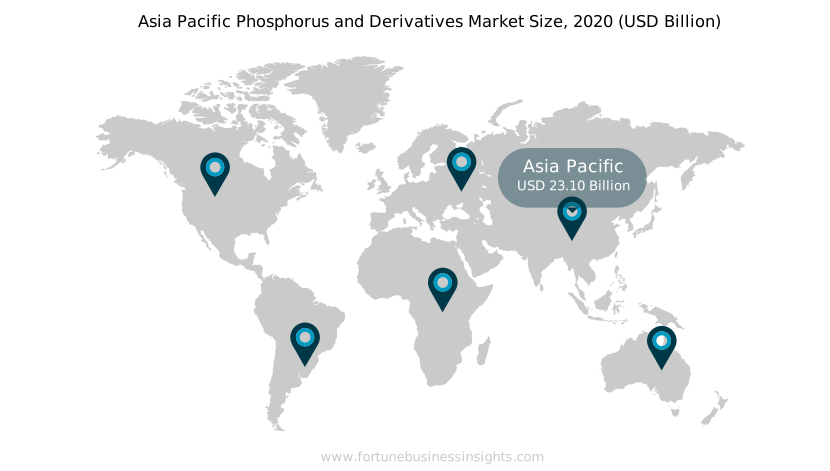
Asia Pacific phosphorus and derivatives market size, led by China, India, Japan, and South Korea, may witness a significant growth rate due to the increasing demand from fertilizer and food additives industries. China is the leading fertilizer producer and consumer globally. According to the China Customs statistics, China exported around 2.82 million tons (MT) of fertilizers in July 2019. China exported around 14.96 MT of chemical fertilizers from January to July with an export value of USD 4.2 billion, increasing 28.2% and 28.8% Y-o-Y. In February 2020, the Chinese government instructed the local governments to ensure fertilizer supply and maintain largely stable fertilizer prices for the spring season.
Fertilizer sales will be attributed to expansion in the agricultural activities in China and India. The rise in income for the rural farmers shall augment the market growth in the Asia Pacific region. In addition, increasing crop prices have encouraged most farmers to invest in fertilizers to enhance crop yields, thus boosting the demand for the global market of phosphorus and derivatives.
The market in North America may witness a significant growth rate during the forecast period. The U.S. is the world's major consumer and producer of phosphate fertilizers and phosphate rock. Favorable government rules and regulations with the rise in agricultural activities in the U.S. may augment the product demand. According to the U.S. Department of Agriculture (USDA), about 2.05 million farms in the U.S. are 97% family-owned. The rising populace and limited arable land in the U.S. have led to the dependence on fertilizers to meet the growing demand. Rising government initiatives for implementing modern agriculture techniques and innovative infrastructure have added to the region's high revenue.
Rising per-capita income, growing population, and rising hygiene & health awareness have augmented the use of household care products, thus driving Europe’s detergent market growth. Extensive usage of laundry care products and growing demand for environment-friendly products show potential in the industry growth. According to EU Detergents Regulation, the use of phosphorus has been reduced to 0.5 grams per wash in consumer laundry detergents and 0.3 grams per wash in dishwasher detergents. Such limitations were implemented to avert the sale of old-fashioned detergents containing high phosphate levels, thus causing environmental and health problems.
Brazil is one of the foremost phosphorus consumers and agricultural producers across the world. Around 50% of the fertilizer phosphorus used in Brazilian agriculture is imported. The expansion of the agriculture business in Brazil has substantially increased the demand for fertilizers to sustain crop yields, which, in turn, may create opportunities in the market.
The market in the Middle East & Africa may witness a significant growth rate during the forthcoming years. The increasing demand for phosphorus pentoxide in the agriculture industry shall drive regional market growth.
KEY INDUSTRY PLAYERS
Companies are Introducing New Products and Acquiring to Create Competition Across the Value Chain
The global phosphorus and derivatives market share is competitive with numerous market players in the industry. As a result, companies acquire, collaborate, open new production plants, and launch new products to produce phosphorus & derivatives and create avenues in the value chain.
Also, various researchers focus on R&D converting red phosphorus into black phosphorus. For instance, in November 2020, the Advanced Materials Laboratory and the Advanced Nanomaterials and Manufacturing Laboratory researchers collaborated with Iris Light Technologies to research mechano-chemically synthesized black phosphorus. This collaboration will economically convert commodity red phosphorus into optoelectronic grade black phosphorus using a high-energy ball milling. Hence, using a ball milling conversion method will reduce black phosphorus production costs.
LIST OF KEY COMPANIES PROFILED IN PHOSPHORUS AND DERIVATIVES MARKET:
- OCP (Casablanca, Morocco)
- Mosaic (Florida, U.S.)
- Yara International ASA (Oslo, Norway)
- EuroChem Group (Zug, Switzerland)
- Solvay (Brussels, Belgium)
- Prayon S.A. (Engis, Belgium)
- Ma’aden (Riyadh, Saudi Arabia)
- Innophos Holdings (New Jersey, U.S.)
- LANXESS (Cologne, Germany)
- Italmatch Chemicals S.p.A. (Genoa, Italy)
- ICL (Tel Aviv-Yafo, Israel)
- Kazphosphate LLC (Almaty, Kazakhstan)
- Haifa Group (Haifa, Israel)
- Omnisal GmbH (Lutherstadt Wittenberg, Germany)
- Other Key Players
KEY INDUSTRY DEVELOPMENTS:
- November 2020 – AgroLiquid launched a liquid phosphorus product, springuP, to its crop nutrition portfolio. This quick-release product is readily available and helps growers get their crops off to a strong start.
- February 2018 – LANXESS completed its acquisition of Solvay's phosphorus chemical business in its U.S. production site in Charleston, South Carolina. This acquisition will provide both the Group’s to expand in the North America and Asia regions.
REPORT COVERAGE
An Infographic Representation of Phosphorus and Derivatives Market

 View Full Infographic
To get information on various segments, share your queries with us
The market research report provides a detailed analysis of the market and focuses on crucial aspects such as leading companies and applications. Also, the report offers insights into market trends and highlights vital industry developments. This report includes historical data & forecasts revenue growth at global, regional, and country levels and analyzes the industry's latest market dynamics and opportunities. In addition to the factors mentioned above, the report encompasses various factors contributing to the market's growth in recent years.
REPORT SCOPE & SEGMENTATION
|
ATTRIBUTE |
DETAILS |
|
Study Period |
2017-2028 |
|
Base Year |
2020 |
|
Estimated Year |
2021 |
|
Forecast Period |
2021-2028 |
|
Historical Period |
2017-2019 |
|
Unit |
Value (USD Billion); Volume (Million Tons) |
|
Segmentation |
Type; End-Use; and Region |
|
By Type |
|
|
By End-Use |
|
|
By Region |
|
Frequently Asked Questions
Fortune Business Insights says that the global market size was USD 62.78 billion in 2020 and is projected to reach USD 85.01 billion by 2028.
In 2020, Asia Pacific stood at USD 23.10 billion.
Growing at a CAGR of 3.9%, the market will exhibit steady growth during the forecast period (2021-2028).
The fertilizer is expected to be the leading segment in this market during the forecast period.
An increase in agriculture production is expected to drive the growth of the market.
OCP, Yara International, Prayon S.A., Maaden, and Mosaic are major players in the global market.
The Asia Pacific dominated the market share in 2020.
Lithium iron phosphate used in the electric vehicles industry is expected to drive product adoption.



- 2017-2028
- 2020
- 2017-2019
- 140
Get 30-60 hrs Free Customization
Expand Regional and Country Coverage, Segments Analysis, Company Profiles, Competitive Benchmarking, and End-user Insights.


















Related Reports
-
US +1 833 909 2966 ( Toll Free )
-
Get In Touch With Us