Sacroiliac Joint Fusion Surgery Market Size, Share & Industry Analysis, By Type (MIS, Open), By Indication, By Approach, By Product, By End Use and Regional Forecast, 2026-2034
 Download Free Sample
Sacroiliac Joint Fusion Surgery Market Overview
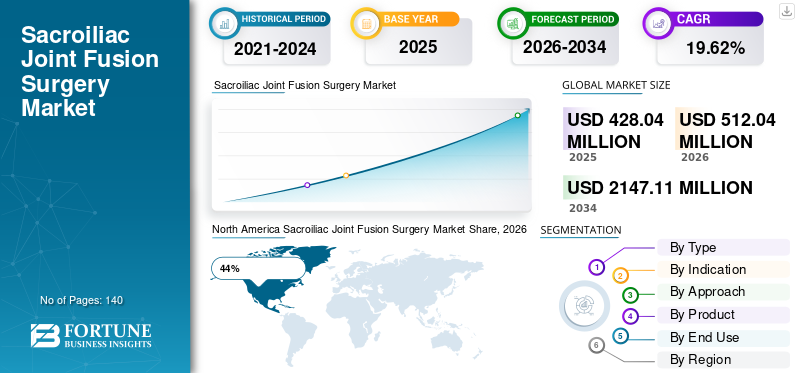
The sacroiliac joint fusion surgery market size was valued at USD 428.04 million in 2025. The market is projected to grow from USD 512.04 million in 2026 to USD 2,147.11 million by 2034, exhibiting a CAGR of 19.62% during the forecast period.

The sacroiliac joint fusion surgery market is expanding steadily due to increasing prevalence of chronic lower back pain and growing awareness regarding sacroiliac joint dysfunction diagnosis and treatment. Minimally invasive surgical techniques, advanced implant systems, and image-guided procedures are improving surgical outcomes and recovery efficiency. Healthcare providers are increasingly adopting sacroiliac joint fusion procedures to address pain management challenges associated with degenerative disorders, trauma, and spinal instability. The sacroiliac joint fusion surgery market report highlights rising utilization of titanium implants, navigation-assisted systems, and robotic surgical technologies. Continuous innovation in orthopedic implants and procedural techniques is strengthening sacroiliac joint fusion surgery market growth globally.
The USA sacroiliac joint fusion surgery market is witnessing strong expansion because of increasing spinal disorder prevalence, advanced healthcare infrastructure, and rising adoption of minimally invasive orthopedic procedures. Hospitals and spine surgery centers across the United States are integrating advanced navigation systems and implant technologies to improve patient outcomes and reduce hospitalization duration. The sacroiliac joint fusion surgery market analysis in the USA highlights growing demand for outpatient procedures and image-guided surgical systems. Increasing awareness regarding sacroiliac joint dysfunction diagnosis among healthcare professionals is supporting procedural volume growth. Expansion of orthopedic specialty clinics continues to strengthen the sacroiliac joint fusion surgery market outlook in the United States.
Download Free sample to learn more about this report.
Sacroiliac Joint Fusion Surgery Market Key Takeaways
 Global Market Size & Forecast
- 2025 Market Size: USD 428.04 million
- 2026 Market Size: USD 512.04 million
- 2034 Forecast Market Size: USD 2,147.11 million
- CAGR: 19.62% from 2026–2034
 Market Share
- North America dominated with a regional market share of 44% in 2025.
- Minimally Invasive Surgery (MIS) led by type with approximately 76% market share.
- Titanium implants led by product with approximately 67% market share.
 Key Regional Highlights
North America
North America held the largest regional share at 44% of the global market.
Europe
Europe accounted for 28% of the global market, supported by advanced orthopedic care infrastructure.
Asia-Pacific
Asia-Pacific represented 21% of the global market, driven by growing demand for minimally invasive procedures.
U.S.
The U.S. remains a major market, supported by advanced spine care facilities and adoption of minimally invasive fusion procedures.
Japan
Japan accounted for 27% of the Asia-Pacific market, supported by advanced orthopedic technologies and growing demand for surgical interventions.
Read More

Sacroiliac Joint Fusion Surgery Market Latest Trends
The sacroiliac joint fusion surgery market trends are increasingly influenced by rapid adoption of minimally invasive surgical techniques and robotic-assisted orthopedic procedures. Healthcare providers are emphasizing smaller incisions, shorter recovery times, and reduced blood loss to improve patient satisfaction and clinical outcomes. Advanced navigation systems and intraoperative imaging technologies are improving implant placement precision and surgical efficiency during sacroiliac fusion procedures.
Download Free sample to learn more about this report.
Another major trend identified in the sacroiliac joint fusion surgery market research report is the growing utilization of biologics and advanced implant materials. Manufacturers are introducing porous titanium implants, bone graft substitutes, and patient-specific fixation systems to improve fusion success rates and long-term stability. Outpatient surgical centers are increasingly performing minimally invasive sacroiliac fusion procedures because of technological advancements and improved procedural safety. The sacroiliac joint fusion surgery market forecast also highlights increasing integration of artificial intelligence and data-driven surgical planning tools within orthopedic surgery environments.
Sacroiliac Joint Fusion Surgery Market Dynamics
DRIVER
Rising Prevalence of Chronic Lower Back and Sacroiliac Joint Disorders
The increasing prevalence of chronic lower back pain and sacroiliac joint disorders is one of the primary factors driving sacroiliac joint fusion surgery market growth. Aging populations, sedentary lifestyles, obesity, spinal degeneration, and occupational strain are contributing to higher incidence of sacroiliac joint dysfunction globally. Patients experiencing persistent pain and mobility limitations are increasingly seeking long-term surgical treatment solutions after failure of conservative therapies.
The sacroiliac joint fusion surgery market analysis highlights growing awareness among orthopedic specialists and pain management professionals regarding the importance of accurate sacroiliac joint diagnosis. Healthcare providers are increasingly adopting advanced imaging technologies and minimally invasive fusion procedures to improve treatment outcomes. Rising demand for outpatient orthopedic surgeries and reduced recovery time procedures is also supporting market expansion. Technological advancements in implant design, navigation systems, and robotic-assisted surgery continue to improve procedural precision and patient safety. Expansion of orthopedic healthcare services continues to strengthen the Sacroiliac Joint Fusion Surgery Industry Report globally.
RESTRAINT
High Surgical Costs and Reimbursement Limitations
High surgical costs and reimbursement limitations remain major restraints affecting the sacroiliac joint fusion surgery market share. Advanced implant systems, robotic-assisted technologies, navigation platforms, and hospitalization expenses significantly increase the overall procedural cost for patients and healthcare systems. Limited insurance reimbursement policies in certain regions may restrict patient access to minimally invasive sacroiliac fusion procedures.
The sacroiliac joint fusion surgery market outlook also highlights challenges associated with variability in clinical evidence and treatment standardization. Some healthcare providers remain cautious regarding long-term procedural outcomes and patient selection criteria for sacroiliac fusion surgery. High equipment procurement costs for hospitals and specialty surgical centers may also limit adoption among smaller healthcare facilities. Additionally, lengthy regulatory approval processes and training requirements for advanced surgical technologies contribute to operational complexity within the sacroiliac joint fusion surgery market size globally.
OPPORTUNITY
Expansion of Minimally Invasive and Outpatient Surgical Procedures
The expansion of minimally invasive and outpatient surgical procedures presents significant sacroiliac joint fusion surgery market opportunities. Healthcare providers increasingly prefer minimally invasive approaches because they reduce tissue damage, shorten recovery periods, and minimize hospitalization requirements. Outpatient orthopedic surgery centers are rapidly adopting advanced sacroiliac fusion technologies to improve procedural efficiency and patient convenience.
The sacroiliac joint fusion surgery market insights highlight increasing investment in robotic-assisted surgery, navigation systems, and advanced implant materials capable of improving fusion outcomes. Manufacturers are developing patient-specific implants and biologic integration technologies optimized for minimally invasive applications. Rising demand for ambulatory surgical procedures and healthcare cost optimization is also encouraging procedural innovation. Expansion of orthopedic specialty care and increasing physician training programs continue to create strong growth opportunities within the Sacroiliac Joint Fusion Surgery Industry Analysis globally.
CHALLENGE
Maintaining Long-Term Clinical Outcomes and Procedural Standardization
Maintaining long-term clinical outcomes and procedural standardization remains one of the major challenges within the sacroiliac joint fusion surgery market forecast. Surgical success depends heavily on accurate diagnosis, implant placement precision, patient selection, and postoperative rehabilitation management. Variability in surgical techniques and treatment protocols may influence patient recovery and procedural effectiveness.
The sacroiliac joint fusion surgery market research report further highlights challenges associated with generating long-term clinical evidence supporting newer implant systems and minimally invasive technologies. Healthcare providers and regulatory agencies increasingly demand extensive clinical validation and patient outcome studies before widespread technology adoption. Training surgeons on advanced navigation systems and robotic platforms also requires substantial investment and procedural standardization efforts. Rapid technological evolution and increasing competition among orthopedic device manufacturers continue to create operational challenges within the sacroiliac joint fusion surgery market.
Sacroiliac Joint Fusion Surgery Market Segmentation
By Type
Minimally Invasive Surgery (MIS) dominates the sacroiliac joint fusion surgery market with approximately 76% market share because healthcare providers increasingly prioritize reduced recovery time, smaller incisions, and lower postoperative complications. MIS procedures utilize specialized implants, navigation systems, and fluoroscopic guidance to improve surgical precision and patient outcomes. Hospitals and outpatient surgical centers widely adopt minimally invasive techniques because of shorter hospitalization duration and improved procedural efficiency.
The sacroiliac joint fusion surgery market report highlights growing demand for robotic-assisted navigation technologies and advanced implant systems optimized for minimally invasive applications. Manufacturers are introducing porous titanium implants and biologic integration technologies to improve fusion stability and long-term procedural success. Expansion of outpatient orthopedic surgery programs continues to strengthen the MIS segment within the overall sacroiliac joint fusion surgery market growth landscape.
Open surgical procedures account for approximately 24% of the sacroiliac joint fusion surgery market share because they remain important for complex spinal deformities, trauma cases, and revision surgeries requiring extensive anatomical access. Open fusion surgeries allow surgeons to address severe instability and structural abnormalities that may not be suitable for minimally invasive techniques.
The sacroiliac joint fusion surgery market trends indicate increasing utilization of advanced fixation systems and imaging guidance technologies within open surgical procedures. Healthcare providers continue to perform open fusion surgeries for patients with complicated spinal conditions requiring comprehensive surgical intervention. Improvements in implant durability and surgical planning technologies continue to support growth within the Open segment globally.
To know how our report can help streamline your business, Speak to Analyst
By Indication
Degenerative sacroiliitis holds nearly 48% market share in the sacroiliac joint fusion surgery market due to increasing prevalence of age-related spinal degeneration and chronic lower back pain disorders. Patients suffering from persistent sacroiliac joint inflammation and mobility limitations increasingly undergo fusion procedures after conservative therapies fail to provide long-term relief. Hospitals and orthopedic centers are adopting minimally invasive surgical techniques and advanced imaging technologies to improve diagnosis accuracy and procedural outcomes.
The sacroiliac joint fusion surgery market analysis highlights rising demand for porous titanium implants and navigation-assisted procedures specifically designed for degenerative sacroiliitis treatment. Growing awareness among spine specialists regarding sacroiliac joint dysfunction is contributing to earlier diagnosis and treatment adoption. Expansion of outpatient orthopedic care and enhanced recovery protocols continue to strengthen this indication segment globally.
Traumatic sacroiliac injuries account for approximately 29% market share because pelvic fractures, spinal trauma, and accident-related instability frequently require surgical stabilization procedures. Orthopedic trauma centers increasingly utilize advanced fixation implants and robotic-assisted navigation systems to improve implant positioning and patient recovery outcomes. Rising road accidents and sports-related injuries are contributing to increased surgical procedure volumes.
The sacroiliac joint fusion surgery market research report indicates strong adoption of minimally invasive fusion procedures for trauma-related instability due to reduced blood loss and faster rehabilitation benefits. Healthcare providers are integrating advanced imaging and precision surgical systems to enhance procedural efficiency. Increasing demand for rapid recovery orthopedic procedures continues to support growth in this segment.
Post-lumbar fusion disorders contribute around 23% market share within the sacroiliac joint fusion surgery market because sacroiliac dysfunction often develops after spinal fusion surgeries. Changes in spinal biomechanics and increased joint stress frequently result in chronic pain and reduced patient mobility. Spine surgeons increasingly recognize secondary sacroiliac degeneration as a significant postoperative complication requiring targeted fusion procedures.
The sacroiliac joint fusion surgery market outlook highlights rising utilization of minimally invasive implants and biologic fusion technologies for patients experiencing persistent postoperative sacroiliac pain. Advanced navigation-assisted systems are improving implant placement precision and long-term stabilization outcomes. Growth in spinal surgery procedures worldwide continues to strengthen demand within this indication segment.
By Approach
The lateral approach dominates the sacroiliac joint fusion surgery market with nearly 58% market share because it provides direct access to the sacroiliac joint while minimizing tissue disruption. Surgeons prefer this approach for minimally invasive procedures due to improved implant positioning and reduced recovery time. Hospitals and outpatient surgery centers increasingly utilize lateral approach fusion systems integrated with fluoroscopic imaging guidance.
The sacroiliac joint fusion surgery market forecast highlights increasing adoption of robotic-assisted navigation technologies within lateral fusion procedures. Manufacturers are introducing advanced implant systems specifically designed for lateral placement and enhanced osseointegration. Growing emphasis on minimally invasive orthopedic care continues to support expansion of this surgical approach globally.
The posterior approach accounts for approximately 42% market share because it offers effective stabilization for selected patients requiring sacroiliac fixation without extensive lateral tissue manipulation. Spine surgeons increasingly adopt posterior minimally invasive procedures for patients with anatomical limitations or revision surgery requirements. Advanced navigation systems are improving procedural precision and implant placement accuracy during posterior fusion surgeries.
The Sacroiliac Joint Fusion Surgery Industry Report highlights growing development of posterior fixation implants optimized for minimally invasive applications. Healthcare providers emphasize reduced procedural trauma and improved patient comfort associated with posterior access techniques. Expansion of image-guided orthopedic surgery continues to strengthen this segment worldwide.
By Product
Titanium implants hold approximately 67% market share within the sacroiliac joint fusion surgery market because of superior biocompatibility, durability, and osseointegration performance. Orthopedic surgeons increasingly utilize porous titanium implants designed to improve long-term fusion stability and minimize implant migration risks. Minimally invasive procedures frequently incorporate titanium fixation systems because of their compatibility with advanced navigation-assisted surgery.
The sacroiliac joint fusion surgery market insights indicate rising investment in 3D-printed titanium implants and customized fixation technologies optimized for patient-specific anatomy. Healthcare providers prioritize implant durability and enhanced bone integration to improve clinical outcomes. Technological innovation in titanium implant manufacturing continues to strengthen this product segment globally.
Bone graft substitutes and biologics account for nearly 33% market share because they support improved bone healing and fusion success during sacroiliac joint stabilization procedures. Surgeons increasingly combine biologic materials with implant systems to accelerate osseointegration and reduce non-union risks. Advanced synthetic graft materials and growth factor technologies are gaining popularity within minimally invasive orthopedic surgeries.
The sacroiliac joint fusion surgery market trends highlight growing research into regenerative biologics and bioactive fusion materials capable of improving long-term procedural outcomes. Hospitals and specialty spine centers increasingly adopt advanced biologic solutions to enhance patient recovery and procedural success rates. Rising demand for precision orthopedic surgery continues to support product innovation within this segment.
By End Use
Hospitals represent nearly 57% market share in the sacroiliac joint fusion surgery market because they possess advanced surgical infrastructure, robotic-assisted systems, and multidisciplinary orthopedic care capabilities. Complex sacroiliac fusion procedures requiring advanced imaging, postoperative rehabilitation, and inpatient monitoring are primarily performed within hospital settings. Large healthcare institutions continue investing in minimally invasive orthopedic technologies and navigation-assisted surgery systems to improve procedural efficiency.
The sacroiliac joint fusion surgery market report highlights increasing integration of robotic surgery platforms and AI-assisted imaging tools within hospital orthopedic departments. Rising patient preference for advanced specialty care and comprehensive postoperative management continues to strengthen hospital dominance in the global market.
Sacroiliac Joint Fusion Surgery Market Regional Outlook
North America Sacroiliac Joint Fusion Surgery Market Share, 2026 (%)
To get more information on the regional analysis of this market, Download Free sample
North America
North America dominates the sacroiliac joint fusion surgery market because of advanced orthopedic healthcare infrastructure, rising prevalence of chronic lower back disorders, and increasing adoption of minimally invasive spinal procedures. Hospitals and spine surgery centers across the region increasingly utilize navigation-assisted technologies and robotic surgical systems to improve procedural outcomes. North America represents approximately 44% of the global market.
The sacroiliac joint fusion surgery market industry analysis highlights strong demand for outpatient orthopedic procedures and advanced implant systems throughout the region. Healthcare providers emphasize precision surgery, rapid recovery, and improved pain management outcomes to enhance patient satisfaction. Expansion of orthopedic specialty clinics continues to support regional market growth.
Europe
Europe remains a major contributor to the sacroiliac joint fusion surgery market because of increasing aging populations, rising spinal disorder prevalence, and growing adoption of minimally invasive orthopedic technologies. Hospitals and specialty spine centers across the region are investing in advanced imaging systems and surgical navigation platforms. Europe contributes approximately 28% of the global market.
The sacroiliac joint fusion surgery market report highlights increasing utilization of biologic implants and robotic-assisted spinal surgery technologies throughout European healthcare systems. Healthcare providers emphasize evidence-based orthopedic procedures and postoperative rehabilitation optimization. Expansion of minimally invasive surgical programs continues to strengthen market growth across Europe.
Germany Sacroiliac Joint Fusion Surgery Market
Germany accounts for approximately 34% of the European sacroiliac joint fusion surgery market because of its advanced orthopedic healthcare system and strong medical technology manufacturing sector. Spine surgery centers and hospitals across Germany increasingly adopt navigation-assisted fusion systems and minimally invasive implant technologies to improve patient outcomes.
The Germany sacroiliac joint fusion surgery market outlook highlights rising investment in robotic orthopedic surgery and precision implant systems. Healthcare providers prioritize clinical accuracy, patient safety, and postoperative recovery optimization to strengthen orthopedic care quality. Germany’s advanced healthcare infrastructure continues to support expansion of the sacroiliac joint fusion surgery market.
United Kingdom Sacroiliac Joint Fusion Surgery Market
The United Kingdom contributes approximately 22% to the European sacroiliac joint fusion surgery market because of increasing orthopedic procedure volumes and growing adoption of minimally invasive surgical techniques. Hospitals and spine specialists are integrating advanced imaging and navigation technologies to improve surgical precision and treatment outcomes.
The United Kingdom sacroiliac joint fusion surgery market forecast indicates rising demand for outpatient spinal surgery procedures and enhanced recovery programs. Healthcare institutions are emphasizing cost-efficient orthopedic care and improved patient rehabilitation strategies. Expansion of specialty spine surgery services continues to strengthen the Sacroiliac Joint Fusion Surgery Industry Report within the United Kingdom.
Asia-Pacific
Asia-Pacific is witnessing rapid expansion within the sacroiliac joint fusion surgery market because of growing healthcare investments, increasing orthopedic disorder prevalence, and rising awareness regarding minimally invasive spinal procedures. Hospitals and specialty clinics across the region increasingly adopt advanced implant technologies and image-guided surgical systems. Asia-Pacific contributes approximately 21% of the global market.
The sacroiliac joint fusion surgery market trends indicate increasing demand for cost-effective orthopedic procedures and technologically advanced fusion implants throughout Asia-Pacific. Government healthcare modernization initiatives and expansion of specialty orthopedic care are driving regional market development. Rising aging populations and spinal disorder incidence continue to accelerate market growth.
Japan Sacroiliac Joint Fusion Surgery Market
Japan represents approximately 27% of the Asia-Pacific sacroiliac joint fusion surgery market because of its advanced healthcare technology ecosystem and growing aging population. Hospitals and orthopedic specialists increasingly utilize minimally invasive spinal surgery techniques and precision implant systems to improve treatment outcomes.
The Japan sacroiliac joint fusion surgery market analysis highlights rising investment in robotic-assisted orthopedic surgery and advanced navigation platforms. Healthcare providers prioritize procedural precision, rapid recovery, and minimally invasive treatment approaches to improve patient satisfaction. Japan’s strong medical technology infrastructure continues to support growth within the sacroiliac joint fusion surgery market.
China Sacroiliac Joint Fusion Surgery Market
China accounts for approximately 41% of the Asia-Pacific sacroiliac joint fusion surgery market because of expanding orthopedic healthcare infrastructure and increasing adoption of advanced spinal surgery technologies. Hospitals and specialty spine centers are investing heavily in minimally invasive surgical systems and orthopedic implant innovation.
The China sacroiliac joint fusion surgery market research report highlights growing domestic production of orthopedic implants and increasing government support for healthcare modernization. Healthcare providers are emphasizing procedural accessibility and advanced surgical care to meet rising patient demand. Expansion of orthopedic specialty hospitals continues to accelerate sacroiliac joint fusion surgery market growth across China.
Rest of World
The Rest of World sacroiliac joint fusion surgery market is gradually expanding as orthopedic healthcare infrastructure and awareness regarding spinal disorder treatment continue to improve across Latin America, the Middle East, and Africa. Hospitals and spine specialists increasingly adopt minimally invasive fusion technologies to improve procedural efficiency and patient outcomes. Rest of World contributes approximately 7% of the global market.
Healthcare modernization initiatives and rising investment in orthopedic surgical technologies are encouraging adoption of advanced implant systems and image-guided procedures throughout developing regions. Increasing prevalence of chronic lower back disorders and aging populations continue to support market expansion globally. Growth in specialty orthopedic care continues to create additional sacroiliac joint fusion surgery market opportunities worldwide.
List of Top Sacroiliac Joint Fusion Surgery Companies
- SI-BONE, Inc.
- CornerLoc
- Globus Medical
- Orthofix Medical, Inc.
- Camber Spine Technologies, LLC
- Life Spine, Inc.
- CoreLink Surgical
- PainTEQ
- SIGNUS Medizintechnik GmbH
- Medtronic
Sacroiliac Joint Fusion Surgery Market Top Two Companies with Highest Market Share
- SI-BONE, Inc. – 27%
- Medtronic – 18%
Sacroiliac Joint Fusion Surgery Market Investment Analysis and Opportunities
The sacroiliac joint fusion surgery market opportunities segment is attracting strong investment from orthopedic device manufacturers, robotic surgery developers, and healthcare institutions. Investors are focusing on minimally invasive surgical systems, navigation-assisted implants, and biologic integration technologies capable of improving procedural precision and patient recovery outcomes. Growing demand for outpatient orthopedic procedures is creating substantial commercial opportunities globally.
The sacroiliac joint fusion surgery market insights highlight increasing investment in robotic-assisted surgery platforms, AI-driven surgical planning systems, and advanced porous implant materials. Manufacturers are developing patient-specific implants and image-guided navigation technologies to improve long-term fusion stability and procedural efficiency. Strategic collaborations between orthopedic device companies and healthcare providers are accelerating innovation and market expansion. Rising focus on minimally invasive orthopedic care and enhanced recovery protocols continues to strengthen long-term investment potential within the Sacroiliac Joint Fusion Surgery Industry Analysis.
Sacroiliac Joint Fusion Surgery Market New Product Development
The sacroiliac joint fusion surgery market trends highlight continuous innovation in minimally invasive implants, robotic-assisted navigation systems, and biologic fusion technologies. Manufacturers are introducing porous titanium implants with improved osseointegration capabilities and advanced fixation designs optimized for minimally invasive procedures. Navigation-assisted surgery systems and AI-powered imaging platforms are improving implant placement precision and procedural planning.
Orthopedic device companies are also developing expandable implants and patient-specific fixation systems to improve clinical flexibility and fusion outcomes. The sacroiliac joint fusion surgery market research report highlights increasing innovation in biologic bone graft substitutes and outpatient surgical technologies designed to reduce recovery time and hospitalization requirements. Rising demand for precision orthopedic procedures continues to accelerate product development activities globally.
Sacroiliac Joint Fusion Surgery Market Five Recent Developments (2023-2025)
- SI-BONE, Inc. introduced advanced porous titanium implant systems optimized for minimally invasive sacroiliac fusion procedures in 2024.
- Medtronic expanded robotic-assisted spinal surgery capabilities targeting sacroiliac fusion applications in 2023.
- Orthofix Medical, Inc. launched navigation-compatible sacroiliac fusion implants with enhanced fixation stability in 2025.
- PainTEQ introduced image-guided minimally invasive treatment technologies for sacroiliac joint dysfunction management in 2024.
- Globus Medical developed advanced navigation-assisted orthopedic systems supporting precision sacroiliac implant placement in 2025.
Report Coverage of Sacroiliac Joint Fusion Surgery Market
The sacroiliac joint fusion surgery market report provides comprehensive analysis of industry trends, orthopedic technology developments, competitive landscape factors, and minimally invasive surgical innovation influencing global market expansion. The report evaluates major procedure types including minimally invasive and open sacroiliac fusion surgeries, advanced implant systems, and navigation-assisted surgical technologies. It also examines segmentation based on indications, approaches, products, and end-use healthcare facilities.
Request for Customization to gain extensive market insights.
The sacroiliac joint fusion surgery market research report further covers investment activities, product innovation trends, regulatory developments, and strategic collaborations among leading orthopedic device manufacturers and healthcare providers. Company profiling sections analyze implant technologies, surgical navigation capabilities, and operational strategies of major market participants. Regional analysis highlights orthopedic healthcare modernization, spinal surgery adoption, and minimally invasive procedural trends across North America, Europe, Asia-Pacific, and Rest of World markets.
Frequently Asked Questions
Fortune Business Insights says that the global market value stood at USD 428.04 million in 2025 and is projected to reach USD 2,147.11 million by 2034.
The market is expected to exhibit a CAGR of 19.62% during the forecast period of 2026-2034.
Minimally Invasive Surgery (MIS) was the leading type segment, accounting for approximately 76% of the market, driven by shorter recovery times, smaller incisions, and lower postoperative complications.
Key players include SI-BONE, Inc., CornerLoc, Globus Medical, Orthofix Medical, Inc., Camber Spine Technologies, LLC, and Life Spine, Inc.
Major trends include rapid adoption of minimally invasive and robotic-assisted procedures and growing use of advanced implant materials, biologics, and navigation systems. North America leads with approximately 44% market share, supported by advanced orthopedic infrastructure and high adoption of minimally invasive procedures.



- 2021-2034
- 2025
- 2021-2024
- 140
-

(Offer valid till 30th Sep 2026)
Get 30-60 hrs Free Customization
Expand Regional and Country Coverage, Segments Analysis, Company Profiles, Competitive Benchmarking, and End-user Insights.













.webp)






-
US +1 833 909 2966 ( Toll Free )
-
Get In Touch With Us