Sandalwood Oil Market Size, Share & Industry Analysis, By Product (Natural Sandalwood Oil, Synthetic Sandalwood Oil), By Application (Personal Care & Cosmetics, Pharmaceutical, Aromatherapy), and Regional Forecast, 2026-2034
 Download Free Sample
Sandalwood Oil Market Overview
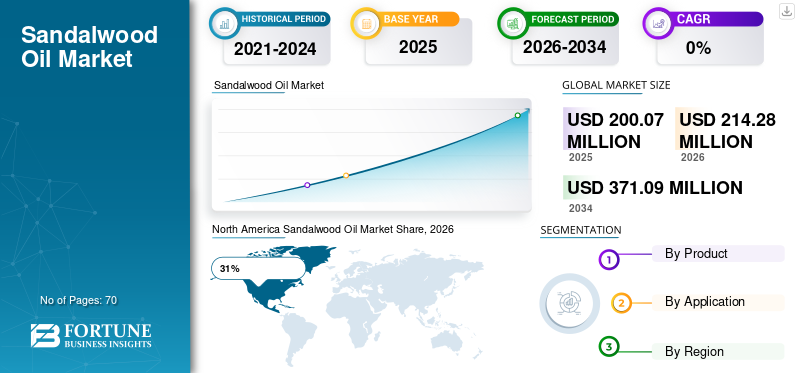
The global sandalwood oil market size was valued at USD 200.06 billion in 2025. The market is projected to grow from USD 214.28 billion in 2026 to USD 371.09 billion by 2034, exhibiting a CAGR of 7.10% during the forecast period.

The sandalwood oil market is witnessing strong expansion due to increasing demand from personal care, aromatherapy, pharmaceutical, and luxury fragrance industries. Sandalwood oil is widely valued for its woody aroma, anti-inflammatory properties, and therapeutic applications in skincare and wellness products. The sandalwood oil market report highlights rising utilization in premium perfumes, herbal cosmetics, meditation products, and natural healthcare formulations. Growing consumer preference for plant-based essential oils and clean-label cosmetic ingredients is supporting market penetration globally. Sustainable sandalwood cultivation programs and technological advancements in extraction methods are also strengthening product availability. The sandalwood oil market analysis indicates increasing commercial demand from wellness brands and natural fragrance manufacturers.
The United States sandalwood oil market is expanding steadily due to increasing consumer demand for organic skincare, aromatherapy products, and premium wellness formulations. More than 63% of natural fragrance manufacturers in the country utilize sandalwood oil in luxury perfume blends and therapeutic products. The sandalwood oil industry report indicates strong adoption among personal care brands focused on botanical ingredients and sustainable sourcing practices. Aromatherapy centers and wellness clinics across the United States are increasingly incorporating sandalwood oil into relaxation therapies and stress management treatments. Demand for natural essential oils among health-conscious consumers continues rising due to growing awareness regarding synthetic chemical alternatives and holistic wellness solutions.
Download Free sample to learn more about this report.
Sandalwood Oil Market Key Takeaways
 Global Market Size & Forecast
- 2025 Market Size: USD 200.06 Billion
- 2026 Market Size: USD 214.28 Billion
- 2034 Forecast Market Size: USD 371.09 Billion
- CAGR: 7.10% from 2026-2034
 Market Share
- Asia-Pacific dominated with a 32% market share in 2025.
- Natural sandalwood oil led by product with a 67% market share.
- Personal care and cosmetics led by application with a 49% market share.
 Key Regional Highlights
Asia-Pacific
Asia-Pacific held the largest regional share at 32%.
North America
North America accounted for 31% of the global market.
Europe
Europe represented 28% of the global market.
U.S.
The U.S. market is supported by growing demand for natural fragrances, cosmetics, and wellness products.
Japan
Japan accounted for 17% of the Asia-Pacific market, driven by demand for premium personal care and aromatherapy products.
Read More

Sandalwood Oil Market Latest Trends
The sandalwood oil market trends indicate growing consumer preference for natural essential oils and sustainable fragrance ingredients across cosmetic and wellness industries. Manufacturers are increasingly investing in ethically sourced sandalwood plantations to ensure long-term raw material supply and environmental sustainability. Organic and certified-natural sandalwood oil products are gaining popularity among skincare companies focused on premium formulations and clean-label branding. The sandalwood oil market Research Report identifies rising integration of sandalwood oil in anti-aging creams, serums, soaps, and herbal cosmetics because of its soothing and antimicrobial properties.
Aromatherapy applications are expanding significantly due to increasing awareness regarding stress management and mental wellness therapies. Wellness centers and spa chains are utilizing sandalwood oil in massage treatments, meditation oils, and relaxation therapies to attract premium consumers. The pharmaceutical industry is also increasing utilization of sandalwood oil in topical ointments and herbal therapeutic formulations.
Download Free sample to learn more about this report.
Sandalwood Oil Market Dynamics
DRIVER
Rising Demand for Natural and Organic Personal Care Products
Increasing consumer preference for natural skincare and wellness products is a major driver of the sandalwood oil market growth. Sandalwood oil is widely utilized in facial creams, soaps, perfumes, and body lotions because of its calming aroma and skin-soothing properties. More than 58% of premium cosmetic brands now incorporate botanical oils into their formulations to meet clean-label product demand. The sandalwood oil market analysis indicates strong growth in herbal beauty products and essential oil-based cosmetics among urban consumers. Rising awareness regarding harmful synthetic chemicals in skincare products is further encouraging adoption of plant-derived ingredients. Wellness-focused lifestyles and increasing expenditure on luxury personal care solutions continue strengthening commercial demand across cosmetic and aromatherapy sectors globally.
RESTRAINT
Limited Availability of Natural Sandalwood Resources
Restricted availability of mature sandalwood trees remains a significant restraint within the sandalwood oil market. Natural sandalwood cultivation requires long growth cycles and strict environmental regulations, leading to supply limitations and fluctuating raw material availability. Illegal harvesting and deforestation concerns also affect sustainable sourcing practices across several producing regions. The Sandalwood Oil Industry Analysis highlights increasing production costs associated with plantation management, extraction processes, and export restrictions. Premium pricing of natural sandalwood oil limits widespread adoption among smaller cosmetic manufacturers and price-sensitive consumers. Additionally, climatic variations and agricultural risks continue impacting sandalwood cultivation productivity, creating challenges for maintaining consistent global supply chains and stable commercial production levels.
OPPORTUNITY
Expansion of Aromatherapy and Wellness Industries
Rapid expansion of wellness centers, spa therapies, and holistic healthcare services presents major opportunities for the sandalwood oil market. Aromatherapy treatments utilizing sandalwood oil are increasingly preferred for relaxation, meditation, stress reduction, and emotional wellness applications. The sandalwood oil market opportunities are particularly strong in urban wellness sectors where consumers prioritize natural therapies and mental health support products. Luxury hotels, premium spas, and yoga centers are incorporating sandalwood oil-based products into wellness experiences to enhance customer engagement. Pharmaceutical companies are also exploring sandalwood oil applications in herbal medicines and topical healthcare formulations. Increasing online sales of essential oils and wellness products are further improving accessibility and global consumer reach for sandalwood oil manufacturers and distributors.
CHALLENGE
Competition From Synthetic Fragrance Substitutes
The sandalwood oil market faces growing competition from synthetic fragrance substitutes developed for large-scale perfumery and industrial applications. Synthetic sandalwood oil variants are widely preferred by mass-market fragrance manufacturers because of lower production costs and stable aroma consistency. The sandalwood oil market insights indicate that price-sensitive industries increasingly adopt synthetic formulations to reduce operational expenses and ensure uninterrupted supply availability. Natural sandalwood oil producers also face challenges associated with counterfeit products and adulteration within global essential oil trade channels. Maintaining product purity, authenticity, and sustainability certification remains critical for premium market positioning. Regulatory compliance related to cosmetic ingredients and export standards further adds complexity for small and medium-sized sandalwood oil manufacturers worldwide.
Sandalwood Oil Market Segmentation
By Product
Natural sandalwood oil accounts for approximately 67% market share within the type segment due to strong demand from luxury perfumery, aromatherapy, and premium skincare industries. Extracted directly from sandalwood trees through steam distillation, this oil is valued for its rich woody fragrance and therapeutic benefits. The sandalwood oil market analysis highlights increasing use of natural sandalwood oil in anti-aging products, meditation oils, herbal soaps, and relaxation therapies. Cosmetic brands increasingly emphasize sustainably sourced natural ingredients to attract health-conscious consumers seeking organic skincare products. Premium wellness centers and luxury fragrance manufacturers continue driving strong demand for authentic sandalwood oil formulations.
Synthetic sandalwood oil holds nearly 33% market share due to increasing adoption in affordable perfumes, industrial fragrances, and large-scale cosmetic manufacturing. These formulations are chemically engineered to replicate the aroma characteristics of natural sandalwood while offering greater supply consistency and lower production costs. The sandalwood oil industry report indicates strong utilization within deodorants, air fresheners, soaps, and mass-market fragrance products. Manufacturers increasingly prefer synthetic variants because they provide stable scent performance and reduced dependency on limited natural sandalwood resources. Technological advancements in fragrance chemistry are improving aroma quality and enhancing commercial acceptance among industrial users.
To know how our report can help streamline your business, Speak to Analyst
By Application
Personal care and cosmetics represent approximately 49% market share within the sandalwood oil market due to increasing demand for natural skincare and luxury beauty products. Sandalwood oil is widely incorporated into creams, soaps, facial serums, shampoos, perfumes, and body lotions because of its soothing fragrance and anti-inflammatory properties. The sandalwood oil market Research Report highlights strong consumer preference for botanical cosmetic ingredients and herbal beauty formulations. Premium skincare brands increasingly utilize sandalwood oil in anti-aging and skin-brightening products targeted toward urban consumers. Rising disposable income and growing interest in clean-label cosmetics continue driving market demand.
The pharmaceutical segment accounts for approximately 24% market share because of increasing use of sandalwood oil in herbal medicines, topical ointments, and therapeutic formulations. Sandalwood oil possesses antimicrobial, anti-inflammatory, and calming properties that support its utilization in skincare treatments and wellness products. The sandalwood oil market outlook indicates rising research regarding its application in stress relief, skin irritation management, and complementary healthcare therapies. Pharmaceutical companies are increasingly integrating plant-based ingredients into natural healthcare products to address growing consumer preference for herbal medicine alternatives. Demand for therapeutic essential oils in wellness supplements and traditional medicinal preparations is also contributing to market expansion.
Aromatherapy contributes approximately 27% market share in the sandalwood oil market due to rising global awareness regarding stress management and holistic wellness therapies. Sandalwood oil is widely used in massage oils, meditation blends, relaxation sprays, and spa treatments because of its calming fragrance and emotional wellness benefits. The sandalwood oil market trends reveal increasing adoption among wellness centers, yoga studios, and luxury hospitality facilities offering premium therapeutic experiences. Consumers increasingly prefer natural essential oils for improving sleep quality, reducing anxiety, and supporting emotional balance. Digital wellness trends and online essential oil retail platforms are further improving consumer accessibility.
Sandalwood Oil Market Regional Outlook
North America
North America Sandalwood Oil Market Share, 2026 (%) To get more information on the regional analysis of this market, Download Free sample
North America accounts for approximately 31% market share in the sandalwood oil market due to increasing demand for natural personal care products, luxury fragrances, and aromatherapy solutions. The United States dominates regional consumption because of strong consumer awareness regarding organic skincare and wellness therapies. Premium cosmetic brands increasingly incorporate sandalwood oil into anti-aging creams, perfumes, and herbal beauty products. The sandalwood oil market analysis indicates strong growth in aromatherapy applications across wellness clinics, yoga centers, and spa chains throughout metropolitan regions. Canada is also witnessing rising demand for essential oils and plant-based skincare products due to increasing consumer preference for sustainable wellness solutions. Luxury fragrance manufacturers in North America widely utilize sandalwood oil blends in premium perfume formulations. The region benefits from advanced retail infrastructure and strong digital marketing channels supporting essential oil sales. Rising popularity of meditation therapies and stress management treatments continues supporting market expansion. Wellness-focused consumers increasingly prefer botanical fragrance ingredients over synthetic alternatives.
Europe
Europe holds approximately 28% market share within the sandalwood oil market because of strong demand for luxury perfumes, herbal cosmetics, and premium wellness products. Countries including France, Germany, Italy, and the United Kingdom represent major fragrance manufacturing hubs utilizing sandalwood oil in personal care and perfumery applications. The sandalwood oil market Research Report identifies increasing preference for natural fragrance ingredients among European consumers seeking environmentally responsible products. Luxury skincare brands are increasingly launching organic product lines enriched with sandalwood oil and botanical extracts. Wellness tourism and premium spa services across Southern Europe are also contributing to rising aromatherapy demand. Regulatory standards regarding clean-label cosmetics and sustainable sourcing practices encourage manufacturers to invest in ethically harvested sandalwood oil products. Growing anti-aging skincare demand and increasing interest in holistic wellness continue strengthening market growth across European cosmetic and healthcare industries. Consumers increasingly seek plant-based ingredients in beauty and relaxation products. European markets. Rising demand for premium organic fragrances further supports regional market expansion.
Germany Sandalwood Oil Market
Germany contributes approximately 24% market share within the European sandalwood oil market because of strong demand for herbal skincare products and premium fragrance formulations. Consumers increasingly prefer natural cosmetic ingredients and aromatherapy products supporting relaxation and skin wellness. The sandalwood oil market insights indicate rising use of sandalwood oil in organic beauty creams, massage oils, and wellness therapies across urban markets. German manufacturers prioritize sustainable sourcing and high-quality botanical ingredients to meet stringent cosmetic safety standards. Wellness clinics and holistic therapy centers are also expanding utilization of essential oils in meditation and stress-relief programs. Growing preference for environmentally friendly cosmetics continues supporting commercial demand across Germany’s personal care industry. Premium fragrance manufacturers are integrating sandalwood oil into luxury perfume collections and spa products. Increasing demand for vegan and herbal beauty formulations is further accelerating market penetration. Digital retail expansion is improving accessibility of essential oil products across metropolitan areas.
United Kingdom Sandalwood Oil Market
The United Kingdom accounts for approximately 19% market share within the European sandalwood oil market due to rising consumer interest in aromatherapy and botanical skincare solutions. Premium beauty brands and luxury fragrance manufacturers increasingly incorporate sandalwood oil into perfumes, facial oils, and wellness products. The sandalwood oil market outlook highlights growing online sales of essential oils and natural cosmetic products among younger consumers. Spa centers and wellness facilities across London and other metropolitan cities are utilizing sandalwood oil in therapeutic massage and relaxation programs. Increasing awareness regarding mental wellness and stress management continues supporting aromatherapy demand. The expansion of vegan skincare products and organic beauty formulations further strengthens market penetration across the United Kingdom. Consumers increasingly seek sustainable and cruelty-free personal care products containing botanical ingredients. Luxury wellness brands are introducing sandalwood oil-based candles, sprays, and meditation products.
Asia-Pacific
Asia-Pacific dominates the sandalwood oil market with approximately 32% market share due to traditional cultural usage, expanding wellness industries, and increasing cosmetic manufacturing activities. India, China, Japan, and Australia represent major regional markets because of rising demand for herbal products, luxury perfumes, and natural healthcare solutions. The sandalwood oil market trends indicate strong utilization in religious rituals, meditation products, and Ayurvedic therapies across South Asian countries. India remains one of the leading producers and exporters of sandalwood oil because of favorable climatic conditions and historical cultivation practices. Cosmetic and pharmaceutical companies throughout Asia-Pacific increasingly integrate sandalwood oil into skincare products and wellness formulations. Growing middle-class population and rising disposable income are improving accessibility of premium essential oils. Wellness tourism and spa industry growth across Thailand, Bali, and Southeast Asia further support regional market expansion. Consumers increasingly prefer herbal and botanical ingredients in personal care products. Expanding e-commerce channels are strengthening product distribution networks throughout the region.
Japan Sandalwood Oil Market
Japan contributes approximately 17% market share within the Asia-Pacific sandalwood oil market because of strong consumer preference for premium skincare and aromatherapy products. Japanese consumers prioritize high-quality botanical ingredients and minimalist wellness solutions for skincare and relaxation therapies. The sandalwood oil market analysis indicates increasing use of sandalwood oil in facial serums, meditation oils, and luxury bath products. Wellness centers and beauty clinics are integrating sandalwood oil into stress management and anti-aging treatment programs. Demand for natural fragrance ingredients continues increasing among premium cosmetic manufacturers focused on clean-label beauty solutions. Technological innovation in essential oil extraction and packaging further strengthens product quality and consumer confidence across Japan. Consumers increasingly prefer calming wellness products that support emotional relaxation and healthy lifestyles. Luxury hospitality providers are incorporating sandalwood oil into spa therapies and meditation experiences. Growing elderly population is supporting demand for anti-aging skincare products enriched with botanical oils. Rising focus on wellness and self-care continues strengthening the Japanese market outlook.
China Sandalwood Oil Market
China accounts for approximately 40% market share within the Asia-Pacific sandalwood oil market because of expanding beauty industries and increasing demand for herbal wellness products. Urban consumers increasingly purchase sandalwood oil-based skincare formulations, perfumes, and aromatherapy products through digital retail platforms. The sandalwood oil market forecast identifies strong growth in wellness centers, luxury spa facilities, and premium cosmetic manufacturing across major metropolitan cities. Traditional medicine practices and rising awareness regarding natural health solutions continue supporting product demand. Domestic cosmetic companies are launching sandalwood oil-infused facial creams and relaxation products targeted toward younger consumers seeking premium botanical skincare experiences. Increasing disposable income and beauty consciousness continue accelerating market penetration throughout China. Social media influencers are actively promoting essential oil therapies and organic skincare products. Luxury fragrance manufacturers are expanding sandalwood oil perfume collections for urban consumers.
Rest of World
The Rest of World region accounts for approximately 9% market share within the sandalwood oil market with increasing demand across Latin America, the Middle East, and Africa. Brazil and the United Arab Emirates represent important growth markets because of rising luxury fragrance consumption and wellness tourism activities. The Sandalwood Oil Industry Analysis highlights increasing adoption of sandalwood oil in spa treatments, meditation therapies, and herbal skincare products throughout these regions. Middle Eastern consumers increasingly utilize sandalwood oil in premium perfumes and traditional fragrance applications due to cultural preference for woody aromatic products. African wellness sectors are also witnessing gradual expansion in essential oil usage within herbal cosmetics and spa therapies. International essential oil suppliers are strengthening regional distribution partnerships to improve product accessibility and commercial reach. Rising beauty awareness and premium skincare demand continue supporting market expansion. Wellness tourism and luxury spa investments are increasing across urban destinations. Herbal medicine applications are also supporting essential oil utilization in developing economies.
List of Top Sandalwood Oil Companies
- Quintis
- Meena Perfumery
- RK-Essential Oils
- Santanol Group
- KS&DL (Karnataka Soaps and Detergents Limited)
- Shiva Exports India
- Eden Botanicals
- Plant Therapy Essential Oils
- Haldin International
- Aroma Magic
- Doterra International LLC
- CLIARA ESSENTIAL OILS
- Shubham Natural Fragrances
- Sunrise Agriland Development & Research Pvt. Ltd.
- Herbo Nutra Extract Private Limited
Top Two Companies with the Highest Market Share
- Quintis – 18% market share
- Santanol Group – 14% market share
Investment Analysis and Opportunities
Investment activity within the sandalwood oil market is increasing due to rising demand for natural wellness products, luxury fragrances, and botanical skincare formulations. Companies are investing heavily in sustainable sandalwood cultivation projects to ensure long-term raw material supply and reduce dependency on declining natural forests. Plantation expansion initiatives across Australia and India are attracting institutional investors and essential oil manufacturers seeking stable sourcing channels. The sandalwood oil market opportunities are particularly strong in aromatherapy, herbal cosmetics, and premium wellness industries where consumer preference for plant-based ingredients continues increasing.
Private wellness brands and cosmetic manufacturers are also investing in product diversification strategies involving organic skincare, therapeutic oils, and relaxation-focused consumer products. Digital retail platforms and cross-border e-commerce channels are improving global accessibility for premium sandalwood oil formulations. Pharmaceutical companies are exploring new therapeutic applications involving anti-inflammatory and calming properties of sandalwood oil in topical healthcare products. Expanding spa tourism, luxury hospitality services, and meditation wellness programs are creating additional commercial opportunities for investors and manufacturers operating within the global sandalwood oil market.
New Product Development
New product development within the sandalwood oil market is focused on organic formulations, sustainable sourcing practices, and multifunctional wellness applications. Cosmetic manufacturers are launching sandalwood oil-infused anti-aging creams, facial serums, herbal soaps, and premium perfumes designed for consumers seeking natural skincare alternatives. Aromatherapy companies are introducing meditation oils, relaxation sprays, and sleep-support essential oil blends containing sandalwood extracts. The sandalwood oil market Research Report highlights increasing innovation in eco-friendly packaging and cruelty-free product formulations.
Manufacturers are also developing advanced extraction technologies to improve oil purity, aroma stability, and therapeutic effectiveness. Synthetic sandalwood fragrance compounds with enhanced longevity are gaining popularity in industrial perfumery and affordable cosmetic applications. Wellness-focused brands are integrating sandalwood oil into haircare products, massage formulations, and holistic skincare solutions targeting stress reduction and emotional wellness. Digital customization platforms allowing consumers to personalize fragrance blends are also supporting product innovation. Increasing consumer preference for vegan, botanical, and chemical-free wellness products continues encouraging manufacturers to expand premium sandalwood oil product portfolios globally.
Five Recent Developments (2023-2025)
- In 2023, major sandalwood oil manufacturers expanded sustainable plantation programs to improve long-term raw material supply.
- In 2023, wellness brands launched sandalwood oil-based aromatherapy collections focused on stress relief and sleep enhancement.
- In 2024, cosmetic companies introduced organic sandalwood skincare products targeting premium anti-aging beauty segments.
- In 2024, fragrance manufacturers developed synthetic sandalwood formulations with enhanced aroma stability for industrial perfumery applications.
- In 2025, essential oil producers expanded e-commerce distribution channels for global direct-to-consumer sandalwood wellness products.
Report Coverage of The Sandalwood Oil Market
The sandalwood oil market report provides comprehensive analysis of global market trends, segmentation, regional performance, competitive landscape, and emerging commercial opportunities across fragrance, wellness, and cosmetic industries. The report evaluates changing consumer preferences regarding natural skincare ingredients, aromatherapy products, and plant-based healthcare solutions. It includes detailed segmentation analysis by product type and application category to support strategic business planning and market expansion initiatives.
Request for Customization to gain extensive market insights.
The sandalwood oil market analysis also examines technological advancements in extraction processes, synthetic fragrance development, and sustainable sandalwood cultivation practices. Regional insights cover North America, Europe, Asia-Pacific, and Rest of World with detailed evaluation of production trends, consumer behavior, and commercial demand patterns. Competitive landscape analysis highlights leading manufacturers, product innovation strategies, and distribution network expansion across global essential oil industries. The report further assesses investment activities, wellness industry growth, and evolving regulatory standards associated with natural cosmetic ingredients and essential oil trade practices.
Frequently Asked Questions
Fortune Business Insights says that the global market value stood at USD 200.06 billion in 2025 and is projected to reach USD 371.09 billion by 2034.
The market is expected to exhibit a CAGR of 7.10% during the forecast period of 2026-2034.
Natural sandalwood oil was the leading product segment, accounting for approximately 67% of the type segment, driven by demand from luxury perfumery, aromatherapy, and premium skincare.
Key players include Quintis, Meena Perfumery, RK-Essential Oils, Santanol Group, KS&DL, and Shiva Exports India.
Major trends include rising preference for natural, organic, and sustainably sourced sandalwood oil and expanding aromatherapy and wellness applications. Asia-Pacific held the largest regional share at approximately 32%.



- 2021-2034
- 2025
- 2021-2024
- 70
-

(Offer valid till 15th Oct 2026)
Get 30-60 hrs Free Customization
Expand Regional and Country Coverage, Segments Analysis, Company Profiles, Competitive Benchmarking, and End-user Insights.



















-
US +1 833 909 2966 ( Toll Free )
-
Get In Touch With Us