Sporting Goods Market Size, Share & Industry Analysis, By Product Type (Equipment, Protective Gears, Sports Bags, Accessories), By Sport Type (Outdoor Sports, Indoor Sports, Adventure Sports, Other Sport), By End User (Women, Men, Kids), By Distribution Channel (Offline, Online), and Regional Forecast, 2026-2034
 Download Free Sample
(Offer valid till 15th Jul 2026)
Sporting Goods Market Overview
The global sporting goods market size was valued at USD 112.62 billion in 2025. The market is projected to grow from USD 119.61 billion in 2026 to USD 193.67 billion by 2034, exhibiting a CAGR of 6.21% during the forecast period.

The sporting goods market is witnessing significant expansion due to rising participation in fitness activities, recreational sports, and outdoor adventure programs worldwide. Consumers are increasingly investing in premium sports equipment, performance-enhancing accessories, and technologically advanced athletic gear to support active lifestyles. The sporting goods market Report highlights strong demand for fitness equipment, sports apparel accessories, training tools, and protective gear across both professional and amateur sports segments. Manufacturers are emphasizing lightweight materials, ergonomic product designs, and sustainable manufacturing practices to strengthen brand positioning. The Sporting Goods Industry Analysis also indicates growing consumer preference for smart fitness devices, multifunctional sports bags, and eco-friendly sports products, supporting long-term sporting goods market Growth and evolving retail dynamics globally.
The USA sporting goods market remains one of the largest and most innovation-driven sectors due to increasing health awareness, fitness culture expansion, and rising participation in organized sports. American consumers are purchasing advanced fitness equipment, premium athletic accessories, and durable protective gear to support wellness-oriented lifestyles and professional training programs. The sporting goods market Research Report highlights strong demand for home fitness products, outdoor sports equipment, and digitally connected athletic accessories across the United States. Retailers and manufacturers are also benefiting from growth in e-commerce sports retailing, customized athletic products, and sports-inspired lifestyle trends. Continuous innovation in performance-focused sporting products continues to shape the USA sporting goods market Outlook.
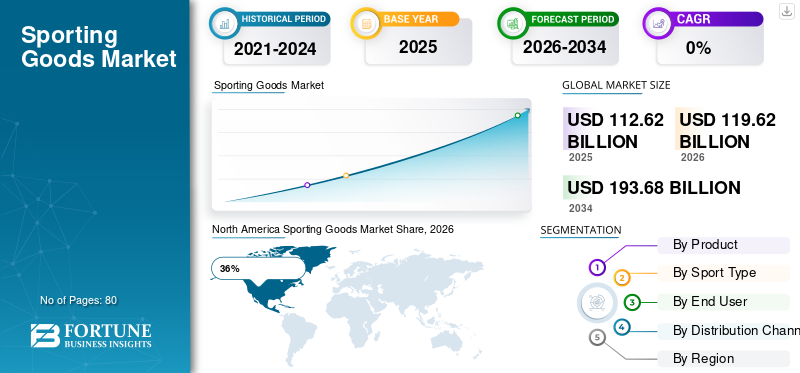
Download Free sample to learn more about this report.
Key Takeaways
Market Size & Growth
- Global market size 2025: USD 112.62 billion
- Global market size 2034: USD 193.67 billion
- CAGR (2025–2034): 6.21%
Market Share – Regionals
- North America: 36%
- Europe: 29%
- Asia-Pacific: 26%
- Rest of World: 9%
Country-Level Shares
- Germany: 25% of Europe’s market
- United Kingdom: 21% of Europe’s market
- Japan: 17% of Asia-Pacific market
- China: 44% of Asia-Pacific market
Sporting Goods Market Latest Trends
The sporting goods market Trends reveal increasing adoption of smart sports equipment, connected fitness devices, and sustainable athletic products. Consumers are actively seeking technologically advanced sporting goods integrated with fitness tracking, biometric monitoring, and AI-driven training features. The sporting goods market Analysis indicates growing demand for lightweight sporting equipment, eco-friendly sports accessories, and multifunctional training gear among professional athletes and fitness enthusiasts. Manufacturers are introducing recyclable materials, moisture-resistant fabrics, and advanced shock-absorption technologies to improve performance and durability. Personalized sporting goods and custom-designed athletic equipment are also gaining popularity among younger consumers and competitive sports participants.
Another major trend influencing the Sporting Goods Industry Report is the rapid growth of online sports retailing and direct-to-consumer distribution models. Digital platforms are enabling brands to offer virtual product customization, AI-powered fitness recommendations, and immersive online shopping experiences. The sporting goods market Forecast also highlights rising popularity of outdoor adventure sports, home fitness solutions, and hybrid training programs following increased awareness regarding physical wellness and active lifestyles. Demand for compact exercise equipment, smart training accessories, and portable sports products continues to strengthen across urban populations globally.
Download Free sample to learn more about this report.
Sporting Goods Market Dynamics
DRIVER
Rising participation in fitness and recreational sports activities
The increasing global focus on physical fitness and active lifestyles is a primary driver supporting sporting goods market Growth. Consumers across all age groups are participating more frequently in gym training, outdoor sports, cycling, running, and recreational fitness programs to maintain physical and mental wellness. This trend is creating strong demand for sports equipment, protective gear, and fitness accessories designed for both professional athletes and casual users. The sporting goods market Report highlights rising sales of home fitness products, exercise tools, yoga accessories, and sports training equipment due to growing awareness regarding obesity prevention and healthy living.
Schools, sports academies, and fitness clubs are also expanding investments in athletic infrastructure and sports training programs, supporting demand for quality sporting goods. The sporting goods market Insights indicate increasing consumer preference for technologically enhanced products such as smart wearables, connected exercise machines, and AI-assisted training equipment. Social media influence, celebrity athlete endorsements, and international sporting events continue to encourage sports participation and sports product consumption globally. Manufacturers are further benefiting from growing interest in outdoor recreational activities and adventure tourism.
RESTRAINT
High pricing of premium sporting equipment
The high cost associated with premium sporting goods remains a major restraint affecting market expansion. Advanced sports equipment, branded athletic accessories, and technologically integrated fitness products often involve expensive materials, research investments, and manufacturing processes. The Sporting Goods Industry Analysis indicates that high retail prices can limit product accessibility for budget-conscious consumers, particularly in developing economies. Professional-grade sporting equipment and performance-enhancing accessories are often considered premium purchases, restricting widespread adoption among casual users.
Fluctuating raw material costs and increasing transportation expenses also impact pricing structures across the sporting goods supply chain. The sporting goods market Outlook highlights that counterfeit products and low-cost alternatives may further challenge premium brand growth in price-sensitive markets. Seasonal demand fluctuations and rapidly changing consumer preferences can additionally create inventory management difficulties for retailers and manufacturers. Companies must therefore balance innovation, product quality, and affordability to sustain long-term market competitiveness.
OPPORTUNITY
Growth in smart sports equipment and digital fitness integration
The integration of smart technology into sports products is creating substantial opportunities within the sporting goods market. Consumers are increasingly seeking digitally connected sporting equipment capable of tracking fitness performance, movement patterns, and training progress. Smart treadmills, AI-enabled training systems, wearable fitness devices, and app-connected sports accessories are becoming important growth categories in the sporting goods market Forecast. Manufacturers are investing heavily in sensor-based technologies, cloud connectivity, and personalized fitness analytics to improve user engagement.
The expansion of home fitness culture and virtual training platforms is also creating new opportunities for compact and multifunctional sports products. The sporting goods market Opportunities further include increasing demand for sustainable athletic products made from recyclable materials and eco-friendly manufacturing processes. Outdoor adventure sports and wellness tourism are additionally encouraging demand for durable sporting gear and performance-focused accessories. Emerging markets with growing middle-class populations and rising health awareness are expected to provide strong future growth potential for sporting goods manufacturers and retailers.
CHALLENGE
Supply chain disruptions and counterfeit product competition
The sporting goods market faces significant challenges related to supply chain complexity and counterfeit sports products. Manufacturers rely heavily on raw materials such as synthetic fabrics, rubber compounds, carbon composites, and specialized metals to produce high-quality sporting equipment. Global supply chain disruptions, transportation delays, and rising production costs can affect inventory availability and operational efficiency. The sporting goods market Analysis highlights increasing pressure on manufacturers to maintain timely product delivery while managing cost fluctuations.
Counterfeit sporting goods remain another major challenge impacting brand reputation and revenue generation. Low-cost imitation products often compete directly with established brands in developing markets, affecting consumer trust and product quality standards. The sporting goods market Research Report also indicates challenges related to rapidly evolving fashion trends and changing sports participation patterns. Manufacturers must continuously invest in innovation, digital retail strategies, and product authentication technologies to remain competitive in the global sporting goods industry.
Sporting Goods Market Segmentation
By Type
Sports equipment dominates the sporting goods market with approximately 46% market share due to strong demand for fitness machines, outdoor sports tools, and professional training products. Consumers are increasingly purchasing exercise equipment, bicycles, rackets, balls, and gym accessories for both personal fitness and organized sports participation. The sporting goods market Report highlights growing demand for multifunctional home fitness equipment and technologically advanced training systems among urban consumers.
Manufacturers are introducing lightweight materials, digital connectivity features, and ergonomic designs to improve user experience and performance. Smart fitness equipment integrated with AI-driven training applications and biometric tracking technologies is gaining significant popularity. The sporting goods market Analysis indicates rising adoption of portable and space-efficient exercise equipment due to increasing home workout culture. Schools, sports clubs, and commercial fitness centers continue to invest heavily in durable sports equipment, supporting long-term segment expansion globally.
Protective gears account for nearly 24% of the sporting goods market Share because of increasing awareness regarding sports safety and injury prevention. Helmets, knee guards, gloves, mouth guards, and body protection equipment are widely used across contact sports, cycling, adventure sports, and professional athletic training. The sporting goods market Research Report highlights rising demand for lightweight and impact-resistant protective products designed for improved comfort and safety.
Manufacturers are focusing on advanced shock absorption technologies, breathable materials, and customized fitting systems to enhance product performance. Growing participation in outdoor sports and high-intensity fitness activities continues to support segment demand. The sporting goods market Outlook also indicates increasing regulatory emphasis on athlete safety standards in professional sports leagues and training academies. Demand for smart protective gear integrated with performance monitoring sensors is further contributing to innovation within this segment.
Sports bags represent approximately 18% of the sporting goods market Size due to increasing demand for convenient and multifunctional storage solutions among athletes and fitness enthusiasts. Consumers are actively purchasing durable sports backpacks, gym bags, travel duffels, and waterproof sports luggage for training, travel, and outdoor adventure activities. The Sporting Goods Industry Report highlights growing preference for lightweight, ergonomic, and fashion-oriented sports bag designs.
Manufacturers are introducing anti-theft features, moisture-resistant compartments, and sustainable fabric materials to improve product differentiation. The sporting goods market Trends indicate rising demand for compact sports bags equipped with smart charging ports and organizational compartments for fitness accessories and electronic devices. Growth in sports tourism, gym memberships, and recreational travel continues to support segment expansion across both developed and emerging economies.
Accessories hold approximately 12% of the sporting goods market Share due to increasing demand for performance-enhancing and lifestyle-oriented sports products. Water bottles, fitness bands, wrist supports, caps, resistance bands, and training accessories are gaining popularity among consumers focused on active lifestyles and workout convenience. The sporting goods market Forecast highlights strong growth in wearable fitness accessories and digital sports gadgets integrated with health monitoring technologies.
Manufacturers are investing in sustainable materials, stylish product designs, and multifunctional capabilities to strengthen consumer engagement. The sporting goods market Insights indicate growing adoption of personalized accessories and branded merchandise among younger consumers and sports enthusiasts. Retailers are also expanding product offerings in the accessories segment due to higher purchase frequency and strong cross-selling opportunities with major sports equipment categories.
To know how our report can help streamline your business, Speak to Analyst
By Application
Outdoor sports account for approximately 41% of the sporting goods market Share due to rising participation in activities such as football, cricket, cycling, hiking, and running. Consumers are increasingly investing in durable sports equipment, protective gear, and performance apparel accessories designed for outdoor environments. The sporting goods market Report highlights growing demand for weather-resistant equipment and lightweight adventure sports gear among recreational athletes and outdoor enthusiasts.
Manufacturers are focusing on durable materials, portability, and advanced performance technologies to meet evolving consumer expectations. Outdoor sporting events, fitness campaigns, and adventure tourism trends continue to support market growth within this application segment. The sporting goods market Analysis also indicates increasing adoption of smart outdoor sports accessories equipped with GPS tracking and biometric monitoring capabilities.
Indoor sports represent nearly 28% of the sporting goods market Size due to rising popularity of gym training, yoga, badminton, table tennis, and home-based fitness programs. Consumers are purchasing compact exercise equipment, training mats, resistance tools, and indoor sports accessories to support convenient workout routines. The sporting goods market Research Report highlights strong demand for multifunctional home fitness products among urban populations and working professionals.
Manufacturers are introducing foldable fitness equipment, AI-enabled workout devices, and digitally connected training accessories to improve user experience. The sporting goods market Outlook also indicates growing investment in commercial fitness centers and indoor sports facilities worldwide. Rising awareness regarding physical wellness and preventive healthcare continues to strengthen the indoor sports application segment.
Adventure sports contribute approximately 19% of the sporting goods market Share due to increasing consumer interest in trekking, mountain climbing, surfing, skiing, and water sports activities. Consumers participating in adventure tourism are actively purchasing specialized equipment, protective gear, and weather-resistant accessories designed for extreme environments. The Sporting Goods Industry Analysis highlights growing demand for lightweight adventure equipment and advanced safety products.
Manufacturers are emphasizing product durability, portability, and high-performance materials to support demanding outdoor conditions. Adventure sports tourism and social media influence are encouraging greater participation among younger demographics. The sporting goods market Forecast indicates strong opportunities for premium adventure sports products and technologically enhanced safety gear in both developed and emerging markets.
Other sports applications account for approximately 12% of the sporting goods market Share and include niche sports categories such as martial arts, skating, golf, and esports fitness accessories. Consumers are increasingly investing in specialized training products and customized equipment for professional and recreational use. The sporting goods market Insights highlight growing popularity of niche fitness programs and recreational sporting activities among urban consumers.
Manufacturers are introducing personalized sports products, lightweight materials, and technologically advanced accessories tailored to specific athletic requirements. Rising sports participation at school and community levels continues to support demand within this segment. The expansion of recreational wellness programs and sports academies is further creating opportunities for specialized sporting goods manufacturers globally.
Sporting Goods Market Regional Outlook
North America
North America Sporting Goods Market Share, 2026 (%)
To get more information on the regional analysis of this market, Download Free sample
North America accounts for approximately 36% of the sporting goods market Share due to high consumer spending on fitness products, sports participation, and outdoor recreational activities. Consumers across the region are actively purchasing premium sports equipment, connected fitness devices, and durable protective gear to support active lifestyles. The sporting goods market Report highlights strong demand for home fitness systems, athletic accessories, and outdoor adventure products throughout the United States and Canada.
The region benefits from advanced retail infrastructure, high sports participation rates, and strong brand presence among leading sporting goods manufacturers. E-commerce growth and increasing interest in wellness-focused lifestyles continue to strengthen market demand. Manufacturers are investing in product innovation, sustainability initiatives, and digital retail experiences to maintain competitiveness within the North American sporting goods industry.
Europe
Europe holds nearly 29% of the sporting goods market Size due to rising participation in fitness activities, cycling, football, and outdoor recreation programs. Consumers across Europe are increasingly adopting wellness-oriented lifestyles and purchasing premium athletic products designed for performance and durability. The sporting goods market Analysis highlights strong demand for eco-friendly sports equipment and technologically enhanced fitness accessories.
Manufacturers are emphasizing sustainable materials, recyclable packaging, and lightweight product designs to align with environmental regulations and consumer preferences. Sporting events, community fitness programs, and recreational sports infrastructure continue to support market expansion across Europe. Growth in online sports retailing and personalized athletic products is also strengthening regional market development.
Germany Sporting Goods Market
Germany represents approximately 25% of the European sporting goods market Share due to strong participation in football, cycling, fitness training, and outdoor recreational sports. German consumers actively purchase premium sports equipment, performance-focused accessories, and sustainable athletic products to support active lifestyles. The sporting goods market Research Report highlights increasing demand for technologically advanced exercise equipment and eco-friendly sports gear throughout Germany.
Manufacturers are investing in smart sports technologies, durable product materials, and innovative fitness solutions tailored to changing consumer preferences. The sporting goods market Outlook indicates strong growth in cycling accessories, home fitness systems, and adventure sports equipment across the country. Expansion of digital sports retail platforms and wellness-oriented consumer behavior continues to support Germany’s sporting goods market growth.
United Kingdom Sporting Goods Market
The United Kingdom sporting goods market accounts for approximately 21% of the regional market share due to rising fitness awareness and strong participation in football, cricket, and gym training activities. Consumers are increasingly purchasing premium athletic accessories, home workout products, and multifunctional sports equipment to maintain wellness-oriented lifestyles. The Sporting Goods Industry Analysis highlights growing popularity of digitally connected fitness products and personalized sports accessories in the UK market.
Retailers and manufacturers are introducing innovative product portfolios through e-commerce platforms and specialty sports stores. Consumers are also showing strong preference for sustainable sportswear accessories and eco-friendly sporting goods. The sporting goods market Insights indicate increasing demand for outdoor recreation products and technologically enhanced fitness equipment among younger demographics and fitness enthusiasts throughout the United Kingdom.
Asia-Pacific
Asia-Pacific captures approximately 26% of the sporting goods market Share due to rising urbanization, increasing disposable incomes, and expanding participation in fitness and recreational sports activities. Countries such as China, Japan, India, and South Korea are witnessing strong demand for sports equipment, protective gear, and fitness accessories. The sporting goods market Forecast highlights growing consumer interest in home fitness products, outdoor sports gear, and smart athletic devices throughout the region.
Manufacturers are expanding localized production capabilities and introducing affordable sporting goods tailored to regional consumer preferences. Growth in sports infrastructure, wellness campaigns, and digital retail channels is further supporting regional market expansion. Rising popularity of organized sports and adventure tourism continues to create opportunities within the Asia-Pacific sporting goods industry.
Japan Sporting Goods Market
Japan accounts for approximately 17% of the Asia-Pacific sporting goods market Share due to strong consumer focus on fitness, wellness, and technologically advanced sports products. Japanese consumers are increasingly purchasing compact exercise equipment, smart fitness accessories, and premium outdoor sports gear to maintain active lifestyles. The sporting goods market Analysis highlights rising demand for wearable sports technology and multifunctional home workout systems throughout Japan.
Manufacturers are emphasizing innovation, lightweight materials, and ergonomic designs to strengthen product competitiveness. Aging populations and increasing awareness regarding preventive healthcare are also supporting demand for fitness-oriented sporting goods. The sporting goods market Research Report indicates growing popularity of cycling products, indoor exercise equipment, and digital training accessories in Japan’s sports retail industry.
China Sporting Goods Market
China represents approximately 44% of the Asia-Pacific sporting goods market Size due to rising health awareness, rapid urbanization, and expanding middle-class spending on fitness products and sports equipment. Chinese consumers are actively investing in gym accessories, outdoor sports gear, and home fitness systems to support wellness-oriented lifestyles. The sporting goods market Trends highlight strong growth in online sports retailing and digitally connected fitness products throughout China.
Domestic and international manufacturers are expanding production facilities and launching affordable sporting goods tailored to local consumer preferences. Government initiatives encouraging sports participation and physical fitness are supporting long-term market expansion. The sporting goods market Outlook also indicates increasing popularity of adventure sports equipment and smart exercise products among younger demographics in China.
Rest of World
The Rest of World region accounts for approximately 9% of the sporting goods market Share due to rising sports participation and increasing awareness regarding active lifestyles across Latin America, the Middle East, and Africa. Consumers are gradually adopting fitness routines, outdoor sports activities, and recreational training programs that support demand for sports equipment and athletic accessories. The Sporting Goods Industry Report highlights increasing interest in affordable sporting goods and wellness-oriented fitness products throughout emerging economies.
Retail modernization, digital commerce growth, and sports infrastructure investments are improving accessibility to sporting products across developing regions. Manufacturers are introducing cost-effective and durable sports equipment tailored to regional preferences. Rising youth participation in sports and increasing popularity of community fitness programs continue to create new growth opportunities within the Rest of World sporting goods market.
List of Top Sporting Goods Companies
- Nike
- Adidas
- Puma
- Under Armour
- Decathlon
Top Two Companies by Market Share
- Nike – 19% market share
- Adidas – 13% market share
Investment Analysis and Opportunities
The sporting goods market is attracting substantial investment due to increasing global participation in fitness activities, sports training, and outdoor recreation programs. Manufacturers are investing heavily in smart fitness technologies, sustainable product materials, and digitally connected sports equipment to strengthen market competitiveness. The sporting goods market Research Report highlights growing investment in wearable fitness devices, AI-driven training systems, and eco-friendly sporting products.
Opportunities are also expanding in home fitness equipment, outdoor adventure gear, and direct-to-consumer digital retail platforms. Sporting brands are forming strategic partnerships with fitness influencers, sports academies, and e-commerce companies to strengthen market penetration. The sporting goods market Opportunities continue to grow through increasing demand for personalized athletic products, connected exercise systems, and premium protective gear across global sports industries.
New Product Development
Innovation remains a major growth strategy in the sporting goods market as manufacturers introduce advanced performance-focused athletic products. Companies are launching smart exercise equipment, lightweight sports accessories, and AI-enabled training systems designed to improve athletic performance and user convenience. The sporting goods market Trends indicate increasing focus on sustainable product materials and ergonomic designs.
Manufacturers are also developing wearable sports technology integrated with biometric monitoring and cloud-based fitness analytics. Compact home fitness systems, multifunctional sports bags, and advanced protective gear are gaining strong consumer traction. The sporting goods market Analysis highlights increasing investment in recyclable materials, moisture-resistant fabrics, and digitally connected sporting products tailored to evolving consumer preferences and active lifestyles.
Five Recent Developments (2023-2025)
- Nike expanded its sustainable sports footwear and smart fitness product portfolio in 2024.
- Adidas introduced advanced recyclable sportswear materials and connected training accessories in 2023.
- Puma strengthened investments in eco-friendly athletic footwear manufacturing during 2025.
- Under Armour launched AI-integrated fitness apparel and connected workout accessories in 2024.
- Decathlon expanded affordable home fitness equipment and adventure sports product lines in 2025.
Report Coverage of The Sporting Goods Market
The sporting goods market Report provides comprehensive analysis of market trends, product innovation, consumer purchasing behavior, and competitive dynamics across global sports industries. The report covers major product categories including sports equipment, protective gear, sports bags, and athletic accessories. Detailed segmentation analysis evaluates applications such as outdoor sports, indoor sports, adventure sports, and niche sporting activities. The sporting goods market Research Report also examines technological advancements, sustainability initiatives, and evolving retail strategies influencing market growth.
Request for Customization to gain extensive market insights.
Regional analysis within the report covers North America, Europe, Asia-Pacific, and Rest of World markets, highlighting sports participation trends, digital commerce expansion, and investment activities. Competitive profiling evaluates leading manufacturers based on product portfolios, innovation strategies, and market positioning. The Sporting Goods Industry Analysis further examines supply chain trends, smart fitness integration, consumer lifestyle changes, and emerging opportunities shaping the future outlook of the global sporting goods market.



- 2021-2034
- 2025
- 2021-2024
- 80
-
(Offer valid till 15th Jul 2026)
Get 30-60 hrs Free Customization
Expand Regional and Country Coverage, Segments Analysis, Company Profiles, Competitive Benchmarking, and End-user Insights.



















-
US +1 833 909 2966 ( Toll Free )
-
Get In Touch With Us