 Download Free Sample



Get a Quote
Receive a tailored pricing based on your needs.
- Choose license type
- Multiple user options
- Custom scope & coverage
- Fast turnaround
"Designing Growth Strategies is in our DNA"
 Listen to Audio Version
The U.S. intrathecal drugs market size was USD 1.04 billion in 2024. The market is expected to grow from USD 1.07 billion in 2025 to USD 1.38 billion by 2032, exhibiting a CAGR of 3.8% during the forecast period.
Intrathecal drugs are medications administered directly into the intrathecal space of the spinal cord, where cerebrospinal fluid flows. This route elimates the blood-brain barrier and thus allows the drug to reach more effectively toward the central nervous system. Intrathecal drugs are used for pain management, spasticity treatment, anesthesia, and chemoterapy. The rising prevalence of chronic pain diseases and muscle spasticity in the U.S. boosts the growth of the market. Furthermore, the increasing prevalence of pain associated with chronic diseases leads to the increasing prescription of intrathecal drugs by healthcare professionals. Some of the prominent companies in the U.S. intrathecal drugs market are Hikma Pharmaceuticals PLC, Piramal Critical Care, Baxter, and Novartis AG.
Additionally, the doses required for intrathecal administration are much lower than the intravenous, intramuscular, and oral routes to achieve the desired therapeutic effect in the CNS. These drugs offer targeted site delivery with rapid onset of action. Such benefits associated with the intrathecal administration of drugs are expected to propel the growth of the market.
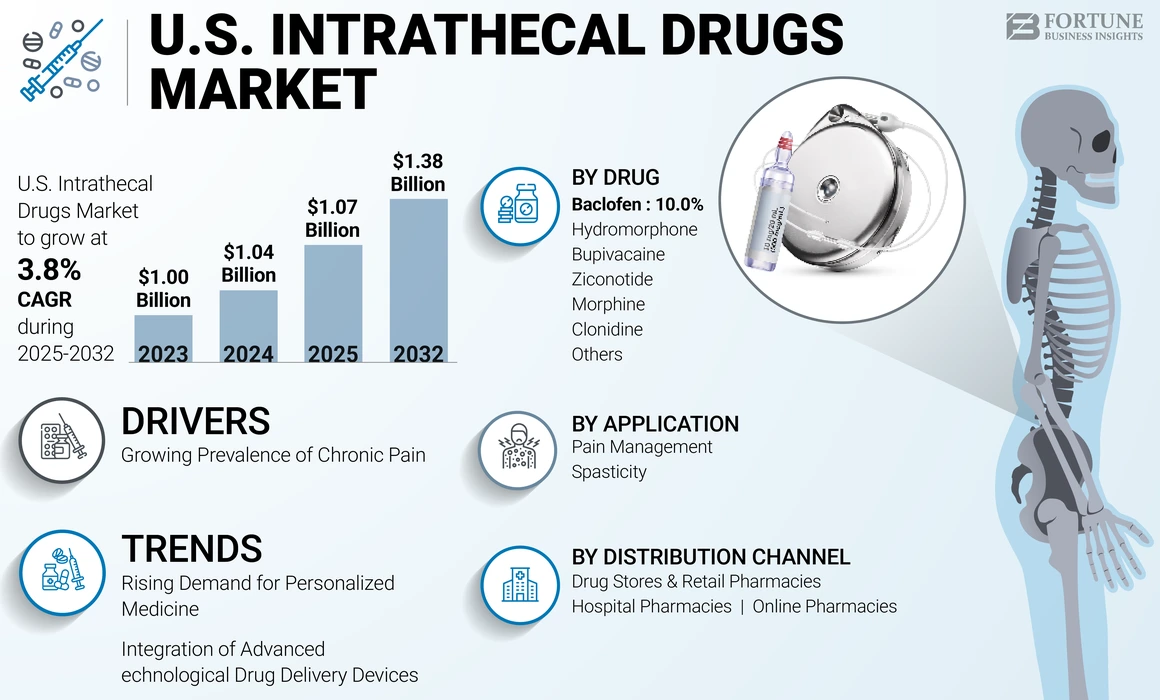
During the COVID-19 pandemic, the market witnessed a slower growth as there were a limited number of patients receiving intrathecal drugs. This was particularly due to the reduction in the number of accidents and trauma cases, and also due to the decline in the number of surgical procedures in the U.S. However, the market witnessed a resurgence after the pandemic, and is expected to grow steadily during the forecast period from 2025-2032.
Growing Prevalence of Chronic Pain to Boost Market Growth
The primary factor driving the expansion of the U.S. market is the rising prevalence of chronic pain-related conditions. An aging population and the increasing incidence of chronic diseases result in higher rates of chronic pain conditions and subsequently drive the increased adoption of intrathecal drugs.
Side Effects & Complications Associated with These Drugs to Hamper Market Growth
Despite the advantages associated with intrathecal drug delivery, some side effects hampers the growth of the market. These include cerebrospinal drug leakage, medical device site hematoma, infection, vomiting, weight gain, urinary retention, sedation, and others. Additionally, the high risk of overdose can result in several medical complications.
High Treatment Cost and Limited Availability of Treatment Centers to Hinder Market Growth
In recent years, the rising prevalence of chronic diseases has increased the demand for medications, including intathecal therapies. However, the market faces challenges, such as adverse drug reactions, the high cost of drugs and devices, and reduced adoption.
Additionally, the limited presence of specialized centers to offer intrathecal drug therapy is another factor that impedes the adoption of the therapy.
Surge in R&D Activities to Present Significant Growth Opportunities
With the increasing burden of chronic pain and muscle spasticity in the U.S., the demand for intrathecal drugs is expected to increase steadily in the coming years. This is growth supported by the presence of advanced healthcare facilities and infrastructure for the management of neuropathic pain and chronic pain conditions. The presence of active regulatory and reimbursement policies is expected to propel the adoption of the therapy during the forecast period.
Furthermore, the presence of key market players with strong investments in research and development (R&D) is critical for advancing drug formulations and delivery devices tailored to pain management. The key companies' R&D prioritizes the development of products for patient-specific needs and alternative therapeutic modalities for pain management and spasticity management, propelling the growth of the market in the country.
Regulatory Hurdles and High Costs Pose Challenges to Market Growth
The U.S. intrathecal drug market faces several challenges, including significant regulatory hurdles, such as the lengthy FDA approval process for new formulations and delivery systems, which delays clinical trials and market entry. Safety concerns, particularly the potential for misuse or overdose of potent drugs such as opioids, further hinder market growth. Additionally, high costs and economic barriers limit patient access, especially among low-income groups, due to inadequate insurance coverage. Furthermore, the shortage of trained professionals capable of administering and monitoring these therapies, along with limited access to specialized centers, poses a challenge for market growth.
Rising Demand for Personalized Medicine Is a Prominent Trend
Precision medicine tailors medical treatment and interventions to individual characteristics such as genetic makeup, lifestyle, and environment. This approach enhances the effectiveness of intrathecal therapies, especially in complex conditions such as neurological disorders, chronic pain, and cancer. Additionally, intrathecal therapies are used for treating critical conditions such as spinal cord injuries and CNS infections, where personalized solutions make the treatment more effective.
Furthermore, increasing research activities for incorporating personalized approaches for pain management is expected to propel market growth.
Integration of Advanced Technological Drug Delivery Devices to Bolster Market’s Growth
The increasing demand for drug delivery systems such as smart pumps and wearable delivery systems is streamlining the administration process of intrathecal drugs. These technologies helped to improve patient outcomes by providing precise drug dosages, real-time monitoring, and better adherence to treatment protocols, making them a prominent trend in the U.S. intrathecal drugs market.
Additionally, increasing product launches by key players for more convenient drug delivery is expected to boost market growth.
Integration of Telemedicine and the Incorporation of Regenerative Medicine through Intrathecal Therapy
The U.S. intrathecal drug market trend is witnessing a significant transformation with the emergence of stem cell therapy as a groundbreaking treatment option for neurological and spinal disorders. An innovative approach within this market involves the intrathecal application of stem cells, which entails direct injection into the cerebrospinal fluid (CSF). This method enables the stem cells to circulate through the CSF, effectively reaching the brain and spinal cord, positioning it as a promising treatment for various central nervous system conditions.
Additionally, the market is witnessing trends such as an increasing shift toward outpatient settings for intrathecal drug delivery. This transition enhances patient convenience and accessibility, allowing for more efficient management of chronic pain and other conditions. The integration of telemedicine plays a crucial role in remotely monitoring intrathecal drug therapy, enabling healthcare providers to manage treatments and adjust dosages without necessitating frequent in-person visits. Finally, developing regulatory trends, including new FDA guidelines and approvals, are facilitating the adoption of innovative intrathecal drug delivery systems and therapies.
Download Free sample to learn more about this report.
High tariffs on imported intrathecal drugs can disrupt supply chains and increase costs. However, robust patent laws are crucial for fostering innovation despite the challenges posed by generic drugs and biosimilars. Additionally, global trade policies and international agreements significantly influence the U.S. healthcare and pharmaceutical industries.
Pharmaceutical and biotech companies are increasingly focusingly on the development of biologic gene therapies to manage chronic conditions treated with intrathecal drugs. Additionally, studies are going on to launch combination drugs for intrathecal administration. The integration of biologics and nanotechnology in drug formulation has the potential to enhance drug solubility and bioavailability, potentially reducing side effects and improving therapeutic outcomes. Furthermore, fostering collaboration between pharmaceutical companies, academic institutions, and healthcare providers can facilitate the exchange of knowledge, leading to the development of advanced therapies.
Increasing Demand for Morphine for Pain Management Boosted Morphine Segment Growth
Based on drug, the market is divided into morphine, baclofen, ziconotide, bupivacaine, hydromorphone, clonidine, and others.
The morphine segment dominated the U.S. market due to the proven efficacy of morphine in managing chronic pain, especially cancer-related and post-surgical pains. Morphine has been the drug of choice for intrathecal drug delivery systems.
Bupivacaine held the second-largest U.S. intrathecal drug market share. It is a local anesthetic agent used for managing malignant and nonmalignant spine pain. Increasing demand for bupivacaine for lower abdomen procedures and as a pain relief agent during labor and delivery is expected to propel the growth of the segment.
Baclofen, ziconotide, hydromorphone, clonidine, and others are expected to grow considerably during the forecast period. The growth of the segment is augmented by the increasing prevalence of chronic diseases such as spasticity and pain, leading to rising demand for intrathecal delivery. Such factors are expected to further promote the growth of these segments.
To know how our report can help streamline your business, Speak to Analyst
Pain Management Segment Led due to Rising Demand for Intrathecal Drugs
Based on application, the market is bifurcated into pain management and spasticity.
The pain management segment held the dominant U.S. intrathecal drugs market share in 2024. The dominant share of the segment is due to the rising prevalence of chronic pain-related diseases in the country. This has resulted in higher demand for intrathecal drugs, which offer faster drug delivery and immediate pain relief.
The spasticity segment accounted for a substantial share in 2024 owing to the high prevalence of spasticity in the country and thus increasing the demand for drug therapy.
Such a rising number of cases propel the adoption of the drug and the growth of the segment in the market.
Technological Advancements in the Hospiatl Pharmacy Management to Propel the Segment’s Growth in the Market
In terms of distribution channel, the market is segmented into hospital pharmacies, drug stores & retail pharmacies, and online pharmacies.
The hospital pharmacies accounted for the largest share of the U.S. intrathecal drugs market in 2024. The dominance of the segment is attributed to the greater adoption of these drugs in hospital settings for chronic diseases such as stroke, cancer, and brain injury in hospitals. The prevelance of these conditions boost the adoption of intrathecal drugs in hospitals, propelling the growth of the segment in the market. Additionally, the rising adoption of pharmacy automation solutions for medication management will propel the growth of the hospital pharmacies segment in the U.S.
For instance, in December 2024, Swisslog Healthcare, a robotic medication management solution, partnered with BD. This collaboration aimed to deliver hospital pharmacies an innovative end-to-end medication management solution by integrating robotics with BD's inventory management and workflow software. Such advancements in the sector aimed to boost the segment's growth.
The drug stores & retail pharmacies segment accounted for a prominent share of the U.S. market. The growth of the segment is due to the wide availability of product at these channels. However, the presence of a large number of pharmacies and drug stores in the country propels the growth of the segment in the market.
The online pharmacies segment is projected to expand during the forecast period. This growth can be attributed to the wide availability of prescription medications through these channels, along with enhanced support services and convenience for patients. Additionally, the increasing adoption of technology and e-commerce platforms in the U.S. is contributing to the segment's growth.
The U.S. intrathecal drug market is poised for significant growth over the next 5 to 10 years owing to the rising prevalence of chronic pain disorders, cancer, and neurological conditions requiring advanced pain management solutions. Additionally, the integration of precision medicine, genetic profiling, and advanced drug delivery systems is expected to propel market growth during the forecast period. Furthermore, increasing focus of key players in the market to advance product offerings through strategic initiatives and funding is likely to propel market growth.
Strategic Activities and Robust Product Portfolio of Key Market Players to Maintain their Market Position
In terms of competitive structure, the market has is fragmented with Hikma Pharmaceutical PLC, Piramal Critical Care, and Amneal Pharmaceuticals LLC as some of the prominent players in the U.S. intrathecal drugs market. With robust product portfolio and expanded research and development activities aimed at launching new products are expected to maintain their market positions.
Other important players include Baxter, Novartis AG, TerSera Therapeutics LLC, Mylan N.V., Pfizer Inc., Inc., and others. The rising focus of the companies on the introduction of innovative products with specific strategic initiatives and gaining approvals are anticipated to boost their presence in the U.S. market during the forecast period.
The U.S. intrathecal drugs market report focuses on an industry overview and market dynamics, such as the drivers, restraints, opportunities, and trends. In addition to this, the market provides information related to the prevalence of key diseases, overview and pipeline analysis of the new drug developed by market players. Furthermore, the U.S. market analysis also focuses on key industry developments and new product launches in the market by key companies. In addition, the impact of COVID-19 pandemic, detailed company’s profile, and the industry overview are covered in the report.
Request for Customization to gain extensive market insights.
|
ATTRIBUTE |
DETAILS |
|
Study Period |
2019-2032 |
|
Base Year |
2024 |
|
Forecast Period |
2025-2032 |
|
Historical Period |
2019-2023 |
|
Unit |
Value (USD Billion) |
|
Growth Rate |
CAGR of 3.8% from 2025-2032 |
|
Segmentation |
By Drug, Application, and Distribution Channel |
|
ByDrug |
· Morphine · Baclofen · Ziconotide · Bupivacaine · Hydromorphone · Clonidine · Others |
|
By Application |
· Pain Management · Spasticity |
|
By Distribution Channel |
· Hospital Pharmacies · Drug Stores & Retail Pharmacies · Online Pharmacies |
Fortune Business Insights says that the U.S. market stood at USD 1.04 billion in 2024 and is projected to reach USD 1.38 billion by 2032.
The market is expected to exhibit a CAGR of 3.8% during the forecast period.
The morphine segment led the market.
The contributing factors, such as the increasing prevalence of chronic diseases and technological advancements, are key factors driving market growth.
The rise in personalized medicine development for intrathecal administration is the key trend in the market.
Hikma Pharmaceutical PLC, Piramal Critical Care, and Amneal Pharmaceuticals LLC are the top players in the market.

Get 30-60 hrs Free Customization
Expand Regional and Country Coverage, Segments Analysis, Company Profiles, Competitive Benchmarking, and End-user Insights.













.webp)






Get In Touch With Us
US +1 833 909 2966 ( Toll Free )
Receive a tailored pricing based on your needs.
Discuss your questions with our industry experts.
Have questions? Get quick answers before you purchase.

