 Download Free Sample



Get a Quote
Receive a tailored pricing based on your needs.
- Choose license type
- Multiple user options
- Custom scope & coverage
- Fast turnaround
"Designing Growth Strategies is in our DNA"
 Listen to Audio Version
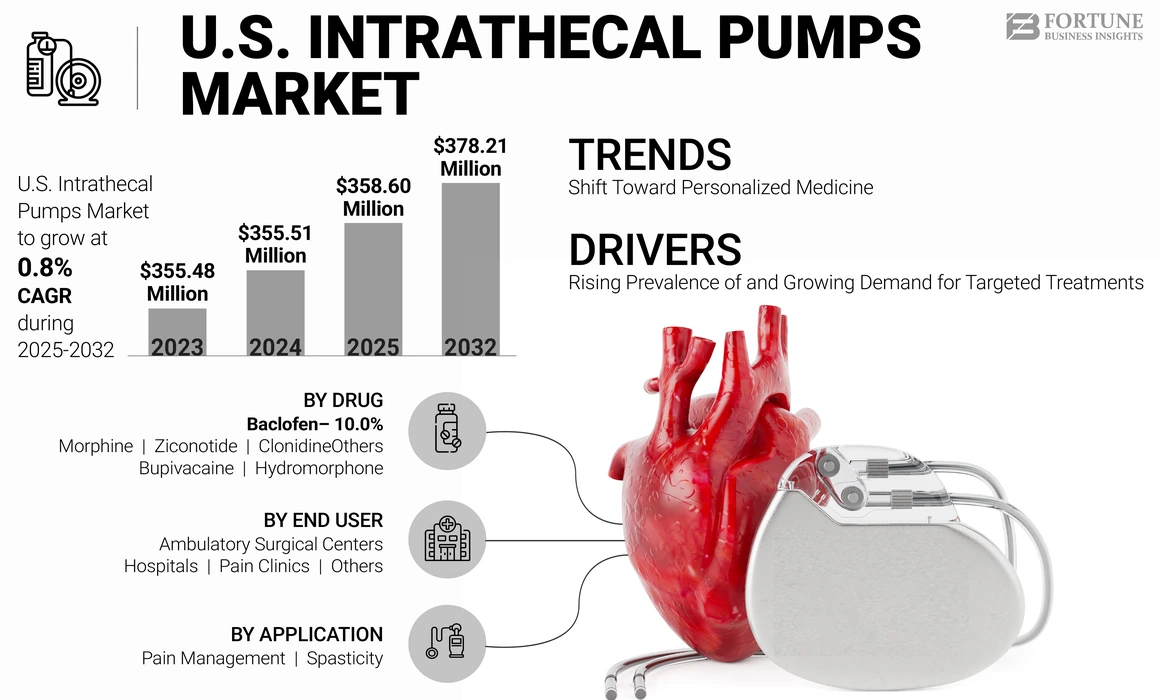
The U.S. intrathecal pumps market size was valued at USD 355.51 million in 2024 and is expected to grow from USD 358.60 million in 2025 to USD 378.21 million by 2032, exhibiting a CAGR of 0.8% during the forecast period.
Intrathecal pumps, also known as pain pumps, are surgically implanted devices that deliver medication directly to the cerebrospinal fluid surrounding the spinal cord. The pumps are programmed in such a way that they deliver small amounts of medication directly to the central nervous system. This is done by pulling medication from the reservoir and pumping it through the catheter into the spinal cord. Thus, the intrathecal pump is used for delivering medication directly to the spinal cord and nerves as this method is more effective than taking medicine by mouth or intravenously. These pumps are used along with various opioid pain medications, anesthetics for pain management, spasticity management, anesthesia, and chemotherapy. The dosage required for intrathecal administration is much lower than that for the intravenous, intramuscular, and oral routes. Thus, the rising prevalence of chronic diseases and benefits associated with the pumps are expected to propel the U.S. intrathecal pumps market growth.
Furthermore, the presence of strong market players, such as Medtronic, with its advanced product offerings in the intrathecal pumps market and robust strategic initiatives to launch advanced products will propel the market’s growth during the forecast period.
Additionally, the market is witnessing trends, such as an increasing shift of patients toward the outpatient settings for intrathecal drug delivery. This transition enhances the patient convenience and accessibility, allowing for more efficient chronic pain management and spasticity management. Furthermore, the integration of telemedicine plays a crucial role in remotely monitoring intrathecal drug therapy, enabling healthcare providers to manage treatments and adjust dosages without necessitating frequent in-person visits. Finally, emerging regulatory trends, including new FDA guidelines and approvals, facilitates the adoption of innovative intrathecal drug delivery systems and therapies.
During the COVID-19 pandemic, the market witnessed a negative impact in terms of its value. This negative impact was due to disruptions across the healthcare systems caused by the outbreak. Elective procedures, such as intrathecal pump implantation were delayed due to an increased focus on the management of COVID-19 cases. This scenario led to a significant drop in the demand for new devices, such as pumps.
Additionally, several research and development activities for intrathecal pumps were delayed as key resources were redirected to address the pandemic situation. However, the market gradually recovered as the elective procedures resumed, and the adoption of remote monitoring and telemedicine increased, leading to the growth of the market during the forecast period of 2025-2032.
Rising Prevalence of and Growing Demand for Targeted Treatments to Drive Market’s Growth
The growing prevalence of chronic pain diseases, such as back pain, cancer pain, and pain after a surgical procedure in the U.S. is expected to drive the demand for intrathecal pumps for the effective delivery of drugs.
The long-term management of chronic pain is mainly accomplished with oral analgesics. Still, due to the continuous administration of analgesics, the daily dose can escalate to the point of intolerable side effects or ineffective pain control. Conservative methods failed to demonstrate the proper effect of analgesia, leading to inadequate pain relief. Thus, intrathecal drug delivery systems are used for spine disorders, such as spondylosis and spondylolisthesis or non-spine-related pain disorders, such as rheumatoid arthritis, connective tissue disorders, chronic pancreatitis, and others. Thus, the rising aging population and inefficiency of current treatment methodologies are driving the growth of the U.S. pumps market.
High Cost of Intrathecal Pump Implantation & Side Effects Associated with Intrathecal Drugs to Hinder Market Growth
Despite the rising demand for intrathecal pumps, their high cost and the overall cost of intrathecal drugs administered through these pumps is comparatively higher than that of the other alternative treatment options.
Furthermore, side effects, such as cerebrospinal drug leakage, medical device site hematoma, infection, vomiting, weight gain, and urinary retention are the complications associated with overdose of these drugs. This can result in several medical complications that will also affect the market growth during the forecast period.
Increasing Adoption of Intrathecal Pumps for Cases Beyond Pain Management to Accelerate Market Growth
The usage of intrathecal drug delivery for new therapeutic areas, such as Parkinson's disease and multiple sclerosis is gaining attention for its ability to provide targeted and sustained release of medicines. Additionally, the increasing prevalence of these diseases and growing demand for targeted therapy options for effective motor symptom control is expected to boost the market's growth during the forecast period.
This significant growth of the patient pool creates a need for advanced therapies where oral medications are insufficient. Thus, such scenarios are expected to propel the market expansion in the U.S.
Limitations Associated With Devices May Restrict Market Growth
Despite the potential benefits of the intrathecal pump device, failure issues and barriers to its adoption among patients are significant challenges to the market’s growth. These pumps have a finite battery life that requires a surgical replacement every 5-7 years. Motor dysfunction, blockages, and catheter kinks are the failure issues associated with the pumps that compromise patient safety.
Furthermore, high initial costs, limited insurance coverage, and the fear of surgical interventions are some factors that challenge the market’s growth.
Shift Toward Personalized Medicine is a Prominent Market Trend
Intrathecal therapies treat critical conditions, such as spinal cord injuries and CNS infections; precision medicine tailors medical treatments and interventions to individual characteristics, such as genetic makeup, lifestyle, and environment. Thus, this approach enhances intrathecal therapies for complex neurological disorders, such as Parkinson’s, where personalized solutions make the treatment more effective. Thus, with rising demand for personalized medicine and gene therapy, intrathecal drug delivery plays a crucial role in targeted drug administration and improving patient outcomes.
Download Free sample to learn more about this report.
The U.S. intrathecal pumps market might be affected by high tariffs and regulations that impact the import of medical devices and components. The country’s healthcare policies, particularly those related to Medicare, Medicaid, and private insurance, play a crucial role in determining the adoption and reimbursement rates for intrathecal pumps. This directly impacts patients’ access to these devices. Such policies also affect trade and influence the market’s growth.
Advancements in precision drug delivery, biocompatibility, and smart connectivity drive the U.S. intrathecal pumps market growth. Future research and development efforts are focusing on user-friendly miniature devices with the integration of artificial intelligence.
Also, the increasing adoption of artificial intelligence in pumps to optimize drug delivery schedules and dosages for easy use and patient comfort is prompting medical device companies to develop advanced devices. Additionally, the rising demand for personalized medicines and real-time monitoring will boost the development of innovative devices. Increasing indications, such as non-opioid pain management and regenerative medicine will further enhance the market’s growth potential. These innovations may improve patient outcomes while addressing affordability and accessibility challenges.
Rising Prevalence of Chronic Pain Diseases and Product Launches to Propel Product Use in Pain Management
Based on application, the market is divided into spasticity and pain management.
The pain management segment held a significant U.S. intrathecal pumps market share in 2024. The rising prevalence of chronic pain diseases in the country and increasing cases of overdose and opioid dependence will propel the demand for intrathecal pumps for faster drug delivery and immediate pain relief. Additionally, the rising focus of key players on launching intrathecal drugs for pain management will boost the segment’s growth during the forecast period of 2025-2032.
The spasticity segment is expected to grow during the forecast period. The rising prevalence of stroke and spinal injuries leading to muscle spasticity is propelling the demand for targeted drug treatments and a sustained drug delivery for a longer time via pumps. Thus, such scenarios will promote the segment’s growth.
Demand for Morphine Increased to Manage Pain Effectively
Based on drug, the market is divided into morphine, baclofen, ziconotide, bupivacaine, hydromorphone, clonidine, and others.
The morphine segment held a significant U.S. intrathecal pumps market share in 2024. Utilization of this drug in the management of chronic pain, especially cancer and post-surgical pains, is a key market trend. Thus, morphine has been the drug of choice for use in the intrathecal drug delivery systems. Additionally, the focus of key players to launch new products with morphine will boost the segment’s growth.
The bupivacaine segment holds the second-largest share of the U.S. intrathecal pumps market. The increasing adoption of this drug as a pain relief agent during the lower abdomen procedures and labor & delivery is propelling the segment’s growth.
Ziconotide, baclofen, clonidine, hydromorphone, and other segments are expected to grow during the forecast period. Increasing prevalence of chronic diseases, such as spasticity and chronic pain is leading to a robust demand for these drugs, which will used in intrathecal delivery. Such scenarios will promote the segment’s growth.
To know how our report can help streamline your business, Speak to Analyst
Shift of Patients’ Preference to Hospitals to Boost Hospital Segment Growth
Based on end user, the market is segmented into hospitals, ambulatory surgical centers, pain clinics, and others.
The hospitals segment held a dominant share of the U.S. market in 2024. The rising number of patients suffering from chronic diseases, such as strokes, cancers, and brain injuries in hospitals and the presence of skilled professionals for installing the pumps with the required medical training and accuracy will boost the segment’s growth. Furthermore, the rising number of hospitals in the country will boost the segment’s growth in the market.
On the other hand, the ambulatory surgical centers segment held the second-largest market share. ASCs come with several benefits, such as the presence of an advanced healthcare infrastructure and highly trained and experienced medical professionals. Also, the procedures performed in an ASC usually do not require an overnight stay and can be performed safely in an outpatient setting. Additionally, the presence of many ambulatory surgery centers in the U.S. will boost the segment’s growth.
Additionally, many ambulatory surgery centers in the U.S. aim to boost the adoption of intrathecal pumps, thereby fueling the segment’s growth.
Furthermore, the pain clinics and others segments are expected to grow during the forecast period. A rising number of clinical studies to launch new drugs for pain management is expected to boost the segment’s growth.
The U.S. intrathecal pump market is poised to grow during the forecast timeframe. The rising prevalence of chronic pain disorders, cancers, and neurological conditions, combined with an increasing focus of key players on advancing their product offerings with strategic initiatives and funding, will propel the market’s growth in the future.
Furthermore, technological advancements are enhancing product efficacy through improved drug delivery systems and smart monitoring capabilities, making intrathecal pumps an attractive alternative to opioids for pain management. Increased focus on effective pain management strategies, coupled with strategic collaborations among key players, further propels the market expansion. Additionally, the growing awareness and acceptance of intrathecal therapy among healthcare professionals and patients are likely to increase its adoption. However, challenges, such as potential complications, ongoing management needs, and varying reimbursement policies remain critical considerations for the market's future. Overall, the outlook for the intrathecal pump market remains positive, promising improved patient care and quality of life.
Strategic Activities and Robust Product Portfolio by Key Players to Help Them Maintain their Market Position
The competitive landscape reflects a highly consolidated structure. Medtronic, Tricumed Medizintechnik GmbH, and Flowonix Medical Inc. are the major players operating in the U.S. intrathecal pumps market. Medtronic has a strong presence in the market due to its strategic activities and strong product portfolio.
The report focuses on an industry overview and market dynamics, such as drivers, restraints, opportunities, and trends. In addition, it provides information related to the prevalence of key diseases and an overview of the new devices by the market players. Furthermore, the U.S. market analysis also focuses on key industry developments and new product launches by key companies. In addition, the impact of COVID-19, as well as a detailed company profile and the industry overview during the pandemic, are covered in the report.
Request for Customization to gain extensive market insights.
|
ATTRIBUTE |
DETAILS |
|
Study Period |
2019-2032 |
|
Base Year |
2024 |
|
Estimated Year |
2025 |
|
Forecast Period |
2025-2032 |
|
Historical Period |
2019-2023 |
|
Unit |
Value (USD million) |
|
Growth Rate |
CAGR of 0.8% from 2025-2032 |
|
Segmentation |
By Application
|
|
By Drug
|
|
|
By End User
|
Fortune Business Insights says that the U.S. market value stood at USD 355.51 million in 2024 and is projected to reach USD 378.21 million by 2032.
The market is expected to exhibit a CAGR of 0.8% during the forecast period of 2025-2032.
By drug type, the morphine segment is projected to lead the market.
Factors, such as the increasing prevalence of chronic diseases and technological advancements in intrathecal pumps are expected to drive the market’s growth.
Rise in personalized medicine development for intrathecal administration is the key trend in the market.
Medtronic is one of the top players in the market.

Get 30-60 hrs Free Customization
Expand Regional and Country Coverage, Segments Analysis, Company Profiles, Competitive Benchmarking, and End-user Insights.













.webp)






Related Reports
Get In Touch With Us
US +1 833 909 2966 ( Toll Free )
Receive a tailored pricing based on your needs.
Discuss your questions with our industry experts.
Have questions? Get quick answers before you purchase.

