Vegan Chocolate Confectionery Market Size, Share & Industry Analysis, By Product (Molded Bars, Boxed, Chips & Bites, Truffles & Cups), By Type (Dark, Milk, White), By Distribution Channel (Offline, Online), and Regional Forecast, 2026-2034
 Download Free Sample
Vegan Chocolate Confectionery Market Overview
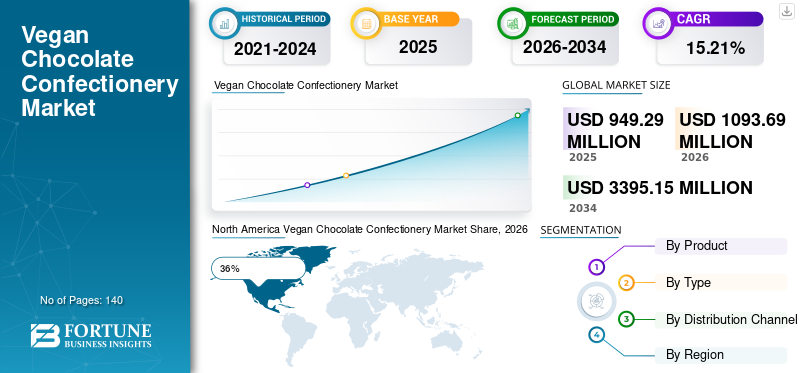
The global vegan chocolate confectionery market size was valued at USD 949.29 Million in 2025. The market is projected to grow from USD 1093.69 Million in 2026 to USD 3395.15 Million by 2034, exhibiting a CAGR of 15.21% during the forecast period.

The vegan chocolate confectionery market is witnessing rapid transformation due to increasing consumer preference for plant-based indulgence products, ethical sourcing practices, and dairy-free formulations. Manufacturers are focusing on premium ingredients such as oat milk, almond milk, coconut milk, and organic cocoa to enhance taste and texture while meeting evolving dietary trends. Vegan chocolate confectionery products are gaining traction across supermarkets, specialty stores, online retail platforms, and foodservice channels. The growing awareness regarding lactose intolerance, animal welfare, and sustainable food production is driving long-term market expansion. Vegan chocolate confectionery market analysis indicates rising innovation in sugar-free variants, protein-enriched formulations, and clean-label products globally.
The USA vegan chocolate confectionery market continues to experience strong consumer adoption due to increasing demand for healthier snacking products and premium vegan desserts. Major retailers are expanding shelf space for dairy-free chocolates, vegan truffles, and plant-based confectionery assortments. American consumers increasingly prefer ethically sourced cocoa and allergen-free confectionery products, creating new opportunities for domestic and international brands. Foodservice chains and boutique chocolate producers are introducing vegan seasonal offerings and limited-edition flavors to attract younger consumers. Vegan chocolate confectionery industry analysis in the United States highlights strong momentum in organic, non-GMO, and low-sugar chocolate categories across urban and suburban markets.
Download Free sample to learn more about this report.
Vegan Chocolate Confectionery Market Key Takeaways
 Global Market Size & Forecast
- 2025 Market Size: USD 949.29 Million
- 2026 Market Size: USD 1,093.69 Million
- 2034 Forecast Market Size: USD 3,395.15 Million
- CAGR: 15.21% from 2026-2034
 Market Share
- North America dominated with a revenue share of 36% in 2025.
- Molded bars dominated by product with approximately 34% market share.
- Dark vegan chocolate dominated by type with approximately 46% market share.
 Key Regional Highlights
North America
North America held the largest regional share at 36% in 2025, supported by strong demand for plant-based confectionery.
Europe
Europe accounted for 31% of the global market, driven by growing vegan and clean-label product adoption.
Asia-Pacific
Asia-Pacific represented 24% of the market, supported by rising consumer interest in plant-based foods and premium chocolates.
U.S
The U.S. remains a major market, supported by strong demand for vegan, organic, and premium confectionery products.
Japan
Japan accounted for 9% of the Asia-Pacific market, supported by growing interest in innovative plant-based confectionery.
Read More

vegan chocolate confectionery market Latest Trends
The vegan chocolate confectionery market trends reveal significant movement toward premiumization and ingredient transparency. Consumers are increasingly demanding chocolates made with single-origin cocoa, natural sweeteners, and environmentally responsible packaging. Companies are introducing vegan chocolates infused with superfoods, nuts, fruits, adaptogens, and probiotics to create functional confectionery products. The expansion of artisanal vegan chocolate brands and gourmet product lines is also influencing purchasing behavior among millennials and health-conscious consumers.
Download Free sample to learn more about this report.
Another major trend in the vegan chocolate confectionery market report is the adoption of innovative plant-based milk alternatives such as oat milk and cashew milk to improve creaminess and flavor profiles. E-commerce channels are playing a major role in product visibility and direct-to-consumer sales. Seasonal gifting, festive packaging, and limited-edition collaborations are strengthening brand loyalty. Manufacturers are also focusing on reduced sugar content and sustainable cocoa farming practices to align with evolving regulatory and consumer expectations. vegan chocolate confectionery market outlook further highlights increasing penetration into convenience stores, cafes, and premium hospitality sectors.
vegan chocolate confectionery market Dynamics
DRIVER
Rising Consumer Demand for Plant-Based and Dairy-Free Confectionery Products
The increasing adoption of plant-based diets is a major driver supporting vegan chocolate confectionery market growth globally. Consumers are actively seeking dairy-free alternatives due to lactose intolerance, vegan lifestyles, and health-conscious eating habits. The expansion of vegan food culture across developed and emerging economies has significantly increased demand for plant-based confectionery items. Retailers are responding by dedicating more shelf space to vegan chocolate bars, vegan truffles, and organic confectionery assortments.
The vegan chocolate confectionery market research report also highlights the role of social media and influencer marketing in shaping consumer preferences toward cruelty-free and sustainable chocolate products. Younger demographics are increasingly prioritizing ethical sourcing, clean-label ingredients, and environmentally responsible packaging solutions. Manufacturers are investing in product innovation by incorporating oat milk, almond milk, and coconut milk to replicate traditional chocolate textures. Rising consumer awareness regarding animal welfare and carbon footprint reduction continues to accelerate market penetration across premium and mainstream product categories.
RESTRAINT
Higher Production Costs Associated with Premium Vegan Ingredients
The vegan chocolate confectionery market faces restraints due to the elevated cost of plant-based ingredients and sustainable cocoa sourcing. Vegan chocolate manufacturing requires specialized ingredients such as almond milk powder, coconut cream, oat extracts, and natural emulsifiers, which increase overall production expenses. Compared to conventional chocolates, vegan variants often involve more complex processing methods and premium packaging solutions.
Another major restraint affecting vegan chocolate confectionery industry analysis is limited consumer affordability in price-sensitive markets. Premium vegan chocolate products generally carry higher retail prices because of organic certification, fair-trade sourcing, and small-batch production practices. Additionally, fluctuations in cocoa prices and supply chain disruptions can impact operational profitability for manufacturers. Some consumers still perceive vegan chocolates as niche products with limited flavor variety, creating barriers to wider adoption in conventional retail markets. The need for cold-chain logistics and strict allergen management standards further adds operational complexity for producers and distributors.
OPPORTUNITY
Expansion of Functional and Premium Vegan Chocolate Innovations
The increasing demand for functional snacking products presents strong opportunities for vegan chocolate confectionery market opportunities globally. Consumers are showing interest in chocolates enriched with protein, probiotics, vitamins, adaptogens, and superfoods. Manufacturers are leveraging this trend by introducing vegan confectionery products that combine indulgence with nutritional benefits. Premium gifting categories and artisanal vegan chocolates are also gaining popularity in luxury retail environments.
The vegan chocolate confectionery market forecast indicates substantial growth opportunities in emerging economies where urbanization and westernized dietary trends are increasing demand for plant-based desserts. E-commerce platforms are helping small and mid-sized brands expand their consumer reach through subscription boxes and personalized gifting solutions. Innovative flavor combinations such as sea salt caramel, berry infusions, matcha, espresso, and tropical fruits are enhancing product differentiation. Manufacturers also have opportunities to expand private-label partnerships with supermarkets and specialty organic retailers seeking exclusive vegan confectionery product lines.
CHALLENGE
Maintaining Product Texture and Taste Consistency Without Dairy Ingredients
One of the biggest challenges in the vegan chocolate confectionery market is achieving texture and mouthfeel comparable to traditional dairy-based chocolates. Dairy ingredients contribute creaminess and stability, making it technically difficult to replicate similar sensory characteristics using plant-based alternatives. Manufacturers must continuously invest in research and development to improve flavor balance, melting properties, and shelf stability.
Another major challenge in vegan chocolate confectionery market insights is maintaining consistent supply chains for ethically sourced cocoa and organic plant-based ingredients. Climatic fluctuations, agricultural uncertainties, and sustainability regulations can disrupt ingredient availability and increase operational risks. Additionally, manufacturers face intense competition from established conventional confectionery brands entering the vegan category.
vegan chocolate confectionery market Segmentation
By Product
Molded bars represent approximately 34% market share within the vegan chocolate confectionery market due to their widespread availability and convenience-oriented consumption patterns. Consumers prefer vegan molded bars for everyday snacking, gifting, and on-the-go consumption. Manufacturers are introducing premium molded bars containing nuts, dried fruits, caramel fillings, and high-cocoa-content formulations to attract health-conscious buyers. Dark vegan molded bars continue to dominate demand due to their antioxidant positioning and reduced sugar perception among consumers. The vegan chocolate confectionery market report highlights growing demand for organic and fair-trade molded bars across supermarkets and online retail platforms. Companies are using innovative plant-based milk alternatives to improve texture and flavor consistency.
Boxed vegan chocolates account for nearly 22% market share in the Vegan Chocolate Confectionery Industry due to rising demand for premium gifting products. These products are commonly purchased during festive occasions, corporate gifting events, and luxury celebrations. Manufacturers are focusing on elegant packaging designs and assorted flavor combinations to position boxed vegan confectionery products as high-end indulgence items. The vegan chocolate confectionery market analysis indicates growing demand for handcrafted and artisanal boxed chocolates made with exotic ingredients, flavored ganaches, and premium cocoa blends.
Chips and bites hold around 24% market share in the vegan chocolate confectionery market Size due to their versatility in snacking and baking applications. These products are widely used in cookies, desserts, frozen treats, breakfast cereals, and protein snacks. Vegan chocolate chips are gaining popularity among home bakers and foodservice providers seeking plant-based baking ingredients. The vegan chocolate confectionery market growth in this category is supported by rising demand for portion-controlled snacks and healthier indulgence products. Manufacturers are launching mini bite-sized formats infused with nuts, seeds, and natural sweeteners to appeal to fitness-oriented consumers.
Truffles and cups contribute nearly 20% market share within the vegan chocolate confectionery market outlook because of their premium positioning and indulgent flavor profiles. Consumers increasingly prefer vegan truffles filled with nut butter, fruit creams, caramel, and specialty ganaches. Luxury dessert retailers and artisanal confectionery producers are introducing innovative vegan truffle collections targeting premium buyers. The vegan chocolate confectionery market insights show increasing popularity of peanut butter cups, hazelnut cups, and coconut cream truffles among millennials and vegan consumers. Companies are emphasizing handcrafted production techniques, sustainable cocoa sourcing, and gourmet flavor combinations to differentiate their offerings.
To know how our report can help streamline your business, Speak to Analyst
By Type
Dark vegan chocolate holds approximately 46% market share within the vegan chocolate confectionery market because of its strong association with health benefits and premium cocoa content. Consumers perceive dark chocolate as a healthier indulgence option due to antioxidant properties and lower sugar levels. Vegan dark chocolate products are commonly formulated with high cocoa percentages and natural sweeteners to attract wellness-oriented consumers. The vegan chocolate confectionery market trends indicate rising demand for dark chocolate variants infused with sea salt, berries, coffee, spices, and nuts. Premium dark vegan chocolates are particularly popular among urban consumers seeking sophisticated flavor experiences.
Milk-style vegan chocolates account for nearly 38% market share in the vegan chocolate confectionery market Share due to advancements in plant-based milk formulations. Manufacturers are using oat milk, almond milk, rice milk, and coconut milk to replicate the creamy texture traditionally associated with milk chocolate. This category is gaining popularity among mainstream consumers transitioning toward plant-based diets. The vegan chocolate confectionery market research report highlights strong innovation in milk-style vegan chocolates targeting younger demographics and family-oriented buyers. Flavored variants including caramel, vanilla, hazelnut, and cookie inclusions are expanding category appeal.
White vegan chocolate represents around 16% market share within the vegan chocolate confectionery industry analysis due to growing experimentation with premium dessert-inspired products. Manufacturers are using cocoa butter combined with oat milk powder, coconut cream, and natural vanilla extracts to create dairy-free white chocolate alternatives. Consumers increasingly purchase vegan white chocolate for baking, gifting, and specialty dessert applications. The vegan chocolate confectionery market opportunities in this segment are expanding due to rising demand for unique flavor combinations such as raspberry, pistachio, matcha, and tropical fruit infusions. Premium cafés and dessert boutiques are introducing vegan white chocolate beverages and pastries to cater to evolving consumer preferences.
By Distribution Channel
Offline distribution channels account for approximately 68% market share within the vegan chocolate confectionery market due to strong consumer preference for physical product inspection and impulse purchasing behavior. Supermarkets, hypermarkets, specialty organic stores, convenience stores, and premium confectionery boutiques remain dominant sales channels for vegan chocolate products. Consumers often prefer offline retail environments because they can compare packaging, ingredients, cocoa percentages, and flavor options before making purchasing decisions. Retail chains are significantly expanding shelf space dedicated to dairy-free chocolates, vegan truffles, and plant-based confectionery assortments to accommodate rising consumer demand. The vegan chocolate confectionery market analysis highlights that premium gifting purchases and seasonal sales continue to perform strongly through offline retail channels.
Online distribution channels represent nearly 32% market share in the vegan chocolate confectionery market growth due to the rapid expansion of e-commerce platforms and direct-to-consumer retail models. Consumers increasingly purchase vegan chocolates online because of convenience, broader product availability, subscription services, and access to international premium brands. Digital commerce platforms allow manufacturers to showcase limited-edition flavors, personalized gifting collections, and seasonal assortments that may not be available through traditional retail stores. The vegan chocolate confectionery market trends indicate strong growth in online sales driven by social media marketing, influencer collaborations, and targeted digital advertising campaigns.
vegan chocolate confectionery market Regional Outlook
North America Vegan Chocolate Confectionery Market Share, 2025 (%)
To get more information on the regional analysis of this market, Download Free sample
North America
North America accounts for approximately 36% of the vegan chocolate confectionery market Share due to strong consumer awareness regarding plant-based lifestyles and ethical food sourcing. The region benefits from high demand for organic chocolates, allergen-free products, and premium confectionery innovations. Supermarkets, specialty organic retailers, and online platforms continue expanding vegan chocolate assortments across the United States and Canada. Manufacturers are investing heavily in sustainable cocoa sourcing and recyclable packaging solutions to strengthen brand positioning.
Additionally, rising investments in plant-based food innovation are accelerating product diversification across North America. Consumers are increasingly attracted to vegan chocolates containing natural sweeteners, superfoods, and organic cocoa ingredients. Retailers are introducing exclusive vegan confectionery collections to strengthen customer engagement and brand loyalty. The growing popularity of online grocery shopping and subscription snack services is also supporting market expansion. Manufacturers are collaborating with sustainability organizations to improve ethical sourcing standards and reduce environmental impact.
Europe
Europe holds nearly 31% market share in the vegan chocolate confectionery market due to strong sustainability awareness and mature premium chocolate consumption patterns. Consumers across the region increasingly prioritize fair-trade cocoa, organic ingredients, and environmentally responsible packaging. Germany, the United Kingdom, Switzerland, and France represent major hubs for vegan confectionery innovation and artisanal chocolate manufacturing.
The region is also witnessing rapid growth in private-label vegan confectionery products offered by supermarkets and premium retailers. Consumers are increasingly influenced by sustainability certifications, transparent ingredient sourcing, and eco-friendly packaging initiatives. Manufacturers are investing in innovative flavor combinations such as hazelnut cream, berry infusions, and botanical extracts to attract sophisticated buyers. E-commerce platforms are contributing significantly to product accessibility across both urban and rural markets. Additionally, government support for sustainable agriculture and environmentally responsible food production is encouraging manufacturers to adopt ethical sourcing practices.
Germany vegan chocolate confectionery market
Germany contributes nearly 28% of Europe’s vegan chocolate confectionery market due to high consumer demand for organic and ethically sourced confectionery products. German consumers are highly conscious regarding ingredient transparency, sustainability certifications, and environmentally friendly packaging. Supermarkets and discount retail chains have significantly expanded vegan confectionery product portfolios to accommodate growing plant-based consumption trends.
Furthermore, Germany’s strong culture of organic food consumption and environmental responsibility continues to support market growth. Consumers increasingly prefer locally produced vegan chocolates made with fair-trade cocoa and natural ingredients. Specialty vegan stores and premium bakeries are introducing handcrafted confectionery collections targeting health-conscious buyers. Manufacturers are also investing in sugar-free and protein-enriched vegan chocolate products to align with wellness trends. Online retail channels are expanding rapidly, allowing smaller artisanal brands to reach broader audiences across the country. Seasonal demand during holidays such as Christmas and Easter significantly boosts sales of premium vegan confectionery assortments.
United Kingdom vegan chocolate confectionery market
The United Kingdom represents approximately 24% of Europe’s vegan chocolate confectionery market driven by rising vegan population growth and strong retail innovation. Consumers increasingly prefer dairy-free snacks and ethical indulgence products, encouraging major confectionery brands to expand vegan product offerings. Convenience stores, supermarkets, and online retailers continue increasing availability of plant-based chocolate products throughout the country.
The United Kingdom is also experiencing increasing demand for functional vegan chocolates containing added vitamins, protein, and superfood ingredients. Consumers are actively seeking healthier indulgence options that combine taste with nutritional benefits. Retailers are expanding shelf space for organic and allergen-free confectionery products to meet evolving dietary preferences. Foodservice operators and café chains are incorporating vegan desserts and chocolate beverages into mainstream menus. Social media marketing and influencer campaigns are significantly shaping consumer purchasing behavior, especially among younger demographics. Manufacturers are introducing innovative packaging designs and seasonal product launches to strengthen brand visibility.
Asia-Pacific
Asia-Pacific accounts for approximately 24% market share in the vegan chocolate confectionery market due to rapid urbanization, increasing disposable income, and changing dietary preferences. Consumers in countries such as Japan, China, Australia, and South Korea are increasingly exploring plant-based food products. International confectionery companies are investing heavily in regional product launches and localized flavor development.
Additionally, rising health awareness and westernized eating habits are encouraging consumers to experiment with premium dairy-free confectionery products. Online retail platforms and digital payment systems are making vegan chocolates more accessible across metropolitan and semi-urban areas. Manufacturers are collaborating with local distributors and retailers to strengthen regional market penetration. Sustainable packaging and ethical cocoa sourcing are becoming increasingly important purchasing factors among environmentally conscious consumers. Seasonal gifting traditions and premium packaging formats are also supporting demand for luxury vegan confectionery products.
Japan vegan chocolate confectionery market
Japan contributes nearly 9% of the Asia-Pacific vegan chocolate confectionery market due to strong demand for premium confectionery and innovative flavor profiles. Japanese consumers value high-quality ingredients, elegant packaging, and limited-edition product offerings. Manufacturers are introducing vegan chocolates infused with matcha, yuzu, sakura, and black sesame to appeal to local taste preferences.
Japan’s confectionery industry is highly innovation-driven, encouraging manufacturers to continuously introduce unique vegan chocolate concepts and premium seasonal collections. Consumers are increasingly attracted to handcrafted chocolates featuring regional ingredients and artistic presentation styles. Convenience stores and luxury retail outlets are expanding vegan confectionery selections to meet rising consumer demand. Functional vegan chocolates containing collagen alternatives, probiotics, and wellness-focused ingredients are also gaining popularity among health-conscious buyers. Tourism and international culinary influences are contributing to broader acceptance of plant-based desserts and confectionery products. Manufacturers are emphasizing sustainability, premium quality, and sophisticated packaging to strengthen brand differentiation. Japan remains a key market for luxury vegan chocolate innovation and premium confectionery experiences.
China vegan chocolate confectionery market
China accounts for approximately 35% of the Asia-Pacific vegan chocolate confectionery market due to expanding middle-class consumption and rising awareness regarding plant-based nutrition. Urban consumers are increasingly experimenting with premium dairy-free snacks and imported vegan confectionery products. International and domestic brands are rapidly expanding product portfolios to capitalize on growing demand.
China’s growing focus on health-conscious lifestyles and premium food consumption is creating favorable conditions for vegan confectionery expansion. Younger consumers are increasingly influenced by social media trends, celebrity endorsements, and international food culture. Domestic manufacturers are introducing innovative vegan chocolate products featuring tea flavors, nuts, fruits, and traditional regional ingredients. E-commerce platforms continue to dominate sales channels by offering convenient access to imported and premium vegan confectionery brands. Luxury gifting remains an important driver of seasonal demand, particularly during festivals and corporate celebrations. Companies are investing in sustainable packaging and localized marketing campaigns to strengthen consumer engagement. China continues to emerge as one of the fastest-growing markets for vegan chocolate confectionery products in Asia-Pacific.
Rest of World
The Rest of World region holds nearly 9% market share in the vegan chocolate confectionery market driven by growing urbanization and increasing awareness regarding plant-based diets. Latin America, the Middle East, and parts of Africa are gradually adopting vegan confectionery products through premium retail channels and international brand expansion. Younger consumers in metropolitan areas are increasingly interested in dairy-free desserts and ethical indulgence products.
Furthermore, rising disposable income and expanding urban populations are contributing to stronger demand for premium plant-based snacks and desserts. International confectionery brands are entering emerging markets through partnerships with local distributors and retail chains. Consumers are increasingly attracted to vegan chocolates featuring tropical fruits, nuts, spices, and culturally inspired flavors. Social media influence and exposure to global food trends are accelerating awareness regarding dairy-free confectionery alternatives. Manufacturers are also focusing on affordable product formats to improve accessibility among middle-income consumers. Growth in modern retail infrastructure, including supermarkets and convenience stores, is supporting wider product availability.
List of Top Vegan Chocolate Confectionery Companies
- Taza Chocolate
- Alter Eco Foods
- Endangered Species Chocolate
- Equal Exchange
- ENDORFIN FOODS
- Chocoladefabriken Lindt & Sprüngli AG
- Mondelēz International
- Goodio
- No Whey Chocolate
- Montezuma's Chocolate
- RAAKA CHOCOLATE LTD.
- EVOLVED CHOCOLATE
- Theo Chocolate, Inc.
- Rococo Chocolates London Limited
Top Two Companies by Market Share
- Mondelēz International – 16% market share
- Chocoladefabriken Lindt & Sprüngli AG – 13% market share
Investment Analysis and Opportunities
The vegan chocolate confectionery market is attracting substantial investment from multinational confectionery producers, venture capital firms, and specialty food manufacturers. Companies are expanding production facilities dedicated to dairy-free chocolate manufacturing to meet rising global demand. Investments in sustainable cocoa sourcing, recyclable packaging technologies, and clean-label ingredient development are becoming central growth strategies within the industry.
The vegan chocolate confectionery market opportunities are particularly strong in premium gifting products, functional confectionery, and online retail expansion. Investors are supporting innovative startups focused on organic vegan chocolates, low-sugar formulations, and allergen-free confectionery products. Expansion into emerging markets and direct-to-consumer subscription services is creating additional revenue channels for manufacturers. Research and development investments are also increasing in plant-based milk technologies designed to improve texture and flavor consistency in vegan chocolate applications.
New Product Development
Innovation remains a major competitive factor within the vegan chocolate confectionery market. Manufacturers are introducing new products featuring oat milk, cashew milk, coconut cream, and almond milk to improve creaminess and sensory appeal. Functional ingredients such as probiotics, protein isolates, collagen alternatives, and adaptogens are increasingly incorporated into vegan confectionery formulations to attract health-conscious consumers.
The vegan chocolate confectionery market trends also show strong momentum toward sugar-free and keto-friendly vegan chocolates. Companies are launching seasonal collections, limited-edition flavors, and premium artisanal assortments featuring ingredients such as matcha, raspberry, sea salt caramel, espresso, and tropical fruits. Sustainable packaging innovations, biodegradable wrappers, and ethically sourced cocoa certifications are becoming key differentiators in new product development strategies. Personalized gifting collections and customizable assortments are further enhancing consumer engagement across online retail platforms.
Five Recent Developments (2023-2025)
- Mondelēz International expanded its dairy-free chocolate portfolio with new oat milk-based confectionery products in multiple international markets.
- Chocoladefabriken Lindt & Sprüngli AG introduced premium vegan truffle assortments targeting luxury gifting and festive retail channels.
- Theo Chocolate, Inc. launched organic low-sugar vegan chocolate bars featuring functional superfood ingredients.
- Alter Eco Foods expanded sustainable packaging initiatives using compostable wrappers for selected vegan chocolate product lines.
- Montezuma's Chocolate introduced limited-edition vegan caramel and nut-infused confectionery collections for premium retail distribution.
Report Coverage
The vegan chocolate confectionery market report provides comprehensive analysis of industry trends, segmentation patterns, regional outlook, competitive landscape, and investment opportunities. The report evaluates product innovation strategies, consumer purchasing behavior, sustainability initiatives, and retail expansion developments influencing global market dynamics. It also examines changing dietary trends, premiumization strategies, and emerging demand for clean-label confectionery products.
Request for Customization to gain extensive market insights.
The vegan chocolate confectionery market research report covers segmentation by type, application, and geography while assessing the role of online retail, specialty stores, and foodservice channels in market expansion. The report further analyzes competitive positioning among leading manufacturers and identifies opportunities related to functional ingredients, personalized gifting, and ethical sourcing practices. Market insights regarding packaging innovation, ingredient technology, and consumer lifestyle preferences are also included to support strategic business decision-making.
Frequently Asked Questions
Fortune Business Insights says that the global market value stood at USD 949.29 million in 2025 and is projected to reach USD 3,395.15 million by 2034.
The market is expected to exhibit a CAGR of 15.21% during the forecast period of 2026-2034.
Dark vegan chocolate was the leading type segment, holding approximately 46% market share, supported by its association with health benefits, premium cocoa content, and lower sugar levels.
Key players include Mondelēz International, Chocoladefabriken Lindt & Sprüngli AG, Taza Chocolate, Alter Eco Foods, Endangered Species Chocolate, and Equal Exchange.
Major trends include premiumization and ingredient transparency, alongside growing adoption of plant-based milk alternatives and functional ingredients. North America led the market with approximately 36% share.



- 2021-2034
- 2025
- 2021-2024
- 140
-

(Offer valid till 31st Oct 2026)
Get 30-60 hrs Free Customization
Expand Regional and Country Coverage, Segments Analysis, Company Profiles, Competitive Benchmarking, and End-user Insights.



















-
US +1 833 909 2966 ( Toll Free )
-
Get In Touch With Us