 Download Free Sample



Get a Quote
Receive a tailored pricing based on your needs.
- Choose license type
- Multiple user options
- Custom scope & coverage
- Fast turnaround
"Designing Growth Strategies is in our DNA"
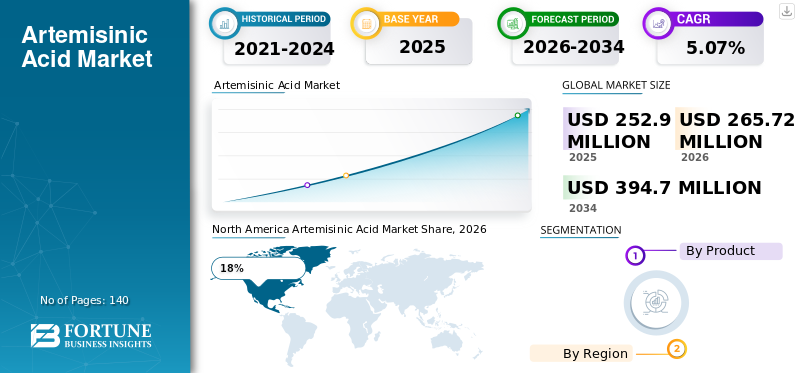
The global artemisinic acid market size was valued at USD 252.9 billion in 2025. The market is projected to grow from USD 265.72 billion in 2026 to USD 394.7 billion by 2034, exhibiting a CAGR of 5.07% during the forecast period.

The artemisinic acid market is a specialized pharmaceutical intermediate market centered on the production and supply of artemisinic acid, a critical precursor used in the manufacture of artemisinin-based antimalarial therapies. Demand is strongly linked to global malaria treatment programs, pharmaceutical procurement activities, and expansion of semi-synthetic artemisinin production technologies. The market is characterized by collaboration between pharmaceutical manufacturers, biotechnology firms, and active pharmaceutical ingredient suppliers. Growing emphasis on supply chain stability, fermentation-based production methods, and high-purity pharmaceutical ingredients continues to influence artemisinic acid market Trends. Increasing investments in infectious disease treatment and drug manufacturing capacity are supporting long-term market expansion.
The USA artemisinic acid market remains strategically important due to advanced pharmaceutical research capabilities, biotechnology innovation, and involvement in global malaria control initiatives. The country plays a significant role in microbial fermentation research and development associated with semi-synthetic artemisinin production. Pharmaceutical companies, research institutions, and biotechnology organizations continue to support process optimization and manufacturing efficiency improvements. Demand is also supported by government-funded infectious disease research programs and partnerships with international health organizations. The USA serves as a technology development hub rather than a large malaria treatment market, contributing approximately 12% of global artemisinic acid market Share through innovation, research activities, and pharmaceutical manufacturing expertise.
Download Free sample to learn more about this report.
 Global Market Size & Forecast
 Market Share
 Key Regional Highlights
Asia-Pacific
Asia-Pacific led the market with a 31% share, supported by high malaria incidence and expanding healthcare access.
Asia-Pacific
Rest of the World accounted for 29% of the market, driven by ongoing demand for antimalarial treatments across malaria-endemic regions.
Europe
Europe held a 22% share, supported by established pharmaceutical infrastructure and continued demand for malaria therapies.
U.S
The U.S. remains a key market, supported by pharmaceutical research and demand for antimalarial treatments.
Japan
Japan accounted for approximately 21% of the Asia-Pacific market, supported by advanced pharmaceutical capabilities and healthcare infrastructure.
Read More

The artemisinic acid market is witnessing a transition from dependence on agricultural extraction toward advanced fermentation-based manufacturing systems. Biotechnology companies are increasingly utilizing engineered microbial strains to produce artemisinic acid with improved consistency and scalability. This shift is helping pharmaceutical manufacturers reduce exposure to seasonal cultivation risks and raw material price fluctuations. Another notable trend in the Artemisinic Acid Industry Analysis is the growing adoption of semi-synthetic artemisinin production. Pharmaceutical companies are investing in integrated manufacturing facilities capable of combining fermentation technologies with downstream chemical synthesis. These investments improve supply reliability and quality control while supporting large-scale antimalarial drug production.
Download Free sample to learn more about this report.
The artemisinic acid market research report also highlights increasing focus on pharmaceutical-grade purity standards. Manufacturers are implementing advanced purification technologies to meet regulatory requirements and support global distribution of antimalarial medicines. Strategic partnerships between biotechnology innovators and pharmaceutical companies continue to strengthen manufacturing capabilities. Sustainability has emerged as a major factor influencing procurement decisions. Companies are investing in environmentally responsible production methods that reduce agricultural dependence and improve resource utilization. Digital manufacturing technologies, process automation, and predictive quality systems are becoming common across production facilities. These developments are expected to enhance operational efficiency and strengthen the long-term artemisinic acid market outlook.
Rising Demand for Artemisinin-Based Antimalarial Therapies
The primary driver of the artemisinic acid market growth is the sustained global demand for artemisinin-based combination therapies used in malaria treatment. Malaria remains one of the most significant infectious diseases worldwide, creating continuous demand for pharmaceutical ingredients required in antimalarial medicines. Public health agencies, international aid organizations, and national governments continue to procure substantial volumes of antimalarial drugs to support disease control programs. As artemisinic acid serves as a critical precursor in semi-synthetic artemisinin production, increasing drug manufacturing activities directly support market expansion. Pharmaceutical companies are enhancing production capabilities to ensure uninterrupted supply and improve treatment accessibility across malaria-endemic regions.
Dependence on Regulated Pharmaceutical Supply Chains
The artemisinic acid market faces constraints associated with stringent pharmaceutical regulations and complex manufacturing requirements. Production facilities must comply with Good Manufacturing Practices, pharmaceutical quality standards, and regulatory approvals across multiple regions. Compliance costs increase operational expenditures and may limit market participation for smaller manufacturers. In addition, product validation, quality testing, and certification procedures require significant investments. Regulatory delays affecting antimalarial drug approvals can influence procurement cycles and production planning. Supply chain disruptions involving raw materials, fermentation inputs, or logistics infrastructure may also affect manufacturing efficiency and market stability.
Expansion of Fermentation-Based Production Technologies
The most promising opportunity within the artemisinic acid market lies in fermentation-based production technologies. Advances in synthetic biology, metabolic engineering, and microbial fermentation are enabling efficient large-scale manufacturing of artemisinic acid. These technologies offer improved yield consistency, reduced dependence on agricultural production, and enhanced scalability. Pharmaceutical manufacturers are increasingly investing in bioprocess innovation to strengthen supply security and optimize production costs. Emerging biotechnology partnerships are expected to accelerate commercialization of next-generation production platforms. Growing acceptance of sustainable manufacturing solutions creates additional opportunities for technology providers, contract manufacturers, and pharmaceutical companies seeking competitive advantages in the Artemisinic Acid Industry Report.
Resistance Concerns and Treatment Evolution
One of the major challenges affecting the artemisinic acid market forecast is the emergence of resistance concerns related to antimalarial therapies. Pharmaceutical developers and healthcare organizations continuously monitor treatment effectiveness and disease evolution. Any significant shift in treatment protocols may influence demand patterns for artemisinin-based products. Manufacturers must invest in research, formulation improvements, and combination therapies to maintain clinical effectiveness. Additionally, fluctuating procurement budgets from international health programs can impact purchasing volumes. Competition among pharmaceutical suppliers and pressure to maintain affordable treatment costs further challenge profitability and operational planning within the global market.
Antimalarial Injections hold approximately 32% market share within the artemisinic acid market. This segment is essential for the treatment of severe malaria cases requiring rapid therapeutic intervention. Hospitals, emergency care facilities, and specialized infectious disease treatment centers are the primary users of injectable antimalarial formulations. Artemisinic acid serves as a vital precursor in manufacturing artemisinin derivatives used in these products. Demand remains strong across regions with high malaria incidence and limited access to early diagnosis. Pharmaceutical manufacturers continue improving formulation stability, storage performance, and distribution efficiency. International healthcare programs frequently maintain strategic stockpiles of injectable antimalarial therapies, supporting sustained procurement and production activities.
Antimalarial Tablets account for approximately 68% market share and represent the dominant segment within the artemisinic acid market. Tablets are widely utilized for uncomplicated malaria treatment and prevention programs. Their ease of administration, cost efficiency, and suitability for large-scale public health distribution contribute to strong market demand. Pharmaceutical companies continue expanding production capacity to support national malaria control initiatives and global healthcare procurement programs. Growing access to healthcare services across developing regions further supports tablet consumption. Improvements in formulation technology and combination therapies are enhancing treatment outcomes while strengthening the long-term market position of this segment.
To know how our report can help streamline your business, Speak to Analyst
North America Artemisinic Acid Market Share, 2026 (%)
To get more information on the regional analysis of this market, Download Free sample
North America holds approximately 18% of the global artemisinic acid market share and remains a key center for pharmaceutical innovation and biotechnology research. The region benefits from advanced fermentation technologies, strong research funding, and established pharmaceutical manufacturing infrastructure. The United States leads regional development through investments in synthetic biology and active pharmaceutical ingredient production. Companies are focusing on improving manufacturing efficiency, product purity, and supply chain resilience. Regulatory compliance standards encourage the adoption of advanced production systems. Research institutions collaborate with pharmaceutical manufacturers to enhance semi-synthetic artemisinin production methods. Canada contributes through specialized pharmaceutical research and development activities. Growing support for infectious disease research further strengthens market demand. Continuous technological advancements maintain North America's strategic position in the global market.
Europe accounts for nearly 22% of the global artemisinic acid market share and is recognized for its strong pharmaceutical manufacturing capabilities. The region benefits from advanced biotechnology expertise, strict quality standards, and substantial investments in research and development. European manufacturers are increasingly adopting fermentation-based production technologies to improve efficiency and sustainability. Pharmaceutical companies actively participate in global antimalarial drug supply programs. Research organizations support innovation in production processes and purification technologies. The presence of well-established regulatory frameworks ensures high product quality and safety standards. Strategic collaborations between biotechnology firms and pharmaceutical companies continue to expand production capabilities. Investments in environmentally sustainable manufacturing practices are increasing. Europe remains an important contributor to global pharmaceutical ingredient supply chains.
Germany represents approximately 40% of the global artemisinic acid market share and serves as a major pharmaceutical innovation hub in Europe. The country possesses advanced biotechnology infrastructure and highly developed pharmaceutical manufacturing capabilities. German companies invest significantly in fermentation technologies, process automation, and quality management systems. Research institutions actively collaborate with manufacturers to improve production efficiency and product consistency. The market benefits from strong government support for life sciences and biotechnology development. High regulatory standards encourage continuous technological advancement and product quality improvement. Pharmaceutical companies focus on sustainable manufacturing and resource optimization. Growing investments in biopharmaceutical research support market expansion. Germany continues to strengthen its position through innovation-driven production strategies. The country remains a significant contributor to European market growth.
The United Kingdom accounts for approximately 18% of the global artemisinic acid market share and maintains a strong position in pharmaceutical research and biotechnology innovation. The market is supported by leading academic institutions, research centers, and pharmaceutical companies. Investments in infectious disease research continue to drive technological development. The country focuses on improving fermentation processes and advanced pharmaceutical manufacturing techniques. Collaboration between public and private organizations supports innovation and product development activities. Regulatory expertise and established healthcare research networks contribute to market growth. Biotechnology firms are expanding capabilities related to semi-synthetic artemisinin production. Continued investment in life sciences strengthens competitiveness within the global market. Pharmaceutical innovation remains a key growth factor. The United Kingdom continues to support advancements in pharmaceutical ingredient manufacturing.
Asia-Pacific holds approximately 31% of the global artemisinic acid market share and represents the largest regional market. The region benefits from extensive pharmaceutical manufacturing capacity, growing healthcare investments, and strong demand for antimalarial treatments. China and India serve as major production centers for artemisinin-related pharmaceutical ingredients. Government initiatives supporting biotechnology and pharmaceutical industries contribute to market expansion. Manufacturers continue investing in fermentation technologies and large-scale production facilities. Growing populations and improving healthcare access support long-term demand. Regional companies focus on increasing production efficiency and reducing manufacturing costs. Research activities related to microbial engineering and process optimization are expanding rapidly. Strategic partnerships among pharmaceutical firms strengthen regional competitiveness. Asia-Pacific remains a critical hub for global supply and production activities.
Japan contributes approximately 21% of the global artemisinic acid market share and is known for advanced pharmaceutical technologies and research excellence. The country emphasizes high-quality production standards and continuous process improvement. Japanese pharmaceutical companies invest in biotechnology innovation, fermentation systems, and pharmaceutical engineering. Research institutions actively support the development of efficient manufacturing techniques. Strong regulatory frameworks ensure product consistency and quality assurance. The market benefits from significant investments in life sciences and healthcare innovation. Companies focus on improving manufacturing productivity and environmental sustainability. Collaborative research initiatives help accelerate technological advancement. Pharmaceutical expertise continues to strengthen Japan’s competitive position. The country remains an important contributor to innovation within the global Artemisinic Acid industry.
China holds approximately 21% of the global artemisinic acid market share and serves as one of the largest production hubs worldwide. The country benefits from extensive pharmaceutical manufacturing infrastructure, skilled labor availability, and strong supply chain networks. Chinese manufacturers continue expanding fermentation-based production facilities to meet domestic and international demand. Government support for biotechnology and pharmaceutical innovation strengthens industry growth. Research organizations focus on improving production yields and manufacturing efficiency. The market is supported by increasing investments in advanced processing technologies. China plays a major role in supplying pharmaceutical ingredients for antimalarial drug production globally. Strong export capabilities further enhance market influence. Continuous industrial development supports long-term competitiveness. China remains a leading participant in the global artemisinic acid market.
The Rest of World region accounts for approximately 29% of the global artemisinic acid market share, including Latin America, the Middle East, and Africa. Demand is primarily driven by malaria treatment requirements and public health initiatives. Many countries within Africa remain major consumers of artemisinin-based therapies, supporting consistent demand for pharmaceutical ingredients. Governments and healthcare organizations continue expanding treatment access and disease control programs. Investments in healthcare infrastructure and pharmaceutical distribution networks are increasing. International partnerships help improve medicine availability and supply chain stability. Local pharmaceutical manufacturing capabilities are gradually expanding across several countries. Public health funding supports procurement of antimalarial medicines. Growing awareness of disease prevention further contributes to market demand. The region remains a significant contributor to global artemisinic acid market growth.
The artemisinic acid market presents substantial investment opportunities across biotechnology, pharmaceutical manufacturing, and supply chain optimization. Investors are increasingly focusing on fermentation-based production technologies due to their potential to improve manufacturing consistency and reduce reliance on agricultural cultivation. Strategic investments are supporting development of advanced microbial strains, process automation systems, and scalable biomanufacturing platforms. Pharmaceutical companies are expanding production facilities to address long-term demand for artemisinin-derived medicines.
Investments in quality assurance systems, regulatory compliance capabilities, and integrated manufacturing operations are becoming increasingly common. Venture capital participation in synthetic biology companies has also increased as commercialization opportunities continue to expand. Emerging markets offer attractive opportunities for manufacturing expansion and healthcare infrastructure development. Governments and healthcare organizations are investing in treatment accessibility programs that support sustained pharmaceutical procurement. Contract manufacturing organizations are attracting investment due to their ability to provide flexible production capacity and specialized expertise.
Innovation within the artemisinic acid market increasingly focuses on production technologies, process efficiency, and pharmaceutical quality enhancement. Biotechnology companies are developing advanced microbial fermentation platforms capable of producing higher yields while reducing resource consumption. Genetic engineering techniques continue improving microbial strain performance and production consistency. Manufacturers are introducing enhanced purification systems designed to achieve pharmaceutical-grade purity requirements. New downstream processing technologies improve product recovery rates and operational efficiency. Automated monitoring systems and real-time process controls are being integrated into production facilities to strengthen quality management.
Research organizations are exploring novel applications for artemisinin derivatives beyond traditional antimalarial treatments. Pharmaceutical developers continue evaluating potential therapeutic uses in infectious disease management and specialized healthcare applications. Innovation efforts also target formulation improvements that enhance drug stability and distribution efficiency. Sustainable manufacturing remains a key area of product development activity. Companies are implementing environmentally responsible production methods that reduce waste generation and improve resource utilization.
The artemisinic acid market report provides comprehensive analysis of industry structure, market dynamics, competitive landscape, regional developments, and emerging opportunities. Coverage includes detailed assessment of production technologies, pharmaceutical applications, supply chain developments, and demand drivers influencing market expansion. The report evaluates manufacturing trends, procurement patterns, and technological innovations affecting the industry.
Request for Customization to gain extensive market insights.
The artemisinic acid market analysis examines segmentation by type and application while identifying key growth areas and investment opportunities. Regional evaluations cover North America, Europe, Asia-Pacific, and Rest of World markets, highlighting production capabilities, healthcare infrastructure developments, and pharmaceutical manufacturing trends. Competitive assessment includes major manufacturers, strategic initiatives, operational capabilities, and market positioning. The report also reviews technological advancements related to fermentation processes, synthetic biology applications, and pharmaceutical manufacturing improvements.
Fortune Business Insights says that the global market value stood at USD 252.9 billion in 2025 and is projected to reach USD 394.7 billion by 2034.
The market is expected to exhibit a CAGR of 5.07% during the forecast period of 2026-2034.
Antimalarial tablets led the product segment with approximately 68% market share, supported by their ease of administration, cost efficiency, and suitability for large-scale malaria treatment programs.
Key players include Sanofi, KPC Pharmaceuticals, Inc., Guilin Pharmaceutical Co., Ltd., Calyx Chemicals and Pharmaceuticals Ltd., Novartis Pharmaceuticals Corporation, and Ipca Laboratories Inc.
Major trends include the shift toward fermentation-based manufacturing and growing adoption of semi-synthetic artemisinin production. Asia-Pacific led with approximately 31% market share.


(Offer valid till 31st Oct 2026)
Get 30-60 hrs Free Customization
Expand Regional and Country Coverage, Segments Analysis, Company Profiles, Competitive Benchmarking, and End-user Insights.








.webp)





Get In Touch With Us
US +1 833 909 2966 ( Toll Free )
Receive a tailored pricing based on your needs.
Discuss your questions with our industry experts.
Have questions? Get quick answers before you purchase.

