Chemical Peel Market Size, Share & Industry Analysis, By Product (Lactic Peel, Fruit Peel), By Type (Superficial or Light Peel, Medium Peel), By Application (Hyperpigmentation, Dark Circles, Wrinkles), By End-use, and Regional Forecast, 2026-2034
 Download Free Sample
Chemical Peel Market Overview
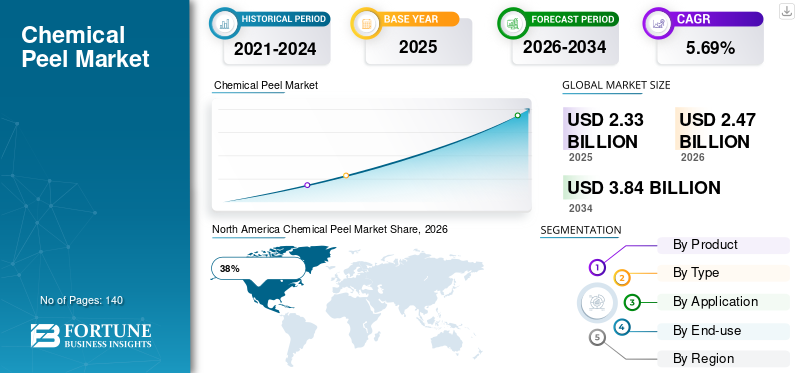
The global chemical peel market size was valued at USD 2.33 billion in 2025. The market is projected to grow from USD 2.46 billion in 2026 to USD 3.84 billion by 2034, exhibiting a CAGR of 5.69% during the forecast period.

The chemical peel market is expanding steadily due to increasing consumer preference for non-invasive dermatology procedures and advanced cosmetic skincare treatments. Rising awareness regarding acne scars, hyperpigmentation, wrinkles, and uneven skin tone is accelerating demand among dermatology clinics, medispas, and aesthetic centers. Chemical peel formulations containing glycolic acid, salicylic acid, lactic acid, and fruit-derived acids are widely adopted for skin resurfacing and anti-aging procedures. The chemical peel market report highlights growing product penetration across professional skincare networks and home-use cosmetic segments. Increasing urbanization, digital beauty influence, and demand for minimally invasive aesthetic procedures continue supporting chemical peel market growth across both developed and emerging healthcare and cosmetic industries.
The United States dominates the chemical peel market in North America with approximately 78% regional market share due to high adoption of cosmetic dermatology procedures and advanced skincare awareness. More than 15 million minimally invasive aesthetic procedures are performed annually across the country, with chemical peel treatments representing a significant portion of facial rejuvenation services. Dermatology clinics and medical spas increasingly utilize medium and superficial peels for acne treatment, pigmentation correction, and wrinkle reduction. Demand among adults aged 25 years to 54 years continues rising because of social media beauty trends and increasing disposable income. The USA chemical peel market analysis indicates strong expansion in physician-supervised cosmetic procedures and premium skincare treatments.
Download Free sample to learn more about this report.
Chemical Peel Market Key Takeaways
 Global Market Size & Forecast
- 2025 Market Size: USD 2.33 Billion
- 2026 Market Size: USD 2.46 Billion
- 2034 Forecast Market Size: USD 3.84 Billion
- CAGR: 5.69% from 2026-2034
 Market Share
- North America dominated with a 38% market share in 2025.
- Lactic peel products led with approximately 56% market share.
- Superficial or light peels dominated with approximately 61% market share.
 Key Regional Highlights
North America
North America led the market with a 38% share.
Europe
Europe accounted for 27% of the global market.
Asia-Pacific
Asia-Pacific held a 25% market share.
U.S.
The U.S. is a major market supported by growing demand for minimally invasive aesthetic treatments.
Japan
Japan accounted for 18% of the Asia-Pacific market, supported by increasing demand for advanced skincare procedures.
Read More

Chemical Peel Market Latest Trends
The chemical peel market trends indicate strong transformation toward personalized skincare solutions, combination therapies, and dermatologist-guided treatment protocols. Consumers increasingly prefer customized peel concentrations designed for specific skin conditions including melasma, acne scars, sun damage, and age-related pigmentation. Medical spas and aesthetic clinics are integrating chemical peels with laser resurfacing, microneedling, and LED therapies to improve treatment efficiency and patient satisfaction. This trend is strengthening the chemical peel market outlook among premium cosmetic treatment providers.
Download Free sample to learn more about this report.
The rise of organic and fruit-acid-based formulations is another notable trend influencing the Chemical Peel Industry Report. Consumers are actively seeking gentler exfoliation procedures with shorter recovery periods and lower irritation risks. Lactic acid and fruit enzyme peels are witnessing increased demand because they are considered suitable for sensitive and darker skin tones. Manufacturers are also introducing home-use peel kits with controlled acid concentrations to attract younger consumers and first-time skincare users.
Chemical Peel Market Dynamics
DRIVER
Rising Demand for Minimally Invasive Cosmetic Dermatology Procedures
The increasing demand for non-surgical aesthetic procedures is a primary growth driver in the chemical peel market. Consumers prefer treatments that provide visible skin improvement without hospitalization or extended downtime. Chemical peels are increasingly utilized for acne reduction, wrinkle management, pigmentation correction, and skin texture enhancement. More than 62% of cosmetic dermatology clinics worldwide offer superficial and medium chemical peel procedures as part of standard facial rejuvenation services. Growing beauty consciousness among millennials and middle-aged consumers is further strengthening demand. The chemical peel market analysis shows that dermatologists increasingly recommend peel therapies because of their affordability compared with laser resurfacing and surgical interventions. Expanding medical spa chains and advanced dermatology infrastructure continue supporting widespread market penetration across urban healthcare systems.
RESTRAINT
Risk of Skin Irritation and Post-Treatment Complications
Skin sensitivity, redness, hyperpigmentation, and prolonged irritation remain significant restraints within the chemical peel market. Medium and deep peel procedures can sometimes cause complications including inflammation, scarring, or uneven pigmentation, particularly among patients with sensitive or darker skin types. These concerns discourage first-time consumers and limit adoption in regions with limited dermatologist supervision. Regulatory restrictions regarding acid concentrations in over-the-counter products also affect market expansion. More than 38% of consumers seeking aesthetic treatments prioritize procedures with minimal recovery risks, leading some patients to prefer alternative therapies such as laser toning or hydrafacial treatments. The Chemical Peel Industry Analysis indicates that improper application by untrained practitioners further increases procedural risks and negatively impacts patient confidence in emerging cosmetic markets.
OPPORTUNITY
Expansion of Medical Spa and Home-Use Skincare Markets
Rapid growth in medical spa infrastructure and home-based cosmetic skincare products presents strong opportunities for the chemical peel market. Urban consumers increasingly seek convenient skincare treatments that can be integrated into regular beauty routines. Manufacturers are developing low-concentration exfoliation kits, fruit-acid solutions, and dermatologist-tested products designed for safe home application. The global increase in skincare spending among adults aged 20 years to 45 years is supporting product innovation. Medical spas are also introducing membership-based skincare programs that include recurring peel treatments for anti-aging and acne management. The chemical peel market forecast suggests rising opportunities in Asia-Pacific, Latin America, and Middle Eastern countries where aesthetic awareness and disposable income continue improving. Partnerships between cosmetic brands and dermatology clinics are further expanding treatment accessibility.
CHALLENGE
Intense Competition from Alternative Skin Rejuvenation Technologies
The chemical peel market faces growing competition from advanced aesthetic technologies including laser resurfacing, radiofrequency therapy, hydradermabrasion, and microneedling treatments. Consumers increasingly compare treatment outcomes, downtime duration, and side effects before selecting cosmetic procedures. Laser-based technologies are particularly attractive for consumers seeking targeted pigmentation correction and collagen stimulation with controlled precision. Additionally, social media trends frequently shift toward newer skincare technologies, influencing consumer preferences and treatment demand. Smaller chemical peel manufacturers also face challenges associated with product differentiation and regulatory compliance. The chemical peel market insights reveal that maintaining treatment effectiveness while reducing irritation remains a major technical challenge for manufacturers developing next-generation peel formulations.
Chemical Peel Market Segmentation
By Product
Lactic peel products account for approximately 56% market share within the type segment due to their mild exfoliation properties and compatibility with sensitive skin. Derived primarily from milk-based acids, lactic peels are widely used for hydration improvement, fine line reduction, and treatment of uneven skin texture. Dermatologists frequently recommend lactic acid formulations for first-time users because they cause less irritation compared with stronger chemical agents. The chemical peel market analysis highlights increasing utilization among adults aged 30 years to 50 years seeking anti-aging skincare procedures. Medical spas are introducing combination therapies integrating lactic acid with antioxidants and vitamin formulations to improve skin brightness.
Fruit peel products hold nearly 44% market share and are witnessing increasing demand because of consumer preference for natural skincare ingredients. These peels commonly contain citric acid, malic acid, papaya enzymes, and botanical extracts that support exfoliation and skin rejuvenation. Fruit-based peels are particularly popular among younger consumers seeking preventive skincare and mild acne management solutions. Cosmetic clinics increasingly market fruit peel treatments as organic and low-irritation alternatives suitable for regular skincare maintenance. The chemical peel market outlook indicates strong adoption across Asia-Pacific beauty clinics where herbal and botanical skincare traditions influence consumer purchasing behavior.
To know how our report can help streamline your business, Speak to Analyst
By Type
Superficial or light peel procedures account for approximately 61% market share because of minimal downtime and broad applicability across skin types. These treatments primarily utilize low-concentration glycolic acid, lactic acid, and salicylic acid formulations to address acne, pigmentation, and minor wrinkles. Dermatology clinics increasingly recommend light peels for routine skincare maintenance and preventive anti-aging treatments. More than 68% of aesthetic treatment centers offer superficial peel sessions as part of monthly skincare programs. The chemical peel market growth is supported by rising demand among working professionals seeking cosmetic improvements without extended recovery periods.
Medium peel treatments represent nearly 39% market share and are primarily utilized for moderate pigmentation, acne scarring, and deeper wrinkle correction. These procedures commonly involve trichloroacetic acid formulations that penetrate beyond superficial skin layers to stimulate collagen renewal. Medium peels are widely adopted in physician-supervised dermatology practices due to the need for professional monitoring and post-treatment care. The chemical peel market insights indicate increasing demand among consumers aged above 40 years seeking more visible anti-aging outcomes. Technological improvements in controlled acid delivery systems are helping reduce post-treatment irritation and improve procedural safety.
By Application
Hyperpigmentation treatments account for approximately 34% market share within the application category due to growing consumer concerns regarding sun damage, melasma, and uneven skin tone. Chemical peels are commonly used to remove damaged outer skin layers and stimulate cellular renewal. Dermatologists increasingly recommend glycolic acid and lactic acid peels for pigmentation correction among patients with post-inflammatory discoloration. The chemical peel market research report indicates strong demand across tropical and urban regions where UV exposure contributes significantly to pigmentation disorders. Cosmetic clinics are also developing personalized peel concentrations tailored for different skin tones and sensitivity levels.
Dark circle treatment applications hold approximately 21% market share within the chemical peel market due to increasing demand for facial rejuvenation procedures among urban consumers. Chemical peels formulated with mild acids and brightening agents help improve under-eye pigmentation and skin texture. Aesthetic clinics increasingly provide combined treatment programs involving peels, hydration therapies, and topical serums to address periorbital discoloration. Consumers aged 25 years to 45 years represent the dominant treatment demographic because of lifestyle stress, screen exposure, and sleep-related skin concerns.
Wrinkle reduction procedures contribute nearly 45% market share in the anti-aging application segment. Chemical peels are widely utilized to stimulate collagen regeneration, improve skin elasticity, and reduce fine lines associated with aging. Medium-depth peels are particularly effective for facial rejuvenation among adults aged above 40 years. Dermatologists increasingly integrate peel procedures with retinoid therapies and hydration protocols to improve long-term skin firmness. The chemical peel market forecast suggests strong growth in anti-aging applications due to increasing elderly populations and rising demand for minimally invasive cosmetic procedures.
By End-use
The professional dermatology and medical spa segment dominates the chemical peel market with approximately 64% market share due to increasing demand for physician-supervised cosmetic procedures and advanced skincare treatments. Dermatology clinics remain the primary end-use sector because consumers prefer expert consultation for acne scars, hyperpigmentation, wrinkles, and skin resurfacing procedures. Medical spas are rapidly expanding across urban regions by offering personalized peel therapies combined with hydration treatments, collagen stimulation, and anti-aging skincare programs. The chemical peel market analysis indicates rising consumer preference for minimally invasive cosmetic solutions with visible results and shorter recovery periods. Hospitals and aesthetic surgery centers are also integrating medium and superficial peel procedures into facial rejuvenation services.
Chemical Peel Market Regional Outlook
North America
North America Chemical Peel Market Share, 2026 (%)
To get more information on the regional analysis of this market, Download Free sample
North America dominates the chemical peel market with approximately 38% market share due to high adoption of aesthetic dermatology procedures and advanced skincare infrastructure. The United States remains the leading contributor because of increasing consumer spending on anti-aging and skin rejuvenation treatments. Cosmetic dermatology clinics across the region widely offer chemical peel procedures for acne scars, pigmentation, and wrinkle management. The chemical peel market analysis indicates strong demand among consumers seeking minimally invasive cosmetic procedures and advanced skincare treatments. Canada is also witnessing increasing demand due to rising awareness regarding professional skincare treatments and medical spa services. Urban consumers increasingly prefer superficial peel procedures with shorter recovery periods and visible skin improvement results. Dermatologists across North America are introducing personalized peel concentrations for sensitive and combination skin types. The market is also benefiting from rising male participation in cosmetic skincare treatments.
Europe
Europe accounts for approximately 27% market share in the chemical peel market due to strong demand for premium skincare and cosmetic dermatology treatments. Countries including Germany, France, Italy, and the United Kingdom are major contributors because of developed healthcare infrastructure and high beauty consciousness. Aesthetic treatment centers across Europe provide chemical peel procedures for anti-aging and pigmentation correction therapies. The chemical peel market trends indicate rising consumer preference for botanical acid formulations and dermatologist-approved skincare solutions. Consumers increasingly seek minimally invasive procedures with limited downtime and improved treatment safety. Luxury skincare clinics and wellness centers are expanding rapidly across urban European regions to address growing cosmetic treatment demand. Medical tourism is also supporting market expansion, especially in Southern European countries offering affordable aesthetic procedures. Manufacturers are investing in advanced acid formulations and customized treatment systems suitable for multiple skin tones.
Germany Chemical Peel Market
Germany contributes nearly 26% market share within the European chemical peel market due to advanced dermatology services and increasing anti-aging skincare demand. Consumers across Berlin, Munich, and Frankfurt increasingly prefer professional skin resurfacing procedures for wrinkle reduction and pigmentation correction. Dermatology clinics in major urban regions offer chemical peel treatments integrated with hydration and collagen therapies. The chemical peel market research report highlights strong adoption among adults seeking minimally invasive cosmetic procedures and skin rejuvenation solutions. Fruit-acid and lactic-acid-based peel formulations are gaining popularity because of their mild exfoliation properties and lower irritation risks. German consumers prioritize clinically tested skincare treatments with physician supervision and safety certification. Premium medical spa chains are also expanding their skincare treatment portfolios to include customized peel programs. Growing awareness regarding preventive skincare and skin texture enhancement continues supporting procedural demand.
United Kingdom Chemical Peel Market
The United Kingdom holds approximately 21% market share within the European chemical peel market because of increasing popularity of facial rejuvenation procedures and professional skincare services. London remains the largest cosmetic dermatology hub supported by advanced private clinic networks and strong consumer awareness regarding aesthetic treatments. Skincare clinics across the country provide superficial and medium chemical peel procedures for acne scars and pigmentation management. The chemical peel market analysis indicates growing demand among younger adults influenced by digital beauty trends and social media skincare culture. Male participation in cosmetic treatments is also increasing significantly across metropolitan areas. Consumers increasingly seek non-surgical anti-aging procedures with faster recovery periods and visible results. Medical spas are introducing subscription-based skincare programs involving recurring chemical peel sessions for skin maintenance. Fruit-acid formulations and botanical peel products are gaining popularity among consumers preferring natural skincare ingredients.
Asia-Pacific
Asia-Pacific accounts for nearly 25% market share and represents one of the fastest-growing regions in the chemical peel market due to expanding beauty awareness and rising disposable income. Countries including China, Japan, South Korea, India, and Australia are witnessing rapid growth in cosmetic dermatology clinics and skincare centers. Aesthetic clinics in urban Asia-Pacific cities provide chemical peel services for acne management and skin brightening procedures. The chemical peel market growth is strongly influenced by increasing demand for pigmentation correction treatments associated with UV exposure and uneven skin tone concerns. Consumers across the region increasingly prefer fruit-acid and herbal-based peel formulations because of strong cultural preference for botanical skincare products. Medical tourism in countries such as Thailand and South Korea is also supporting procedural demand among international consumers. Dermatology clinics are investing heavily in advanced peel technologies and personalized skincare solutions. Social media beauty trends and online skincare consultations continue increasing treatment awareness among younger consumers.
Japan Chemical Peel Market
Japan contributes approximately 18% market share within the Asia-Pacific chemical peel market because of advanced skincare culture and strong consumer preference for premium aesthetic procedures. Consumers in Tokyo, Osaka, and Yokohama increasingly seek dermatologist-supervised chemical peel treatments for wrinkle reduction and hydration enhancement. Urban skincare clinics provide customized peel programs focused on sensitive skin and anti-aging solutions. The chemical peel market insights indicate strong demand for mild acid formulations that offer gradual skin rejuvenation with minimal irritation. Japanese consumers prioritize clinically validated skincare products and technologically advanced treatment procedures. Medical spas are integrating chemical peels with collagen stimulation and hydration therapies to improve treatment effectiveness. Increasing elderly population and rising demand for youthful skin appearance continue supporting anti-aging treatment growth. Fruit-acid and lactic-acid formulations remain highly preferred because of their compatibility with delicate skin types. Cosmetic dermatology clinics are also adopting AI-based skin analysis systems to personalize treatment recommendations.
China Chemical Peel Market
China accounts for nearly 35% market share within the Asia-Pacific chemical peel market due to rapid urbanization and increasing beauty consciousness among younger consumers. Major cities including Beijing, Shanghai, Shenzhen, and Guangzhou are experiencing strong growth in aesthetic clinic infrastructure and cosmetic dermatology services. Professional skincare centers in metropolitan areas offer chemical peel procedures for acne scars, pigmentation correction, and skin brightening treatments. The chemical peel market research report identifies strong influence from digital beauty platforms and online skincare influencers driving consumer awareness. Younger consumers increasingly seek minimally invasive cosmetic procedures that provide visible skin enhancement without surgical intervention. Domestic cosmetic manufacturers are introducing affordable fruit-acid peel products targeted toward middle-income consumers. Medical spas are also expanding premium skincare memberships involving recurring peel treatments and facial rejuvenation programs. Demand for skin whitening and anti-aging procedures remains particularly strong among female consumers. Technological advancements in cosmetic dermatology equipment continue improving treatment precision and patient safety.
Rest of World
The Rest of World region holds approximately 10% market share in the chemical peel market with increasing adoption across Latin America, the Middle East, and Africa. Brazil and Mexico are major contributors in Latin America because of strong cosmetic surgery culture and growing consumer interest in skin rejuvenation procedures. Urban dermatology clinics in these countries provide chemical peel treatments for pigmentation management and acne scar reduction. The chemical peel market trends indicate rising investment in aesthetic wellness centers and medical spa infrastructure across developing economies. Middle Eastern countries are also witnessing increasing demand due to growing premium skincare spending and rising awareness regarding anti-aging treatments. Consumers in Gulf countries increasingly seek professional cosmetic procedures for sun-related pigmentation correction and facial rejuvenation. In Africa, expanding urban healthcare infrastructure and growing beauty industry penetration are supporting market development. International skincare brands are strengthening regional distribution partnerships to improve accessibility of dermatologist-approved products. Medical tourism and digital skincare consultations are further increasing procedural awareness.
List of Top Chemical Peel Companies
- IMAGE Skincare
- Dermalogica
- Johnson & Johnson Private Limited
- Bausch Health Companies Inc.
- Renée Rouleau Inc.
- L’Oréal
- Glytone
- Sinclair
- Proderma Light
Top Two Companies with Highest Market Share
- L’Oréal – 18% market share
- Johnson & Johnson Private Limited – 14% market share
Investment Analysis and Opportunities in Chemical Peel Market
Investment activity in the chemical peel market is increasing because of rising global demand for aesthetic dermatology procedures and premium skincare treatments. Cosmetic manufacturers are investing heavily in research focused on low-irritation acid formulations, botanical exfoliation agents, and personalized skincare technologies. Medical spa chains are expanding rapidly across urban regions to capture increasing consumer interest in non-invasive beauty procedures. More than 52% of aesthetic investors prioritize skincare treatment platforms because of recurring consumer demand and comparatively lower infrastructure costs than surgical cosmetic procedures.
The chemical peel market opportunities are particularly strong in Asia-Pacific and Middle Eastern countries where disposable income and skincare awareness continue increasing. Investors are also targeting teledermatology platforms and AI-based skin analysis systems to improve patient consultation efficiency and treatment personalization. Partnerships between cosmetic brands and dermatology clinics are supporting wider treatment accessibility and premium product distribution. Home-use chemical peel kits represent another growing investment area due to rising demand for convenient skincare routines among younger consumers.
New Product Development in Chemical Peel Market
Product innovation within the chemical peel market is focused on safer formulations, multifunctional skincare benefits, and reduced recovery periods. Manufacturers are increasingly developing hybrid peel solutions combining exfoliation acids with antioxidants, peptides, and hydration-enhancing compounds. These products aim to improve treatment outcomes while minimizing irritation and post-procedure sensitivity. Fruit-acid formulations enriched with botanical extracts are gaining popularity because consumers increasingly prefer organic and dermatologist-tested skincare products.
Advanced encapsulation technologies are also transforming the Chemical Peel Industry by enabling controlled acid release and targeted skin penetration. Cosmetic companies are launching personalized peel systems designed for acne-prone skin, hyperpigmentation management, and anti-aging applications. The chemical peel market forecast indicates growing demand for home-use peel kits with regulated acid concentrations and simplified application protocols. Medical spas are introducing combination therapies integrating peels with LED therapy, collagen stimulation, and hydration enhancement procedures. Manufacturers are additionally investing in fragrance-free and hypoallergenic peel formulations suitable for sensitive skin categories.
Five Recent Developments in Chemical Peel Market (2023-2025)
- In 2023, major skincare manufacturers introduced fruit-acid chemical peel formulations targeting sensitive skin and hydration-focused treatments.
- In 2023, several dermatology clinic networks expanded subscription-based chemical peel treatment programs across metropolitan cities.
- In 2024, aesthetic product developers launched AI-supported skin analysis systems for personalized chemical peel recommendations.
- In 2024, premium skincare companies introduced combination peel therapies integrating antioxidants and collagen stimulation technologies.
- In 2025, cosmetic dermatology providers expanded male-focused chemical peel treatment packages for anti-aging and pigmentation management applications.
Report Coverage of the Chemical Peel Market
The chemical peel market report provides extensive analysis of market trends, product innovation, segmentation, regional performance, investment activity, and competitive positioning across the global cosmetic dermatology industry. The report evaluates changing consumer preferences related to minimally invasive skincare procedures, pigmentation management, acne treatment, and anti-aging therapies. It includes detailed segmentation analysis by peel type, treatment intensity, and application areas to support strategic business planning and product development initiatives.
Request for Customization to gain extensive market insights.
The chemical peel market research report also examines technological advancements in acid formulations, personalized skincare systems, and dermatologist-supervised treatment platforms. Regional analysis covers North America, Europe, Asia-Pacific, and Rest of World with insights regarding consumer behavior, medical spa expansion, and aesthetic clinic infrastructure development. Competitive landscape evaluation highlights strategic product launches, treatment innovation, and partnership activities among leading skincare manufacturers and cosmetic healthcare providers.
Frequently Asked Questions
Fortune Business Insights says that the global market value stood at USD 2.33 billion in 2025 and is projected to reach USD 3.84 billion by 2034.
The market is expected to exhibit a CAGR of 5.69% during the forecast period of 2026-2034.
Superficial or light peels were the leading type segment, accounting for approximately 61% of the market, due to minimal downtime and broad applicability across skin types.
Key players include IMAGE Skincare, Dermalogica, Johnson & Johnson Private Limited, Bausch Health Companies Inc., Renée Rouleau Inc., and L’Oréal.
Major trends include growing demand for personalized skincare and combination therapies and rising adoption of organic, fruit-acid-based formulations and home-use peel kits. North America led the market with a 38% share.



- 2021-2034
- 2025
- 2021-2024
- 140
-

(Offer valid till 15th Sep 2026)
Get 30-60 hrs Free Customization
Expand Regional and Country Coverage, Segments Analysis, Company Profiles, Competitive Benchmarking, and End-user Insights.













.webp)






-
US +1 833 909 2966 ( Toll Free )
-
Get In Touch With Us