Data Pipeline Tools Market Size, Share & Industry Analysis, By Component (Tools, Services), By Type, By Deployment, By Enterprise Size, By Application, By End-use and Regional Forecast, 2026-2034
 Download Free Sample
Data Pipeline Tools Market Overview
 Listen to Audio Version
The data pipeline tools market is expanding rapidly due to increasing enterprise dependence on real-time analytics, cloud computing infrastructure, and automated data orchestration systems. Organizations across banking, healthcare, manufacturing, retail, and telecommunications sectors are adopting advanced pipeline tools to manage structured and unstructured data efficiently. Data integration, transformation, monitoring, and workflow automation capabilities are becoming essential for business intelligence and operational scalability. Data pipeline tools market trends indicate strong demand for low-code orchestration platforms, AI-enabled workflow management, and cloud-native deployment models. Enterprises are prioritizing scalable data engineering environments capable of supporting distributed analytics, machine learning operations, and hybrid cloud synchronization across multiple business applications.
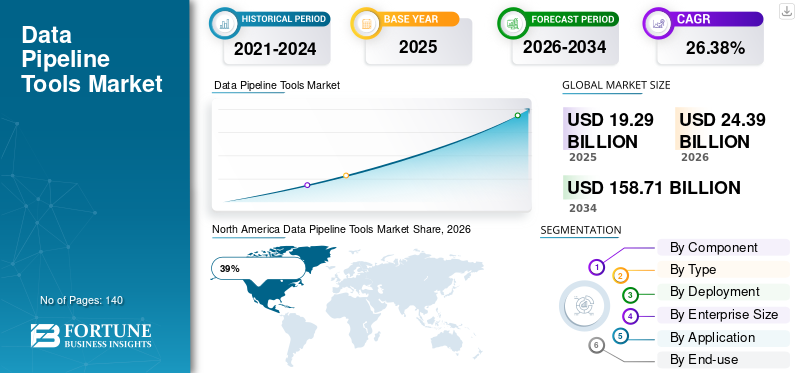
The United States data pipeline tools market represents a dominant share of the global industry due to strong enterprise digitization and large-scale cloud migration initiatives. More than 73% of major enterprises in the country utilize automated data orchestration platforms for analytics and operational intelligence management. Financial institutions increasingly rely on real-time data pipelines for fraud monitoring and customer analytics applications. Healthcare providers continue expanding use of scalable integration systems for patient data synchronization and predictive healthcare analytics. Data pipeline tools market analysis in the United States highlights increasing demand for AI-driven workflow automation, hybrid cloud integration, and metadata governance technologies across enterprise IT infrastructure modernization projects.
Download Free sample to learn more about this report.
Data Pipeline Tools Market Latest Trends
The data pipeline tools market is witnessing strong technological transformation driven by enterprise demand for automation, scalability, and real-time analytics infrastructure. One major trend involves increasing adoption of AI-enabled pipeline orchestration systems capable of automating workload balancing, anomaly detection, metadata classification, and workflow optimization. More than 66% of enterprises implementing analytics environments now prioritize artificial intelligence integration within data engineering operations. Data pipeline tools market trends further indicate rapid migration from batch-processing systems toward event-driven and streaming analytics architectures.
Download Free sample to learn more about this report.
Cloud-native deployment frameworks and Kubernetes-based orchestration technologies are becoming increasingly common among enterprises seeking scalable workflow management solutions. Organizations continue investing in low-code and no-code pipeline development platforms to simplify integration complexity and improve deployment speed. Approximately 59% of medium-sized enterprises prefer visual workflow automation tools for operational efficiency improvement. Data pipeline tools market outlook also reveals rising implementation of hybrid and multi-cloud synchronization environments supporting distributed business operations.
Data Pipeline Tools Market Dynamics
DRIVER
Rising Enterprise Demand for Real-Time Analytics and Automation
The increasing need for real-time business intelligence and workflow automation is a primary growth driver for the data pipeline tools market. Enterprises handling large-scale operational and customer datasets require automated pipeline infrastructure to improve analytics speed and operational efficiency. More than 74% of organizations globally rely on automated data orchestration technologies to support analytics and machine learning applications. Financial institutions process millions of transactional records daily through advanced streaming frameworks for fraud monitoring and risk management operations. Retail companies integrate omnichannel customer data to improve personalization and inventory forecasting capabilities. Data pipeline tools market insights reveal that organizations implementing automated synchronization systems experience substantial improvements in operational visibility and workflow scalability. Increasing cloud adoption and AI-driven enterprise modernization initiatives continue accelerating market demand across healthcare, manufacturing, telecommunications, and logistics industries.
RESTRAINT
Integration Complexity and Shortage of Skilled Professionals
Complex deployment environments and lack of skilled data engineering professionals remain significant restraints affecting the data pipeline tools market. Many enterprises operate fragmented legacy systems and disconnected cloud infrastructure, creating integration challenges during pipeline modernization projects. Approximately 51% of organizations report operational delays associated with workflow configuration and interoperability management. Data governance regulations and compliance validation requirements also increase deployment complexity across highly regulated sectors including healthcare and banking. Data pipeline tools market research report findings indicate rising demand for specialized professionals capable of managing orchestration frameworks, metadata governance, and distributed analytics systems. Smaller enterprises often face budget limitations and implementation barriers related to infrastructure scalability and technical expertise availability. Continuous maintenance and synchronization optimization further increase operational challenges for organizations managing large-scale enterprise datasets.
OPPORTUNITY
Expansion of Cloud-Native and AI-Powered Ecosystems
The rapid expansion of cloud-native computing environments and artificial intelligence applications presents major opportunities within the data pipeline tools market. Enterprises increasingly require scalable integration systems capable of supporting machine learning operations, predictive analytics, and distributed workflow automation. More than 68% of organizations plan to increase investment in cloud-based analytics infrastructure and automated orchestration platforms over the coming years. Industrial IoT adoption and edge analytics deployment are creating additional opportunities for decentralized data synchronization technologies. Data pipeline tools market forecast analysis highlights growing demand for low-latency streaming systems across manufacturing, logistics, retail, and financial services industries. Emerging technologies including serverless orchestration, AI-assisted monitoring, and intelligent metadata governance are expected to create long-term expansion opportunities for solution providers globally.
CHALLENGE
Cybersecurity Risks and Operational Reliability Concerns
Cybersecurity vulnerabilities and operational reliability issues remain critical challenges within the data pipeline tools industry. Modern pipeline environments continuously process sensitive enterprise and customer information, making them attractive targets for cyber threats and unauthorized access attempts. Approximately 57% of enterprises report growing concerns regarding API vulnerabilities and cloud synchronization security risks. Workflow disruptions, latency failures, and infrastructure downtime can significantly affect business continuity and analytics performance. The data pipeline tools market continues to expand, increasing enterprise demand for encrypted synchronization, automated anomaly detection, and zero-trust integration frameworks. Compliance with international data protection regulations also creates operational complexity for multinational organizations managing distributed analytics environments. Maintaining scalability, reliability, and governance consistency across hybrid cloud ecosystems remains an ongoing challenge for enterprises globally.
Data Pipeline Tools Market Segmentation
By Component
Tools account for approximately 71% market share within the data pipeline tools market due to widespread enterprise adoption of workflow orchestration, real-time analytics, and automated synchronization platforms. Organizations increasingly deploy scalable integration tools to manage structured and unstructured datasets across hybrid cloud environments. Data pipeline tools market trends indicate strong demand for low-code pipeline development systems and AI-powered orchestration technologies. Financial institutions and retail enterprises heavily utilize advanced pipeline tools for customer intelligence and operational analytics applications. More than 69% of large enterprises prioritize cloud-native orchestration capabilities and metadata governance frameworks within analytics infrastructure modernization initiatives.
Services represent nearly 29% market share in the data pipeline tools market because of rising enterprise demand for implementation support, infrastructure management, consulting, and maintenance operations. Organizations increasingly require specialized expertise for deployment, integration optimization, workflow customization, and governance management. Data pipeline tools market analysis highlights growing adoption of managed services supporting cloud migration and hybrid synchronization environments. Medium-sized enterprises particularly rely on external consulting providers to simplify deployment complexity and improve operational efficiency.
To know how our report can help streamline your business, Speak to Analyst
By Type
The By Type segment accounts for approximately 18% market share because enterprises increasingly require customized orchestration frameworks tailored to operational analytics and workflow management requirements. Organizations deploy specialized data pipeline tools supporting streaming analytics, metadata governance, and distributed synchronization operations. Data pipeline tools market outlook reveals rising demand for modular deployment architectures capable of integrating cloud-based and on-premise infrastructure environments. Enterprises continue prioritizing scalable analytics systems designed for high-volume data processing and automation efficiency improvement.
By Deployment
The By Deployment segment represents nearly 27% market share within the data pipeline tools market due to growing enterprise migration toward hybrid cloud and multi-cloud analytics environments. Organizations increasingly implement cloud-native orchestration platforms to improve scalability, flexibility, and operational efficiency. Data pipeline tools market research report findings indicate strong demand for Kubernetes-based deployment frameworks and serverless integration technologies. Financial services, healthcare, and retail industries continue expanding investment in secure cloud synchronization systems and distributed workflow management environments.
By Enterprise Size
The By Enterprise Size segment contributes approximately 24% market share because large enterprises and medium-sized organizations increasingly adopt scalable pipeline infrastructure to manage growing analytics complexity. Large enterprises dominate implementation because of higher investment capacity and extensive operational data requirements. Data pipeline tools market insights indicate rising adoption among medium-sized businesses seeking low-code integration systems and workflow automation capabilities. Increasing digital transformation initiatives continue supporting expansion across enterprise categories globally.
By Application
The By Application segment holds nearly 19% market share due to increasing adoption of pipeline orchestration technologies across analytics, machine learning, fraud monitoring, customer intelligence, and operational automation environments. Enterprises deploy real-time synchronization systems to improve workflow visibility and analytics performance across distributed business operations. Data pipeline tools market forecast analysis highlights growing demand for AI-enabled automation and streaming analytics technologies across finance, telecommunications, manufacturing, and logistics sectors.
By End-use
The By End-use segment represents around 12% market share within the data pipeline tools market because multiple industries increasingly depend on automated analytics infrastructure for operational intelligence and workflow management. Banking, healthcare, manufacturing, retail, and telecom sectors continue deploying scalable pipeline environments for customer analytics, compliance management, and predictive maintenance applications. Rising enterprise focus on AI integration and real-time data processing remains a major growth driver across end-use industries globally.
Data Pipeline Tools Market Regional Outlook
Germany Data Pipeline Tools Market
Germany represents nearly 29% share of the European data pipeline tools market due to strong industrial automation and enterprise analytics adoption. Manufacturing companies increasingly deploy real-time orchestration systems to improve predictive maintenance and production monitoring operations. Automotive enterprises utilize AI-powered analytics pipelines for connected mobility data management and operational optimization. Financial institutions continue expanding investment in scalable streaming analytics systems for compliance monitoring and fraud prevention applications. Logistics providers increasingly implement workflow automation technologies to improve supply chain coordination and operational visibility. Data pipeline tools market insights indicate strong demand for secure hybrid cloud integration and metadata governance solutions across enterprise environments. Industrial IoT deployment and edge analytics infrastructure continue accelerating across manufacturing industries. Telecom operators increasingly adopt advanced synchronization systems for customer intelligence and network optimization applications. Medium-sized enterprises continue implementing low-code orchestration technologies to improve workflow efficiency.
United Kingdom Data Pipeline Tools Market
The United Kingdom holds approximately 24% share of the European data pipeline tools market driven by strong financial technology adoption and enterprise cloud transformation initiatives. Banking institutions increasingly deploy automated pipeline orchestration systems for fraud detection and customer intelligence management. Retail companies implement scalable workflow environments to improve customer engagement and operational analytics capabilities. Telecommunications providers continue adopting advanced streaming frameworks for network optimization and real-time operational intelligence applications. Data pipeline tools market forecast analysis highlights increasing demand for AI-enabled monitoring systems and metadata governance technologies among enterprises. Government-backed digital modernization programs continue supporting enterprise cloud adoption and workflow automation projects. Medium-sized enterprises increasingly implement low-code integration environments to simplify deployment complexity and operational management. Healthcare organizations deploy secure synchronization platforms for patient analytics and operational efficiency improvement. Hybrid cloud deployment models continue gaining strong popularity across distributed enterprise environments.
Asia-Pacific
Asia-Pacific holds approximately 25% market share and remains one of the fastest-growing regions within the data pipeline tools market ecosystem. Rapid enterprise digitization and cloud-native infrastructure expansion continue accelerating adoption of orchestration technologies across multiple industries. Large enterprises increasingly invest in scalable analytics and automated synchronization systems supporting machine learning and operational intelligence applications. E-commerce operators process substantial transactional datasets through advanced streaming analytics frameworks for customer engagement optimization. Manufacturing industries deploy industrial IoT analytics systems supported by edge-based synchronization infrastructure and predictive maintenance technologies. Financial institutions increasingly implement AI-powered fraud monitoring and transaction analytics environments to improve operational security. Data pipeline tools market opportunities continue expanding because of telecom modernization, smart city initiatives, and enterprise cloud migration projects. China, Japan, India, and South Korea remain major contributors to regional technology adoption and infrastructure investment. Enterprises continue prioritizing workflow automation and metadata governance technologies for operational scalability improvement.
Japan Data Pipeline Tools Market
Japan contributes approximately 22% share of the Asia-Pacific data pipeline tools market because of advanced robotics integration and industrial automation infrastructure. Manufacturing enterprises increasingly deploy real-time analytics pipelines to improve predictive maintenance and production efficiency across industrial facilities. Automotive companies continue implementing AI-enabled orchestration systems for connected mobility analytics and workflow optimization applications. Financial institutions increasingly invest in secure synchronization systems and fraud analytics platforms for operational intelligence management. Telecom providers deploy streaming analytics frameworks to optimize network performance and customer intelligence capabilities. Data pipeline tools market share growth in Japan is supported by rising enterprise demand for metadata governance and hybrid cloud integration technologies. Healthcare organizations increasingly utilize scalable analytics environments for patient data synchronization and operational monitoring applications. Industrial IoT deployment remains a significant factor driving adoption of edge analytics infrastructure. Medium-sized enterprises continue implementing low-code workflow automation technologies for operational efficiency improvement.
China Data Pipeline Tools Market
China accounts for nearly 25% share of the Asia-Pacific data pipeline tools market due to extensive investment in cloud infrastructure and enterprise digitization initiatives. Large organizations increasingly deploy automated data orchestration technologies for AI analytics and operational intelligence applications. E-commerce enterprises process extensive transactional datasets through scalable real-time synchronization frameworks for customer engagement optimization. Manufacturing industries continue implementing industrial IoT analytics systems supported by predictive maintenance technologies and edge-based processing infrastructure. Financial institutions increasingly invest in AI-powered fraud monitoring and transaction analytics platforms for operational security improvement. Telecom operators continue expanding cloud-native workflow automation and streaming analytics infrastructure across enterprise environments. Data pipeline tools market growth remains strong because of government-supported smart manufacturing and digital economy initiatives. Enterprises continue prioritizing metadata governance and hybrid cloud integration technologies for operational scalability. Medium-sized businesses increasingly adopt low-code orchestration systems to simplify workflow automation and integration management.
Investment Analysis and Opportunities in Data Pipeline Tools Market
The data pipeline tools market is attracting substantial enterprise and institutional investment due to rapid expansion of cloud-native analytics infrastructure and AI-driven workflow automation systems. Investors increasingly focus on scalable orchestration platforms capable of supporting machine learning operations, predictive analytics, and distributed synchronization environments. More than 63% of technology enterprises plan to increase spending on automated workflow management and hybrid cloud integration infrastructure. Data pipeline tools market opportunities continue expanding across industrial IoT analytics, cybersecurity monitoring, healthcare intelligence, and financial transaction processing applications.
Venture capital firms are actively investing in low-code integration platforms, metadata governance technologies, and serverless orchestration solutions to support enterprise modernization initiatives. Medium-sized enterprises increasingly adopt managed services and AI-powered analytics environments to improve operational efficiency and workflow scalability. Data pipeline tools market insights indicate strong long-term investment potential within edge computing, real-time streaming analytics, and intelligent automation ecosystems. Emerging economies also present attractive opportunities because of rising enterprise digitization and smart infrastructure development initiatives. Increasing enterprise dependence on operational intelligence and business automation continues strengthening market investment activity globally.
New Product Development in Data Pipeline Tools Market
Innovation within the data pipeline tools market is accelerating as vendors compete to deliver scalable, intelligent, and cloud-native orchestration platforms. Companies are introducing AI-enabled monitoring systems capable of automating anomaly detection, metadata classification, and predictive workload balancing operations. Data pipeline tools market trends indicate rising demand for low-code pipeline development environments designed to simplify integration complexity and improve deployment speed. Kubernetes-native orchestration frameworks and serverless synchronization technologies are gaining strong enterprise adoption across analytics infrastructure modernization projects.
Manufacturers are also developing advanced cybersecurity features including encrypted synchronization, zero-trust integration architecture, and automated compliance monitoring systems. Real-time streaming analytics platforms supporting industrial IoT and edge computing environments continue witnessing substantial innovation activity. Data pipeline tools market research report findings reveal increasing enterprise preference for API-driven integration frameworks and scalable workflow automation technologies. Vendors continue expanding hybrid cloud compatibility and AI-assisted governance capabilities to strengthen operational visibility and analytics performance. Product innovation focused on distributed analytics scalability and intelligent workflow optimization remains a major competitive factor across the global market.
Report Coverage of the Data Pipeline Tools Market
The data pipeline tools market report provides comprehensive analysis of workflow orchestration technologies, real-time analytics systems, cloud-native synchronization platforms, and enterprise automation infrastructure. The report evaluates major market dynamics including growth drivers, restraints, opportunities, and operational challenges influencing industry expansion globally. The Data Pipeline Tools Industry Report analysis covers segmentation by type, deployment architecture, enterprise size, application environments, and end-use industries across multiple business sectors.
Request for Customization to gain extensive market insights.
The report examines competitive positioning, product innovation strategies, investment trends, and enterprise cloud migration initiatives shaping market development. Data pipeline tools market forecast studies assess increasing demand for AI-enabled automation, streaming analytics, metadata governance, and hybrid cloud synchronization systems. Regional analysis includes North America, Europe, Asia-Pacific, and Rest of World markets with detailed evaluation of enterprise digitization, industrial IoT deployment, and operational intelligence adoption patterns. The report additionally reviews cybersecurity integration trends, low-code orchestration environments, edge computing expansion, and workflow automation technologies impacting long-term market evolution.



- 2021-2034
- 2025
- 2021-2024
- 140
Get 30-60 hrs Free Customization
Expand Regional and Country Coverage, Segments Analysis, Company Profiles, Competitive Benchmarking, and End-user Insights.




















-
US +1 833 909 2966 ( Toll Free )
-
Get In Touch With Us