Denim Jeans Market Size, Share & Industry Analysis, By End Use (Men, Women, Children), By Distribution Channel (Online, Offline), By Region, and Regional Forecast, 2026-2034
 Download Free Sample
Denim Jeans Market Overview
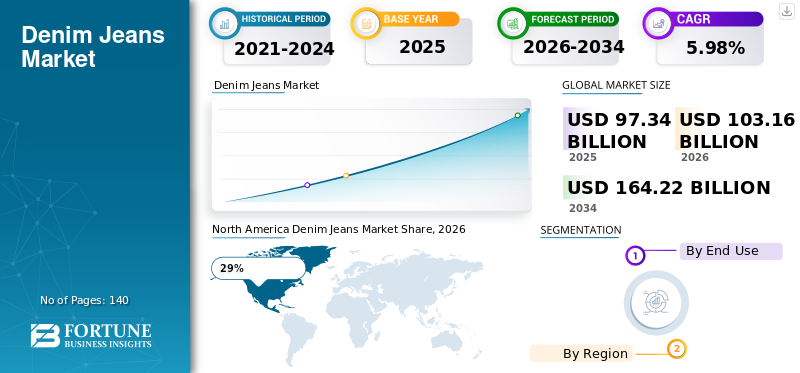
The global denim jeans market size was valued at USD 97.34 billion in 2025. The market is projected to grow from USD 103.16 billion in 2026 to USD 164.22 billion by 2034, exhibiting a CAGR of 5.98% during the forecast period.

The global denim jeans market continues to expand due to increasing consumer preference for casual fashion, premium apparel trends, and rising adoption of sustainable denim products. Denim jeans remain one of the most purchased apparel categories across men, women, and children because of their durability, versatility, and fashion adaptability. The denim jeans market report highlights strong demand for stretch denim, slim-fit jeans, recycled fabric jeans, and eco-friendly manufacturing processes across developed and emerging economies. denim jeans market analysis also indicates that manufacturers are focusing on advanced fabric technologies, digital retail expansion, and fast-fashion product launches to strengthen market penetration. Growing urbanization and changing fashion preferences continue supporting long-term denim jeans market growth globally.
The United States denim jeans market remains one of the largest apparel consumption sectors due to strong fashion awareness, premium brand penetration, and high consumer spending on casual wear. More than 68% of American consumers regularly purchase denim apparel as part of everyday fashion wardrobes. The Denim Jeans Industry Report identifies strong demand for sustainable denim, relaxed-fit jeans, and performance stretch fabrics across retail and e-commerce channels. USA-based manufacturers and retailers are increasingly investing in water-saving production technologies and recycled cotton materials to support environmentally responsible manufacturing practices. Rising online apparel sales and celebrity-driven fashion trends continue supporting the denim jeans market outlook throughout the United States.
Download Free sample to learn more about this report.
Denim Jeans Market Key Takeaways
 Global Market Size & Forecast
- 2025 market size: USD 97.34 Billion
- 2026 market size: USD 103.16 Billion
- 2034 Forecast market size: USD 164.22 Billion
- CAGR: 5.98% from 2026-2034
 Market Share
- Asia-Pacific dominated with a revenue share of 38% in 2025.
- Men’s denim jeans led by end use with a 48% market share.
- Offline retail led by distribution channel with a 56% market share.
 Key Regional Highlights
Asia-Pacific
Asia-Pacific held the largest regional share at 38%, supported by rising fashion demand and expanding apparel markets.
North America
North America accounted for 29% of the market, driven by strong denim consumption and premium fashion trends.
Europe
Europe represented 24% of the market, supported by sustainable denim adoption and established fashion brands.
U.S.
The U.S. remains a major denim market due to strong casualwear demand and established retail networks.
Japan
Japan is a key Asia-Pacific market, supported by premium denim demand and evolving fashion preferences.
Read More

Denim Jeans Market Latest Trends
The denim jeans market trends indicate rising consumer preference for sustainable and environmentally friendly denim products. Manufacturers are increasingly using recycled cotton, organic fibers, biodegradable dyes, and water-efficient finishing technologies to reduce environmental impact. Around 57% of denim manufacturers globally have introduced sustainable fabric collections to align with consumer demand for ethical fashion products. The denim jeans market insights also reveal that laser finishing and ozone washing technologies are replacing traditional chemical-intensive processing methods in modern denim production facilities.
Download Free sample to learn more about this report.
Another major trend in the denim jeans market forecast is the growing popularity of oversized, loose-fit, and vintage-inspired denim styles among younger consumers. Fashion brands are rapidly introducing gender-neutral collections, customized denim designs, and limited-edition collaborations to attract digitally active consumers. Online denim customization platforms are also becoming increasingly popular as consumers seek personalized sizing, embroidery, and distressed styling options. Nearly 49% of premium denim brands now offer digital fitting technologies and AI-based style recommendation systems through e-commerce platforms. Social media influencers and celebrity fashion endorsements continue shaping product demand and accelerating product launch cycles within the global Denim Jeans Industry Analysis.
Denim Jeans Market Dynamics
DRIVER
Rising Demand for Casual and Fashion-Oriented Apparel
The primary driver supporting denim jeans market growth is the increasing global demand for casual clothing and lifestyle-oriented fashion products. Denim jeans have become essential wardrobe items across multiple consumer age groups due to their comfort, durability, and fashion flexibility. More than 61% of urban apparel consumers prefer denim products for daily wear because they are suitable for work, travel, social activities, and casual fashion styling. The denim jeans market research report highlights that changing workplace dress codes and increasing preference for smart-casual clothing are significantly increasing denim apparel consumption worldwide.
Fashion innovation is another important factor strengthening the denim jeans market outlook. Manufacturers are continuously launching stretchable fabrics, lightweight denim materials, and performance-oriented jeans to improve comfort and functionality. Premium denim brands are also expanding product lines with designer collaborations, luxury finishes, and eco-conscious collections to attract high-value consumers. Rapid growth in online fashion retail platforms and social commerce channels further supports market expansion by improving global accessibility to branded denim apparel. The rising influence of fashion influencers and celebrity marketing campaigns continues boosting denim product visibility across international markets.
RESTRAINT
Environmental Concerns Related to Denim Production
One of the major restraints affecting the denim jeans market size is the environmental impact associated with traditional denim manufacturing processes. Conventional denim production consumes large volumes of water, chemical dyes, and energy-intensive washing techniques. Nearly 32% of apparel manufacturers face increasing pressure to comply with environmental regulations and sustainability standards related to textile processing operations. Chemical waste disposal and wastewater treatment requirements are increasing operational costs for denim manufacturers globally.
The denim jeans market analysis also indicates that fluctuating cotton prices and raw material supply instability are creating financial pressure across the apparel industry. Rising labor costs in major manufacturing hubs are reducing profit margins for mid-sized denim producers. In addition, growing competition from athleisure wear, joggers, and alternative casual apparel categories is slightly limiting denim sales growth among younger consumers. Counterfeit branded jeans and low-cost imitation products further create pricing challenges for premium manufacturers operating in highly competitive retail markets. These factors continue influencing operational efficiency and long-term profitability across the denim apparel sector.
OPPORTUNITY
Expansion of Sustainable and Premium Denim Collections
The growing popularity of sustainable fashion creates significant denim jeans market opportunities for manufacturers investing in eco-friendly production methods and premium apparel innovation. Consumers are increasingly preferring jeans made from recycled cotton, organic fibers, and low-water manufacturing technologies. Nearly 46% of apparel buyers actively consider sustainability certifications and environmentally responsible manufacturing practices before purchasing denim products. This shift in purchasing behavior is encouraging global brands to expand eco-conscious denim collections and transparent supply chain initiatives.
Premiumization trends are also opening new growth opportunities within the denim jeans market report. Luxury denim products featuring high-quality fabrics, designer cuts, advanced stitching techniques, and personalized customization services are witnessing increasing demand among fashion-conscious consumers. Digital retail expansion and direct-to-consumer business models are enabling manufacturers to reach wider customer bases while improving profit margins. The integration of AI-powered virtual fitting systems and online customization platforms is further strengthening the denim jeans market forecast by enhancing customer engagement and reducing return rates in online apparel sales channels.
CHALLENGE
Intense Competition and Rapidly Changing Fashion Trends
The denim jeans market industry analysis identifies intense market competition as a major challenge for global apparel manufacturers. Fast-fashion brands continuously introduce new denim styles at competitive prices, forcing established companies to accelerate product development cycles and increase promotional spending. Consumer preferences in the fashion industry change rapidly, requiring manufacturers to adapt designs, fits, and seasonal collections quickly to remain relevant. Nearly 41% of fashion retailers experience inventory management challenges due to rapidly shifting apparel trends and short product life cycles.
Supply chain disruptions and rising transportation costs also create operational difficulties for denim manufacturers sourcing raw materials and distributing finished products globally. The increasing demand for sustainable production adds further complexity because manufacturers must invest in advanced textile processing technologies, water treatment systems, and environmentally compliant production facilities. Maintaining affordability while meeting sustainability expectations remains difficult for several mid-sized apparel companies. The denim jeans market research report further highlights that counterfeit branded denim products and online pricing competition continue placing pressure on premium market positioning strategies.
Denim Jeans Market Segmentation
By End Use
Men’s denim jeans represent the largest segment in the denim jeans market share due to strong demand for casual wear, workwear-inspired fashion, and premium streetwear collections. This segment accounts for nearly 48% of global denim consumption because men frequently purchase regular-fit, slim-fit, straight-cut, and stretch denim products for both professional and lifestyle applications. The denim jeans market analysis highlights increasing popularity of performance denim featuring moisture control, flexibility, and lightweight fabric technologies among male consumers. Business-casual fashion trends are also supporting strong demand for dark-wash and minimalist denim styles across urban markets.
Manufacturers are increasingly introducing sustainable men’s denim collections using recycled cotton fibers and water-saving dyeing technologies. Around 53% of premium men’s denim brands have expanded online-exclusive collections to strengthen digital retail penetration. Celebrity collaborations and sportswear-inspired denim designs are further influencing product demand across younger demographics. The denim jeans market trends indicate that smart-casual dressing patterns and rising disposable income continue supporting long-term expansion of the men’s denim jeans segment globally.
Women’s denim jeans remain one of the fastest-growing categories in the denim jeans market growth, contributing approximately 38% of total market demand. High demand for skinny jeans, high-waist denim, mom-fit styles, bootcut designs, and fashion-forward premium collections continues driving segment expansion. Women consumers frequently purchase denim apparel influenced by seasonal fashion trends, celebrity endorsements, and social media-driven styling trends. The denim jeans market insights show that stretch fabrics and body-contouring denim technologies are becoming increasingly important in women’s apparel manufacturing.
Fashion brands are focusing heavily on sustainable and inclusive sizing strategies to attract wider female consumer groups. Nearly 47% of women’s denim product launches now include recycled fabric blends and eco-friendly finishing methods. Digital retail platforms and influencer-driven marketing campaigns continue accelerating online sales of women’s denim apparel. Customized embroidery, distressed styling, and limited-edition fashion collaborations are also strengthening premium product demand. The denim jeans market forecast indicates continued growth in women’s denim consumption due to evolving fashion preferences and expanding e-commerce accessibility.
Children’s denim jeans account for approximately 14% of the denim jeans market size and continue expanding due to rising demand for durable, comfortable, and fashionable kidswear products. Parents increasingly prefer denim apparel for children because of its durability, easy maintenance, and long-lasting fabric performance. Stretch denim and soft-finish fabrics are becoming increasingly popular in this segment because comfort and mobility remain major purchasing factors. The denim jeans market report highlights rising sales of casual denim products for schoolwear, outdoor activities, and seasonal fashion collections.
Manufacturers are introducing child-safe dyeing technologies, organic cotton fabrics, and skin-friendly materials to improve product safety and sustainability standards. Around 36% of children’s denim manufacturers now emphasize eco-friendly production methods and hypoallergenic materials in marketing strategies. Cartoon-themed designs, embroidered patches, and fashion-inspired mini collections are also supporting product demand among younger consumers. The Denim Jeans Industry Report further indicates that rising urbanization and increasing spending on branded children’s apparel continue supporting growth opportunities within this segment.
To know how our report can help streamline your business, Speak to Analyst
By Region
Online retail represents a rapidly expanding distribution channel in the denim jeans market outlook, accounting for nearly 44% of total denim sales globally. E-commerce platforms provide consumers with extensive product variety, size availability, digital fitting tools, and personalized recommendations that improve shopping convenience. The denim jeans market research report highlights increasing consumer preference for online apparel purchases due to mobile shopping applications, digital payment systems, and fast delivery services. Virtual fitting technologies and AI-driven size recommendation systems are reducing return rates and improving customer satisfaction across online retail platforms.
Fashion influencers and social media advertising play a major role in driving online denim sales, especially among younger demographics. Around 51% of online denim purchases are influenced by influencer campaigns, short-form fashion videos, and celebrity product promotions. Direct-to-consumer business models are enabling brands to improve profitability while strengthening consumer engagement through personalized marketing strategies. The denim jeans market analysis further indicates that subscription-based fashion platforms and online customization services continue supporting growth in the digital denim retail segment.
Offline retail continues dominating the denim jeans market share with approximately 56% market contribution due to strong consumer preference for physical product trials and in-store shopping experiences. Department stores, specialty fashion retailers, shopping malls, and branded flagship outlets remain critical sales channels for denim apparel globally. Consumers often prefer offline purchases because they can physically evaluate fabric quality, fit, color, and comfort before making buying decisions. The denim jeans market trends indicate that premium denim brands continue investing in experiential retail formats and personalized in-store services to strengthen customer loyalty.
Brick-and-mortar retailers are increasingly integrating digital technologies such as smart mirrors, QR-enabled product information systems, and mobile-assisted checkout services to improve customer engagement. Around 43% of premium denim retailers now offer omnichannel shopping experiences combining online browsing with offline product pickup and returns. Seasonal fashion launches, discount campaigns, and in-store promotional events continue driving foot traffic across physical retail channels. The denim jeans market forecast highlights that offline retail remains highly important in emerging economies where traditional shopping culture continues influencing consumer purchasing behavior.
Denim Jeans Market Regional Outlook
North America
North America Denim Jeans Market Share, 2026 (%)
To get more information on the regional analysis of this market, Download Free sample
North America holds approximately 29% share in the global denim jeans market due to strong consumer spending on fashion apparel, premium denim demand, and well-established retail infrastructure. The region benefits from strong brand presence, celebrity-driven fashion influence, and rapid adoption of sustainable denim collections. The United States remains the largest contributor to regional market demand because of high denim consumption across men’s, women’s, and youth fashion categories. Denim jeans are widely preferred for casual wear, workplace fashion, and lifestyle-oriented apparel choices throughout the region.
The denim jeans market report highlights increasing demand for eco-friendly denim, stretch fabrics, and luxury casual wear products in North America. Retailers are investing heavily in omnichannel retail strategies, AI-based product recommendations, and digital fitting technologies to improve customer experience. Sustainable manufacturing initiatives and recycled cotton denim collections continue influencing purchasing decisions among environmentally conscious consumers. Growth in premium online retail platforms and fashion subscription services further supports the denim jeans market growth across North America.
Europe
Europe represents a major fashion-focused region in the denim jeans market analysis with approximately 24% market share driven by premium apparel demand, sustainable fashion adoption, and strong retail brand penetration. Countries such as Germany, Italy, France, Spain, and the United Kingdom remain key contributors to regional denim consumption. European consumers increasingly prefer ethically manufactured and environmentally sustainable denim products. Fashion brands operating in the region are emphasizing transparency in sourcing, organic cotton usage, and low-impact dyeing technologies.
The denim jeans market outlook in Europe is also influenced by evolving streetwear trends and luxury casual fashion preferences. Premium denim collections, customized fashion products, and designer collaborations remain highly popular among younger urban consumers. Around 45% of European apparel retailers have expanded sustainable denim product lines to align with regional environmental expectations. Digital retail growth and social commerce strategies continue accelerating online denim sales throughout European markets.
Germany Denim Jeans Market
Germany remains one of the leading contributors to the European denim jeans market share with nearly 27% of regional demand. The country benefits from strong consumer purchasing power, fashion-conscious urban populations, and increasing preference for premium casual wear. German consumers increasingly prioritize sustainable apparel products, recycled fabrics, and environmentally responsible fashion brands. Denim jeans are widely used for casual office wear, lifestyle fashion, and outdoor apparel applications throughout the country.
The denim jeans market research report highlights rising demand for slim-fit, straight-cut, and stretch denim collections among German consumers. Retailers are increasingly investing in digital retail platforms, virtual fitting systems, and omnichannel shopping experiences to improve customer engagement. Sustainable fashion awareness continues influencing purchasing behavior, encouraging brands to introduce eco-friendly denim collections using low-water manufacturing techniques. The popularity of minimalist fashion and premium-quality fabrics further strengthens the Germany denim market outlook.
United Kingdom Denim Jeans Market
The United Kingdom denim jeans market continues expanding due to growing streetwear culture, influencer-driven fashion trends, and strong online apparel retail activity. The country contributes approximately 19% of Europe’s denim market because of high demand for trendy, premium, and designer-inspired denim collections. British consumers frequently purchase denim products influenced by celebrity endorsements, seasonal fashion trends, and digital marketing campaigns. Skinny jeans, oversized denim, and vintage-inspired styles remain particularly popular among younger demographics.
The denim jeans market insights indicate increasing demand for sustainable and ethically produced denim products across the United Kingdom. Retailers are adopting digital fitting technologies, mobile shopping platforms, and AI-based recommendation systems to improve online apparel sales performance. Premium denim brands continue expanding direct-to-consumer retail strategies and limited-edition fashion collaborations. Rising online fashion consumption and social commerce integration continue supporting strong market opportunities throughout the UK denim apparel sector.
Asia-Pacific
Asia-Pacific dominates the global denim jeans market size with approximately 38% market share supported by large consumer populations, expanding middle-class income groups, and rapidly growing fashion retail industries. China, India, Japan, South Korea, and Southeast Asian countries remain major manufacturing and consumption hubs for denim apparel. Urbanization, rising disposable income, and increasing Western fashion adoption continue driving denim product demand throughout the region. Fast-fashion retail expansion and digital commerce growth are also accelerating market development.
The denim jeans market trends in Asia-Pacific indicate strong demand for affordable denim, premium fashion collections, and sustainable apparel products. Manufacturers are increasingly investing in automated textile production systems and environmentally responsible manufacturing technologies. Online fashion platforms and mobile commerce applications continue influencing purchasing behavior among younger consumers. Regional denim production capacity and export-oriented apparel manufacturing further strengthen Asia-Pacific’s position in the global denim industry.
Japan Denim Jeans Market
Japan represents a premium and innovation-driven segment within the denim jeans market forecast, contributing nearly 22% of Asia-Pacific demand. Japanese consumers are known for their strong preference for high-quality craftsmanship, selvedge denim, and luxury casual fashion products. Domestic brands focus heavily on premium fabric quality, traditional weaving methods, and artisanal denim finishing techniques. Japanese denim products are highly valued internationally due to their durability, texture quality, and premium design aesthetics.
The denim jeans market analysis highlights increasing popularity of sustainable premium denim collections among Japanese consumers. Fashion retailers are integrating digital retail technologies and personalized shopping experiences to strengthen customer engagement. Vintage-inspired denim, minimalist styling, and handcrafted production techniques remain important purchasing factors within the country. Growing online luxury apparel sales and designer collaborations continue supporting expansion of the Japanese denim market.
China Denim Jeans Market
China remains the largest manufacturing and consumption hub in the denim jeans market growth, accounting for approximately 41% of Asia-Pacific demand. Massive apparel production capacity, strong domestic consumption, and expanding online retail infrastructure continue driving denim market expansion across the country. Chinese consumers increasingly prefer branded denim products, fashionable casual wear, and premium lifestyle apparel. The country also serves as a major export base for international denim manufacturing operations.
The denim jeans market Industry Report indicates rising demand for sustainable denim collections, customized fashion products, and smart retail shopping experiences in China. Online retail platforms and live-stream shopping events significantly influence denim purchasing behavior among younger consumers. Domestic manufacturers are investing heavily in automated textile production technologies and water-efficient denim processing systems. Urban fashion trends and increasing premium apparel spending continue supporting strong growth opportunities across the Chinese denim industry.
Rest of World
The Rest of World region accounts for approximately 9% share in the global denim jeans market forecast, supported by rising urbanization, expanding retail infrastructure, and increasing western fashion adoption across Latin America, the Middle East, and Africa. Growing youth populations and rising disposable income are increasing demand for affordable and branded denim apparel products in these regions. Casual fashion trends and international retail brand expansion continue influencing denim product consumption patterns.
The denim jeans market opportunities in the Rest of World region are also supported by digital retail penetration and social media-driven fashion trends. Retailers are increasingly introducing affordable premium denim collections to attract middle-income consumers. Local manufacturing investments and import diversification strategies continue improving product accessibility across emerging markets. Sustainable fashion awareness is gradually increasing, encouraging manufacturers to introduce eco-friendly denim products within developing economies.
List of Top Denim Jeans Companies
- Levi Strauss & Co.
- VF Corp.
- The Gap, Inc.
- H&M Hennes & Mauritz AB
- Kering S.A.
- Pepe Jeans S.L.
- PVH Corp.
- Bestseller A/S
- U.S. Polo Assn.
Top Two Companies by market share
- Levi Strauss & Co. – 13%
- VF Corp. – 9%
Investment Analysis and Opportunities
Investment activity in the denim jeans market continues to increase as manufacturers focus on sustainable production technologies, digital retail infrastructure, and premium product innovation. Apparel companies are investing heavily in recycled cotton sourcing, water-saving dyeing systems, and automated textile manufacturing technologies to improve sustainability performance and operational efficiency. Nearly 44% of global denim manufacturers have announced investments related to environmentally responsible production initiatives and digital retail transformation projects.
The denim jeans market opportunities are particularly strong in premium denim, direct-to-consumer retail channels, and AI-powered online shopping platforms. Investors are increasingly targeting sustainable fashion brands and digital apparel startups that offer personalized product customization and virtual fitting technologies. Emerging markets across Asia-Pacific, Latin America, and the Middle East continue attracting apparel manufacturing investments due to expanding consumer populations and rising fashion awareness. The denim jeans market outlook further highlights strong opportunities in luxury denim collections, influencer-driven marketing strategies, and eco-conscious fashion innovations.
New Product Development
New product development activities in the denim jeans market are centered around sustainable fabrics, comfort-oriented designs, and smart textile technologies. Manufacturers are introducing stretch-enhanced denim, lightweight fabrics, moisture-control finishes, and recycled cotton blends to improve product functionality and environmental performance. Around 39% of denim brands are actively developing eco-friendly collections featuring biodegradable dyes and reduced-water manufacturing techniques.
The denim jeans market trends also indicate rising innovation in customized fashion solutions and digital apparel technologies. Brands are launching AI-powered virtual fitting systems, personalized embroidery services, and limited-edition designer collaborations to strengthen customer engagement. Smart denim fabrics with temperature-regulating and performance-enhancing features are gradually gaining attention among premium consumers. Laser distressing, ozone washing, and digital fabric printing technologies continue transforming modern denim manufacturing processes and supporting innovative product development across the global market.
Five Recent Developments (2023-2025)
- In 2023, Levi Strauss & Co. expanded recycled denim collections using plant-based dyes and water-saving manufacturing methods.
- In 2023, VF Corp. introduced digital product customization platforms for premium denim brands.
- In 2024, H&M Hennes & Mauritz AB increased investments in sustainable cotton sourcing and low-impact denim finishing technologies.
- In 2024, PVH Corp. expanded omnichannel retail operations and AI-powered online fitting solutions.
- In 2025, Pepe Jeans S.L. launched eco-friendly stretch denim collections focused on recyclable fabric materials.
Report Coverage of Denim Jeans Market
The denim jeans market report provides comprehensive analysis of global denim apparel demand, manufacturing trends, retail distribution channels, and consumer purchasing behavior across major international markets. The report evaluates product segmentation by men, women, and children while examining online and offline retail applications influencing denim sales worldwide. The denim jeans market research report also includes a detailed assessment of sustainable fashion trends, textile innovation technologies, digital retail transformation, and competitive landscape developments shaping the apparel industry.
Request for Customization to gain extensive market insights.
The report coverage further analyzes regional demand patterns across North America, Europe, Asia-Pacific, and Rest of World markets while identifying major opportunities in premium fashion, online retail expansion, and eco-friendly manufacturing practices. Company profiling, product innovation analysis, investment trends, and supply chain developments are also included within the denim jeans market analysis. Additionally, the report examines emerging consumer preferences, changing fashion behavior, and technological advancements influencing long-term denim jeans market growth globally.
Frequently Asked Questions
Fortune Business Insights says that the global market value stood at USD 97.34 billion in 2025 and is projected to reach USD 164.22 billion by 2034.
The market is expected to exhibit a CAGR of 5.98% during the forecast period of 2025-2034.
Men’s denim jeans was the leading end-use segment, accounting for nearly 48% of global denim consumption, supported by strong demand for casual wear, workwear-inspired fashion, and premium streetwear.
Key players include Levi Strauss & Co., VF Corp., The Gap, Inc., H&M Hennes & Mauritz AB, Kering S.A., and Pepe Jeans S.L.
Major trends include growing demand for sustainable denim and eco-friendly production technologies, along with rising popularity of oversized, loose-fit, and vintage-inspired styles. Asia-Pacific dominated the market with approximately 38% share.



- 2021-2034
- 2025
- 2021-2024
- 140
-

(Offer valid till 15th Oct 2026)
Get 30-60 hrs Free Customization
Expand Regional and Country Coverage, Segments Analysis, Company Profiles, Competitive Benchmarking, and End-user Insights.



















-
US +1 833 909 2966 ( Toll Free )
-
Get In Touch With Us