Digital Dietitian Market Size, Share & Industry Analysis, By Component (Apps, Platforms, Services), By Delivery Mode (Web-based, Cloud-based and Regional Forecast, 2026-2034
 Download Free Sample
Digital Dietitian Market Overview
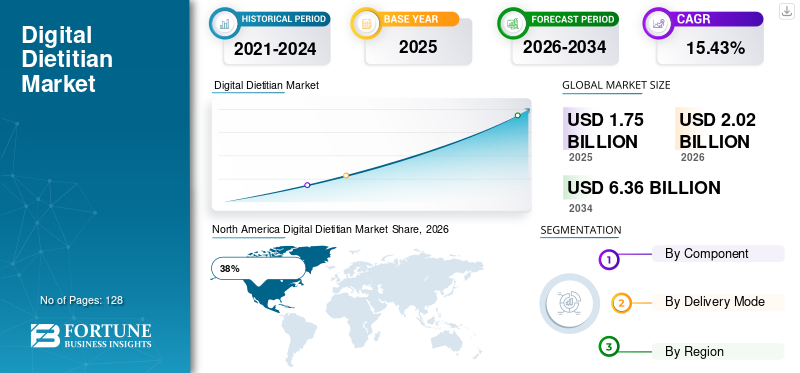
The digital dietitian market size was valued at USD 1.75 Billion in 2025. The market is projected to grow from USD 2.02 Billion in 2026 to USD 6.36 Billion by 2034, exhibiting a CAGR of 15.43% during the forecast period.

The digital dietitian market is experiencing significant expansion as healthcare providers, employers, insurers, wellness platforms, and nutrition technology companies increasingly adopt virtual nutrition management solutions. Digital dietitian platforms combine nutrition tracking, teleconsultation, artificial intelligence, behavioral coaching, meal planning, and health monitoring into a single ecosystem. The market is being shaped by rising awareness of preventive healthcare, increasing obesity rates, growing demand for personalized nutrition, and wider adoption of digital health technologies. Businesses are utilizing digital dietitian solutions to improve patient engagement, reduce healthcare burdens, support chronic disease management, and enhance wellness outcomes. digital dietitian market trends indicate stronger integration of data analytics, wearable connectivity, and personalized nutrition recommendations.
Download Free sample to learn more about this report.
Key Takeaways
Market Size & Growth
- Global market size 2025: USD 1.75 Billion
- Global market size 2034: USD 6.36 Billion
- CAGR (2025–2034): 15.43%
Market Share – Regionals
- North America: 38%
- Europe: 29%
- Asia-Pacific: 25%
- Rest of World: 8%
Country-Level Shares
- Germany: 24% of Europe’s market
- United Kingdom: 21% of Europe’s market
- Japan: 18% of Asia-Pacific market
- China: 32% of Asia-Pacific market
USA digital dietitian market
The United States remains one of the most developed markets for digital dietitian services due to widespread adoption of telehealth, strong healthcare technology infrastructure, and growing consumer interest in nutrition management. Employers are increasingly incorporating digital dietitian services into workplace wellness programs, while healthcare providers use virtual nutrition counseling to support patients with obesity, diabetes, cardiovascular diseases, and metabolic disorders. The demand for digital dietitian market research report solutions continues to rise as consumers seek convenient access to nutrition professionals through mobile applications and cloud-based platforms. Increased health awareness and digital engagement support continued market penetration across multiple healthcare segments.
digital dietitian market Latest Trends
Artificial intelligence is becoming a central component of digital dietitian solutions. Modern platforms analyze dietary habits, activity levels, biometric information, and lifestyle preferences to provide customized nutritional recommendations. AI-supported meal planning is helping organizations deliver scalable nutrition services while maintaining personalization.
Download Free sample to learn more about this report.
Integration with wearable devices represents another major digital dietitian market Trend. Nutrition platforms increasingly connect with smartwatches, glucose monitors, fitness trackers, and health monitoring devices. This integration enables real-time nutritional interventions and more accurate health assessments.
The growing popularity of remote healthcare services is strengthening market adoption. Patients increasingly prefer virtual consultations due to convenience, accessibility, and time efficiency. Healthcare organizations are expanding digital nutrition programs to reach underserved populations.
Corporate wellness programs are also creating strong demand for digital dietitian platforms. Employers recognize nutrition as a key factor affecting productivity, absenteeism, and employee well-being. As a result, digital nutrition services are being integrated into workforce health strategies. These developments continue to shape the digital dietitian market outlook and create new opportunities for technology providers.
digital dietitian market Dynamics
DRIVER
Rising Demand for Personalized Nutrition and Preventive Healthcare
The primary growth driver for the digital dietitian market is the increasing demand for personalized nutrition services. Consumers are becoming more aware of the relationship between diet and long-term health outcomes. This awareness has encouraged individuals to seek customized dietary guidance tailored to age, medical conditions, fitness goals, allergies, and lifestyle preferences.
Healthcare systems are shifting from treatment-focused approaches toward prevention-focused care models. Digital dietitian solutions support this transition by providing ongoing nutritional guidance outside traditional clinical settings. Patients managing diabetes, obesity, hypertension, gastrointestinal disorders, and cardiovascular conditions increasingly rely on digital nutrition support.
The growth of telehealth infrastructure further accelerates market expansion. Digital platforms allow dietitians to serve larger patient populations efficiently while reducing geographical barriers. Businesses, healthcare organizations, and insurance providers are investing in digital dietitian market growth initiatives to improve patient outcomes and reduce long-term healthcare costs. These factors continue to strengthen overall market demand.
RESTRAINT
Concerns Regarding Data Privacy and Information Security
Data privacy remains a significant restraint affecting the Digital Dietitian Industry Analysis. Digital nutrition platforms collect sensitive health information, dietary records, medical histories, biometric data, and behavioral insights. Managing and protecting this information requires robust cybersecurity measures and regulatory compliance.
Consumers remain cautious about sharing personal health information through digital applications. Any security breach can negatively affect trust and hinder platform adoption. Healthcare organizations must invest heavily in encryption, authentication protocols, and secure cloud infrastructure to maintain compliance standards.
Another restraint involves regulatory variations across countries. Different regions maintain unique healthcare data protection requirements, creating operational complexities for multinational providers. Smaller companies may face challenges meeting compliance expectations due to limited resources.
Digital literacy disparities also influence adoption rates. Some patient groups, particularly older adults, may experience difficulties using advanced nutrition technologies. These factors collectively limit market expansion despite strong demand for virtual nutrition services.
OPPORTUNITY
Expansion of Chronic Disease Management Programs
Chronic disease management represents one of the strongest opportunities within the digital dietitian market. The global burden of obesity, diabetes, cardiovascular diseases, and metabolic disorders continues to increase. Nutrition plays a central role in managing these conditions, creating substantial demand for digital dietitian services.
Healthcare providers increasingly recognize the value of continuous nutrition monitoring and intervention. Digital platforms enable personalized meal planning, progress tracking, educational support, and behavior modification. These capabilities improve patient adherence and long-term outcomes.
Employers and insurance companies are also investing in preventive health initiatives. Nutrition-focused wellness programs help reduce medical expenditures while improving workforce productivity. Digital dietitian providers can expand their offerings through partnerships with hospitals, clinics, insurers, and corporate wellness organizations.
The emergence of precision nutrition further enhances opportunities. Advanced analytics, genetic insights, and personalized dietary recommendations are expected to create new revenue streams and strengthen digital dietitian market opportunities over the coming years.
CHALLENGE
Maintaining User Engagement and Long-Term Adherence
Sustaining long-term user engagement remains a major challenge in the digital dietitian market. Many users initially adopt nutrition platforms but gradually reduce participation over time. Consistent dietary behavior change requires motivation, accountability, and ongoing support.
Digital dietitian providers must continuously improve user experiences through interactive features, gamification, coaching, and personalized content. Without strong engagement mechanisms, users may abandon applications before achieving meaningful health outcomes.
Another challenge involves demonstrating measurable clinical effectiveness. Healthcare providers and insurers increasingly demand evidence-based results before investing in nutrition technologies. Companies must conduct research and demonstrate improvements in patient outcomes.
Competition within the digital health sector also intensifies market pressure. Numerous nutrition applications, wellness platforms, and telehealth providers compete for users. Differentiating services through innovation, accuracy, and personalization remains essential for long-term success within the digital dietitian market forecast environment.
digital dietitian market Segmentation
By Component
Apps account for approximately 46% of the digital dietitian market Share. Mobile applications serve as the primary interface between users and nutrition services. These apps provide meal tracking, calorie monitoring, nutrient analysis, hydration reminders, and personalized recommendations. Their convenience and accessibility contribute significantly to adoption rates.
Consumers increasingly rely on mobile nutrition applications for daily health management. AI-powered coaching, barcode scanning, wearable integration, and real-time analytics enhance user experiences. Businesses continue investing in app development to improve engagement and retention. The digital dietitian market analysis indicates that app-based solutions remain the dominant component due to widespread smartphone usage and growing demand for self-managed nutrition programs.
Platforms represent around 34% of the market. These comprehensive systems support healthcare organizations, hospitals, insurers, and corporate wellness programs. Platform solutions enable patient management, consultation scheduling, data analytics, reporting, and integration with electronic health records.
Healthcare providers increasingly adopt centralized nutrition platforms to improve care coordination. Cloud connectivity and interoperability support efficient service delivery across multiple stakeholders. The Digital Dietitian Industry Report highlights strong growth potential for enterprise-grade nutrition platforms as organizations seek scalable and data-driven healthcare solutions.
Services hold approximately 20% market share. This segment includes virtual consultations, nutritional assessments, coaching programs, and professional dietary counseling. Service-based offerings remain essential because many patients prefer direct interaction with qualified nutrition professionals.
Demand for remote dietitian consultations continues to rise across chronic disease management programs, corporate wellness initiatives, and preventive healthcare services. Service providers increasingly combine human expertise with digital technologies to deliver personalized nutrition support. The digital dietitian market Insights indicate continued expansion of hybrid service models that combine automation with professional guidance.
To know how our report can help streamline your business, Speak to Analyst
By Delivery Mode
Web-based solutions account for nearly 42% of the market. These platforms provide browser-accessible nutrition services for healthcare organizations, employers, and individual users. Web-based systems offer flexibility, ease of deployment, and accessibility across multiple devices.
Healthcare providers frequently utilize web-based digital dietitian solutions because they simplify patient onboarding and information sharing. Educational content, nutrition reports, and consultation management can be delivered efficiently through web portals. The digital dietitian market research report identifies web-based deployment as a preferred option for organizations seeking cost-effective implementation.
Cloud-based solutions represent approximately 58% of the market. This segment benefits from scalability, data accessibility, security enhancements, and seamless integration capabilities. Cloud infrastructure enables real-time updates and supports large user populations without significant hardware investments.
Organizations increasingly favor cloud-based digital dietitian systems due to operational efficiency and remote accessibility. Advanced analytics, AI-powered recommendations, and interoperability features are easier to implement through cloud environments. The digital dietitian market Size continues to expand as healthcare organizations migrate toward cloud-enabled nutrition management ecosystems.
digital dietitian market Regional Outlook
North America Digital Dietitian Market Share, 2025 (%)
To get more information on the regional analysis of this market, Download Free sample
North America
North America holds approximately 38% of the global market. The region benefits from advanced healthcare infrastructure, widespread telehealth adoption, and strong awareness of nutrition-related health risks. Healthcare providers actively integrate digital nutrition services into chronic disease management programs. Employers also utilize nutrition platforms within corporate wellness initiatives to improve workforce health outcomes.
Growing prevalence of obesity, diabetes, and cardiovascular diseases continues driving demand for personalized nutrition solutions. Investments in healthcare technology and digital therapeutics support innovation across the region. The digital dietitian market outlook remains highly favorable due to increasing acceptance of virtual healthcare services and strong consumer engagement with wellness technologies.
Europe
Europe accounts for approximately 29% of the global market. The region demonstrates strong adoption of preventive healthcare strategies and digital health initiatives. Governments, healthcare systems, and private organizations increasingly support nutrition-focused interventions to reduce long-term healthcare burdens.
Digital dietitian services are gaining popularity across hospitals, clinics, wellness providers, and insurance programs. Rising health awareness and expanding telemedicine infrastructure contribute to sustained market development. The digital dietitian market growth trajectory remains supported by demand for personalized healthcare and nutrition management solutions throughout the region.
Germany digital dietitian market
Germany represents approximately 24% of the European market. The country maintains a strong healthcare infrastructure and a growing focus on preventive medicine. Digital nutrition platforms are increasingly adopted by healthcare providers seeking to improve patient outcomes through personalized dietary interventions.
The market benefits from widespread internet connectivity, growing health awareness, and increasing demand for remote healthcare services. German employers are incorporating digital nutrition solutions into workplace wellness programs, supporting further market expansion. Healthcare organizations continue investing in technology-driven nutrition management to address chronic disease challenges and improve population health outcomes.
United Kingdom digital dietitian market
The United Kingdom contributes approximately 21% of the European market. Digital healthcare adoption continues expanding across public and private healthcare sectors. Virtual nutrition counseling services are increasingly utilized for weight management, diabetes prevention, and lifestyle improvement initiatives.
Healthcare providers emphasize preventive care and patient engagement, creating favorable conditions for digital dietitian solutions. The growing use of mobile health technologies and teleconsultation services strengthens market demand. Nutrition-focused wellness programs offered by employers and insurers further support growth within the UK market.
Asia-Pacific
Asia-Pacific holds approximately 25% of the global market. Rapid digital transformation, expanding healthcare access, and increasing health awareness drive regional growth. Rising smartphone penetration and growing adoption of mobile health applications support widespread accessibility of digital nutrition services.
Countries across the region are experiencing increasing rates of obesity, diabetes, and lifestyle-related disorders. These trends create demand for nutrition management solutions. The digital dietitian market opportunities within Asia-Pacific remain significant due to large population bases and expanding healthcare investments.
Japan digital dietitian market
Japan accounts for approximately 18% of the Asia-Pacific market. The country’s aging population creates strong demand for nutrition-focused healthcare services. Digital dietitian platforms help support healthy aging, chronic disease management, and preventive care programs.
Japanese consumers demonstrate strong interest in wellness technologies and personalized health solutions. Integration of wearable devices and health monitoring tools enhances nutrition management capabilities. Healthcare organizations increasingly adopt digital nutrition platforms to improve efficiency and patient engagement.
China digital dietitian market
China represents approximately 32% of the Asia-Pacific market. Rapid digitalization and widespread mobile technology adoption create favorable conditions for market expansion. Consumers increasingly seek nutrition guidance through digital channels as awareness of preventive healthcare grows.
The prevalence of lifestyle-related diseases supports demand for personalized nutrition services. Healthcare providers, technology companies, and wellness organizations continue investing in innovative nutrition platforms. Cloud-based deployment and AI-powered recommendations contribute to ongoing market development throughout the country.
Rest of World
Rest of World accounts for approximately 8% of the global market. Emerging economies are increasingly adopting digital healthcare technologies to improve healthcare accessibility and efficiency. Nutrition-focused digital services help address shortages of healthcare professionals and expand access to dietary counseling.
Growing internet connectivity and smartphone usage support market penetration across Latin America, the Middle East, and Africa. Public health initiatives emphasizing preventive care create additional opportunities for digital nutrition providers. The digital dietitian market forecast indicates increasing adoption as healthcare modernization efforts continue throughout these regions.
List of Top Digital Dietitian Companies
- MyFitnessPal, Inc.
- FitNow, Inc.
- Cronometer
- Teladoc Health, Inc.
- Practo
- Fitbit
- Amwell
- Healthie
- Nutrium
- Virgin Pulse
Top Two Companies by Market Share
- MyFitnessPal, Inc. – 18%
- Teladoc Health, Inc. – 14%
Investment Analysis and Opportunities
Investment activity within the digital dietitian market continues to increase as investors recognize the growing importance of preventive healthcare and personalized nutrition. Venture capital firms, healthcare technology investors, and strategic corporate investors are funding innovative nutrition platforms that combine artificial intelligence, analytics, and telehealth capabilities.
Significant opportunities exist in chronic disease management, employer wellness programs, and integrated healthcare ecosystems. Investors are particularly interested in platforms capable of demonstrating measurable health outcomes and scalable business models. The expansion of wearable device connectivity and personalized nutrition technologies creates additional growth avenues. Organizations that develop interoperable, cloud-based, and evidence-driven solutions are expected to attract continued investment and partnership opportunities within the digital dietitian market.
New Product Development
Innovation remains a key competitive factor within the digital dietitian market. Companies are developing advanced nutrition platforms featuring AI-driven meal planning, predictive health analytics, and automated dietary coaching. Personalized nutrition recommendations based on health data, lifestyle factors, and behavioral patterns are becoming increasingly sophisticated.
New products increasingly integrate wearable sensors, glucose monitoring systems, fitness trackers, and remote patient monitoring technologies. Enhanced user interfaces, multilingual support, and virtual coaching capabilities improve accessibility and engagement. Cloud-native architectures enable seamless scalability and real-time data synchronization. These innovations strengthen digital dietitian market trends while improving user outcomes and healthcare efficiency.
Five Recent Developments (2023-2025)
- MyFitnessPal expanded AI-powered nutrition recommendation capabilities for personalized meal planning.
- Teladoc Health enhanced virtual nutrition counseling services within its integrated telehealth ecosystem.
- Fitbit introduced advanced nutrition tracking features linked with wearable health monitoring devices.
- Nutrium expanded professional dietitian management tools for remote consultation workflows.
- Healthie strengthened interoperability capabilities to support healthcare provider integration and patient data management.
Report Coverage
The digital dietitian market Report provides comprehensive analysis of industry structure, technology adoption, competitive landscape, market segmentation, regional performance, investment activity, and innovation trends. The study evaluates key growth factors influencing adoption across healthcare providers, employers, insurers, wellness organizations, and individual consumers.
Request for Customization to gain extensive market insights.
The report covers component segmentation including apps, platforms, and services, along with delivery mode analysis encompassing web-based and cloud-based solutions. Regional assessments examine North America, Europe, Asia-Pacific, and Rest of World markets. Competitive profiling highlights leading companies, strategic developments, and innovation initiatives. The report also analyzes digital dietitian market Share, digital dietitian market Insights, digital dietitian market opportunities, Digital Dietitian Industry Analysis, and digital dietitian market forecast factors influencing future industry expansion.



- 2021-2034
- 2025
- 2021-2024
- 128
-

(Offer valid till 30th Sep 2026)
Get 30-60 hrs Free Customization
Expand Regional and Country Coverage, Segments Analysis, Company Profiles, Competitive Benchmarking, and End-user Insights.




















-
US +1 833 909 2966 ( Toll Free )
-
Get In Touch With Us