Home Bedding Market Size, Share & Industry Analysis, By Type (Mattress, Bed Linen, Pillows, Blankets, Mattress Toppers & Pads), By Distribution Channel (Offline, Online), and Regional Forecast, 2026-2034
 Download Free Sample
Home Bedding Market Overview
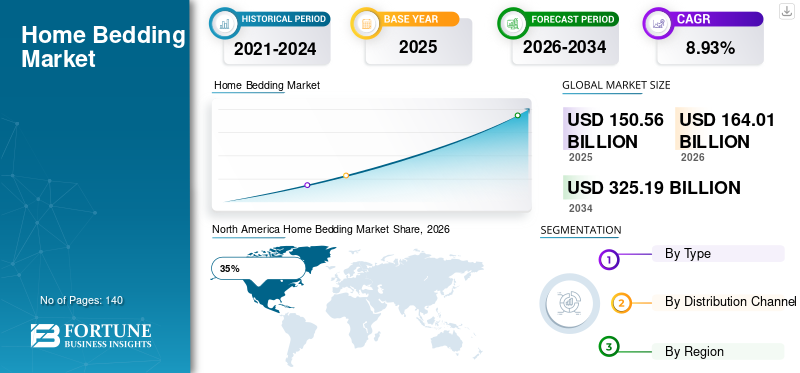
The home bedding market size was valued at USD 143.77 billion in 2025. The market is projected to grow from USD 156.60 billion in 2026 to USD 310.43 billion by 2034, exhibiting a CAGR of 8.93 % during the forecast period.

The home bedding market is experiencing substantial growth due to increasing consumer focus on comfort, sleep quality, home aesthetics, and wellness-oriented lifestyles. Bedding products such as mattresses, bed linen, pillows, blankets, and mattress toppers are becoming essential household purchases as consumers prioritize healthy sleeping environments and interior décor improvements. home bedding market analysis indicates rising urbanization, expanding residential construction activities, and growing disposable incomes continue supporting market demand globally. Manufacturers are increasingly introducing premium bedding products featuring ergonomic support, temperature regulation, and sustainable materials to meet evolving consumer preferences.
The United States home bedding market remains one of the largest global markets due to strong consumer spending on home furnishing products and premium sleep solutions. Rising awareness regarding orthopedic health, sleep disorders, and bedroom interior design continues supporting demand for advanced bedding products throughout the country. Home Bedding Industry Report findings indicate strong adoption of memory foam mattresses, luxury bed linen, smart pillows, and hypoallergenic bedding materials among residential consumers. E-commerce growth and direct-to-consumer bedding brands are significantly influencing purchasing behavior in the U.S. market.
Download Free sample to learn more about this report.
Home Bedding Market Key Takeaways
 Global Market Size & Forecast
- 2025 Market Size: USD 143.77 Billion
- 2026 Market Size: USD 156.60 Billion
- 2034 Forecast Market Size: USD 310.43 Billion
- CAGR: 8.93% from 2026-2034
 Market Share
- North America dominated with a 35% regional market share in 2025.
- Mattresses held the largest product share at approximately 34%.
- Offline retail accounted for the largest distribution share at approximately 62%.
 Key Regional Highlights
North America
North America held the largest regional share at 35%, supported by strong demand for premium bedding products.
Asia-Pacific
Asia-Pacific accounted for 30% of the market, driven by rising urbanization and growing sleep wellness awareness.
Europe
Europe represented 27% of the market, supported by demand for luxury and sustainable bedding products.
U.S.
Demand is supported by growing consumer preference for premium, comfortable, and innovative bedding products.
Japan
Japan accounted for 22% of the Asia-Pacific market, supported by demand for quality and ergonomic bedding solutions.
Read More

Home Bedding Market Latest Trends
The home bedding market trends reveal increasing demand for smart bedding products, sustainable materials, and wellness-focused sleep solutions. Consumers are increasingly purchasing bedding products featuring cooling fabrics, antimicrobial protection, moisture management, and ergonomic support technologies designed to improve sleep quality and physical comfort. home bedding market research report findings indicate rising popularity of memory foam mattresses, adjustable beds, weighted blankets, and organic cotton bed linen among health-conscious consumers.
Download Free sample to learn more about this report.
Another major trend shaping the home bedding industry analysis is the growing influence of digital retail channels and direct-to-consumer business models. Online platforms are enabling manufacturers to offer personalized mattress recommendations, virtual room visualization tools, and subscription-based bedding replacement services. Sustainability is also becoming a major purchasing factor, encouraging companies to introduce eco-friendly fabrics, recycled fibers, and biodegradable packaging solutions.
Home Bedding Market Dynamics
DRIVER
Rising Consumer Focus On Sleep Quality And Home Comfort
The increasing emphasis on sleep health and home comfort remains a major driver supporting home bedding market growth globally. Consumers are becoming more aware of the relationship between sleep quality, physical wellness, and mental health, increasing demand for high-quality bedding products. home bedding market analysis indicates rising preference for orthopedic mattresses, hypoallergenic pillows, and breathable bed linen designed to improve comfort and support. Expanding residential construction activities and home renovation trends are also accelerating demand for premium bedding solutions. Hospitality sector growth and rising tourism activities continue supporting commercial bedding purchases across hotels and resorts. In addition, social media influence and home décor trends are encouraging consumers to invest in aesthetically appealing and technologically advanced bedding products worldwide.
RESTRAINT
Fluctuating Raw Material Costs and Pricing Pressure
One of the major restraints affecting the home bedding market is the volatility in raw material prices including cotton, foam, latex, polyester, and specialty fabrics. Bedding manufacturers face increasing operational costs associated with material sourcing, transportation, and labor expenses. Home Bedding Industry Report findings indicate intense competition among local and international brands often creates pricing pressure and limits profitability. Consumers in price-sensitive markets may also prefer low-cost alternatives, affecting premium product adoption. Supply chain disruptions and global trade uncertainties further impact inventory management and production planning. Additionally, counterfeit products and inconsistent product quality in unorganized retail markets continue creating challenges for established bedding manufacturers globally.
OPPORTUNITY
Expansion of Smart Bedding and Sustainable Products
The rapid expansion of smart bedding technologies and sustainable home furnishing products presents substantial opportunities for the home bedding market. Consumers increasingly seek mattresses and bedding products integrated with sleep monitoring systems, temperature regulation features, and ergonomic support technologies. home bedding market opportunities are also growing because of rising environmental awareness and preference for organic cotton, bamboo fabrics, recycled fibers, and eco-friendly production methods. Manufacturers are investing heavily in premium sleep solutions designed to enhance wellness and personalized comfort experiences. Emerging economies with expanding middle-class populations and increasing urban housing development continue offering strong commercial opportunities. The growth of online retail platforms and direct-to-consumer sales channels further strengthens market accessibility globally.
CHALLENGE
Intense Market Competition and Changing Consumer Preferences
The home bedding market faces significant challenges related to intense competition and rapidly evolving consumer expectations. Bedding manufacturers must continuously innovate product designs, materials, and technologies to remain competitive within the industry. home bedding market forecast studies indicate maintaining affordability while integrating advanced features such as cooling technologies and smart sleep tracking systems creates operational complexity. Consumer preferences for personalized comfort, sustainability, and luxury aesthetics require ongoing investment in research and product development. Additionally, seasonal demand fluctuations and increasing return rates associated with online mattress sales create logistical challenges for manufacturers and retailers. Maintaining brand loyalty and product differentiation remains a critical challenge across the global home bedding industry.
Home Bedding Market Segmentation
By Type
Mattresses account for approximately 34% of the home bedding market share and remain the largest product segment globally. Consumers increasingly prioritize sleep comfort, spinal alignment, and pressure relief, supporting strong demand for memory foam, latex, hybrid, and orthopedic mattresses. home bedding market research report findings indicate rising adoption of smart mattresses equipped with sleep tracking, adjustable firmness, and temperature control technologies. Residential consumers and hospitality providers are investing heavily in premium mattresses to improve sleep experiences and long-term durability. Manufacturers are continuously introducing innovative mattress materials designed for motion isolation, cooling comfort, and ergonomic support.
Bed linen contributes nearly 24% share of the home bedding market because consumers frequently purchase sheets, duvet covers, comforters, and pillowcases to maintain hygiene and enhance bedroom aesthetics. home bedding market trends indicate rising demand for luxury fabrics including Egyptian cotton, bamboo fibers, silk blends, and organic textile materials. Consumers increasingly prefer breathable, antimicrobial, and eco-friendly bed linen products aligned with wellness and sustainability trends. Manufacturers are introducing designer patterns, customizable bedding sets, and moisture-regulating textiles to attract modern consumers.
Pillows hold approximately 18% share of the home bedding market due to rising consumer demand for ergonomic neck support and improved sleep posture. Memory foam pillows, cooling gel pillows, orthopedic support cushions, and hypoallergenic pillow products are gaining substantial popularity among health-conscious consumers. home bedding market analysis highlights increasing interest in customized pillow firmness and advanced pressure-relief technologies. Manufacturers are developing pillows using breathable fabrics, antimicrobial treatments, and adjustable filling materials to improve comfort and hygiene. Sleep wellness awareness and rising incidence of neck pain and posture-related issues continue supporting product demand.
Blankets contribute nearly 14% share of the home bedding market because consumers increasingly seek comfort-focused bedding solutions for temperature regulation and seasonal use. home bedding market trends indicate rising popularity of weighted blankets, fleece blankets, electric blankets, and luxury wool products designed to improve sleep comfort and relaxation. Manufacturers are increasingly utilizing sustainable fibers and hypoallergenic materials to align with changing consumer preferences. Decorative blankets and multifunctional throws are also gaining demand because of rising home décor trends and social media influence. Growing awareness regarding wellness-focused sleep environments and increasing winter bedding demand continue supporting market expansion within the blanket segment across residential and hospitality sectors.
Mattress toppers and pads account for approximately 10% share of the home bedding market due to increasing consumer interest in enhancing mattress comfort and extending product lifespan. home bedding market outlook studies indicate strong demand for memory foam toppers, cooling mattress pads, waterproof protectors, and pressure-relief support layers. Consumers increasingly utilize mattress toppers to customize sleeping surfaces without replacing entire mattresses. Manufacturers are introducing temperature-regulating fabrics, antimicrobial technologies, and orthopedic support features within mattress protection products.
To know how our report can help streamline your business, Speak to Analyst
By Distribution Channel
Offline retail accounts for approximately 62% share of the home bedding market because consumers often prefer physically testing mattresses, pillows, and bedding fabrics before purchasing. Department stores, specialty bedding outlets, furniture retailers, and hypermarkets continue serving as major distribution channels across residential markets. home bedding market analysis indicates that in-store shopping allows customers to compare comfort levels, material quality, and product designs directly. Retailers are increasingly improving showroom experiences with sleep consultation services, product demonstrations, and customized bedding recommendations.
Online sales contribute nearly 38% share of the home bedding market due to rapid e-commerce expansion and growing popularity of direct-to-consumer bedding brands. home bedding market trends reveal increasing consumer preference for online mattress shopping, personalized sleep recommendations, and doorstep delivery services. Digital platforms enable manufacturers to offer extensive product catalogs, customer reviews, and virtual bedroom visualization tools. Subscription-based pillow and bedding replacement services are also becoming increasingly popular among urban consumers. Manufacturers are investing heavily in online marketing campaigns, AI-based product recommendation systems, and flexible return policies to improve customer satisfaction. Rising smartphone usage and digital payment adoption continue accelerating online bedding sales globally.
Home Bedding Market Regional Outlook
North America
North America Home Bedding Market Share, 2025 (%)
To get more information on the regional analysis of this market, Download Free sample
North America holds approximately 35% share of the home bedding market and remains one of the largest regions for premium sleep products and home furnishing solutions. The United States dominates regional demand because consumers increasingly prioritize sleep health, wellness, and luxury bedroom interiors. home bedding market analysis indicates strong adoption of memory foam mattresses, smart sleep systems, luxury bed linen, and orthopedic pillows throughout residential and hospitality sectors. Canada also contributes significantly due to rising awareness regarding ergonomic bedding and sustainable textile products. home bedding market trends reveal growing consumer preference for eco-friendly fabrics, cooling mattresses, and personalized sleep comfort technologies. Direct-to-consumer bedding brands and online mattress retailers are expanding rapidly across North America due to increasing digital purchasing behavior. Manufacturers are heavily investing in AI-enabled sleep tracking technologies, adjustable mattresses, and customizable bedding products designed for wellness-focused consumers. Hospitality industry growth and premium hotel expansion continue strengthening commercial bedding demand throughout the region.
Europe
Europe accounts for nearly 27% share of the home bedding market and remains a major center for luxury bedding products, premium textiles, and sustainable home furnishings. Consumers across the region increasingly prioritize comfort, aesthetics, and environmentally friendly bedding materials. home bedding market research report findings indicate rising demand for organic cotton sheets, hypoallergenic pillows, and temperature-regulating blankets across residential and hospitality sectors. Germany, France, the United Kingdom, and Italy remain major contributors because of their strong textile manufacturing industries and high consumer spending on home décor products. home bedding market trends also highlight increasing adoption of sustainable fabrics, recycled fibers, and eco-friendly packaging solutions throughout Europe. Luxury bedding brands are introducing customizable mattress systems and designer bedding collections targeting premium consumers. Hospitality sector modernization and increasing tourism activities continue supporting commercial bedding demand. Consumers are also increasingly interested in wellness-oriented sleep products including weighted blankets and orthopedic mattresses.
Germany Home Bedding Market
Germany represents nearly 25% share of the Europe home bedding market due to strong consumer preference for premium sleep products and advanced home furnishing solutions. The country has a well-established textile manufacturing sector and increasing demand for ergonomic mattresses, sustainable bed linen, and orthopedic pillows. home bedding market analysis in Germany highlights rising awareness regarding sleep quality and wellness-focused bedding products among residential consumers. Manufacturers are investing heavily in eco-friendly textiles, smart sleep technologies, and luxury bedding collections tailored to modern consumer preferences. Hospitality sector growth and increasing home renovation activities continue supporting market expansion. Germany’s strong retail infrastructure and consumer focus on product quality further strengthen its position within the European home bedding industry.
United Kingdom Home Bedding Market
The United Kingdom accounts for approximately 18% share of the Europe home bedding market because of increasing consumer spending on luxury bedding products and home décor improvements. home bedding market trends indicate strong demand for memory foam mattresses, premium bed linen, and designer bedding collections across urban households. E-commerce bedding brands and direct-to-consumer mattress companies are significantly influencing purchasing patterns within the country. Consumers increasingly prefer sustainable bedding materials and multifunctional sleep products designed for comfort and wellness. Hospitality industry growth and rising apartment furnishing activities continue strengthening bedding demand throughout the United Kingdom. Technological integration within sleep products and increasing interest in wellness lifestyles further support market growth.
Asia-Pacific
Asia-Pacific holds approximately 30% share of the home bedding market and is emerging as one of the fastest-growing regions due to rapid urbanization, expanding middle-class populations, and increasing residential construction activities. Countries such as China, Japan, India, and South Korea are witnessing strong demand for mattresses, bed linen, pillows, and luxury bedding products. home bedding market insights reveal increasing consumer awareness regarding sleep quality, wellness, and modern home aesthetics throughout urban markets. Rising disposable incomes and expanding e-commerce platforms continue accelerating bedding product sales across the region. home bedding market trends also indicate growing adoption of memory foam mattresses, cooling fabrics, and minimalist bedding designs aligned with contemporary lifestyle preferences. Manufacturers are increasingly introducing affordable premium bedding products tailored for regional consumer needs. Hospitality industry growth and rising tourism activities are significantly supporting commercial bedding demand across hotels and serviced apartments. Smart home adoption and technology-enabled sleep products continue creating innovation opportunities throughout Asia-Pacific.
Japan Home Bedding Market
Japan contributes nearly 22% share of the Asia-Pacific home bedding market due to strong consumer preference for comfort-focused sleep products and advanced textile innovation. Japanese consumers increasingly prioritize compact bedding designs, ergonomic support, and premium fabric quality within residential spaces. home bedding market analysis indicates strong adoption of memory foam mattresses, cooling pillows, and multifunctional bedding products designed for smaller urban apartments. Manufacturers are heavily investing in smart sleep technologies, antimicrobial textiles, and sustainable fabric solutions to meet changing consumer expectations. Hospitality modernization and increasing wellness-focused lifestyles continue supporting demand for premium bedding products. Rising interest in minimalist interior décor and space-efficient bedding solutions further strengthens Japan’s market position.
China Home Bedding Market
China represents approximately 44% share of the Asia-Pacific home bedding market due to rapidly expanding residential construction activities and rising middle-class consumer spending. home bedding market forecast studies indicate strong demand for affordable luxury bedding products, smart mattresses, and premium bed linen collections across urban populations. Domestic and international manufacturers are increasingly investing in e-commerce expansion, AI-based sleep technologies, and customized bedding products tailored for Chinese consumers. Rising awareness regarding sleep wellness and increasing home décor trends continue accelerating product demand throughout the country. Hospitality sector growth and expanding apartment furnishing activities further strengthen market opportunities. China remains one of the largest production and consumption hubs within the global home bedding industry.
Rest of World
The Rest of World region accounts for nearly 8% share of the home bedding market and includes developing home furnishing industries across Latin America, the Middle East, and Africa. Increasing urbanization, rising disposable incomes, and growing awareness regarding home comfort are supporting market expansion throughout these regions. home bedding market analysis indicates increasing demand for mattresses, blankets, bed linen, and pillows among residential consumers and hospitality establishments. Latin American markets are witnessing rising adoption of affordable bedding products and modern interior décor trends due to expanding middle-class populations. The Middle East continues experiencing strong demand for luxury bedding and premium hospitality textiles supported by tourism and luxury real estate development. African markets are gradually increasing adoption of modern bedding products because of improving housing infrastructure and retail accessibility. home bedding market trends also reveal increasing partnerships between international bedding brands and regional distributors to improve market penetration.
List of Top Home Bedding Companies
- Somnigroup International Inc.
- Bombay Dyeing & Manufacturing Company Limited
- Casper Sleep Inc.
- Beaumont & Brown
- Restful Nights
- American Textile Company
- Peacock Alley
- Purple Innovation, Inc.
- The White Company
- Sleep Number Corporation
Top Two Companies by Market Share
- Sleep Number Corporation – Approximately 16% market share
- Casper Sleep Inc. – Approximately 14% market share
Investment Analysis and Opportunities
The home bedding market is attracting substantial investments due to increasing consumer demand for premium sleep products, wellness-oriented home furnishings, and sustainable bedding materials. Manufacturers and investors are heavily focusing on smart mattress technologies, cooling textiles, and eco-friendly bedding solutions designed to improve sleep quality and consumer comfort. home bedding market opportunities are particularly strong in luxury bedding, direct-to-consumer retail models, and AI-enabled sleep monitoring systems.
Emerging economies across Asia-Pacific and Latin America offer substantial commercial opportunities because of rising disposable incomes and expanding middle-class populations. Manufacturers are increasingly investing in personalized bedding solutions, smart home integration, and advanced textile engineering to strengthen competitive positioning within the global home bedding industry.
New Product Development
New product development within the home bedding market is heavily focused on smart sleep technologies, sustainable materials, and personalized comfort solutions. Manufacturers are increasingly introducing AI-enabled mattresses equipped with sleep tracking systems, temperature adjustment features, and posture monitoring technologies.
Manufacturers are focusing on integrating digital connectivity and smart home compatibility into advanced bedding systems. Improved moisture management fabrics, hypoallergenic treatments, and orthopedic support technologies continue driving innovation across mattresses and sleep accessories globally. Luxury aesthetics and wellness-oriented product design remain key focus areas within the evolving home bedding industry.
Five Recent Developments (2023-2025)
- Sleep Number Corporation expanded AI-enabled sleep tracking mattress technologies in 2024.
- Casper Sleep Inc. introduced advanced cooling mattress collections and ergonomic sleep accessories in 2025.
- Purple Innovation, Inc. strengthened investments in smart sleep technology and pressure-relief mattress systems in 2023.
- Bombay Dyeing & Manufacturing Company Limited expanded premium bed linen and sustainable textile product lines in 2024.
- American Textile Company launched antimicrobial and hypoallergenic bedding collections designed for wellness-focused consumers in 2025.
Report Coverage of home bedding market
The home bedding market Report provides comprehensive analysis of market trends, competitive landscape, regional performance, and technological advancements across the global home furnishing and sleep products industry. The report evaluates major market segments including mattresses, bed linen, pillows, blankets, and mattress toppers while analyzing distribution channels across offline and online retail markets.
Request for Customization to gain extensive market insights.
The report further analyzes key growth drivers such as increasing consumer awareness regarding sleep health, rising residential construction activities, and expanding hospitality sector demand. Market restraints related to raw material price volatility, supply chain disruptions, and intense competition are also assessed extensively. home bedding market insights additionally highlight emerging opportunities associated with direct-to-consumer retail models, smart sleep products, and eco-friendly bedding materials.
Frequently Asked Questions
Fortune Business Insights says that the global market value stood at USD 143.77 billion in 2025 and is projected to reach USD 310.43 billion by 2034.
The market is expected to exhibit a CAGR of 8.93% during the forecast period of 2026-2034.
Mattresses were the leading type segment, accounting for approximately 34% of the market, driven by rising demand for sleep comfort, spinal alignment, and pressure relief.
Key players include Somnigroup International Inc., Bombay Dyeing & Manufacturing Company Limited, Casper Sleep Inc., Beaumont & Brown, Restful Nights, and American Textile Company.
Major trends include growing demand for smart bedding and sustainable materials, along with the rising influence of online and direct-to-consumer sales. North America leads with approximately 35% market share.



- 2021-2034
- 2025
- 2021-2024
- 140
-

(Offer valid till 30th Sep 2026)
Get 30-60 hrs Free Customization
Expand Regional and Country Coverage, Segments Analysis, Company Profiles, Competitive Benchmarking, and End-user Insights.



















-
US +1 833 909 2966 ( Toll Free )
-
Get In Touch With Us