Ketogenic Diet Market Size, Share & Industry Analysis, By Type (Packaged Keto Foods & Beverages {Keto Snacks, Low-Carb Staples, Keto-Ready Meals, and Keto Beverages}, Keto Supplements & Nutraceuticals, and Keto Programs & Services), By Price Tier (Premium/Specialty and Mass Market), By End Use (Weight Management, Lifestyle/Fitness, and Medical), By Distribution Channel (Offline Retail, Online, and Healthcare/Fitness), and Regional Forecast, 2026-2034
 Download Free Sample
(Offer valid till 31st Oct 2026)

Ketogenic Diet Market Size and Future Outlook
 Listen to Audio Version
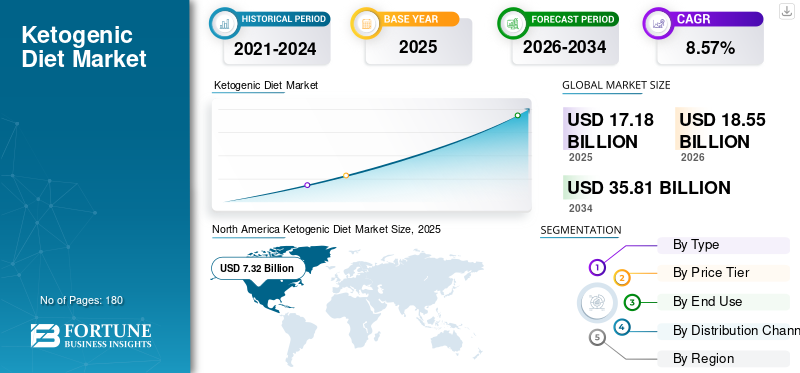
The global ketogenic diet market size was valued at USD 17.18 billion in 2025. The market is projected to grow from USD 18.55 billion in 2026 to USD 35.81 billion by 2034, exhibiting a CAGR of 8.57% during the forecast period. North America dominated the ketogenic diet market with a market share of 42.61% in 2025.
The ketogenic diet is a low-carb, high-fat way of eating that influences energy intake by the body. In ketosis, the body burns fat for fuel instead of carbohydrates and this diet focuses on foods such as meat, fish, eggs, dairy, nuts, and healthy oils, while cutting back on sugars and starches.
The market for ketogenic products is growing rapidly as more people seek ways to manage their weight, improve metabolic health, and prevent lifestyle-related diseases. People are increasingly choosing the ketogenic-based diet as they learn about its benefits, such as improved energy and better blood sugar control. As more keto-friendly products are available, manufacturers are adopting strong promotion on digital platforms that support market growth.
Companies such as Nestlé S.A., Perfect Keto, Abbott Laboratories, and others are some of the key players operating in this market. New product launch is the key strategy which is boosting product sales and supporting the market growth.
Download Free sample to learn more about this report.
Ketogenic Diet Market KeyTakeaways
 Market Size & Forecast
- 2025 Market Size: USD 17.18 billion
- 2026 Market Size: USD 18.55 billion
- 2034 Forecast Market Size: USD 35.81 billion
- CAGR: 8.57% from 2026–2034
 Market Share
- North America dominated the ketogenic diet market with a 42.61% share in 2025.
- Keto supplements & nutraceuticals are projected to grow at a CAGR of 8.80% during the forecast period.
- The online segment is anticipated to expand at a CAGR of 8.98% over the study period.
 Key Regional Highlights
North America
North America led the market with USD 7.32 billion in 2025, driven by strong keto awareness and broad product availability.
Asia Pacific
Asia Pacific reached USD 3.58 billion in 2025 and is projected to grow at the fastest CAGR of 10.03% through 2034.
Europe
Europe accounted for USD 4.62 billion in 2025, supported by increasing demand for low-carb foods and preventive healthcare.
U.S.
The market totaled USD 6.34 billion in 2025
Japan
The market reached USD 0.67 billion in 2025
Read More

KETOGENIC DIET MARKET TRENDS
Growing Preference for Ready-to-Eat Keto Foods and Digital Wellness Influence Driving Market Innovation
There is a growing shift toward clean-label, natural ingredients in keto product formulations, prompting manufacturers to develop new product lines that suit this evolving market demand. Moreover, information sharing about such products through digital platforms, fitness influencers, and social media also plays a major role in increasing consumers' acceptance. Product innovation in snacks, beverages, and supplements is also expanding market reach. Young consumers are also combining keto with other dietary approaches, such as intermittent fasting, further boosting consumer adoption.
MARKET DYNAMICS
MARKET DRIVERS
Download Free sample to learn more about this report.
Rising Obesity Levels and Growing Focus on Metabolic Health Accelerating Adoption of Ketogenic Diet
The ketogenic diet market growth is primarily driven by the increasing global focus on weight management and increased health development. There is a rising prevalence of obesity, diabetes, and lifestyle-related disorders, which is encouraging consumers to adopt low-carbohydrate, high-fat diets. Moreover, increasing awareness of the need for improved energy levels, better blood sugar control, and fat loss is further accelerating the adoption of this diet. Growth in fitness communities, social media, and health professionals is further boosting consumer interest in such products. Hence, manufacturers are expanding the availability of keto-friendly product lines and boosting market demand.
MARKET RESTRAINTS
Strict Dietary Requirements and Concerns Over Long-Term Health Effects Limiting Wider Consumer Adoption
People have raised concerns about the long-term safety of the ketogenic diet, especially when it comes to possible nutrient deficiencies and heart health. The strict rules and limited food options can also make it hard for many to stick with this diet. Specialized keto products can be expensive to make and are not always easy to find in every area, which can make it harder for people to try or continue the diet. Another challenge is that there are no clear standards or consistent guidelines for such a diet, which can make people unsure about how to follow it safely. Cultural food habits, especially in places where people eat a lot of carbohydrates, can also make it harder for the diet to become popular.
MARKET OPPORTUNITIES
Expanding Demand for Convenient, Personalized, and Plant-Based Keto Products Creating New Growth Potential
There are significant opportunities for manufacturers to develop new, convenient keto-friendly foods that appeal to a wide range of consumer base and to expand their product lines into vegetarian and vegan options. A market expansion strategy could also drive growth, as consumption rises in underdeveloped markets. Expanding ketogenic principles into personalized nutrition plans and digital health platforms also creates an opportunity to engage new customers. Therefore, food manufacturers and health professionals can partner to develop new diet plans, build consumer trust, and encourage consumer adoption.
Segmentation Analysis
By End Use
Rising Obesity Rates and Strong Consumer Focus on Effective Fat Loss Driving Dominance of Weight Management Segment
The market is segmented by end use into weight management, lifestyle/fitness, and medical.
The weight management segment held the largest ketogenic diet market share in 2025 due to its core value proposition of promoting fat loss through ketosis. Consumers widely adopt the keto diet for its effectiveness in rapid weight reduction, appetite control, and improved metabolic efficiency.
The lifestyle/fitness holds the second-largest market share, and is growing at a CAGR of 8.49% during the forecast period. Consumers adopt keto for sustained energy, endurance, and overall wellness. It is particularly popular among athletes and fitness enthusiasts. However, its adoption is more niche than weight management, as it focuses on performance optimization rather than mass-market weight-loss goals, resulting in relatively lower overall demand.
By Type
High Demand for Convenient and Ready-to-Consume Products Driving Dominance of Packaged Keto Food & Beverages Segment
Based on type, the market is segmented into packaged keto foods & beverages, keto supplements & nutraceuticals, and keto programs & services.
The packaged keto foods & beverages segment accounted for the largest market share in 2025. Such products are convenient, easy to find, and can easily fit into people’s daily routines. Moreover, consumers leading busy lifestyles often choose ready-to-eat or easy-to-make options, such as snacks, bars, drinks, and meal replacements. Manufacturers are also investing in expanding and improving their product lines by enhancing taste, variety, and the use of clean-label ingredients in their food products.
Keto supplements & nutraceuticals make up the second-largest share of the market and are expected to grow at a CAGR of 8.80% during the forecast period. Keto supplements are slowly growing popular among consumers following such diets as they help support ketosis. Supplement ranges typically include exogenous ketones, MCT oils, and an electrolyte blend which helps to enhance the performance of the products and supports convenience.
By Price Tier
Higher Willingness to Pay for Specialized and High-Quality Keto Products Driving Dominance of Premium/Specialty Segment
The market is segmented by price tier into premium/specialty and mass market.
The premium/specialty segment led the global market in 2025 as they provide precise nutrition and high-quality ingredients that help consumers stay in ketosis. Such products include organic, non-GMO, or those with added health benefits, which further add to the cost of the products. They also include special ingredients such as MCT oils and almond flour.
The mass market is another major segment that has a CAGR of 8.23% during the forecast period. There are several mainstream food companies that are increasingly offering economical keto-friendly product portfolios. Such products are typically readily available at several retail and online stores. However, they may not meet the strict standards or premium quality that dedicated keto consumers expect.
By Distribution Channel
To know how our report can help streamline your business, Speak to Analyst
Strong Consumer Preference for In-Store Product Verification and Immediate Availability Driving Dominance of Offline Retail Segment
The market is segmented by distribution channel into offline retail, online, and healthcare/fitness.
The offline retail segment led the global market in 2025. Consumers prefer to check products in person and trust familiar stores such as supermarkets and hypermarkets. Physical stores also help people read ingredient labels, check nutrition facts, and ensure that the products are genuine before buying. Offline stores also make it easier to witness more products, take advantage of in-store deals, and get advice from health shop experts, all of which can affect what people buy. Established distribution networks and bulk product availability further drive higher sales volumes in this segment.
The online segment accounted for the second largest market share in 2025 and is expected to register a CAGR of 8.98% during the forecast period. Online platforms growth is driven by convenience, wider product variety, and growing digital adoption. However, factors such as delayed delivery, lack of physical inspection, and trust issues in certain regions limit their dominance compared to offline retail.
Ketogenic Diet Market Regional Outlook
By region, the market is categorized into Europe, North America, Asia Pacific, South America, and the Middle East & Africa.
North America
North America Ketogenic Diet Market Size, 2025 (USD Billion)
To get more information on the regional analysis of this market, Download Free sample
The market in North America reached a valuation of USD 7.32 billion in 2025 and is the leading region in the world. The region leads the market as many people are aware of keto, more are choosing low-carb lifestyles, and there are plenty of keto-friendly products available. The U.S. stands out as it has many health-conscious people, increasing obesity rates, and lots of food brands that offer keto snacks, drinks, and supplements. Social media, popular fitness trends, and celebrity endorsements also help increase demand. Well-established retail stores and online shopping make it easier to find keto products. However, concerns about the diet's long-term sustainability and closer scrutiny of health claims could affect the market.
U.S. Ketogenic Diet Market
In 2025, the U.S. market reached USD 6.34 billion and it leads the market due to high awareness, strong fitness culture, and easy access to keto-friendly products. More people are choosing such diets as obesity rates rise and demand for weight management solutions grows. Many food brands now offer keto snacks, drinks, and supplements, which helps the market grow. Growth is also boosted by digital marketing, influencer promotions, and consumer education efforts.
Asia Pacific
The Asia Pacific market was valued at USD 3.58 billion in 2025 and is expected to grow at a CAGR of 10.03% during the forecast period. The diet is gaining popularity in the Asia Pacific as more people move to cities, incomes rise, and there is greater awareness about weight management and lifestyle diseases. In countries such as China, India, and Australia, more people, especially those living in cities, are showing interest in low-carb diets. Still, traditional diets that are high in carbohydrates and local food preferences can make it harder for the keto diet to become widely popular. The market is just starting out, but as people learn more about global health trends and gain greater access to keto products, it is expected to grow.
India Ketogenic Diet Market
The India market in 2025 was valued around USD 0.51 billion, accounting for roughly 2.99% of global market revenues.
China Ketogenic Diet Market
China’s market in 2025 was valued at around USD 1.10 billion, representing roughly 6.38% of global market share. China’s market is still new, but more urban consumers are turning to it for weight loss and fitness. More keto products are now available online as e-commerce platforms expand their offerings. The market will reportedly grow slowly as people learn more about keto diets and as more local keto-friendly products become available.
Japan Ketogenic Diet Market
The Japan market in 2025 reached a valuation of around USD 0.67 billion, accounting for roughly 3.89% of global market revenues.
Europe
The European market reached a valuation of USD 4.62 billion in 2025. The market in Europe is growing steadily, helped by a stronger focus on weight management and preventive healthcare. Germany, the U.K., and France are leading markets where demand for low-carb and high-protein foods is increasing. High consumer awareness of metabolic health and prefer foods with simple, clean labels. Still, traditional eating habits and strict rules about health claims could slow the diet's popularity. Even so, more keto-friendly products and a stronger fitness culture are helping the market grow steadily.
Germany Ketogenic Diet Market
The market in Germany in 2025 reached around USD 1.02 billion, representing roughly 5.96% of global market revenues. The market in the country is growing steadily as more consumers focus on health, fitness, and low-carb eating. This demand comes from greater awareness of metabolic health and the wider range of functional and organic foods now available.
U.K. Ketogenic Diet Market
The U.K. market reached approximately USD 0.80 billion in 2025, equivalent to around 4.65% of global market sales. The market is expanding with rising demand for structured meal plans that simplify adherence to low-carb, high-fat dietary requirements.
South America and Middle East & Africa
Over the forecast period, South America is expected to experience significant growth in this market and in 2025 recorded USD 1.03 billion. The market in South America is slowly growing as more people become aware of fitness and weight management, especially in Brazil and Argentina. The rising urbanization and growing middle-class populations are supporting demand for specialized diet products. However, higher price sensitivity and lower awareness than the developed regions impact the market growth. Even with these challenges, global health trends and a growing fitness culture are expected to help more people in the region try ketogenic-specific diets over time. The Middle East & Africa region reached a valuation of USD 0.64 billion in 2025 and the market in this region is just beginning to develop. Growth is mainly driven by greater health awareness and rising obesity and diabetes rates, especially in Gulf countries. People living in cities in the UAE and Saudi Arabia are becoming more interested in weight management diets such as keto. Still, limited awareness, local food preferences, and a lack of keto products can make it harder for people to try this diet. Even with these challenges, better retail options and a stronger focus on wellness are anticipated to help the market grow slowly in the region.
UAE Ketogenic Diet Market
The UAE market is set to grow at a CAGR of 6.73% during the forecast period. The market in the UAE is expanding as more people become aware of health issues such as obesity and diabetes, and focus more on healthy living. This market is supported by a strong retail network and easy access to imported keto products.
COMPETITIVE LANDSCAPE
Key Industry Players
Rising Demand for Weight Management Solutions and Functional Diet Products Driving Competition and Innovation in Market
The ketogenic diet market is highly fragmented, with several global food companies and emerging startups competing across various product categories. Prominent manufacturers include Nestlé S.A., Perfect Keto, and Abbott Laboratories, among others, which are focused on expanding their keto-friendly product portfolios, including snacks, beverages, and supplements.
Product innovation, clean-label positioning, and functional benefits are among the major strategies used to develop high-protein, low-carb formulations. Expansion in e-commerce platforms enables new entrants to scale effectively and intensifies competition.
LIST OF KETOGENIC DIET COMPANIES PROFILED
- Nestlé Health Science (Switzerland)
- Danone S.A. (France)
- Abbott Laboratories (U.S.)
- Glanbia plc (Ireland)
- Herbalife Nutrition Ltd. (U.S.)
- Amway Corp. (U.S.)
- Perfect Keto (U.S.)
- KetoLogic (U.S.)
- Know Brainer Foods (U.S.)
- Kiss My Keto (U.S.)
KEY INDUSTRY DEVELOPMENTS
- January 2026: Gorgie, a leading energy drinks company, launched innovative protein based energy drinks suited for keto diet. The product range includes strawberry pop and power punch flavors.
- March 2023: The Protein Co. launched a new Keto product range in the market. Such snacks have low carb, low sugar, and 100% natural keto snacks.
- September 2022: Mission foods introduced Zero Net Carbs Tortillas which is targeted toward health conscious consumers. It is available in two flavors namely original and sundried tomato basil.
- April 2021: Plant-based organic food manufacturing company, Core Foods, launched a keto-friendly product line namely CORE Keto Bars. It is available in two different flavors namely Fudgy Double Chocolate Brownies and Chewy Chocolate Chip Peanut Butter.
- March 2021: Pepsico Co. launched keto friendly snack brand named Hilo Life in the market. The product is formulated using defatted flour and is available in flavors namely nacho cheese, ranch, and spicy salsa.
REPORT COVERAGE
The global market research provides an in-depth study of market size & forecast by all the market segments included in the report. The ketogenic diet market analysis includes details on the market dynamics and market trends expected to drive the market during the forecast period. It offers information on the technological advancements, new product launches, key industry developments, and details on partnerships, mergers & acquisitions. The market forecast also encompasses detailed competitive landscape with information on the market segmentation, market share and profiles of key operating players.
Request for Customization to gain extensive market insights.
Report Scope & Segmentation
| ATTRIBUTE | DETAILS |
| Study Period | 2021-2034 |
| Base Year | 2025 |
| Estimated Year | 2026 |
| Forecast Period | 2026-2034 |
| Historical Period | 2021-2024 |
| Growth Rate | CAGR of 8.57% from 2026-2034 |
| Unit | Value (USD Billion) |
| Segmentation | By Type, Price Tier, End Use, Distribution Channel, and Region |
| By Type |
|
| By Price Tier |
|
| By End Use |
|
| By Distribution Channel |
|
| By Region |
|



- 2021-2034
- 2025
- 2021-2024
- 180
-
(Offer valid till 31st Oct 2026)
Get 30-60 hrs Free Customization
Expand Regional and Country Coverage, Segments Analysis, Company Profiles, Competitive Benchmarking, and End-user Insights.




















-
US +1 833 909 2966 ( Toll Free )
-
Get In Touch With Us