Meal Replacement Products Market Size, Share & Industry Analysis By Product (Powder, Ready-to-Drink, Protein Bar), By Distribution Channel (Online, Offline), and Regional Forecast, 2026-2034
 Download Free Sample
(Offer valid till 15th Jul 2026)
Meal Replacement Products Market Overview
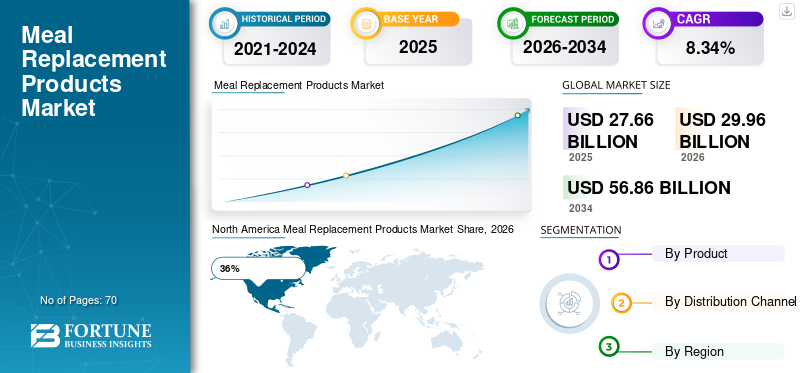
The global meal replacement products market size was valued at USD 27.66 billion in 2025. The market is projected to grow from USD 29.96 billion in 2026 to USD 56.86 billion by 2034, exhibiting a CAGR of 8.34% during the forecast period.

The Meal Replacement Products Market is expanding steadily due to increasing consumer focus on convenient nutrition, weight management, and healthy lifestyle choices. Meal replacement products such as powders, ready-to-drink shakes, and protein bars are gaining popularity among working professionals, athletes, fitness-conscious consumers, and individuals seeking balanced dietary solutions. Meal Replacement Products Market Analysis indicates rising demand for high-protein, plant-based, low-sugar, and functional nutrition products across global retail and online channels. Manufacturers increasingly develop nutrient-rich formulations containing vitamins, minerals, probiotics, and fiber to meet evolving consumer preferences. Growing health awareness and demand for convenient dietary alternatives continue strengthening Meal Replacement Products Market Growth worldwide.
The United States Meal Replacement Products Market remains one of the largest global markets because consumers increasingly prioritize healthy eating habits, fitness nutrition, and convenient meal solutions. Retailers and nutrition companies across the country increasingly introduce protein shakes, functional nutrition bars, and ready-to-drink beverages targeting weight management and active lifestyles. Meal Replacement Products Industry Report findings indicate strong demand for plant-based meal replacement products, keto-friendly formulations, and high-protein dietary supplements throughout the U.S. market. Expansion of fitness culture, digital health awareness, and personalized nutrition trends continues strengthening the competitive landscape across the United States meal replacement products industry.
Download Free sample to learn more about this report.
Key Takeaways
Market Size & Growth
- Global market size 2025: USD 27.65 billion
- Global market size 2034: USD 56.86 billion
- CAGR (2025–2034): 34%
Market Share – Regionals
- North America: 36%
- Europe: 27%
- Asia-Pacific: 30%
- Rest of World: 7%
Country-Level Shares
- Germany: 24% of Europe’s market
- United Kingdom: 19% of Europe’s market
- Japan: 18% of Asia-Pacific market
- China: 46% of Asia-Pacific market
Meal Replacement Products Market Latest Trends
The Meal Replacement Products Market Trends reveal increasing demand for plant-based nutrition, high-protein formulations, and clean-label meal replacement products across global consumer markets. Consumers increasingly prefer products containing natural ingredients, low sugar content, and added functional benefits such as probiotics, vitamins, and digestive support. Meal Replacement Products Market Research Report findings indicate strong demand for ready-to-drink shakes and protein bars designed for fitness enthusiasts, busy professionals, and weight management consumers.
Manufacturers are introducing sustainable packaging, plant-derived protein sources, and fortified nutrition blends to improve product differentiation and customer engagement. Meal Replacement Products Market Outlook further highlights increasing investments in online retail channels, influencer marketing strategies, and functional food innovation across the global health and wellness industry.
Download Free sample to learn more about this report.
Meal Replacement Products Market Dynamics
DRIVER
Rising Consumer Demand for Convenient and Healthy Nutrition
The increasing consumer preference for convenient and healthy dietary solutions remains one of the major drivers supporting Meal Replacement Products Market Growth globally. Busy lifestyles, changing eating habits, and growing health awareness are encouraging consumers to adopt meal replacement products as quick and nutritious alternatives to traditional meals. Meal Replacement Products Market Analysis indicates rising participation in fitness activities, weight management programs, and active lifestyle trends continues accelerating demand for protein-rich and functional nutrition products. Manufacturers increasingly develop nutrient-balanced meal replacement formulations containing vitamins, minerals, and plant-based proteins to meet evolving consumer expectations. Expansion of health-conscious consumer demographics further strengthens demand for meal replacement products worldwide.
RESTRAINT
Consumer Concerns Regarding Artificial Ingredients and Nutritional Balance
One of the major restraints affecting the Meal Replacement Products Market is growing consumer concern regarding artificial additives, preservatives, and long-term nutritional balance associated with processed dietary products. Some consumers remain skeptical about replacing traditional meals with packaged nutrition solutions because of concerns related to ingredient quality and dietary completeness. Meal Replacement Products Industry Report findings indicate fluctuating consumer trust and increasing demand for transparent labeling continue creating challenges for manufacturers. Premium product pricing and limited affordability in certain markets further restrict adoption among cost-sensitive consumers. Additionally, strict food safety regulations and nutritional compliance requirements increase operational complexity for meal replacement product manufacturers globally.
OPPORTUNITY
Expansion of Plant-Based and Personalized Nutrition Products
The rapid expansion of plant-based nutrition and personalized dietary solutions presents substantial opportunities for the Meal Replacement Products Market. Consumers increasingly seek vegan-friendly, allergen-free, and customized meal replacement products aligned with their health goals and dietary preferences. Meal Replacement Products Market Opportunities are also growing because of rising investments in sports nutrition, clinical nutrition, and wellness-focused functional foods. Companies worldwide are developing AI-driven nutrition platforms and subscription-based meal replacement services to improve customer engagement and product personalization. Emerging economies with rising disposable incomes and increasing health awareness continue creating strong commercial opportunities for meal replacement product manufacturers globally.
CHALLENGE
Intense Market Competition and Changing Consumer Preferences
The Meal Replacement Products Market faces significant challenges related to intense brand competition, rapidly changing consumer preferences, and product differentiation pressures. Manufacturers increasingly compete through flavor innovation, nutritional enhancements, and marketing strategies targeting health-conscious consumers. Meal Replacement Products Market Forecast studies indicate maintaining consumer loyalty and product innovation remains critical for long-term market positioning. Fluctuating raw material prices and supply chain disruptions may also affect ingredient sourcing and product affordability. Additionally, balancing taste, convenience, and nutritional value while meeting clean-label expectations continues creating formulation challenges across the global meal replacement products industry.
Meal Replacement Products Market Segmentation
By Product
Powder-based meal replacement products account for approximately 35% share of the Meal Replacement Products Market because they provide flexible consumption options and customizable nutrition solutions. Meal Replacement Products Market Research Report findings indicate strong demand for protein powders, plant-based meal replacement mixes, and weight management nutrition products across fitness and wellness consumers. Powder products are widely utilized for sports nutrition, dietary supplementation, and calorie-controlled meal planning because they offer convenience and long shelf life. Manufacturers increasingly introduce fortified powder formulations containing probiotics, vitamins, and fiber to improve nutritional value and digestive health benefits. Expansion of gym culture and personalized nutrition programs continues strengthening growth within the powder segment globally.
Ready-to-drink products account for approximately 42% of the Meal Replacement Products Market Share and remain the dominant segment due to increasing consumer preference for convenient and portable nutrition solutions. Meal Replacement Products Market Trends indicate rising demand for protein shakes, functional beverages, and fortified nutrition drinks among working professionals and active consumers. Ready-to-drink products provide quick meal alternatives and require no preparation, making them highly popular in urban lifestyles and fitness routines. Manufacturers increasingly develop low-sugar, plant-based, and high-protein beverage formulations to meet evolving health and wellness trends. Expansion of convenience retail channels and online grocery platforms further supports strong demand for ready-to-drink meal replacement products worldwide.
Protein bars contribute nearly 23% share of the Meal Replacement Products Market because consumers increasingly seek healthy snack alternatives and portable nutrition products. Meal Replacement Products Market Analysis highlights strong adoption of protein bars among athletes, fitness enthusiasts, and busy professionals requiring convenient energy and nutrition support. Manufacturers continue introducing low-carb, vegan, gluten-free, and functional ingredient-based protein bars designed for sports nutrition and weight management applications. Consumers increasingly prefer products containing natural sweeteners, nuts, seeds, and plant proteins to align with clean-label dietary preferences. Expansion of sports nutrition and healthy snacking trends continues supporting market growth within the protein bar segment globally.
To know how our report can help streamline your business, Speak to Analyst
By Distribution Channel
Online distribution channels account for approximately 39% share of the Meal Replacement Products Market because consumers increasingly purchase nutrition products through e-commerce platforms and subscription-based wellness services. Meal Replacement Products Market Analysis indicates strong growth in direct-to-consumer sales, digital nutrition platforms, and online fitness communities promoting meal replacement products. Manufacturers increasingly utilize influencer marketing, social media campaigns, and personalized subscription models to improve customer engagement and product accessibility. Online platforms also enable consumers to compare nutritional content, flavors, and dietary options conveniently. Expansion of digital commerce and mobile shopping applications continues accelerating online sales growth within the meal replacement products market globally.
Offline retail channels contribute nearly 61% share of the Meal Replacement Products Market because supermarkets, pharmacies, health stores, and fitness centers remain major distribution points for nutrition products. Meal Replacement Products Market Outlook studies indicate strong consumer preference for purchasing meal replacement products through physical retail stores where customers can review product labels and nutritional information directly. Retail chains increasingly expand dedicated health and wellness sections featuring protein shakes, nutrition bars, and dietary supplements. In-store promotional campaigns and product sampling activities further strengthen consumer purchasing behavior. Expansion of specialty nutrition retail stores and fitness-focused retail partnerships continues supporting strong growth within offline distribution channels worldwide.
Meal Replacement Products Market Regional Outlook
North America
North America Meal Replacement Products Market Share, 2026 (%)
To get more information on the regional analysis of this market, Download Free sample
North America holds approximately 36% share of the Meal Replacement Products Market and remains one of the most advanced regions for functional nutrition and wellness product adoption. The United States dominates regional demand because consumers increasingly prioritize fitness nutrition, weight management, and convenient meal alternatives. Meal Replacement Products Market Analysis indicates strong adoption of protein shakes, meal replacement powders, and fortified nutrition bars across retail and online distribution channels throughout the region. Canada also contributes significantly because of increasing health awareness and expanding plant-based nutrition trends. Meal Replacement Products Market Trends reveal rising demand for low-sugar products, vegan meal replacement formulations, and clean-label nutritional beverages across North America. Consumers increasingly seek personalized nutrition products aligned with fitness goals and dietary preferences. Expansion of digital health platforms, wellness subscription services, and sports nutrition communities further strengthens demand for meal replacement products throughout the region.
Europe
Europe accounts for nearly 27% share of the Meal Replacement Products Market and remains a significant hub for functional foods, plant-based nutrition, and wellness innovation. Consumers across the region increasingly adopt meal replacement shakes, nutrition bars, and dietary supplements to support weight management and healthy lifestyles. Meal Replacement Products Market Research Report findings indicate strong demand for organic meal replacement products, vegan protein formulations, and low-calorie nutrition solutions across Germany, the United Kingdom, France, and Nordic countries. Meal Replacement Products Market Trends also highlight increasing consumer preference for clean-label products and sustainable ingredient sourcing throughout European nutrition markets. Manufacturers increasingly develop allergen-free, gluten-free, and fortified meal replacement products tailored for diverse dietary needs. Expansion of fitness culture and preventive healthcare awareness further contributes to market growth across the region. Retailers increasingly promote health-focused product portfolios and functional wellness brands through supermarkets and specialty nutrition stores.
Germany Meal Replacement Products Market
Germany represents nearly 24% share of the Europe Meal Replacement Products Market due to increasing consumer focus on health-conscious eating habits, fitness nutrition, and plant-based dietary solutions. German consumers increasingly purchase protein shakes, nutrition bars, and meal replacement powders designed for weight management and active lifestyles. Meal Replacement Products Market Analysis in Germany highlights strong demand for organic, vegan, and low-sugar nutrition products across supermarkets and specialty health stores. Manufacturers continue introducing fortified formulations containing vitamins, minerals, and plant proteins to improve product differentiation. Expansion of wellness-focused retail channels and growing participation in sports and fitness activities further strengthens Germany’s position within the European meal replacement products market.
United Kingdom Meal Replacement Products Market
The United Kingdom accounts for approximately 19% share of the Europe Meal Replacement Products Market because consumers increasingly prioritize convenience nutrition, healthy snacking, and fitness-oriented dietary products. Meal Replacement Products Market Trends indicate strong adoption of ready-to-drink shakes, high-protein bars, and meal replacement powders throughout the country. Retailers and nutrition companies continue investing in plant-based product innovation and online subscription-based nutrition services to improve market penetration. Expansion of gym memberships and digital wellness communities further supports market growth. Increasing emphasis on healthy weight management and functional food consumption continues strengthening the United Kingdom meal replacement products industry.
Asia-Pacific
Asia-Pacific holds approximately 30% share of the Meal Replacement Products Market and is emerging as one of the fastest-growing regions due to rising urbanization, changing dietary habits, and increasing health awareness. Countries such as China, Japan, India, and South Korea are witnessing strong demand for protein shakes, meal replacement powders, and functional nutrition bars across urban consumer populations. Meal Replacement Products Market Insights reveal increasing investments in sports nutrition, plant-based dietary products, and personalized wellness solutions throughout the region. Consumers increasingly seek convenient and nutrient-rich food alternatives because of busy lifestyles and growing participation in fitness activities. Meal Replacement Products Market Trends also indicate rising adoption of online nutrition platforms, influencer-driven wellness marketing, and digital fitness applications across Asia-Pacific consumer markets. Expansion of middle-class populations and increasing disposable incomes further strengthens demand for premium meal replacement products throughout the region. Manufacturers increasingly introduce localized flavors, herbal ingredients, and culturally tailored nutrition products designed for regional consumer preferences. Rising wellness awareness and preventive healthcare trends continue supporting long-term market opportunities across Asia-Pacific.
Japan Meal Replacement Products Market
Japan contributes nearly 18% share of the Asia-Pacific Meal Replacement Products Market due to increasing consumer preference for convenient nutrition solutions and balanced dietary products. Japanese consumers increasingly adopt ready-to-drink nutrition beverages, protein bars, and low-calorie meal replacement products to support healthy lifestyles and busy work schedules. Meal Replacement Products Market Analysis indicates strong demand for functional foods enriched with vitamins, probiotics, and plant proteins across urban consumer groups. Manufacturers continue introducing compact and portion-controlled nutrition products tailored for convenience and wellness-focused consumption patterns. Expansion of aging population nutrition programs and preventive healthcare awareness further supports Japan’s position within the regional meal replacement products industry.
China Meal Replacement Products Market
China represents approximately 45% share of the Asia-Pacific Meal Replacement Products Market due to rapid urbanization, rising fitness culture, and increasing consumer awareness regarding healthy dietary practices. Meal Replacement Products Market Forecast studies indicate strong demand for protein shakes, nutrition powders, and functional meal replacement beverages across online and retail distribution channels. Consumers increasingly adopt meal replacement products for weight management, sports nutrition, and convenience-based dietary solutions. Expansion of e-commerce platforms and social media-driven wellness marketing continues accelerating market growth throughout the country. China remains one of the largest emerging markets within the global meal replacement products industry because of growing disposable incomes and expanding health-conscious consumer demographics.
Rest of World
The Rest of World region accounts for nearly 7% share of the Meal Replacement Products Market and includes expanding health and wellness industries across Latin America, the Middle East, and Africa. Increasing consumer awareness regarding fitness nutrition, weight management, and convenient dietary products is supporting market expansion throughout these regions. Meal Replacement Products Market Analysis indicates growing adoption of protein bars, nutrition shakes, and fortified meal replacement powders among urban consumers and fitness communities. Latin American countries increasingly invest in sports nutrition retail channels and wellness-focused product distribution networks to improve market accessibility. The Middle East continues experiencing strong demand for premium meal replacement products because of rising health awareness and expanding fitness culture. African markets are gradually increasing adoption of meal replacement products because of improving retail infrastructure and growing interest in preventive healthcare. Meal Replacement Products Market Trends also reveal increasing collaboration between international nutrition brands and regional distributors to strengthen product availability and consumer engagement.
List of Top Meal Replacement Products Companies
- Soylent
- Abbott Nutrition
- Unilever
- Nestle
- Herbalife
- SlimFast
- Wild Oats Markets
- Blue Diamond Growers
- General Mills
- Glanbia
Top Two Companies by Market Share
- Nestle – Approximately 16% market share
- Abbott Nutrition – Approximately 13% market share
Investment Analysis and Opportunities
The Meal Replacement Products Market is attracting substantial investments due to increasing consumer demand for functional nutrition, convenient meal solutions, and personalized dietary products. Nutrition companies, food manufacturers, and wellness startups are heavily investing in plant-based proteins, fortified meal replacement beverages, and high-protein nutrition bars designed to improve health outcomes and consumer convenience. Meal Replacement Products Market Opportunities are particularly strong in sports nutrition, weight management, and clean-label dietary product categories.
Emerging economies across Asia-Pacific and Latin America offer substantial investment potential because rising disposable incomes and increasing health awareness continue driving nutrition product adoption. Manufacturers are increasingly investing in plant-derived ingredients, low-sugar formulations, and customized nutrition products to strengthen competitive positioning within the global meal replacement products industry.
New Product Development
New product development within the Meal Replacement Products Market is heavily focused on plant-based formulations, clean-label ingredients, and functional nutrition innovation. Manufacturers are increasingly introducing ready-to-drink protein beverages, fortified meal replacement powders, and high-fiber nutrition bars designed to improve convenience and health benefits. Meal Replacement Products Market Trends indicate strong innovation in vegan proteins, probiotic-enriched formulations, and low-sugar dietary products capable of supporting fitness and wellness goals.
Companies are also investing heavily in personalized nutrition platforms, sustainable ingredient sourcing, and eco-friendly packaging technologies designed to strengthen customer engagement and environmental responsibility. Functional ingredients such as collagen, probiotics, adaptogens, and superfoods are gaining substantial popularity because consumers increasingly seek holistic wellness and preventive healthcare benefits. Meal Replacement Products Industry Analysis highlights increasing demand for allergen-free, gluten-free, and keto-friendly nutrition products tailored for diverse dietary preferences.
Five Recent Developments (2023-2025)
- Nestle expanded plant-based meal replacement beverage offerings and functional nutrition product portfolios in 2024.
- Abbott Nutrition introduced enhanced high-protein ready-to-drink nutrition products targeting active lifestyle consumers in 2025.
- Herbalife strengthened personalized wellness and weight management product development initiatives in 2023.
- Glanbia expanded sports nutrition and clean-label protein bar production capabilities in 2024.
- Soylent launched upgraded functional meal replacement formulations with sustainable packaging technologies in 2025.
Report Coverage of Meal Replacement Products Market
The Meal Replacement Products Market Report provides comprehensive analysis of market trends, competitive landscape, regional performance, and product innovation across the global nutrition and wellness industry. The report evaluates major market segments including powders, ready-to-drink beverages, and protein bars while analyzing online and offline distribution channels. Meal Replacement Products Market Research Report coverage includes detailed examination of plant-based nutrition, personalized dietary solutions, sports nutrition products, and functional wellness innovations influencing market expansion.
Request for Customization to gain extensive market insights.
The report further analyzes key growth drivers such as increasing health awareness, rising demand for convenient nutrition solutions, and expanding fitness culture. Market restraints related to consumer concerns regarding artificial ingredients, pricing pressures, and nutritional balance are also assessed extensively. Meal Replacement Products Market Insights additionally highlight emerging opportunities associated with clean-label formulations, vegan nutrition products, and AI-driven personalized wellness platforms.



- 2021-2034
- 2025
- 2021-2024
- 70
-
(Offer valid till 15th Jul 2026)
Get 30-60 hrs Free Customization
Expand Regional and Country Coverage, Segments Analysis, Company Profiles, Competitive Benchmarking, and End-user Insights.



















-
US +1 833 909 2966 ( Toll Free )
-
Get In Touch With Us