 Download Free Sample



Get a Quote
Receive a tailored pricing based on your needs.
- Choose license type
- Multiple user options
- Custom scope & coverage
- Fast turnaround
"Designing Growth Strategies is in our DNA"
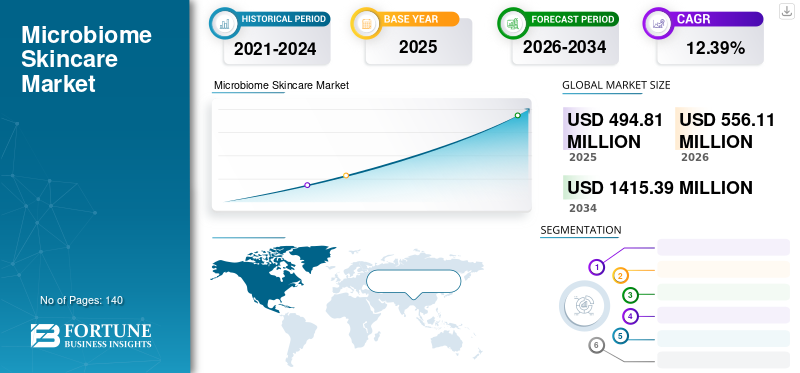
The global microbiome skincare market size was valued at USD 494.81 Million in 2025. The market is projected to grow from USD 556.11 Million in 2026 to USD 1415.39 Million by 2034, exhibiting a CAGR of 12.39% during the forecast period.

The microbiome skincare market has emerged as a significant segment within the global skincare industry, driven by growing consumer awareness regarding skin microbiota balance and skin barrier health. Microbiome skincare products are formulated to support beneficial microorganisms present on the skin, helping maintain hydration, reduce irritation, and improve overall skin health. The market is witnessing increasing demand for scientifically formulated skincare solutions that incorporate microbiome-friendly ingredients. Beauty brands are investing in research and development to introduce innovative formulations targeting sensitive skin, acne management, and anti-aging concerns. The microbiome skincare market report highlights expanding product portfolios, increasing consumer education, and rising adoption of personalized skincare solutions.
The United States accounts for approximately 36% market share in the global microbiome skincare market. Consumer preference for science-backed skincare products continues to drive demand across the country. Increasing awareness regarding skin microbiome health, coupled with growing prevalence of sensitive skin conditions, has encouraged adoption of microbiome-based formulations. Premium skincare brands are expanding product lines featuring probiotic and prebiotic ingredients. The country also benefits from advanced dermatological research and strong product innovation activities. E-commerce growth, social media influence, and rising spending on wellness-oriented beauty products continue to strengthen the USA microbiome skincare market outlook and support long-term market expansion.
Download Free sample to learn more about this report.
 Global Market Size & Forecast
 Market Share
 Key Regional Highlights
North America
North America led the market with a 35% share in 2025, supported by growing consumer awareness of skin health and advanced skincare products.
Europe
Europe accounted for 30% of the market, driven by rising demand for premium and microbiome-focused skincare solutions.
Asia-Pacific
Asia-Pacific held a 27% share, supported by expanding beauty markets and increasing consumer interest in innovative skincare products.
U.S
The U.S. market is supported by strong demand for premium skincare, product innovation, and growing microbiome awareness.
Japan
Japan accounted for 21% of the Asia-Pacific market, supported by advanced beauty trends and increasing interest in skin barrier health.
Read More

The microbiome skincare market trends indicate a strong shift toward scientifically validated skincare products designed to preserve and restore skin microbiota balance. Consumers increasingly seek products free from harsh chemicals that may disrupt the natural skin ecosystem. This trend has encouraged manufacturers to develop formulations containing probiotics, prebiotics, postbiotics, and microbiome-supporting active ingredients. Personalized skincare is becoming a major trend within the microbiome skincare market analysis landscape. Brands are introducing diagnostic tools and customized solutions based on individual skin microbiome profiles.
Another notable trend is the integration of biotechnology in skincare development, enabling precise ingredient selection and improved efficacy. Sustainability is also influencing purchasing decisions. Consumers prefer products with environmentally responsible ingredients and packaging. The rise of dermatologically tested skincare products targeting eczema, rosacea, and acne-prone skin further contributes to market expansion. growth in online beauty retail channels and increasing collaboration between skincare companies and dermatology experts continue shaping the future of the microbiome skincare market research report environment.
Rising Consumer Awareness Regarding Skin Microbiome Health
Growing awareness about the role of beneficial microorganisms in maintaining healthy skin is the primary driver of the microbiome skincare market growth. Consumers are becoming increasingly educated about skin barrier protection, microbiome diversity, and the impact of skincare ingredients on overall skin wellness. Social media platforms, dermatology campaigns, and beauty influencers have contributed significantly to spreading awareness. Increasing prevalence of skin sensitivity and irritation caused by environmental stressors has further strengthened demand for microbiome-supportive skincare solutions. Brands are leveraging scientific research to develop innovative products that align with consumer preferences for health-focused beauty routines. These factors collectively support sustained market growth.
Limited Consumer Understanding of Product Efficacy
Despite growing interest, many consumers remain unfamiliar with microbiome science and the specific benefits of microbiome skincare products. Product claims can sometimes appear complex or difficult to understand, creating barriers to purchasing decisions. Additionally, premium pricing associated with advanced microbiome formulations may discourage adoption among budget-conscious consumers. Variations in product effectiveness and lack of standardized microbiome testing methodologies can also create uncertainty. These factors restrict broader market penetration and challenge manufacturers seeking widespread consumer acceptance.
Expansion of Personalized Skincare Solutions
Personalized skincare represents a significant opportunity within the microbiome skincare market opportunities landscape. Advances in microbiome testing technologies allow brands to develop customized skincare regimens tailored to individual skin characteristics. Consumers increasingly seek targeted solutions rather than generic beauty products. Growing investment in biotechnology, artificial intelligence, and dermatological research supports development of highly personalized skincare products. Expansion into emerging markets and increasing demand for premium wellness-focused beauty products further enhance growth opportunities for industry participants.
Regulatory and Formulation Complexities
A major challenge facing the Microbiome Skincare industry analysis environment is the complexity associated with microbiome-related product development and regulatory compliance. Maintaining stability and effectiveness of live or microbiome-supporting ingredients requires advanced formulation expertise. Scientific validation of microbiome claims often demands extensive testing and research investment. Different regulatory frameworks across regions can create additional challenges for manufacturers seeking international expansion. Ensuring consistent product performance while meeting evolving consumer expectations remains an ongoing industry challenge.
Serums account for approximately 42% market share in the microbiome skincare market. These products are widely preferred due to their concentrated formulations and ability to deliver active ingredients effectively. Microbiome serums frequently contain probiotics, prebiotics, peptides, and botanical extracts that support skin barrier health and hydration. Consumers increasingly choose serums for targeted treatment of sensitive skin, redness, and aging concerns. The lightweight texture and compatibility with multi-step skincare routines contribute to strong demand. Continuous product innovation and premium positioning further strengthen the serum segment's leadership within the market.
Creams hold approximately 38% market share within the microbiome skincare market. These products are designed to provide long-lasting hydration while supporting microbiome balance and skin barrier integrity. Consumers with dry or sensitive skin often prefer microbiome creams due to their nourishing properties. Manufacturers continue introducing advanced formulations containing microbiome-supportive ingredients and dermatologically tested actives. Growing awareness regarding skin health and barrier repair contributes significantly to segment growth. Creams remain a core category across both premium and mass-market skincare portfolios.
Masks represent approximately 20% market share in the microbiome skincare market. These products are increasingly used as intensive treatment solutions aimed at restoring skin balance and hydration. Sheet masks, overnight masks, and wash-off masks containing microbiome-friendly ingredients have gained popularity among skincare enthusiasts. Consumers appreciate the convenience and visible results associated with mask-based treatments. Brands continue launching innovative formulations targeting specific skin concerns such as dryness, irritation, and environmental stress. The segment benefits from increasing consumer interest in self-care and wellness-focused skincare routines.
Prebiotic-based products account for approximately 58% market share within the microbiome skincare market. Prebiotics serve as nutrients that support the growth of beneficial microorganisms on the skin surface. These ingredients help strengthen the skin barrier, improve moisture retention, and enhance overall skin resilience. Consumers increasingly prefer prebiotic formulations due to their compatibility with diverse skin types. Manufacturers continue expanding product portfolios featuring plant-derived prebiotic ingredients. Strong clinical support and broad formulation flexibility contribute to the segment's leading position.
Probiotic-based products represent approximately 42% market share in the microbiome skincare market. These formulations contain beneficial microorganisms or their derivatives designed to support microbiome balance and skin health. Probiotic skincare products are commonly used to address sensitivity, irritation, and uneven skin appearance. Growing scientific research and increasing consumer awareness regarding microbiome wellness support segment growth. Premium beauty brands continue investing in advanced probiotic technologies to enhance product performance and differentiation.
Hypermarkets and supermarkets account for approximately 44% market share within the microbiome skincare market. These retail channels provide broad product visibility and accessibility to a large consumer base. Consumers often prefer physical stores for skincare purchases because they can compare products and evaluate packaging directly. Retail chains continue expanding premium beauty sections to accommodate growing demand for microbiome skincare products. Strategic product placement and promotional campaigns further support sales growth through this channel.
E-commerce holds approximately 56% market share in the microbiome skincare market. Online platforms have become the preferred purchasing channel for many consumers due to convenience, product variety, and access to detailed information. Digital marketing, influencer recommendations, and personalized product suggestions contribute significantly to online sales growth. Subscription models and direct-to-consumer strategies have further strengthened the role of e-commerce. Increasing internet penetration and mobile shopping adoption continue supporting expansion of this distribution channel within the microbiome skincare market outlook.
North America accounts for approximately 35% market share in the global microbiome skincare market and remains the leading regional market due to strong consumer awareness and advanced skincare research capabilities. Consumers across the United States and Canada increasingly seek products formulated with prebiotics, probiotics, and microbiome-supportive ingredients to improve skin health. The region benefits from a highly developed beauty and personal care industry, supported by extensive product innovation and premium skincare adoption. Dermatologist-recommended formulations continue gaining popularity among consumers dealing with skin sensitivity, acne, and barrier-related concerns. E-commerce platforms and direct-to-consumer channels have significantly improved product accessibility. Growing interest in personalized skincare solutions and microbiome testing services further supports market expansion. Continuous investment in scientific research and biotechnology-based skincare development strengthens North America's position within the microbiome skincare market outlook.
Europe holds approximately 30% market share in the global microbiome skincare market and represents one of the most innovation-driven regions. Consumers increasingly prefer skincare products that promote microbiome balance, skin barrier protection, and long-term skin wellness. The region has witnessed rising demand for clean-label, sustainable, and dermatologically tested beauty products. Regulatory emphasis on ingredient transparency and product safety has encouraged manufacturers to develop scientifically validated formulations. Premium skincare brands continue investing in microbiome-focused product development to address concerns related to hydration, aging, and sensitive skin. Sustainability trends have also influenced purchasing decisions, with consumers favoring environmentally responsible products and packaging. research collaborations between scientific institutions and skincare companies continue driving innovation. These factors collectively support Europe's strong contribution to the microbiome skincare market growth.
Germany accounts for approximately 24% market share within the European microbiome skincare market and remains a major center for skincare innovation. German consumers demonstrate strong interest in scientifically formulated and dermatologist-tested skincare products designed to improve skin health. Demand for microbiome-supportive solutions continues increasing due to growing awareness regarding skin barrier function and microbial balance. Manufacturers are investing in advanced formulations containing prebiotics, probiotics, and postbiotics to address specific skin concerns. Sustainability and ingredient transparency remain important purchasing considerations among consumers. The country's strong pharmaceutical and cosmetic research infrastructure supports continuous product innovation. Growing adoption of premium skincare products and increasing consumer education regarding microbiome science continue driving expansion of the Germany microbiome skincare market.
The United Kingdom represents approximately 18% market share within the European microbiome skincare market and continues to experience rising demand for advanced skincare solutions. Consumers are increasingly interested in products that support microbiome health, strengthen skin resilience, and improve overall skin appearance. The growing popularity of wellness-focused beauty routines has contributed significantly to microbiome skincare adoption. Online retail channels remain highly influential, enabling brands to reach broader audiences and provide educational content regarding microbiome science. Beauty brands are launching innovative formulations that combine microbiome-supportive ingredients with hydration and anti-aging benefits. Growing awareness of sensitive skin conditions and demand for dermatologist-backed products further support market growth. These factors continue strengthening the United Kingdom microbiome skincare market outlook.
Asia-Pacific accounts for approximately 27% market share in the global microbiome skincare market and is among the fastest-growing regional markets. Increasing disposable incomes, urbanization, and expanding beauty-conscious populations are driving demand for innovative skincare products. Consumers are becoming more aware of the relationship between microbiome balance and skin health, encouraging adoption of specialized formulations. Beauty brands continue developing region-specific products tailored to local skin concerns and environmental conditions. The rapid expansion of e-commerce has significantly improved product accessibility and consumer engagement. Social media platforms and beauty influencers also play an important role in educating consumers about microbiome skincare benefits. Investments in research, product development, and premium beauty offerings continue supporting long-term regional growth within the microbiome skincare market analysis.
Japan accounts for approximately 21% market share within the Asia-Pacific microbiome skincare market and is recognized globally for advanced skincare innovation. Japanese consumers prioritize gentle, effective, and scientifically developed skincare products that promote long-term skin health. Microbiome-friendly formulations align closely with consumer preferences for hydration, skin barrier protection, and balanced skin conditions. Manufacturers continue investing in research and development to create premium products incorporating advanced microbiome technologies. The country's strong beauty culture and emphasis on preventive skincare contribute to market expansion. Increasing consumer awareness regarding skin microbiota and growing demand for premium skincare solutions support continued growth. These trends reinforce Japan's importance within the Microbiome Skincare industry report.
China represents approximately 37% market share within the Asia-Pacific microbiome skincare market, making it the largest regional contributor. Rising consumer awareness regarding skincare science and increasing spending on premium beauty products continue driving market growth. Consumers are actively seeking innovative formulations that support skin barrier health and microbiome balance. Domestic and international skincare brands are expanding their microbiome-focused product portfolios to address evolving consumer preferences. Digital commerce platforms remain a key distribution channel, supported by strong social media engagement and influencer marketing. Personalized skincare solutions and technology-driven beauty recommendations are becoming increasingly popular. Continued investment in product innovation and consumer education supports the long-term development of the China microbiome skincare market.
The Rest of World region accounts for approximately 8% market share in the global microbiome skincare market and includes Latin America, the Middle East, and Africa. Growing awareness regarding skin health and microbiome-focused skincare products is supporting market expansion across these regions. Rising urbanization and improving economic conditions have increased consumer spending on premium beauty and personal care products. International skincare brands continue expanding their presence through strategic partnerships and broader distribution networks. Educational marketing campaigns and social media influence are helping consumers understand the benefits of microbiome-supportive formulations. Demand for products targeting hydration, sensitivity, and skin barrier repair is steadily increasing. Continued improvements in retail infrastructure and e-commerce accessibility create significant future opportunities for the Rest of World microbiome skincare market.
The microbiome skincare market presents substantial investment opportunities due to increasing consumer demand for science-backed skincare solutions. Investors continue focusing on companies specializing in microbiome research, biotechnology, and personalized beauty products. Growing interest in skin health and wellness has encouraged capital allocation toward product innovation and clinical validation programs. Beauty brands are investing in microbiome testing technologies and advanced formulation capabilities to strengthen product differentiation. Strategic partnerships between skincare companies and biotechnology firms continue supporting innovation.
Expansion into emerging markets offers additional opportunities as awareness regarding microbiome health increases. Digital commerce infrastructure and direct-to-consumer business models remain attractive investment areas. Companies leveraging artificial intelligence and personalized skincare platforms are positioned to benefit from evolving consumer preferences. The microbiome skincare market opportunities landscape remains favorable due to ongoing scientific advancement and rising consumer acceptance.
Innovation remains central to the microbiome skincare market. Manufacturers continue introducing products formulated with advanced prebiotic, probiotic, and postbiotic ingredients designed to support microbiome balance. research efforts increasingly focus on enhancing skin barrier function and improving product efficacy. Personalized skincare solutions represent a major area of development. Companies are utilizing microbiome analysis tools to create customized product recommendations.
Multi-functional products combining hydration, barrier repair, and microbiome support are gaining popularity. Sustainable formulation strategies are also becoming increasingly important. Brands are incorporating naturally derived ingredients and environmentally responsible packaging solutions. Advances in biotechnology continue enabling development of highly targeted skincare products. These innovations contribute significantly to the evolving microbiome skincare market trends landscape.
The microbiome skincare market report provides detailed analysis of market dynamics, competitive developments, product innovations, and regional performance. The report evaluates growth drivers, restraints, opportunities, and challenges influencing industry expansion. Coverage includes segmentation by product type, ingredients, and distribution channels. The study examines market trends related to prebiotic and probiotic skincare products, personalized beauty solutions, and consumer purchasing behavior. Regional analysis covers North America, Europe, Asia-Pacific, and Rest of World markets, providing insight into geographic demand patterns.
Competitive assessment includes profiling of major industry participants, product development strategies, and market positioning activities. The report further analyzes investment trends, technological advancements, and innovation initiatives shaping the future of the industry. The microbiome skincare market research report offers comprehensive coverage of factors influencing market expansion and business opportunities across the global skincare sector.
According to Fortune Business Insights, the global microbiome skincare market was valued at USD 494.81 million in 2025 and is projected to reach USD 1,415.39 million by 2034.
The market is expected to grow at a CAGR of 12.39% during the forecast period of 2026–2034.
Serums was the leading product type, accounting for approximately 42% of the market. This dominance was driven by concentrated formulations, effective active-ingredient delivery, and growing demand for targeted skincare.
Key players include Vichy Laboratoires, L'Oréal Paris, OUTIN FUTURES INC., Missha, Eminence Organic Skin Care, and La Roche-Posay.
Major trends include growing demand for scientifically validated, microbiome-friendly formulations containing probiotics, prebiotics, and postbiotics, along with rising adoption of personalized skincare solutions. North America led the market with approximately 35% share in 2025.


(Offer valid till 31st Oct 2026)
Get 30-60 hrs Free Customization
Expand Regional and Country Coverage, Segments Analysis, Company Profiles, Competitive Benchmarking, and End-user Insights.









.webp)





Get In Touch With Us
US +1 833 909 2966 ( Toll Free )
Receive a tailored pricing based on your needs.
Discuss your questions with our industry experts.
Have questions? Get quick answers before you purchase.

