Wet Wipes Market Size, Share & Industry Analysis, By Product (Household Wipes, Baby Wipes, Intimate Wipes), By Material (Non-Woven, Woven), By Distribution Channel, and Regional Forecast, 2026-2034
 Download Free Sample
Wet Wipes Market Size & Overview
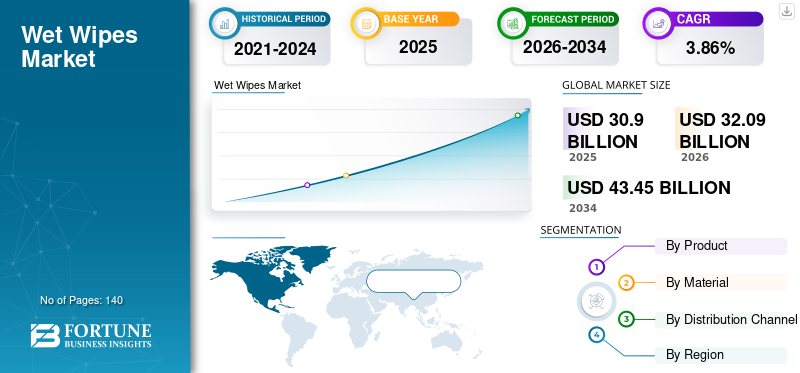
The global wet wipes market size was valued at USD 30.90 billion in 2025. The market is projected to grow from USD 32.09 billion in 2026 to USD 43.45 billion by 2034, exhibiting a CAGR of 3.86% during the forecast period.

The wet wipes market is expanding steadily due to increasing hygiene awareness, growing demand for convenient personal care products, and rising use of disposable cleaning solutions across households, healthcare facilities, and commercial spaces. Wet wipes are widely used for baby care products, personal hygiene, disinfecting surfaces, cosmetic applications, and travel convenience. The wet wipes market report highlights strong demand for biodegradable, skin-friendly wipes as consumers increasingly prefer eco-conscious, dermatologically tested products. Manufacturers are investing in advanced non-woven materials and sustainable packaging technologies to strengthen product appeal. Growth in urban populations, rising disposable income, and expanding retail distribution networks continue to support the wet wipes market growth globally.
The USA wet wipes market accounts for nearly 34% of the global market share due to high consumer awareness of hygiene and strong demand for personal care products. Household disinfecting wipes, baby wipes, and intimate wipes are witnessing significant adoption across the United States consumer market. The Wet Wipes Industry Report indicates increasing preference for antibacterial wipes and alcohol-free baby wipes among health-conscious consumers. Retail chains and e-commerce platforms are expanding the availability of wet wipes across urban and suburban regions. Rising use of wet wipes in healthcare institutions, restaurants, fitness centers, and travel applications is further strengthening the USA wet wipes market outlook and long-term product demand across multiple end-user categories.
Download Free sample to learn more about this report.
Wet Wipes Market Key Takeaways
 Global Market Size & Forecast
- 2025 Market Size: USD 30.90 billion
- 2026 Market Size: USD 32.09 billion
- 2034 Forecast Market Size: USD 43.45 billion
- CAGR: 3.86% from 2026–2034
 market share
- The market in North America dominated with a revenue share of 35% in 2025.
- Household wipes held a 44% market share by product.
- Non-woven materials accounted for an 81% market share by material.
 Key Regional Highlights
North America
North America led the market with a 35% share in 2025.
Asia-Pacific
Asia-Pacific accounted for 29% of the global market, supported by rising hygiene awareness and consumer demand.
Europe
Europe held a 28% market share, driven by demand for convenient personal and household hygiene products.
U.S
The U.S. is witnessing strong demand for household, baby, and personal hygiene wet wipes.
Japan
Japan accounted for 27% of the Asia-Pacific market, supported by advanced hygiene standards and demand for convenient wipes.
Read More

Wet Wipes Market Latest Trends
The wet wipes market trends reveal increasing consumer preference for biodegradable, flushable, and chemical-free wipes due to growing environmental awareness and regulatory pressure regarding plastic waste reduction. Manufacturers are introducing plant-based fibers, organic formulations, and compostable packaging solutions to strengthen sustainability positioning within the wet wipes market analysis. Consumers are increasingly choosing products free from parabens, alcohol, synthetic fragrances, and harsh preservatives, especially in baby care and intimate hygiene categories.
Download Free sample to learn more about this report.
Another major trend shaping the wet wipes market outlook is the growing use of antibacterial and disinfecting wipes across healthcare, hospitality, and commercial sectors. Demand for multi-purpose household wipes capable of surface cleaning and germ protection continues increasing globally. Smart packaging innovations, resealable packs, and travel-friendly formats are also gaining traction among consumers seeking convenience and portability. The Wet Wipes Industry Analysis further highlights strong growth in premium skincare wipes infused with natural ingredients such as aloe vera, chamomile, and vitamin extracts. E-commerce expansion and direct-to-consumer distribution channels are accelerating product accessibility and brand visibility across international markets. Manufacturers are also investing in recyclable packaging materials and water-efficient production technologies to strengthen environmental compliance and brand competitiveness.
Wet Wipes Market Dynamics
DRIVER
Rising Consumer Focus On Hygiene and Personal Care
Increasing awareness regarding personal hygiene and sanitation is a primary driver of the wet wipes market. Consumers are using wet wipes extensively for hand cleaning, surface disinfection, baby care, and cosmetic applications due to convenience and portability advantages. The wet wipes market research report indicates that more than 72% of urban consumers regularly use wet wipes as part of daily hygiene routines. Healthcare institutions, educational facilities, and hospitality businesses are also expanding adoption of disinfecting wipes to maintain cleanliness standards. Rising demand for on-the-go hygiene products among travelers, office workers, and fitness enthusiasts continues accelerating market growth. Manufacturers are introducing skin-friendly and hypoallergenic formulations to attract health-conscious consumers. Expansion of retail distribution and online shopping platforms is further increasing accessibility and strengthening wet wipes market share globally.
RESTRAINT
Environmental Concerns Regarding Disposable Wipe Waste
Environmental concerns related to non-biodegradable wet wipes remain a significant restraint for the wet wipes market growth. Traditional wet wipes containing plastic fibers contribute to landfill accumulation, sewage blockages, and marine pollution. The wet wipes market insights reveal that approximately 46% of environmentally conscious consumers are reducing purchases of synthetic disposable wipes due to sustainability concerns. Governments and environmental agencies are implementing stricter regulations on single-use plastic products, impacting conventional wipe manufacturers. Waste management challenges and rising pressure for eco-friendly alternatives are increasing production costs for companies transitioning toward biodegradable materials. Additionally, consumer skepticism regarding flushable wipe claims and compostability certifications continues affecting brand credibility within the market. Manufacturers must invest heavily in sustainable product development and regulatory compliance to maintain long-term market competitiveness.
OPPORTUNITY
Expansion of Biodegradable and Premium Wipes Products
The growing demand for sustainable and premium hygiene products presents substantial opportunities within the wet wipes market. Consumers increasingly prefer biodegradable wipes manufactured from bamboo fibers, cotton blends, and plant-based non-woven materials. The wet wipes market Forecast highlights strong opportunities in premium skincare wipes, intimate hygiene wipes, and natural baby care products. Manufacturers are investing in dermatologically tested formulations enriched with organic ingredients and moisturizing agents to strengthen premium product positioning. Commercial sectors including healthcare, aviation, hospitality, and food service industries are also expanding adoption of disinfecting and sanitizing wipes. Rising demand for antibacterial surface wipes and portable hygiene solutions is creating new business opportunities across institutional applications. Emerging economies with increasing urbanization and growing middle-class populations are becoming major target markets for premium wet wipes manufacturers. Expansion of private-label production and direct-to-consumer marketing strategies is further supporting wet wipes market opportunities globally.
CHALLENGE
Fluctuating Raw Material and Packaging Costs
One of the major challenges affecting the wet wipes market is the volatility in raw material and packaging costs. Non-woven fabrics, preservatives, fibers, and sustainable packaging materials have experienced significant price fluctuations due to supply chain disruptions and increasing global demand. The Wet Wipes Industry Analysis indicates that nearly 38% of manufacturers face profitability pressure because of rising production and transportation expenses. Sustainable packaging adoption is increasing operational costs for companies transitioning toward biodegradable solutions. Manufacturers must also comply with strict safety regulations related to skin sensitivity, chemical composition, and product labeling requirements. Maintaining moisture retention, shelf stability, and antibacterial effectiveness while reducing chemical usage creates additional formulation complexity. Intense competition from regional manufacturers and private-label brands is further impacting pricing strategies within the global wet wipes industry. Supply chain dependency on imported raw materials also creates operational risks for large-scale wet wipes production facilities.
Wet Wipes Market Segmentation
By Product
Household wipes account for nearly 44% market share in the wet wipes market due to increasing demand for convenient cleaning and disinfecting products across residential and commercial spaces. Consumers widely use household wipes for kitchen cleaning, bathroom sanitation, furniture maintenance, and surface disinfection. The wet wipes market report highlights rising adoption of antibacterial and multi-surface wipes among households seeking improved hygiene standards. Commercial establishments including hotels, restaurants, and offices are also expanding usage of disinfecting wipes for sanitation purposes. Manufacturers are introducing biodegradable cleaning wipes and fragrance-free variants to strengthen product differentiation.
Baby wipes represent approximately 39% share in the wet wipes market because parents increasingly prefer convenient and skin-safe hygiene products for infant care. The wet wipes market analysis shows strong demand for alcohol-free, hypoallergenic, and dermatologically tested baby wipes infused with natural ingredients such as aloe vera and chamomile. Manufacturers are focusing on fragrance-free and pH-balanced formulations to address concerns regarding infant skin sensitivity. Eco-friendly baby wipes manufactured from biodegradable fibers are gaining popularity among environmentally conscious consumers. Expanding birth rates in developing economies and rising disposable income are further supporting baby wipes market growth. Premium baby care product positioning.
Intimate wipes hold nearly 17% market share in the Wet Wipes Industry Report and are witnessing rising adoption due to increasing awareness regarding feminine and personal hygiene. Consumers are using intimate wipes for daily freshness, travel convenience, and post-workout hygiene applications. The wet wipes market trends highlight growing demand for pH-balanced, fragrance-free, and gynecologically tested products designed for sensitive skin applications. Manufacturers are introducing herbal and organic formulations enriched with soothing botanical ingredients to strengthen premium product positioning. Urban consumers and younger demographics are among the leading adopters of intimate hygiene wipes globally.
By Material
Non-woven materials account for nearly 81% market share in the wet wipes market due to their superior softness, absorbency, flexibility, and cost efficiency. These materials are widely used in baby wipes, household disinfecting wipes, cosmetic wipes, and intimate hygiene products because they provide better liquid retention and comfortable skin contact. The wet wipes market report highlights increasing use of spunlace and airlaid non-woven fabrics in premium wet wipes manufacturing. Manufacturers prefer non-woven materials because they support lightweight construction, strong durability, and efficient mass production capabilities. Growing consumer demand for biodegradable wipes is also encouraging companies to develop plant-based non-woven fabrics made from bamboo, cotton, and natural fibers.
Woven materials hold approximately 19% share in the wet wipes market and are mainly used in premium and reusable wipes applications requiring higher strength and durability. Woven wipes provide enhanced texture, better tear resistance, and improved cleaning efficiency compared to conventional disposable products. The Wet Wipes Industry Analysis indicates increasing use of woven fabrics in luxury skincare wipes, industrial cleaning wipes, and reusable cosmetic wipes products. Consumers seeking long-lasting and eco-friendly alternatives are gradually supporting demand for woven wet wipes solutions. Manufacturers are introducing woven wipes made from cotton blends and organic textile materials to improve sustainability and premium product appeal.
By Distribution Channel
Distribution channel segmentation contributes significantly to the wet wipes market share, with supermarkets and hypermarkets accounting for nearly 48% share due to strong product visibility and bulk purchasing preferences. Retail stores remain critical sales channels for household wipes and baby wipes products globally. The wet wipes market outlook indicates rapid growth in e-commerce platforms, which currently represent approximately 29% share due to convenience, subscription models, and direct-to-consumer sales strategies. Pharmacies and healthcare outlets also contribute substantially to product distribution, especially for disinfecting and intimate hygiene wipes. Manufacturers are increasingly using online marketing campaigns, influencer promotions, and digital retail partnerships to strengthen product penetration and consumer engagement across international markets.
Wet Wipes Market Regional Outlook
North America
North America dominates the wet wipes market with approximately 35% market share due to strong consumer spending and growing awareness regarding hygiene and sanitation products. Consumers across the United States and Canada widely use household disinfecting wipes, baby wipes, and cosmetic wipes for everyday convenience and personal care applications. The wet wipes market report highlights rising demand for antibacterial wipes and biodegradable products among environmentally conscious buyers in the region. Commercial sectors including healthcare facilities, hospitality businesses, fitness centers, and educational institutions are also major consumers of sanitizing wipes. Manufacturers are investing in fragrance-free formulations, premium skincare wipes, and recyclable packaging solutions to strengthen market competitiveness. Strong retail networks and e-commerce expansion continue supporting wet wipes market growth throughout North America.
Europe
Europe accounts for nearly 28% market share in the wet wipes market due to increasing environmental awareness and strong consumer preference for sustainable hygiene products. Consumers across Germany, France, the United Kingdom, and Italy are increasingly purchasing biodegradable wipes manufactured from natural fibers and recyclable materials. The Wet Wipes Industry Analysis indicates growing demand for premium baby wipes, cosmetic wipes, and household cleaning wipes throughout the region. Government regulations focused on reducing plastic waste are encouraging manufacturers to develop flushable and compostable wipes products. Retailers are expanding private-label offerings to address rising demand for affordable and eco-friendly hygiene solutions. Healthcare and hospitality sectors also continue driving consumption of disinfecting wipes. Europe remains a key innovation hub for sustainable packaging and dermatologically tested wet wipes products.
Germany Wet Wipes Market
Germany holds approximately 31% share within the European wet wipes market due to strong consumer awareness regarding sustainability and premium personal care products. German consumers increasingly prefer biodegradable wipes, alcohol-free baby wipes, and skin-safe intimate hygiene products manufactured from eco-friendly materials. The wet wipes market trends in Germany highlight rising adoption of antibacterial household wipes and fragrance-free cosmetic wipes among urban consumers. Retail chains and pharmacies are expanding product availability for natural and organic wet wipes categories. Manufacturers are investing in recyclable packaging technologies and water-efficient production systems to comply with environmental regulations and improve operational sustainability. Strong purchasing power and high product quality standards continue supporting Germany’s importance within the European Wet Wipes industry.
United Kingdom Wet Wipes Market
The United Kingdom represents nearly 24% share of the European wet wipes market due to increasing hygiene awareness and strong demand for convenient personal care products. Household disinfecting wipes, baby wipes, and skincare wipes are among the most widely used wet wipes categories in the country. The wet wipes market Forecast for the United Kingdom reflects growing preference for flushable and biodegradable wipes due to rising environmental concerns. Consumers are increasingly purchasing premium skincare wipes infused with natural ingredients and moisturizing agents. Online retail channels and subscription-based purchasing models are supporting higher product accessibility and repeat consumer demand. Manufacturers are introducing resealable packaging formats and travel-friendly wipes to strengthen convenience-based product positioning across the UK market.
Asia-Pacific
Asia-Pacific accounts for approximately 29% market share in the wet wipes market and represents one of the fastest-growing regional industries due to rapid urbanization and rising disposable income levels. Countries including China, Japan, India, and South Korea are witnessing increasing demand for baby wipes, cosmetic wipes, disinfecting wipes, and intimate hygiene products. The wet wipes market research report highlights strong expansion of retail infrastructure and e-commerce platforms across the region. Consumers increasingly prefer portable hygiene products suitable for travel and urban lifestyles. Healthcare institutions and hospitality sectors are also increasing use of sanitizing wipes to improve operational hygiene standards. Manufacturers are launching affordable product variants and localized packaging solutions to improve market penetration. Asia-Pacific remains a major growth center for wet wipes manufacturing and product innovation.
Japan Wet Wipes Market
Japan contributes nearly 27% share within the Asia-Pacific wet wipes market due to strong consumer focus on hygiene, cleanliness, and premium-quality personal care products. Japanese consumers widely use wet wipes for skincare, infant care, cosmetic removal, and surface cleaning applications. The wet wipes market insights reveal growing demand for fragrance-free, hypoallergenic, and dermatologically tested wipes products designed for sensitive skin. Manufacturers are introducing compact packaging formats and advanced moisture-lock technologies to improve product convenience and shelf stability. Eco-friendly wipes and recyclable packaging are also becoming increasingly popular among environmentally conscious Japanese consumers. Convenience stores, pharmacies, and supermarkets continue playing major roles in wet wipes distribution throughout Japan’s highly organized retail environment.
China Wet Wipes Market
China accounts for approximately 18% share of the Asia-Pacific wet wipes market due to rapid urbanization, growing middle-class populations, and increasing awareness regarding hygiene and sanitation. Chinese consumers are using wet wipes extensively for baby care, household cleaning, personal hygiene, and travel convenience applications. The wet wipes market opportunities in China remain substantial because of expanding e-commerce penetration and strong demand for affordable hygiene products. Manufacturers are increasing production capacity and introducing both low-cost and premium product variants to address diverse consumer preferences. Healthcare facilities, restaurants, and commercial establishments are also increasing use of disinfecting wipes throughout the country. Strong domestic manufacturing capabilities continue supporting China’s leadership position within the Asia-Pacific Wet Wipes industry.
Rest of World
The Rest of World region represents nearly 8% share of the wet wipes market due to growing hygiene awareness and expanding retail infrastructure across Latin America, the Middle East, and Africa. Consumers in these regions are gradually adopting wet wipes products for personal care, baby hygiene, and household cleaning applications. The wet wipes market analysis indicates increasing demand for affordable disinfecting wipes and baby wipes products in emerging urban populations. Retail modernization and supermarket expansion are improving product accessibility across developing economies. Healthcare facilities and hospitality businesses are also contributing to stronger demand for sanitizing wipes. Manufacturers are introducing small packaging formats and value-oriented pricing strategies to strengthen market penetration. Increasing online retail adoption continues supporting wet wipes market growth across emerging international markets.
List of Top Wet Wipes Companies
- The Clorox Company
- KCWW
- Reckitt Benckiser Group PLC
- Unilever
- Johnson & Johnson Consumer Inc.
- TLC International
- WipesPlus
- The Honest Company, Inc.
- Procter & Gamble
- Himalaya Wellness Company
Top Two Companies with Highest market share
- Procter & Gamble – 18% market share
- The Clorox Company – 15% market share
Investment Analysis and Opportunities
The wet wipes market is attracting strong investment activity due to rising global demand for hygiene and personal care products. Manufacturers are investing heavily in biodegradable materials, sustainable packaging technologies, and automated production systems to improve operational efficiency and environmental compliance. The wet wipes market opportunities are particularly strong in premium skincare wipes, antibacterial household wipes, and eco-friendly baby wipes segments.
Private-label manufacturing and contract production services are also receiving increased investments as retailers seek cost-effective hygiene product portfolios. E-commerce expansion and subscription-based retail models are creating additional business opportunities for wet wipes manufacturers globally. Investors are focusing on companies developing plant-based fibers, recyclable packaging, and water-saving manufacturing technologies. Emerging markets with growing urban populations and rising disposable income continue attracting international expansion strategies within the Wet Wipes Industry Analysis. Commercial sectors including healthcare, hospitality, aviation, and food service industries are also generating substantial demand for sanitizing and disinfecting wipes products worldwide.
New Product Development
New product development in the wet wipes market is focused on sustainability, skin safety, and convenience-oriented innovation. Manufacturers are introducing biodegradable wipes manufactured from bamboo fibers, cotton blends, and compostable non-woven materials to reduce environmental impact. The wet wipes market trends indicate increasing development of alcohol-free and dermatologically tested wipes designed for sensitive skin applications.
Companies are also launching premium skincare wipes infused with botanical extracts, vitamins, and moisturizing ingredients to address rising consumer demand for multifunctional personal care products. Flushable wipes and water-efficient production technologies are gaining commercial attention due to growing regulatory pressure regarding waste management. Smart packaging solutions including resealable lids, travel-size packs, and moisture-lock systems are improving product usability and shelf stability. Manufacturers are further developing antibacterial wipes with advanced germ-protection formulations for healthcare and commercial cleaning applications. Integration of natural fragrances and organic preservatives continues strengthening premium product positioning within the global wet wipes industry.
Five Recent Developments (2023-2025)
- Procter & Gamble introduced biodegradable baby wipes using plant-based fibers in 2024.
- The Clorox Company expanded antibacterial household wipes production capacity across North America in 2025.
- Reckitt Benckiser Group PLC launched alcohol-free disinfecting wipes designed for sensitive skin applications in 2023.
- The Honest Company, Inc. introduced compostable intimate wipes with organic ingredients in 2024.
- Unilever developed recyclable wet wipes packaging solutions to improve sustainability performance in 2025.
Report Coverage of Wet Wipes Market
The wet wipes market report provides comprehensive analysis of industry trends, market dynamics, competitive landscape, regional outlook, and product innovation across the global hygiene products sector. The report evaluates demand patterns for household wipes, baby wipes, intimate wipes, and disinfecting wipes across residential, healthcare, and commercial applications. The wet wipes market analysis includes detailed assessment of raw materials, non-woven technologies, distribution channels, and sustainability initiatives influencing industry expansion.
Request for Customization to gain extensive market insights.
The report coverage further examines major market drivers including increasing hygiene awareness, rising urbanization, and growing preference for convenient disposable cleaning products. Detailed segmentation analysis evaluates performance across product categories, material types, and retail distribution formats. The wet wipes market outlook also highlights investment activities, manufacturing expansion strategies, product innovation pipelines, and regulatory developments affecting global market competitiveness. Regional analysis covers North America, Europe, Asia-Pacific, and Rest of World markets with insights into consumer behavior, retail trends, and commercial hygiene product adoption patterns.
Frequently Asked Questions
Fortune Business Insights says that the global market value stood at USD 30.90 billion in 2025 and is projected to reach USD 43.45 billion by 2034.
The market is expected to exhibit a CAGR of 3.86% during the forecast period of 2026-2034.
Household wipes were the leading product segment, accounting for nearly 44% of the market, driven by rising demand for convenient cleaning and disinfecting products.
Key players include The Clorox Company, KCWW, Reckitt Benckiser Group PLC, Unilever, Johnson & Johnson Consumer Inc., and Procter & Gamble.
Major trends include growing demand for biodegradable, flushable, and chemical-free wipes and rising adoption of antibacterial/disinfecting wipes and sustainable packaging. North America leads regionally with a 35% market share.



- 2021-2034
- 2025
- 2021-2024
- 140
-

(Offer valid till 30th Sep 2026)
Get 30-60 hrs Free Customization
Expand Regional and Country Coverage, Segments Analysis, Company Profiles, Competitive Benchmarking, and End-user Insights.


















-
US +1 833 909 2966 ( Toll Free )
-
Get In Touch With Us