Caffeine Substitute Market Size, Share, and Industry Analysis by Type (Herbal Alternatives and Grain-based Alternatives), Analysis by Form (Powder, Liquid, and Capsules/Tablets), Analysis by Distribution Channel (Supermarkets/Hypermarkets, Specialty Stores, Online Channels, and Others), and Regional Forecast, 2026-2034
 Download Free Sample
(Offer valid till 15th Oct 2026)

KEY MARKET INSIGHTS
 Listen to Audio Version
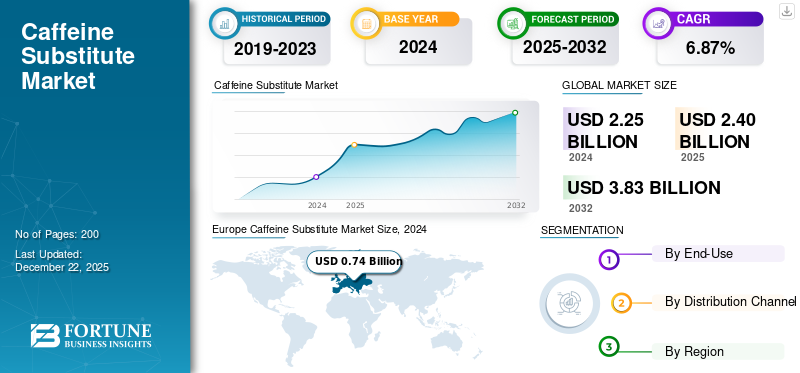
The global caffeine substitute market size was valued at USD 2.41 billion in 2025. The market is projected to grow from USD 2.57 billion in 2026 to USD 4.41 billion by 2034, exhibiting a CAGR of 6.98% during the forecast period. Europe dominated the caffeine substitute market with a market share of 32.57% in 2025.
Major players in the market include Milaf Cola Australia & NZ Pty Ltd, Bateel, Brown Living, Satopradhan Ltd., and Rover Chicory Roasters.
A caffeine substitute is an ingredient that is mainly in powdered form, mimics the taste and experience of coffee, but does not contain caffeine. The market for caffeine is expanding rapidly, owing to growing consumer focus on health and wellness, such as weight loss and improved digestive health. Caffeine substitutes such as chicory coffee, mushroom coffee, and others can offer various benefits, from gentle energy boosts and improved focus to enhanced digestion and hydration. For instance, chicory coffee is known to contain high amounts of inulin, a prebiotic fiber which helps support gut health and regulate blood sugar levels. Furthermore, increased consumer knowledge regarding a wide range of functional advantages offered by caffeine substitutes, such as cognitive performance, stress relief, and better metabolic support, further helps shape the industry's growth.
Download Free sample to learn more about this report.
Caffeine Substitute Market KEY TAKEAWAYS
 Global Market Size & Forecast
- 2025 Market Size: USD 2.41 billion
- 2026 Market Size: USD 2.57 billion
- 2034 Forecast Market Size: USD 4.41 billion
- CAGR: 6.98% from 2026–2034
 Market Share
- Europe dominated the caffeine substitute market with a 32.57% share in 2025.
- The commercial segment accounted for the largest market share of 81.16% in 2026.
- The offline segment held the largest market share of 75.74% in 2026.
 Key Regional Highlights
Asia Pacific
Asia Pacific reached USD 0.54 billion in 2025, driven by rising health awareness and demand for coffee alternatives.
North America
North America reached USD 0.67 billion in 2025, supported by growing demand for decaffeinated and wellness-focused beverages.
Europe
Europe reached USD 0.78 billion in 2025, driven by declining coffee consumption and increasing preference for natural caffeine alternatives.
U.S.
The U.S. market is projected to reach USD 0.56 billion by 2026, fueled by rising demand for healthier beverage options.
Japan
Japan is projected to reach USD 0.12 billion by 2026, supported by growing demand for roasted grain and caffeine-free beverages.
Read More

MARKET DYNAMICS
Market Drivers
Increasing Focus on Healthier Foods to Drive Market Growth
The market for caffeine substitutes has been expanding significantly, owing to a shift in consumer preferences toward wellness and health. The consumers are seeking for healthier solutions owing to growing consumer awareness regarding the possible drawbacks of traditional caffeine sources, such as coffee and energy drinks, such as insomnia, jitters, and others. The market players have been launching a broad range of caffeine substitutes, offering various dietary requirements and tastes. For instance, in June 2024, Kamana, a caffeine-free alternative coffee brand, ventured into the U.S. to launch a new Mesquite-based beverage. The new product offers flavor and a ritual of coffee without the effects such as gut issues, poor sleep, and anxiety.
Growing Consumer Preference for Clean-Label Diet to Drive Market Growth
With rising concerns over caffeine addiction, adrenal fatigue, and digestive health, many consumers are turning to substitute sources such as chicory blends, barley/roasted barley, and mushroom-infused coffee for sustained energy without the side effects of traditional caffeine. The demand for clean-label food and beverages is also fueling, with consumers prioritizing non-GMO and artificial additive-free products that support long-term health benefits. According to Sensient Food Colors Europe GmbH, one of the leading global manufacturers and marketers of colors, flavors, and other specialty ingredients, around 64% of consumers sought products with clean and simple ingredients that they recognize to be healthy. Therefore, innovations involving clean-label ingredients are expected to fuel the market expansion as clean-label movements gain momentum.
Market Restraints
Taste and Sensory Limitations to Impede Market Growth
Consumers familiar with rich, bold, and roasted flavors often find grain-based or herbal alternatives lacking in aroma and depth, making the adoption of caffeine substitutes difficult. The rise in demand for better-tasting options propels companies and brands to experiment with blending techniques, flavor enhancements, and natural sweeteners in order to improve consumer experience. However, achieving desired functionality, palatability, and ingredient integrity remains a hurdle, impacting caffeine substitute market growth.
Market Opportunities
Growing Expansion into the Sports Nutrition and Fitness Sector to Provide Opportunity for Market Growth
The traditional caffeine-based sports nutrition drinks and other fitness supplements may lead to increased heart rate, jitters, crashes, and other health issues, fueling consumers to explore plant-based and adaptogenic herbs. This has led to a rise in the popularity of caffeine-free functional powder and energy drinks. The manufacturers have responded to this trend by launching mushroom-infused or other beneficial formulas supporting cognitive function, sustained energy, and muscle recovery. For instance, in June 2025, Emirati innovator Noora Al Mazroui launched energy drinks and other products using date pits, a byproduct of dates.
Caffeine Substitute Market Trends
Growing Demand for Organic and Sustainable Products to Shape the Industry
The growing consumer demand for organic and sustainable products has presented a significant opportunity majorly within the beverage industry. Consumers nowadays have prioritized healthier and eco-friendly alternatives with the rise in awareness of environmental conditions and the impact of several products on the ecosystem. Therefore, companies operating in the market strategically source certified organic products, focus on sustainable packaging solutions, and maximize sustainable manufacturing processes. For instance, in September 2024, Vybey, a Scottish-based company, launched a new caffeine alternative, Braincare Smart Focus. The new product is a mushroom-based brew powered by nootropics and adaptogens and formulated with premium quality, sustainably sourced plant-based proteins and brain health ingredients.
Download Free sample to learn more about this report.
Impact of COVID-19
The COVID-19 pandemic had a significant effect on the industry for caffeine substitutes, largely in response to changes in consumer behavior and supply chain disruption. The pandemic increased consumers' attention to health and wellness, compelling demand for caffeine-free energy substitutes and functional beverages that provide other health benefits. The shift toward shopping online for ease and a greater variety of products, especially under lockdown, helped grow the online channels demand for caffeine substitutes market. During the pandemic, there was an increased popularity of functional drinks with ingredients such as herbal extracts and adaptogens, further boosting demand.
SEGMENTATION ANALYSIS
By End-Use
High Preference and Growing Application in Supplements Lead to Commercial Segment’s Highest Market Proportion
On the basis of end-use, the market is segmented into household and commercial.
The commercial segment held the largest global caffeine substitute market share in 2024, while the household segment is expected to grow with the highest CAGR. Caffeine substitutes are witnessing growing commercial use, fueled by consumer interest in healthier options while having food outside. These substitutes, ranging from beverages such as chicory coffee to supplements such as EnXtra, are penetrating markets ranging from energy drinks and sports nutrition to cognitive function products. The commercial segment is projected to dominate the market with a share of 81.16% in 2026.
The increasing popularity of caffeine substitutes in households is fueled by rising health consciousness and the need for healthier versions of classic caffeinated drinks. Consumers are increasingly seeking caffeine substitutes that offer more than just an energy boost. This trend is reflected in the increased demand for functional beverages containing natural ingredients such as herbal extracts, adaptogens, and vitamins.
By Distribution Channel
Offline Segment Accounts for Highest Market Share as it offers a Comprehensive Range of Products Under One Roof
Based on the distribution channel, the global market is segmented into offline and online.
The offline segment leads the overall market share in the global caffeine substitute market. The offline segment includes supermarkets/hypermarkets, direct to customers, convenience stores, and others. The direct-to-customers segment is one of the largest contributors to the global market and has the largest market share. Direct-to-customers channels mainly deal with the B2B segment and deliver their products directly to restaurants, hotels, and industries based on their requirements. These channels also cater to the household segment if the order quantity is huge. Supermarkets and hypermarkets provide a comprehensive range of products, including caffeine substitutes, under one roof. This is convenient for many consumers who shop for everything from one place. These channels have various products to suit a broad group of consumers' tastes and dietary needs. This would include more caffeine alternatives such as decaf coffee, barley-based beverages, caffeine-free energy beverages, and other drinks. The offline segment is projected to dominate the market with a share of 75.74% in 2026.
The online channels segment is expected to experience significant growth in the market during the forecast period. Consumers, particularly the millennial generation, have been mostly preferring the convenience of home shopping. Online platforms provide convenience in accessing different products without physically going to stores. Widening internet penetration allows customers to browse and purchase more products online, for example, caffeine substitutes. This has assisted brands in targeting a large customer base, facilitating the ease of expanding markets.
To know how our report can help streamline your business, Speak to Analyst
Caffeine Substitute Market Regional Outlook
Regionally, the global market report covers analysis across North America, Europe, Asia Pacific, South America, and the Middle East & Africa.
Europe
Europe Caffeine Substitute Market Size, 2025 (USD Billion)
To get more information on the regional analysis of this market, Download Free sample
Europe recorded a market size of USD 0.78 billion in 2025, capturing 32.57% of the global market share, and is projected to reach USD 0.83 billion in 2026. Europe dominated the global caffeine substitutes market in 2024 and is expected to retain its dominance over the forecast period. Consumers in the region are becoming more health-focused and seeking for products perceived as natural and beneficial. This trend drives the demand for caffeine substitutes with health advantages such as prebiotic fiber for weight management and enhanced gut health. The region is experiencing a remarkable decline in coffee consumption, which creates the need for caffeine substitutes that are capable of bringing about the same taste and advantages without caffeine. According to the Centre for the Promotion of Imports from developing countries, European coffee consumption experienced a decrease of 3.7% in 2023, from 3,312 million tons to 3,186 million tons in volume. The UK market is expected to reach USD 0.14 billion by 2026, while the Germany market is assessed at USD 0.18 billion by 2026.
North America
The North America market accounted for USD 0.67 billion in 2025, representing 27.96% of the global industry, and is expected to reach USD 0.72 billion in 2026. North America is expected to have significant growth in the forecast period. Due to an increasing demand for decaffeinated products, the market has witnessed rapid growth in countries such as the U.S. and Canada. Consumers have also become increasingly aware of the possible pitfalls of excessive consumption of caffeine, thus fueling the demand for decaffeinated coffee, tea, and other beverages. With a growing number of consumers seeking for conscious choices, the market for caffeine substitutes keeps growing, providing a mix of environmentally conscious and health-oriented alternatives. The U.S. market is valued at USD 0.56 billion by 2026.
Asia Pacific
In 2025, Asia Pacific represented USD 0.54 billion, accounting for 22.49% of the worldwide market, and is projected to grow to USD 0.58 billion in 2026. The Asia Pacific region is witnessing an emerging trend toward coffee substitute beverages with expanding health awareness, urban life, and lifestyle changes. The trend is especially observed in countries with robust tea cultures, including China and Japan, where consumers seek alternatives such as roasted grain drinks. The busy lifestyles of urban populations are further driving demand for convenient and portable beverage options, such as ready-to-drink (RTD) coffee caffeine substitutes. Roasted grain beverages, especially barley-based beverages, are also a favorite drink in China, mostly consumed for their possible medicinal values and refreshing flavor. This phenomenon is favored by health-oriented consumers and the younger generations, further fueling the market demand. The Japan market is forecast to attain USD 0.12 billion by 2026, the China market is set to reach USD 0.16 billion by 2026, and the India market is anticipated to achieve USD 0.03 billion by 2026.
South America
The South American market for caffeine substitutes is witnessing growth as a result of various factors such as increasing health consciousness and a trend toward natural and functional drinks. Many consumers in Brazil are increasingly seeking healthier beverage alternatives, including those with lower sugar content and organic options. Consumers are becoming more aware of the potential side effects of excessive caffeine consumption, such as anxiety and sleep disturbances, leading them to explore caffeine-free options. In South America, barley is mostly grown for its applications in brewing activities. Production and consumption of barley beverages are a part of culture in some South American nations, further fueling the market growth.
Middle East & Africa
Middle East & Africa contributed 6.32% to the global market in 2025, with a valuation of USD 0.15 billion, and is projected to reach USD 0.16 billion in 2026. Consumers in the Middle East & Africa increasingly opt for substitutes for caffeinated beverages due to concerns about the side effects of excessive caffeine and a broader shift toward wellness and healthy living. Caffeine substitutes such as chicory coffee, barley/roasted barley, and mushrooms have witnessed steady growth in the UAE and other parts of the Gulf Cooperation Council (GCC), owing to rising consumer awareness of their health benefits, particularly their high antioxidant content, and metabolism-boosting properties.
Latin America
The Latin America market was valued at USD 0.26 billion in 2025, capturing 10.67% of global revenue, and is estimated to reach USD 0.28 billion in 2026.
COMPETITIVE LANDSCAPE
Key Industry Players
Growing Focus on New Product Launch to Support Market Growth
The global market is highly fragmented, with the presence of numerous players focusing on product innovation, branding, and base expansion. The players maintain a robust presence in North America and Europe, supported by strong consumer demand, manufacturing capabilities, and a well-established distribution network. Key players in the market have been launching innovative products in order to appeal to all generations and demographics.
- For instance, in June 2025, Compound Foods, a U.S. food tech startup, launched bean-less coffee and cocoa ingredients. The bean-less coffee is made from upcycled ingredients, including date, chicory, sunflower, carob, and grape seeds.
Some prominent players in the market include Milaf Cola Australia & NZ Pty Ltd, Bateel, Brown Living, Satopradhan Ltd., and Rover Chicory Roasters.
List of Key Caffeine Substitute Companies Profiled:
- Rover Chicory Roasters (India)
- The Baytown Coffee Company (U.K.)
- Artizan Coffee Roasters (U.S.)
- Milaf Cola Australia & NZ Pty Ltd (Australia)
- Bateel (UAE)
- Brown Living (India)
- Satopradhan Ltd (India)
- Laird Superfood, Inc. (U.S.)
- RYZE Superfoods (U.S.)
- Maverick & Farmer Coffee (India)
KEY INDUSTRY DEVELOPMENTS:
- March 2025: Maverick and Farmer, a Bengaluru-based artisanal coffee brand, launched whole bean-infused lion’s mane coffee. The company used mushrooms as an ingredient instead of coffee beans.
- June 2024: Artizan Coffee Roasters, a U.S.-based coffee company, launched USDA Organic Mushroom Coffee Capsules. The new product is compatible with Nespresso machines and made from organic functional mushrooms and organic specialty-grade Arabica coffee.
- May 2023: Alt Health, a Bengaluru-based startup, entered the U.S. market with its caffeine-free coffee alternatives. The company used a Chickpea as a coffee substitute.
- January 2023: Rasa, a Coffee-alternative maker, launched two new mixes, Classic Rasa and Café Rasa, with adaptogenic herbs and mushrooms instead of caffeine.
- August 2022: Zoe Essentials, a U.S.-based beverage company, Coff-Tea, launched a new coffee alternative. The new product contains flavor-rich chicory root and Honeybush tea and is an all-natural, zero-caffeine beverage.
REPORT COVERAGE
The report analyzes the market in depth and highlights crucial aspects such as global caffeine substitute market trends, market dynamics, prominent companies, and distribution channels. Besides this, the market statistics report also provides insights into the global market analysis and highlights significant industry developments.
Request for Customization to gain extensive market insights.
Report Scope & Segmentation
|
ATTRIBUTE |
DETAILS |
|
Study Period |
2021-2034 |
|
Base Year |
2025 |
|
Forecast Period |
2026-2034 |
|
Historical Period |
2021-2024 |
|
Growth Rate |
CAGR of 6.98% from 2026 to 2034 |
|
Unit |
Value (USD Billion) |
|
Segmentations |
By End-Use, Distribution Channel, and Region |
|
Segmentation |
By End-Use · Household · Commercial |
|
By Distribution Channel
|
|
|
By Region · North America (By End-Use, Distribution Channel, and Country) • U.S. (By End-Use) • Canada (By End-Use) • Mexico (By End-Use) · Europe (By End-Use, Distribution Channel, and Country) • France (By End-Use) • Germany (By End-Use) • Italy (By End-Use) • Russia (By End-Use) • U.K. (By End-Use) • Rest of Europe (By End-Use) · Asia Pacific (By End-Use, Distribution Channel, and Country) • China (By End-Use) • India (By End-Use) • Australia (By End-Use) • Japan (By End-Use) • South Korea (By End-Use) • Rest of Asia Pacific (By End-Use) · South America (By End-Use, Distribution Channel, and Country) • Brazil (By End-Use) • Argentina (By End-Use) • Rest of South America (By End-Use) · Middle East & Africa (By End-Use, Distribution Channel, and Country) • UAE (By End-Use) • South Africa (By End-Use) • Rest of the Middle East & Africa (By End-Use) |
Frequently Asked Questions
Fortune Business Insights says that the global market value was USD 2.41 billion in 2025 and is anticipated to reach USD 4.41 billion by 2034.
At a CAGR of 6.98%, the global market will exhibit steady growth over the forecast period.
By distribution channel, the offline segment leads the market.
Europe holds the largest market with a share of 32.57% in 2025.
Increasing focus on healthier foods is driving market growth.


- 2021-2034
- 2025
- 2021-2024
- 200
-
(Offer valid till 15th Oct 2026)
Get 30-60 hrs Free Customization
Expand Regional and Country Coverage, Segments Analysis, Company Profiles, Competitive Benchmarking, and End-user Insights.


















-
US +1 833 909 2966 ( Toll Free )
-
Get In Touch With Us