Syphilis Rapid Test Kits Market Size, Share & Industry Analysis, By Test Type (Treponemal, Non-Treponemal, and Dual Treponemal/Non-Treponemal), By Application (Antenatal Screening, STI Screening & Diagnosis, High-Risk Population Screening, and Blood Donor Screening), By Technology (Lateral Flow Immunoassay, Flocculation Assay, and Dual-Path Immunoassay), By Sample Type (Capillary Whole Blood, Venous Whole Blood, Serum, and Plasma), By End User (Hospitals & Clinics, Public Health & STI Clinics, Antenatal & Maternity Centers, and Clinical Laboratories), and Regional Forecast, 2026-2034
 Download Free Sample
Syphilis Rapid Test Kits Market Size and Future Outlook
 Listen to Audio Version
The global syphilis rapid test kits market size was valued at USD 177.5 million in 2025. The market is projected to grow from USD 192.1 million in 2026 to USD 373.7 million by 2034, exhibiting a CAGR of 8.67% during the forecast period.
Syphilis rapid test kits provide results during the same visit, which can improve patient follow-up and support earlier referral for confirmatory testing and treatment. The global market is supported by the rising burden of syphilis, increasing antenatal screening, and growing efforts to expand sexually transmitted infection testing beyond central laboratories. Growing adoption of dual HIV/syphilis tests in antenatal care, wider use of finger-prick testing, and the introduction of over-the-counter kits are expected to support market expansion.
- For instance, in March 2025, bioLytical Laboratories launched its INSTI Multiplex HIV-1/2 Syphilis Antibody Test in Australia after its inclusion in the Australian Register of Therapeutic Goods. The test simultaneously detects HIV and syphilis antibodies and provides results in approximately 60 seconds, helping healthcare professionals conduct faster screening and connect reactive patients with further care. This development highlights the increasing focus of diagnostic companies on multiplex testing, shorter result times, and wider access to point-of-care STI screening.
Key players in the market include Abbott Laboratories, SD Biosensor, Inc., Premier Medical Corporation Private Limited, and Guangzhou Wondfo Biotech Co., Ltd. They are actively participating in new product launches, strategic collaborations, acquisitions, and regulatory approval and investment initiatives to expand market presence.
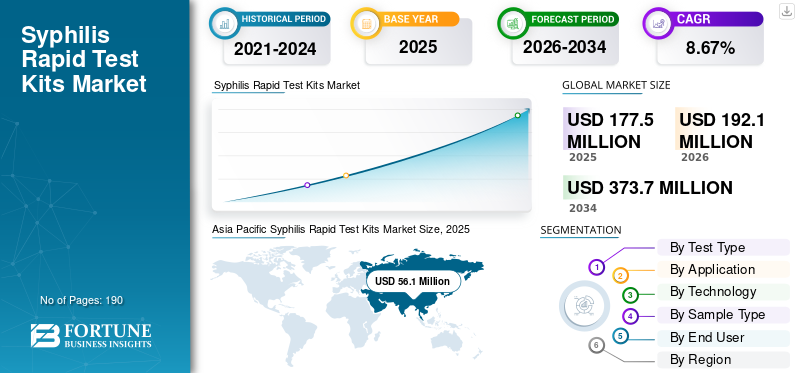
Download Free sample to learn more about this report.
SYPHILIS RAPID TEST KITS MARKET TRENDS
Rising Demand for Self-Testing and Over-the-Counter Syphilis Test Kits is a Prominent Trend
The global market is witnessing a shift toward self-testing and over-the-counter products as consumers increasingly seek easily accessible screening options. Home-based rapid tests can reduce barriers associated with stigma, clinic visits, and limited access to sexual health services, particularly among high-risk and underserved populations. Expansion through pharmacies, retail stores, and online platforms is also widening product accessibility and supporting more frequent testing. However, reactive self-test results must be confirmed through additional laboratory testing and clinical evaluation before treatment decisions are made.
- For instance, in November 2024, NOWDiagnostics launched its First To Know Syphilis Test across the U.S. through pharmacies, drugstores, retail locations, and Amazon. The test uses a single drop of finger-stick blood and provides an in-home result in approximately 15 minutes. These developments highlight the growing focus of diagnostic companies on consumer-directed STI screening, wider retail availability and rapid testing outside conventional healthcare settings.
MARKET DYNAMICS
MARKET DRIVERS
Download Free sample to learn more about this report.
Persistent Syphilis and Congenital Syphilis Burden to Drive Demand for Rapid Screening
The continuing burden of syphilis, including infections transmitted from pregnant women to newborns, is increasing the need for wider and earlier screening. Untreated maternal infection can cause stillbirth, premature delivery, low birth weight, and serious long-term complications in newborns. Governments and healthcare organizations are strengthening community-based and high-risk population screening programs. Rapid test kits support these initiatives by providing results within minutes and enabling faster referral, confirmation and treatment, thereby increasing their procurement across hospitals, maternity centres and outreach settings.
- For instance, in January 2026, Chembio Diagnostic Systems, Inc., announced the dual submission of its DPP Syphilis TnT (Treponemal/Non-Treponemal) Assay to the U.S. FDA for review. The submission includes a 510(k) premarket notification and a CLIA Waiver by Application.
Market Drivers - Impact & CAGR Contribution (2026–2034)
| Rank | Market Drivers | Overall Impact | CAGR Contribution, 2026–2034 | Impact: 2026-2028 | Impact: 2029-2031 | Impact: 2032-2034 |
|---|---|---|---|---|---|---|
| 1 | Persistent syphilis and congenital syphilis burden | High | 3.40% | High | High | High |
| 2 | Expansion of antenatal and government screening programs | High | 2.75% | Medium | High | High |
| 3 | Growth of decentralised point-of-care and community testing | High | 2.20% | Medium | High | Medium |
| 4 | Increasing adoption of dual HIV/syphilis and multiplex rapid tests | Medium-High | 1.80% | Medium | High | High |
| 5 | Expansion of OTC, self-testing and retail-access models | Medium | 1.45% | Medium | Medium | High |
| 6 | Others | Low | 1.10% | Low | Low | Low |
| Total Positive Growth Contribution | 12.70% | |||||
Source: Fortune Business Insights
MARKET RESTRAINTS
Inability of Treponemal-Only Tests to Confirm Active Infection Restrains Market Growth
The clinical limitations of treponemal-only rapid tests may restrain their adoption as standalone diagnostic solutions. These home testing kits detect antibodies against Treponema pallidum, which can remain detectable after successful treatment; therefore, a reactive result may represent an active infection, a previously treated infection, or possible reinfection. Healthcare providers must consequently use patient history, clinical assessment, and a follow-up non-treponemal test, such as RPR or VDRL, to determine disease activity. This requirement increases testing costs, extends diagnostic turnaround time and reduces the same-visit advantage offered by rapid kits. It may also contribute to patient confusion, loss to follow-up and unnecessary retreatment, particularly in self-testing and community-based settings. As a result, healthcare programs may increasingly prefer dual treponemal/non-treponemal tests over treponemal-only products.
- For instance, in October 2025, an article published in the Journal of Clinical Microbiology highlighted that all available syphilis self-tests were based on treponemal antibody detection and could not distinguish active infection from previously treated infection. The article noted that this limitation reduces their usefulness among populations with a high risk of reinfection, including men who have sex with men and sex workers. It also warned that unclear interpretation of reactive results could cause anxiety, confusion, or inappropriate retreatment, reinforcing the need for confirmatory testing and linkage to clinical services.
Market Restraints - Impact & Negative CAGR Contribution (2026–2034)
| Rank | Market Restraints | Overall Impact | Negative CAGR Contribution (2026-2034) | Impact: 2026-2028 | Impact: 2029-2031 | Impact: 2032-2034 |
|---|---|---|---|---|---|---|
| 1 | Inability of treponemal-only tests to confirm active infection | High | 1.25% | High | High | Medium |
| 2 | Variable performance and continued need for confirmatory testing | Medium-High | 1.21% | High | Medium | Medium |
| 3 | Funding, procurement and linkage-to-care gaps in low-resource settings | Medium | 0.94% | Medium | Medium | Low |
| 4 | Others | Low | 0.63% | Low | Low | Low |
| Total Negative Growth Impact | 4.03% | |||||
Source: Fortune Business Insights
MARKET OPPORTUNITIES
Development of Dual-Marker Tests for Active-Infection Differentiation to Create Growth Opportunities
The development of rapid tests that simultaneously detect treponemal and non-treponemal antibodies represents a significant growth opportunity in the market. Dual-marker products can support differentiation between past exposure and probable active infection within a single testing procedure. This can reduce dependence on sequential laboratory tests, shorten diagnostic turnaround time and support faster clinical decisions. Such products may be particularly valuable in antenatal clinics, community screening programs and remote settings where patients may not return for confirmatory testing. The WHO’s inclusion of dual treponemal/non-treponemal rapid diagnostic tests in its 2024 testing recommendations is also expected to encourage product development, regulatory submissions and public-health procurement.
- For instance, in January 2025, MedMira received investigational testing authorization from Health Canada to begin clinical trials of its Multiplo Complete Syphilis TP/nTP Antibody Test. The test simultaneously detects treponemal and non-treponemal antibodies and is being developed to support differentiation between active and non-active syphilis in less than three minutes. The advancement of this product toward Canadian licensing highlights the commercial opportunity for companies developing rapid tests that combine screening and active-infection assessment in a single device.
MARKET CHALLENGES
Accurately Differentiating Active and Previously Treated Syphilis Remains a Major Challenge
Reliably distinguishing active syphilis from a previously treated infection remains a major challenge for rapid test manufacturers. Treponemal antibodies commonly remain detectable for life, while non-treponemal antibody levels vary according to disease stage, treatment response, and patient characteristics. The non-treponemal marker may be undetectable during very early or long-standing infection and may remain reactive at low levels after successful treatment. False-positive non-treponemal results can also occur due to HIV, autoimmune disorders, other infections, or recent vaccination. Therefore, even dual-marker rapid tests may require clinical history, quantitative laboratory testing and further medical assessment, limiting their ability to provide a definitive standalone diagnosis at the point of care.
- For instance, a diagnostic accuracy study published online in December 2025 evaluated Chembio’s DPP Syphilis Screen & Confirm Assay among people living with HIV and found that the test did not meet WHO performance targets. The treponemal component recorded 74.5% sensitivity, while the non-treponemal component showed 90.4% sensitivity and only 46.5% specificity. The study concluded that improve diagnostic tools and more rigorous validation are required to ensure reliable active-syphilis diagnosis in this population, highlighting the difficulty of maintaining consistent dual-marker performance across different patient groups.
Segmentation Analysis
By Test Type
Treponemal Tests Dominated Market Due to Their Suitability for Rapid First-Line Screening
Based on test type, the market is categorized into treponemal, non-treponemal, dual treponemal/non-treponemal, and others.
The treponemal segment dominated the market in 2025. These tests offer a simple and sensitive method for detecting antibodies against Treponema pallidum. Treponemal antibodies generally remain detectable for long periods, which allows the kits to identify infections across primary, secondary, latent, and previously treated stages. Most treponemal rapid tests use visually interpreted disposable devices and require limited operator training, making them suitable for outreach programs. Their broad commercial availability, comparatively low cost and inclusion in national and international screening algorithms have also supported higher procurement volumes.
- For instance, in July 2025, Health Canada authorized bioLytical Laboratories’ iStatis Syphilis Antibody Test for professional use. The treponemal antibody test provides results in under 15 minutes and is intended for use across clinics, public-health programs and community settings. The approval demonstrates the continued commercial focus on treponemal products as accessible first-line syphilis screening tools.
The others segment is expected to grow at a CAGR of 14.54% over the forecast period.
To know how our report can help streamline your business, Speak to Analyst
By Application
Routine Maternal Screening Supported Dominance of Antenatal Screening Segment
Based on application, the market is segmented into antenatal screening, STI screening & diagnosis, high-risk population screening, community & outreach testing, blood donor screening, and others.
In 2025, the antenatal screening segment captured the largest market share due to the widespread recommendation or legal requirement to test pregnant women for syphilis during every pregnancy. Early identification and treatment of maternal infection can prevent transmission to the fetus and reduce the risk of stillbirth, neonatal death, premature birth, and long-term infant complications. Antenatal centers also represent an organized testing channel in which large numbers of pregnant women can be screened during scheduled visits. The adoption of dual HIV/syphilis rapid tests further supports this segment by allowing two major maternal infections to be screened through a single procedure.
- For instance, in May 2025, the U.S. Preventive Services Task Force reaffirmed its Grade A recommendation for early and universal syphilis screening during pregnancy. It recommended screening at the first available opportunity and stated that appropriate screening should include treponemal and non-treponemal testing. Such recommendations sustain routine test consumption across obstetric, maternity and antenatal-care facilities.
The others segment is projected to grow at a 13.26% CAGR during the forecast period.
By Technology
Operational Simplicity Requirements Led to Lateral Flow Immunoassay Segment Dominance
Based on technology, the market is segmented into lateral flow immunoassay, flocculation/agglutination assay, dual-path immunoassay, and others.
The lateral flow immunoassay segment dominated the market in 2025, as the technology provides rapid, visually readable results without requiring automated analyzers or complex laboratory infrastructure. Lateral flow devices are generally portable, individually packaged, and suitable for room-temperature storage, which simplifies their use and distribution across central hospitals, primary-care clinics, and remote testing locations. The technology can also accommodate treponemal-only, dual HIV/syphilis, and dual treponemal/non-treponemal formats. These operational advantages reduce testing time and allow providers to screen patients during the same visit. Consequently, lateral flow remains the preferred platform for high-volume public-health procurement and decentralized syphilis testing.
- For instance, in June 2026, WHO prequalified Abbott’s Determine Syphilis Advanced rapid diagnostic test. The product is an immunochromatographic lateral flow assay that supports capillary whole blood, venous whole blood, serum, and plasma samples. Its WHO prequalification illustrates the continued regulatory and commercial importance of lateral flow technology in the global syphilis testing market.
The dual-path immunoassay segment is projected to grow at a 12.14% CAGR during the forecast period.
By Sample Type
Finger-Prick Convenience Supported Dominance of Capillary Whole Blood Segment
Based on the sample type, the market is segmented into capillary whole blood, venous whole blood, serum, plasma, and oral fluid and other alternative specimens.
The capillary whole blood segment held the largest share in 2025, as finger-prick collection enables testing to be conducted immediately without venipuncture, centrifugation, or specimen transportation to a central laboratory. The method requires a small blood volume and can be performed by trained healthcare workers in clinics, antenatal centres, mobile units and community programs. This improves testing acceptance among patients who may be reluctant to undergo venous blood collection and reduces the time between specimen collection and result delivery.
- For instance, a 2025 clinical study published in the Journal of Clinical Microbiology evaluated the First to Know Syphilis Test using self-collected finger-stick capillary whole blood. The test recorded overall sensitivity of 93.4% and specificity of 99.5%, demonstrating the practical potential of capillary sampling for rapid syphilis screening outside conventional laboratory workflows.
The oral fluid and other alternative specimens segment is projected to grow at a CAGR of 16.21% over the forecast period.
By End User
Integrated Diagnosis and Treatment Pathways Strengthened Dominance of Hospitals & Clinics
Based on end user, the market is segmented into hospitals & clinics, public health & STI clinics, antenatal & maternity centers, clinical laboratories, homecare settings, and others.
In 2025, the hospitals & clinics segment dominated the market, as these facilities combine rapid screening with physician assessment, confirmatory laboratory testing, treatment initiation, and follow-up care. This is particularly important for syphilis, as a reactive rapid-test result alone may not establish active infection or distinguish it from a previously treated case. Hospitals and clinics also serve large patient populations through antenatal departments, sexual health services, emergency departments, infectious-disease units and general outpatient services. Their trained personnel, established procurement systems and ability to maintain patient records support consistent test utilisation. Moreover, same-visit testing and treatment can reduce loss to follow-up, strengthening the role of clinical facilities compared with standalone homecare testing.
- For instance, in March 2026, the U.K. Health Security Agency published its Syphilis Response Plan, which emphasized improved testing through sexual health services and other NHS settings. The plan highlighted opportunities to expand testing across maternity services, emergency departments, general practice and specialist clinics and proposed evaluating treponemal point-of-care tests in underserved settings. This initiative demonstrates the central role of hospitals and clinics in implementing structured syphilis screening and care pathways.
The homecare settings segment is projected to grow at a CAGR of 20.95% over the forecast period.
Syphilis Rapid Test Kits Market Regional Outlook
By geography, the market is categorized into Europe, North America, Asia Pacific, Latin America, and the Middle East & Africa.
Asia Pacific
Asia Pacific Syphilis Rapid Test Kits Market Size, 2025 (USD Million)
To get more information on the regional analysis of this market, Download Free sample
Asia Pacific accounted for the largest share of the market in 2025 with a valuation of USD 56.1 million and is estimated to reach USD 61.1 million in 2026. Large target populations and government programs aimed at eliminating mother-to-child transmission are supporting market growth across Asia Pacific.
Japan Syphilis Rapid Test Kits Market
The Japanese market in 2026 is estimated at around USD 9.1 million, accounting for approximately 4.73% of global revenues.
China's Syphilis Rapid Test Kits Market
China's market is projected to be among the largest globally, with 2026 revenues estimated at around USD 18.3 million, accounting for approximately 9.53% of global sales.
India Syphilis Rapid Test Kits Market
The Indian market is estimated at around USD 10.4 million in 2026, accounting for roughly 5.39% of global revenues.
North America
North America was valued at USD 44.8 million in 2024 and maintained its growth momentum with the second-largest position in 2025 at USD 48.6 million. Market growth is attributed to the persistent burden of maternal and congenital syphilis, with the U.S. reporting nearly 4,000 congenital cases in 2024. Expansion of prenatal screening, community testing, and over-the-counter rapid kits is supporting regional demand.
U.S. Syphilis Rapid Test Kits Market
Given North America's substantial contribution and the U.S. dominance in the region, the U.S. market is estimated at around USD 48.4 million in 2026, accounting for roughly 25.19% of global revenues.
Europe
Europe is projected to grow at 7.01% CAGR in the coming years, the third-highest among all regions, and reach a valuation of USD 35.2 million in 2026. Rising syphilis incidence and stronger STI surveillance are increasing the need for rapid screening, driving regional growth.
U.K. Syphilis Rapid Test Kits Market
The U.K. market is estimated at USD 4.6 million in 2026, accounting for roughly 2.40% of global revenues.
Germany Syphilis Rapid Test Kits Market
Germany's market is projected to reach approximately USD 5.5 million in 2026, equivalent to around 2.87% of global revenues.
Latin America and Middle East & Africa
The Latin America region is expected to witness moderate growth in this market and is estimated to reach a valuation of USD 22.1 million in 2026. Market expansion is driven by increasing disease burden, particularly among pregnant women and underserved populations. In the Middle East & Africa, the GCC is set to reach USD 4.0 million in 2026.
South Africa Syphilis Rapid Test Kits Market
The South African market is projected to reach approximately USD 4.8 million in 2026, accounting for roughly 2.48% of global revenues.
COMPETITIVE LANDSCAPE
Key Industry Players
Regulatory Expansion and Product Differentiation by Key Players to Intensify Market Competition
The global syphilis rapid test kits market has a fragmented competitive structure, with Abbott, SD Biosensor, Premier Medical Corporation, Wondfo, Biosynex/Chembio, bioLytical Laboratories, and NOWDiagnostics holding notable positions across professional and self-testing segments. The market presence of these companies is supported by established rapid-testing platforms, international distribution networks, regulatory approvals, and portfolios covering treponemal tests, HIV/syphilis combination tests, and dual treponemal/non-treponemal products. Products such as Determine Syphilis TP, First Response Syphilis Anti-TP, INSTI Multiplex HIV-1/2 Syphilis Antibody Test, and First to Know Syphilis Test have strengthened competition across hospitals, STI clinics, antenatal programs, community testing, and homecare settings. Competition is expected to increase as companies improve active-infection differentiation, expand multiplex testing, reduce result times, and obtain approvals for decentralized and consumer-directed use.
- For instance, in November 2021, MedAccess, the Clinton Health Access Initiative (CHAI), and SD Biosensor partnered to significantly increase access to innovative combined rapid testing for syphilis and HIV.
Other notable market participants include Healgen Scientific, Orient Gene, InTec Products, and Hangzhou AllTest Biotech Co., Ltd. These companies primarily compete through affordable lateral-flow products, compatibility with whole blood, serum, and plasma, short result times, multiplex configurations, and geographic distribution across emerging markets. During the forecast period, some participants are expected to prioritize regulatory approvals, public-health procurement contracts, dual-marker clinical validation, self-testing formats, and partnerships with government and community screening programs to strengthen their positions in the global market.
LIST OF KEY SYPHILIS RAPID TEST KIT COMPANIES PROFILED
- Abbott Laboratories (U.S.)
- SD Biosensor, Inc. (South Korea)
- Premier Medical Corporation Private Limited (India)
- Wondfo (China)
- Chembio Diagnostic Systems, Inc. (U.S.)
- bioLytical Laboratories Inc. (Canada)
- NOWDiagnostics, Inc. (U.S.)
- SSI Diagnostica A/S (Denmark)
- Healgen Scientific LLC (U.S.)
- Zhejiang Orient Gene Biotech Co., Ltd. (China)
- InTec PRODUCTS, INC. (China)
- Hangzhou AllTest Biotech Co., Ltd. (China)
- MP Biomedicals, LLC (U.S.)
- Access Bio, Inc. (U.S.)
- Tulip Diagnostics (P) Ltd. (India)
KEY INDUSTRY DEVELOPMENTS
- July 2025: Labcorp launched a new initiative with NOWDiagnostics to expand access to rapid syphilis testing. The companies will distribute First to KnowSyphilis Test kits at no cost to select community-based public health organizations across the country.
- February 2025: MedMira Inc. collaborated with Trimedic Inc. for the commercialization of the Multiplo TP/HIV Rapid Antibody Test in Canada. The partnership followed Health Canada’s approval of the dual rapid test and enabled MedMira to use Trimedic’s established point-of-care distribution network to expand access across hospitals.
- October 2024: Chembio Diagnostic Systems received a USD 1.5 million grant from the Bill & Melinda Gates Foundation to develop a rapid point-of-care assay for congenital syphilis. The planned DPP-based test is intended to separately detect treponemal and non-treponemal IgM and IgA antibodies in under 20 minutes.
REPORT COVERAGE
The report provides a detailed global syphilis rapid test kits market analysis across key segments, including test type, application, technology, sample type, and end user. The study offers market insights across North America, Europe, Asia Pacific, Latin America, and the Middle East & Africa, supported by country-level assessments where applicable. The global market report further includes market dynamics, such as key growth drivers, restraints, challenges, trends, and opportunities, along with the competitive landscape, regulatory approvals, product launches, clinical validations, partnerships, collaborations, acquisitions, procurement initiatives, and strategic developments undertaken by leading companies operating in the market.
Request for Customization to gain extensive market insights.
Report Scope and Segmentation
| ATTRIBUTE | DETAILS |
| Study Period | 2021-2034 |
| Base Year | 2025 |
| Estimated Year | 2026 |
| Forecast Period | 2026-2034 |
| Historical Period | 2021-2024 |
| Growth Rate | CAGR of 8.67% from 2026 to 2034 |
| Unit | Value (USD Million) |
| Segmentation | By Test Type, Application, Technology, Sample Type, End User, and Region |
| By Test Type |
|
| By Application |
|
| By Technology |
|
| By Sample Type |
|
| By End User |
|
| By Region |
|
Research Methodology
1. Bottom Up Approaches
Approach 1: Revenues and Market Share of Major Syphilis Rapid Test Kit Players
- Collection of syphilis rapid-test revenues from annual reports, SEC filings, investor presentations, company disclosures, product catalogs, regulatory databases, and procurement records of key manufacturers such as Abbott Laboratories, SD Biosensor, Premier Medical Corporation, Wondfo Biotech, Chembio/Biosynex, bioLytical, NOWDiagnostics, CTK Biotech, and others.
- Estimation of company-level revenues based on syphilis rapid-test portfolio, product registrations, WHO prequalification, geographic reach, institutional contracts, distributor network, and public-health procurement participation.
- Segregation of revenues across treponemal, non-treponemal, dual treponemal/non-treponemal, and other syphilis-containing multiplex rapid tests.
- Allocation of HIV/syphilis multiplex-test revenues based only on the attributable syphilis component to avoid counting the complete multiplex market.
- Triangulation of company-level revenues with estimated test volumes, manufacturer ASPs, procurement participation, and country-level testing demand to derive the global market and company shares.
Approach 2: Product-Level Sales, Procurement and Tender Analysis
- Identification of major commercially available syphilis rapid tests by manufacturer, test type, technology, sample compatibility, pack size, time to result, regulatory approval, and geographic availability.
- Collection of test volumes and procurement values from UNICEF Supply Division, the Global Fund, UN agencies, ministries of health, public-health programs, hospitals, STI clinics, antenatal programs, and government tender portals.
- Analysis of awarded suppliers, unit prices, pack sizes, contract periods, delivery volumes, and procurement frequency for syphilis-only and HIV/syphilis rapid tests.
- Estimation of private-sector sales through hospitals, clinical laboratories, maternity centers, diagnostic distributors, pharmacies, online channels, and home-testing markets.
- Removal of distributor margins, retail mark-ups, taxes, freight, and diagnostic service charges to derive manufacturer-level revenues.
- The summation of product-level and procurement-level sales across countries and suppliers is used to estimate the global market.
Approach 3: Epidemiology Model
- Assessment of reported syphilis cases, estimated incidence, prevalence, congenital syphilis burden, maternal screening volumes, STI clinic attendance, high-risk population screening, community testing, and blood donor testing by country.
- Estimation of the addressable testing population, screening coverage, average testing frequency, repeat testing, rapid-test penetration, and access to point-of-care diagnostics.
- Separation of rapid-test volumes from automated immunoassays, ELISA, CLIA, TPHA, TPPA, conventional laboratory RPR/VDRL, PCR, and other excluded diagnostic methods.
- Estimation of test volumes by application, test type, technology, sample type, end user, country, and region.
- Multiplication of validated rapid-test volumes by country-specific manufacturer ASPs to derive country, regional, and global market revenues.
- Adjustment for wastage, procurement buffer stock, stock-outs, under-reporting, confirmatory testing practices, and differences between public and private testing channels.
2. Top Down Approaches
Approach 1: Analysis of the Parent Diagnostics Market
- Analysis of the global in-vitro diagnostics market, infectious-disease rapid testing market, sexually transmitted infection diagnostics market, and syphilis diagnostics market.
- Estimation of the proportion attributable to rapid syphilis testing based on syphilis testing volumes, rapid-test penetration, point-of-care utilization, disease burden, and product availability.
- Allocation of the market across regions and countries using reported syphilis cases, antenatal screening coverage, public-health expenditure, diagnostic access, donor procurement, and healthcare infrastructure.
- Validation of the resulting market against manufacturer revenues, procurement transactions, product-level volumes, and epidemiology-based demand.
- Reconciliation of the top-down result with the three bottom-up estimates to establish the final global market size and forecast.
- List of Key Sources
- World Health Organization and WHO Global Health Observatory
- WHO Prequalification of in Vitro Diagnostics
- UNAIDS
- Centers for Disease Control and Prevention
- European Centre for Disease Prevention and Control
- National ministries of health and STI surveillance databases
- UNICEF Supply Division
- Global Fund Procurement Transaction Reports
- UNFPA, UNDP, and PAHO procurement sources
- FDA, European Commission, PMDA, NMPA, CDSCO, TGA, Health Canada, and ANVISA
- National government tender and public-procurement portals
- Company annual reports, SEC filings, investor presentations, press releases, product catalogs, and instructions for use
- Product approvals, regulatory registrations, clinical-performance studies, distribution agreements, and public-health program announcements
- Primary Interviews
Supply Side Interviews: 60%
- Key respondents: Discussions with rapid-test manufacturers, diagnostic distributors, procurement suppliers, contract manufacturers, and public-health program vendors to understand product volumes, manufacturer ASPs, tender participation, distribution reach, manufacturing capacity, and competitive positioning.
- Sales Executives, Marketing Managers, Product Managers, Business Development Managers.
- Demand Side Interviews: 40%
- Key Respondents: Discussions with hospitals, STI clinics, public-health agencies, antenatal centers, clinical laboratories, community-screening organizations, and healthcare professionals to assess testing volumes, product preferences, procurement frequency, rapid-test penetration, and unmet diagnostic demand.
Frequently Asked Questions
According to Fortune Business Insights, the global market value stood at USD 177.5 million in 2025 and is projected to reach USD 373.7 million by 2034.
In 2025, the market value in North America stood at USD 48.6 million.
The market is expected to grow at a CAGR of 8.67% over the forecast period of 2026-2034.
By type, the treponemal segment led the market.
Persistent syphilis and congenital syphilis burden is driving market growth.
Abbott Laboratories, SD Biosensor, Inc., Premier Medical Corporation Private Limited, and Guangzhou Wondfo Biotech Co., Ltd. are among the major players in the global market.
Asia Pacific dominated the market in 2025.



- 2021-2034
- 2025
- 2021-2024
- 190
Get 30-60 hrs Free Customization
Expand Regional and Country Coverage, Segments Analysis, Company Profiles, Competitive Benchmarking, and End-user Insights.













.webp)






Related Reports
-
US +1 833 909 2966 ( Toll Free )
-
Get In Touch With Us