Probiotic Drinks Market Size, Share & Industry Analysis, By Product Type (Cultured Dairy RTD Drinks, Non-dairy Fermented RTD Drinks, Probiotic Fortified RTD Beverages, Probiotic Shots & Concentrates, and Pediatric RTD Probiotic Drinks), By Distribution Channel (Supermarkets & Hypermarkets, Online Retail/DTC/Quick Commerce, Health & Specialty Stores, Convenience stores, and Others), By Format (Refrigerated RTD Probiotic Drinks and Shelf-stable RTD Probiotic Drinks), and Regional Forecast, 2026-2034
 Download Free Sample
(Offer valid till 15th Jul 2026)
Probiotic Drinks Market Size and Future Outlook
 Listen to Audio Version
The global probiotic drinks market size was valued at USD 23.49 billion in 2025. The market is projected to grow from USD 25.39 billion in 2026 to USD 48.82 billion by 2034, exhibiting a CAGR of 8.52% during the forecast period.
Probiotic drinks are functional beverages containing live beneficial microorganisms that help support digestive balance, gut microbiota health, immunity, and metabolic function. These drinks include yogurt-based beverages, kefir, fermented dairy drinks, kombucha, probiotic juices, and plant-based probiotic formulations. The market is growing as more people focus on preventive health, better digestion, and nutrition that boost immune function. Manufacturers are introducing low-sugar, clean-label, and plant-based probiotic drinks to attract health-conscious consumers. Better refrigerated storage and growing demand for functional drinks are fueling market growth worldwide.
Companies such as Yakult Honsha Co., Ltd., Danone S.A., Lifeway Foods, Inc. are some of the key players in the global market. New product launches remain a key strategy for boosting sales and supporting the popularity of the product.
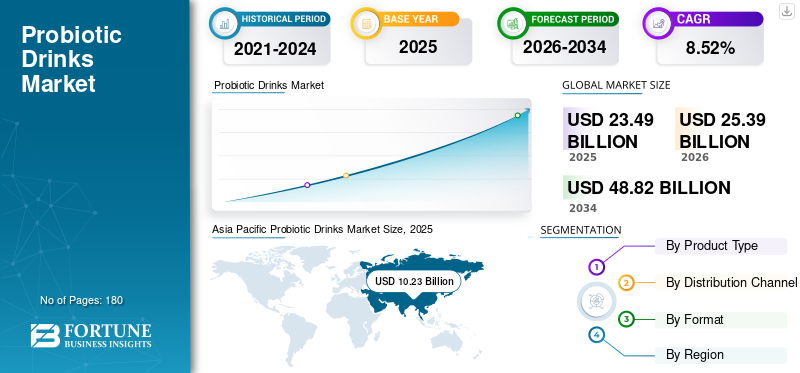
Download Free sample to learn more about this report.
PROBIOTIC DRINKS MARKET TRENDS
Shift Toward Low Sugar and Hybrid Functional Drinks to Boost Market Development
The market is moving toward clinically validated strains, less sugar, clean-label fermentation, and hybrid functional drinks. Probiotic drinks are often mixed with prebiotics, postbiotics, adaptogens, electrolytes, collagen, and plant proteins to offer wider wellness benefits. Plant-based kefir, dairy-free yogurt drinks, kombucha, and sparkling probiotic waters are becoming more popular among younger shoppers. Brands are emphasizing on clear strain labeling, recyclable packaging, and lighter flavors to improve products and make them appealing to the consumers. Companies are moving toward shelf-stable or longer-lasting probiotic products, which help lower reliance on cold-chain infrastructure and improve distribution efficiency.
MARKET DYNAMICS
MARKET DRIVERS
Download Free sample to learn more about this report.
Rising Focus on Gut-Health and Immunity to Support Market Growth
Health conscious consumers are choosing probiotic drinks as part of their daily routine, shifting from supplements use to the regular consumption of functional beverages. Concerns about digestive health, rising interest in immune support, and greater awareness of the importance of gut health are encouraging shoppers to choose yogurt drinks, kefir, kombucha, and plant-based probiotic options. The probiotic drinks market growth is also influenced by convenient packaging formats, making these products more appealing for kids, adults, and older consumers. Retailers are expanding chilled functional beverage shelves as these drinks generate repeat purchases and command premium pricing.
MARKET RESTRAINTS
Manufacturing and Distribution Complexities Hinder Market Growth
The market faces challenges such as maintaining strain stability, reliance on cold storage, concerns about sugar content, and strict rules on health claims. Probiotic drinks need to maintain optimal living colony forming microorganism units throughout processing, storage, transport, and on the shelf, making both manufacturing and distribution more complex. In addition, consumers may remain doubtful when product claims are unclear. Kombucha and fermented dairy brands also face challenges related to maintaining taste consistency, controlling acidity, carbonation, and managing refrigeration costs.
MARKET OPPORTUNITIES
Plant-Based, Synbiotic, and Ambient-Stable Formats Open Several Growth Opportunities
Plant-based probiotic drinks, gut-health beverages for kids, synbiotic blends, and shelf-stable products offer strong growth opportunities for the market. Brands can grow their portfolios by mixing probiotics with prebiotics, protein, vitamins, fiber, or low-sugar fruit blends. Emerging markets also offer strong potential, as digestive health awareness continue to rise while product penetration remains limited. By adjusting flavors, package sizes, and pricing strategies to local preferences, companies can help make probiotic drinks a regular part of people’s daily routines instead of just a niche wellness product.
Segmentation Analysis
By Product Type
Strong Consumer Familiarity Boosted Cultured Dairy RTD Drinks Segment Growth
By product type, the market is segmented into cultured dairy RTD drinks, non-dairy fermented RTD drinks, probiotic fortified RTD beverages, probiotic shots & concentrates, and pediatric RTD probiotic drinks.
The cultured dairy RTD drinks segment held the largest probiotic drinks market share in 2025. Cultured dairy RTD drinks lead the market as people trust these products, consume them daily, find them easily in stores, and rely on them for probiotics. Yogurt drinks, kefir, fermented milk, and lassi-style drinks are widely consumed in Asian countries and the markets are slowly expanding among western countries. Dairy naturally helps probiotics survive, adds protein, provides a creamy texture, and supports a healthy digestive environment.
The non-dairy fermented RTD drinks holds the second-largest market share and is expected to grow at a CAGR of 8.50% during the forecast period. Non-dairy fermented ready-to-drink beverages are becoming more popular, especially among vegans, lactose-intolerant consumers, flexitarians, and younger consumers seeking lighter functional drinks. Drinks such as kombucha, plant-based kefir, and fermented juices offer plenty of room for innovation.
By Distribution Channel
Strong Retail Infrastructure and Visibility Boosted Supermarkets & Hypermarkets Segment Growth
Based on distribution channels, the market is segmented into supermarkets & hypermarkets, online retail/DTC/quick commerce, health & specialty stores, convenience stores, and others.
Supermarkets & hypermarkets accounted for the largest market share in 2025, as these drinks are usually refrigerated and are often bought as part of a routine or on impulse. These stores offer chilled shelves, attract many shoppers, give brands good visibility, run multi-pack promotions, and are trusted for dairy and functional drinks.
The online retail/DTC/quick commerce segment holds the second-largest share of the market and is expected to grow at a CAGR of 9.70% during the forecast period. Online retail, direct-to-consumer, and quick commerce channels are growing fast as they offer convenience and ease of shopping from the comfort of home. These channels are especially popular among urban, health-conscious shoppers who seek convenience, subscription options, premium kombucha, plant-based probiotic beverages, and other niche functional drink brands.
To know how our report can help streamline your business, Speak to Analyst
By Format
Established Cold-Chain Infrastructure and Enhanced Probiotic Viability Encouraged Refrigerated RTD Probiotic Drinks Segment Growth
By format, the market is segmented into refrigerated RTD probiotic drinks and shelf-stable RTD probiotic drinks.
The refrigerated RTD probiotic drinks segment led the global market in 2025. Refrigerated ready-to-drink probiotic beverages lead the market as live cultures stay more viable when kept cold. Products such as drinkable yogurt, kefir, fermented milk, kombucha, and dairy-based probiotic shots need to be kept at the right temperature to maintain their strain count, taste, acidity, texture, and shelf life. In addition, refrigerated products benefit from well-established dairy cold-chain infrastructure, widespread availability in supermarket chilled sections, and strong consumers' belief regarding to the freshness and efficacy of refrigerated probiotic beverages.
Shelf-stable RTD probiotic drinks is another major segment and is expected to grow at a CAGR of 7.96% during the forecast period. Shelf-stable ready-to-drink probiotic beverages are popular since they are easier to distribute and more convenient, especially in places where cold storage is hard to find.
Probiotic Drinks Market Regional Outlook
By geography, the market is categorized into Europe, North America, Asia Pacific, South America, and the Middle East & Africa.
Asia Pacific
Asia Pacific Probiotic Drinks Market Size, 2025 (USD Billion)
To get more information on the regional analysis of this market, Download Free sample
The Asia Pacific market was valued at USD 10.23 billion and led the market in 2025. Asia Pacific’s market is evolving as more people become familiar with fermented drinks, online shopping expands, and awareness of digestive health increases. China, Japan, South Korea, India, and Southeast Asia each play a unique role in this growth. In China, demand is supported by yogurt drinks, probiotic drinks for children, shelf-stable functional beverages, and expanding online retail channels. Japan and South Korea already have a strong acceptance of cultured drinks and health-focused products. India’s market rising demand for lassi-style probiotic drinks, drinkable yogurt, and affordable dairy products is contributing to market growth. Meanwhile consumers across Southeast Asia increasingly favor flavored, convenient, and youth-oriented options, creating opportunities for product innovation.
India Probiotic Drinks Market
The India market was valued around USD 0.60 billion in 2025, accounting for roughly 2.54% of global market revenues.
China Probiotic Drinks Market
China’s market was valued around USD 3.40 billion in 2025, representing roughly 14.45% of global market sales. The market continues to grow with rising demand for yogurt drinks, shelf-stable probiotic beverages, children’s nutrition products, and premium functional drinks. Imported brands are trusted in the high-end market, but local brands grow faster by selling through e-commerce, convenience stores, and supermarkets.
Japan Probiotic Drinks Market
The Japanese market reached a valuation of around USD 2.68 billion in 2025, accounting for roughly 11.43% of global revenues.
North America
The market in North America reached a valuation of USD 5.74 billion in 2025. In the region, people spend a lot on probiotic beverages to support gut health, boost immunity, and stay hydrated. The U.S. is the main driver of demand, with string consumption of kefir, drinkable yogurt, kombucha, sparkling probiotic drinks, and plant-based cultured beverages. Sales growth is particularly strong across refrigerated supermarket aisles, natural grocery stores, club stores, and convenience shops. In Canada, demand stays strong for dairy-based probiotic drinks, and more people are choosing fermented beverages, especially health-conscious city residents.
U.S. Probiotic Drinks Market
In 2025, the U.S. market reached USD 4.83 billion. Market growth is shaped by strong demand for functional beverages. While yogurt drinks and kefir maintain a solid consumer base, kombucha, sparkling probiotic waters, and plant-based probiotic drinks are experiencing faster growth, especially among younger consumers seeking health-focused products. The fastest growth is in refrigerated aisles, club stores, natural food shops, and direct-to-consumer subscriptions, where shoppers are willing to pay more for better health and quality.
Europe
The European market reached a valuation of USD 5.16 billion in 2025. Europe’s market benefits from a long history of fermented dairy products, strict retail standards, and well-informed consumers about probiotic drinks that support digestive health. Germany, France, the U.K., the Netherlands, and the Nordic countries represent key markets, although consumer preferences vary across countries. Private-label brands maintain a strong presence in Europe, creating intense competition for branded manufacturers. Most market growth is concentrated in chilled dairy sections, health food stores, and supermarkets in cities. Suppliers who use natural ingredients, recyclable packaging, carefully crafted claims, and proven cultures are more likely to receive support from retailers.
Germany Probiotic Drinks Market
The market in Germany in 2025 reached around USD 0.99 billion, representing roughly 4.20% of global market demand. In Germany, people are highly aware of digestive health, value traditional fermented dairy, and prefer nutrition backed by science, thereby driving the probiotic drinks market growth. Drinking yogurt, kefir, and other cultured dairy drinks and functional foods is still popular since German consumers trust the benefits of dairy and well-known brands. But now, more people are choosing low-sugar, organic, lactose-free, and plant-based probiotic drinks as they pay closer attention to ingredients.
U.K. Probiotic Drinks Market
The U.K.’s market reached approximately USD 0.83 billion in 2025, equivalent to around 3.51% of global sales.
South America and Middle East & Africa
South America is expected to experience significant growth in this market over the forecast period. The South American market recorded USD 1.46 billion in 2025. Dairy-based drinks lead the market in South America, with Brazil, Argentina, Chile, and Colombia providing the strongest commercial foundations. Drinkable yogurt, fermented milk, and flavored probiotic dairy drinks remain more widely consumed than kombucha or sparkling probiotic beverages, reflecting stablished consumer preferences. Brands need to keep products affordable while offering potential health benefits. Chile and Argentina have greater potential for natural, healthier drinks in niche markets.
In the Middle East & Africa region, the market reached a valuation of USD 0.91 billion in 2025. Gulf countries tend to prefer premium products, while African markets focus more on affordable options. The expansion of modern grocery stores, a large expatriate population, rising focus on fitness, and premium dairy imports are boosting sales of kefir, drinkable yogurt, kombucha, and plant-based probiotic beverages across the region. Local dairy companies can stay competitive by offering fresher chilled products, choosing flavors that suit Arabic preferences, and improving their distribution networks. South Africa has the most developed market for probiotic dairy drinks, supported by higher consumer awareness. In many other African countries, demand rely more on affordable fermented dairy products and local drinks. Issues such as gaps in cold storage, high prices, reliance on imports, and limited awareness of specific probiotic benefits also play a significant role toward slow growth in this region.
UAE Probiotic Drinks Market
The UAE market is set to grow at a CAGR of 6.01% during the forecast period. Premium products remain at the center of market development, supported by expatriate preferences for healthy food products, modern grocery stores, demand from hotels and restaurants, and growing interest in wellness.
COMPETITIVE LANDSCAPE
Key Industry Players
Brand are Offerings Clean-Label Options to Attract New Consumers
The market is defined by competition among dairy companies, kombucha brands, plant-based beverage makers, and start-ups, all of which differentiate themselves through probiotic strains, new flavors, less sugar, and gut-health benefits. Large multinational brands maintain a competitive advantage due to their control chilled distribution, strong relationships with retailers, expertize in fermentation technologies, and high level of consumer trust in dairy-based probiotic beverages. Smaller brands are expanding their presence by offering vegan, low-calorie, organic, sparkling, and clean-label options. Brands highlight clinically proven strains, digestive health, immune benefits, and blends such as postbiotics or synbiotics to attract new consumers.
LIST OF KEY PROBIOTIC DRINKS COMPANIES PROFILED
- Yakult Honsha Co., Ltd. (Japan)
- Danone S.A. (France)
- Lifeway Foods, Inc. (U.S.)
- GT’s Living Foods (U.S.)
- Health-Ade Kombucha (U.S.)
- PepsiCo, Inc. (U.S.)
- Bio-K Plus International Inc. (Canada)
- Inner Mongolia Yili Industrial Group Co., Ltd. (China)
- China Mengniu Dairy Company Limited (China)
- Morinaga Milk Industry Co., Ltd. (Japan)
KEY INDUSTRY DEVELOPMENTS
- July 2025: PepsiCo introduced Pepsi Prebiotic Cola which contains 5 grams of cane sugar, has 30 calories, and contains no artificial sweeteners with added functional ingredient of 3 grams of prebiotic fiber.
- May 2025: Probi, a leading probiotic product company partnered with Nomura Dairy Products to launch its flagship strain in Japan. The country’s first fermented drink fortified with LP299V was launched as a part of this partnership.
- April 2025: Lifeway Foods, Inc., a leading manufacturer of kefir and fermented probiotic products, launched, a ready-to-drink functional beverage named Muscle Mates. It contains 20 grams of protein, 5 grams of creatine, and Lifeway’s 12 live and active probiotic cultures.
- November 2024: MilkyMist, an India based company, partnered with SIG and AnaBio Technologies and introduced the world’s first long-life probiotic buttermilk in aseptic carton packs.
- February 2023: Bloom Nutrition, introduced probiotic drink named Bloom Pop as a part of its better-for-you, functional soda category in the U.S. market.
REPORT COVERAGE
The global probiotic drinks market report provides an in-depth study of market size & forecast by all the market segments included in the report. The market analysis includes details on the market trends that are expected to drive the market during the forecast period. It offers information on the technological advancements, new product launches, key industry developments, and details on partnerships, mergers & acquisitions. The market also encompasses detailed competitive landscape with information on the market segmentation, market share, and profiles of key operating players.
Request for Customization to gain extensive market insights.
Report Scope & Segmentation
| ATTRIBUTE | DETAILS |
| Study Period | 2021-2034 |
| Base Year | 2025 |
| Estimated Year | 2026 |
| Forecast Period | 2026-2034 |
| Historical Period | 2021-2024 |
| Growth Rate | CAGR of 8.52% from 2026 to 2034 |
| Unit | Value (USD Billion) |
| Segmentation | By Product Type, By Distribution Channel, By Format, and Region |
| By Product Type |
|
| By Distribution Channel |
|
| By Format |
|
| By Region |
|
Frequently Asked Questions
Fortune Business Insights says that the global market value stood at USD 23.49 billion in 2025 and is projected to reach USD 48.82 billion by 2034.
In 2025, the North America’s market value stood at USD 5.74 billion.
The market is expected to exhibit a CAGR of 8.52% during the forecast period.
By product type, the cultured dairy RTD drinks segment led the global market in 2025.
Rising focus on gut-health and immunity is the key factor driving the market.
Yakult Honsha Co., Ltd., Danone S.A., and Lifeway Foods, Inc. are a few of the top players in the market.
Asia Pacific held the largest market share in 2025.
Shift toward low sugar and hybrid functional drinks is a key factor driving the market.



- 2021-2034
- 2025
- 2021-2024
- 180
-
(Offer valid till 15th Jul 2026)
Get 30-60 hrs Free Customization
Expand Regional and Country Coverage, Segments Analysis, Company Profiles, Competitive Benchmarking, and End-user Insights.




















Related Reports
-
US +1 833 909 2966 ( Toll Free )
-
Get In Touch With Us