Kids Casual Wear Market Size, Share & Industry Analysis, By Product (Top Wear, Bottom Wear, and Others), By End-user (Boys and Girls), By Age Group (Below 5 Years, 6-10 Years, and Above 10 Years), By Distribution Channel (Offline and Online), and Regional Forecast, 2026-2034
 Download Free Sample
(Offer valid till 15th Oct 2026)

KEY MARKET INSIGHTS
 Listen to Audio Version
The global kids casual wear market size was valued at USD 124.93 billion in 2025. The market is expected to grow from USD 133.02 billion in 2026 to USD 221.27 billion by 2034, exhibiting a CAGR of 6.57% during the forecast period. Asia Pacific dominated the kids casual wear market with a market share of 35.16% in 2025.
Market growth is primarily driven by increasing demand for comfortable, stylish, and affordable clothing. Rising disposable income, greater fashion awareness among parents, and the influence of social media trends are key contributors to this surge. Urbanization and the expansion of e-commerce have made branded and trendy apparel more accessible. Consumers now prioritize functionality and durability along with design, leading to a preference for cotton-rich, easy-to-wear outfits. The market witnesses active participation from both global brands and regional players, catering to a broad range of preferences and price points.
Sustainable and gender-neutral fashion is also gaining traction. Overall, the market is poised for continued expansion, fueled by innovation, seasonal collections, and evolving consumer lifestyles.
Major manufacturers such as Adidas, Zara, and Gap Inc. in the industry are striving to respond to increasing demand for unique and personalized designs by offering customizable solutions, such as bespoke designs and monogramming. Additionally, players such as Organic And More are adopting sustainable practices, from reducing energy and water consumption to using recycled materials.
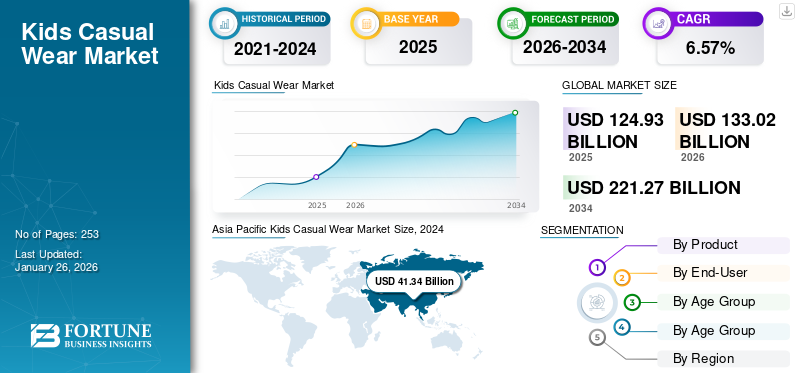
Download Free sample to learn more about this report.
KIDS CASUAL WEAR MARKET KEY TAKEAWAYS
 Global Market Size & Forecast
- 2025 Market Size: USD 124.93 billion
- 2026 Market Size: USD 133.02 billion
- 2034 Forecast Market Size: USD 221.27 billion
- CAGR: 6.57% from 2026-2034
 Market Share
- Asia Pacific dominated the kids casual wear market with a market share of 35.16% in 2025.
- The boys segment captured the highest market share.
- The girls segment is projected to grow at the fastest CAGR in the coming years.
 Key Regional Highlights
North America
North America dominated the UX services market with USD 2.08 billion in 2025, accounting for 32.50% of the global market, and is projected to reach USD 2.78 billion in 2026.
Europe
Europe reached USD 1.63 billion in 2025, representing 25.50% of the global market, and is expected to grow to USD 2.24 billion in 2026.
Asia Pacific
Asia Pacific accounted for USD 1.64 billion in 2025, holding 25.60% of the global market, and is projected to reach USD 2.32 billion in 2026.
U.S.
The U.S. dominated the regional market and is projected to reach USD 1.97 billion in 2026, supported by continued demand for advanced digital user experiences.
Japan
Japan's UX services market is projected to reach USD 0.35 billion in 2026, driven by the growing adoption of digital transformation initiatives.
Read More

MARKET DYNAMICS
MARKET DRIVERS
Growing Influence of Social Media and Digital Exposure on Kids’ Fashion Preferences to Drive Market Growth
The increasing influence of social media channels and digital content consumption is a significant driver propelling the kids casual apparel market. For instance, according to the Sprout Social report, a social media management platform, the total influencer marketing market size is projected to reach USD 32.55 billion in 2025, up from USD 24 billion in 2024. The report also noted that nearly half of all consumers (49%) make purchases at least once a month as a result of influencer content. With the widespread use of smartphones and tablets, children are increasingly exposed to fashion trends through platforms such as Instagram, YouTube, and TikTok. Kid influencers, fashion-forward parenting blogs, and child-focused YouTube channels showcase the latest styles, making children more aware of their clothing choices and driving demand for trendy and comfortable clothing.
Moreover, modern parents are more fashion-conscious and prefer dressing their children in stylish yet casual outfits that reflect current trends. This digital exposure shapes both kids’ and parents’ purchasing decisions, encouraging brands to release more frequent, trend-driven collections. Casual wear, being versatile and comfortable, has become an ideal choice for daily wear that still allows children to look fashionable.
Additionally, the rise of “mini-me” fashion, where children’s apparel mimics adult styles, has been amplified by social media, further accelerating demand. Brands are leveraging these trends through influencer collaborations, social media marketing campaigns, and online-exclusive drops, making digital platforms promotional and boosting product development and market expansion in the kids’ casual clothing segment.
MARKET RESTRAINTS
High Price Sensitivity to Hinder Market Expansion
One primary restraint hampering the kids casual wear market growth is high price sensitivity. Parents often prioritize affordability over brand or fashion when shopping for children, who outgrow clothes quickly. This limits the potential for premium and branded kids casual wear lines to scale in price-conscious markets. Additionally, the need for frequent replacements due to rapid growth spurts discourages consumers from investing in higher-end or trend-based clothing. As a result, many brands struggle to maintain profitability while meeting demand for both high quality and affordability in kids’ fashion.
MARKET OPPORTUNITIES
Rise of Sustainable and Eco-Friendly Fashion to Offer Potential Growth Opportunities
As environmental consciousness grows among consumers, the kids casual clothing market is experiencing a significant shift toward sustainable and eco-friendly clothing. Parents are increasingly seeking out brands that offer organic fabrics, low-impact dyes, and ethical manufacturing processes. This trend presents a major growth opportunity for brands that can combine style, comfort, and sustainability in children’s apparel. By investing in eco-friendly raw materials and transparent supply chains, companies can differentiate themselves in a crowded market and build lasting loyalty among environmentally aware families.
KIDS CASUAL WEAR MARKET TRENDS
Growing Inclination towards Technological Advanced Casual Wear Products to Boost Product
Technological upgradation in kids' casual wear clothing plays a crucial role in driving market demand. Advancements in fabric technologies, such as moisture-wicking materials, aerodynamic designs, and compression fabrics, improve performance by enhancing breathability, reducing drag, and optimizing muscle support. Therefore, parents are willing to invest in high-performance apparel products, including causal clothing items, for their kids that help them achieve better results and comfort. These factors are anticipated to fuel the market growth of the kids casual wear market.
Download Free sample to learn more about this report.
Segmentation Analysis
By Product
Availability of a Variety of Styles Boosted Top Wear Segment Growth
Based on product, the market is segmented into top wear, bottom wear, and others. The top wear segment held the highest kids casual wear market share. The segment includes items such as jackets, sweaters, sweatshirts, hoodies, shirts, tops, blouses, pullovers, and dresses. Top wear can be easily mixed and matched with different bottoms, making them a go-to option for everyday wear. Since children grow quickly, top wear tends to be updated more frequently than other apparel, contributing to its dominating market position. Moreover, the wide range of styles, colors, and designs in top wear appeals to both kids and parents, further driving demand.
The bottom wear segment is poised to grow at the fastest CAGR during the forecast period. Parents are increasingly opting for gender-neutral clothing, reflecting broader societal movements toward diversity and inclusivity. Additionally, there is a growing demand for sustainable and ethically produced clothing, with brands focusing on organic raw materials and reducing carbon emissions likely to support the segment’s growth.
By End-User
Boys Segment Dominated the Market Owing to Rise in Purchase
Based on end-user, the market is segmented into boys and girls. The boys segment captured the highest market share. Boys’ wear is often bought in greater volume, owing to the tendency to wear and tear faster and simpler purchasing decisions with fewer style changes. Additionally, boys’ clothing is often purchased for utility, leading to bulk purchases of basic items rather than frequent trend-driven buys, supplementing its larger market share.
The girls segment is projected to grow at the fastest CAGR in the coming years. The segment growth is attributed to the rising demand for a wider variety of casual clothing options, with fashion trends, accessories, and seasonal styles playing a more significant role. As a result, this leads to higher per-item spending. Moreover, parents often show greater involvement in fashion choices for girls, leading to more frequent purchases and a preference for fashion-forward styles.
By Age Group
Surging Preference for Stylish and Trendy Clothes Encouraged Above 10 Years Segment Growth
Based on age group, the market is segmented into below 5 years, 6-10 years, and above 10 years. The above 10 years segment accounted for the largest kids casual wear market share in 2024. Children aged above 10 years old are becoming increasingly fashion-conscious, significantly influencing the growth of the segment. This age group is at a transitional stage, moving from early childhood into adolescence, where personal identity, peer approval, and self-expression become more important. Consequently, their preference for stylish and trendy clothing is growing rapidly.
The below 5 years segment is anticipated to expand at the fastest CAGR over the forecast period. The growing trend of using branded clothing items for infants and the increasing number of newborn babies are primary factors supplementing the segment’s expansion. Moreover, parents are seeking eco-friendly, sustainable, and durable clothes for young babies and toddlers, owing to their active lifestyles, further leading to demand in this age group.
By Distribution Channel
Offline Segment Led the Market Owing to Touch-and-Feel Advantage
Based on distribution channel, the market is segmented into offline and online. The offline segment dominated the market in 2024 due to the importance of fit and feel. Parents often prefer to inspect clothing to assess fabric quality, comfort, and accurate sizing physically. Since children grow quickly and have sensitive skin, touch-and-feel has become a key factor in decision-making, which offline stores enable. Additionally, offline retail allows for immediate purchase and possession, which is particularly valuable for parents who need clothing urgently due to sudden growth spurts or unplanned events.
The online segment is projected to expand at the highest CAGR during the forecast period due to shifting consumer behavior, increased internet penetration, and the convenience of e-commerce platforms. With more parents embracing digital platforms for shopping, online retail has witnessed a significant uptick. Smartphone penetration and improved internet connectivity, even in semi-urban and rural areas, are contributing to this growth.
Kids Casual Wear Market Regional Outlook
By region, the market is categorized into North America, Europe, Asia Pacific, South America, and the Middle East & Africa.
Asia Pacific
Asia Pacific Kids Casual Wear Market Size, 2024 (USD Billion)
To get more information on the regional analysis of this market, Download Free sample
Asia Pacific held the majority of the kids apparel market share in 2024. The growth of the market is attributed to the growing spending power of consumers and the rise in online shopping, including mobile commerce, which has made kids casual wear more accessible. As household incomes continue to increase across countries, including China, India, and Southeast Asia, parents are more willing to spend on high-quality, branded, and stylish clothing for their kids. Moreover, online platforms offering convenience, variety, and competitive pricing have made shopping for kid’s clothing easier and more appealing.
North America
North America accounted for the second-largest share of the global market, primarily driven by fashion-conscious parents, rising disposable income, e-commerce growth, and comfort-focused clothing demand. Moreover, licensed character apparel that appeals to the younger generation attracts a wider audience, especially children and fans of popular characters, leading to increased sales.
The U.S. is a key market in the North American region. Working parents in the country are becoming more conscious about the health and safety of their babies and toddlers, increasing the purchase of children’s apparel. Moreover, demand for kids casual wear rises during holidays, festivals, and events where many children participate in activities, such as cosplay, Halloween, and school talent shows.
Europe
Europe is the largest market and is projected to grow at the fastest rate during the forecast period. Fashion trends increasingly influence European parents and are transferring these preferences to their children’s wardrobes, fueling demand for trendy and designer kids wear. Furthermore, European consumers place greater emphasis on sustainable and ethically produced clothing. This has led to growing demand for organic and eco-friendly kids wear, prompting brands to adopt more sustainable practices.
South America and Middle East & Africa
The markets in South America and the Middle East & Africa are projected to experience steady growth, supported by changing lifestyles and growing disposable income levels. In addition, high birth rates and a young population are contributing to urbanization, which, in turn, is boosting demand for kids casual wear. Urban migration leads to greater exposure to global fashion trends and consumerism. Urban parents are getting more brand-conscious and seek trendy, comfortable clothing for kids, driving casual wear demand.
COMPETITIVE LANDSCAPE
Key Industry Players
Kids Casual Wear Manufacturers Compete on Product Innovation and Design to Support Customer Engagement
The global kids casual wear market is highly competitive, with multiple players vying for consumer attention through various strategies. These include product differentiation, competitive pricing, and branding. To stand out in the market, kids casual wear producers are focusing on creating unique and innovative designs that cater to current trends and children’s preferences. Strong branding plays a significant role in attracting and retaining customers. For instance, established brands, including Nike and Disney, leverage their reputations to associate their Kid’s apparel with quality, fun, and style. Moreover, loyalty programs, exclusive collections, and collaborations with celebrities or influencers further aid customer engagement and long-term retention.
LIST OF KEY KIDS CASUAL WEAR COMPANIES PROFILED
- Nike (U.S.)
- Adidas (Germany)
- H&M (Sweden)
- Zara (Spain)
- Gap Inc. (U.S.)
- Uniqlo (Japan)
- Carter’s (U.S.)
- The Children’s Place (U.S.)
- Tommy Hilfiger (U.S.)
- Under Armour (U.S.)
KEY INDUSTRY DEVELOPMENTS
- January 2025: Zara, the fast fashion retail brand, launched a 7-piece kids collection inspired by Paddington Bear, bringing the iconic character's whimsical appeal to children’s closets. The collection includes items from sweaters, t-shirts, and pajamas, all designed for ultimate style and comfort.
- September 2024: Disney and Gap Inc. launched a limited-edition, 84-piece collection influenced by the 1990s varsity. The collection includes apparel and accessories for adults, kids, toddlers, and babies, featuring the Gap logo and Mickey & Friends characters. The newly launched range includes denim and fleece separates, caps, and socks, featuring patchwork prints, fall colors, embroidered details, and collegiate-style fonts.
- November 2023: Gap Inc. launched its latest collection featuring hoodies and expanded the range to introduce kids’ clothing items, sweatpants, and accessories.
- September 2023: Kewal Kiran Clothing (KKCL), an India-based branded apparel manufacturer, entered into the kids wear category with the launch of a clothing brand -Junior Killer, under its flagship brand named Killer. The Junior Killer brand offers a wide range of clothing for kids starting from the age of 4 years up to 16 years. The brand offers a variety of clothing categories, including casual, sports, and classic, with pieces such as shirts, t-shirts, and co-ords.
- November 2022: Adidas, a German athletic apparel and footwear company, expanded its presence in Punjab, India, by opening a 7th new store at Nexus Elante Mall, Chandigarh. The store features a wide range of products, from football to casual wear.
REPORT COVERAGE
The global kids casual wear market analysis provides market size and forecasts for all segments included in the report. It includes details of key market dynamics and emerging trends. It offers an outlook on key industry developments, new product launches, details on partnerships, mergers & acquisitions, and a number of kids casual wear manufacturers in key countries. The report covers a detailed competitive landscape with information on the market share and profiles of key players.
Request for Customization to gain extensive market insights.
Report Scope & Segmentation
|
ATTRIBUTE |
DETAILS |
|
Study Period |
2021-2034 |
|
Base Year |
2025 |
|
Estimated Year |
2026 |
|
Forecast Period |
2026-2034 |
|
Historical Period |
2021-2024 |
|
Growth Rate |
CAGR of 6.57% from 2026-2034 |
|
Unit |
Value (USD Billion) |
|
Segmentation |
By Product
|
|
By End-User
|
|
|
By Age Group
|
|
|
By Distribution Channel
|
|
|
By Region
|
Frequently Asked Questions
Fortune Business Insights says that the global market value stood at USD 133.02 billion in 2026 and is projected to reach USD 221.27 billion by 2034.
In 2025, the market value stood at USD 124.93 billion.
The kids casual wear market is expected to grow at a CAGR of 6.57% during the forecast period from 2026 to 2034.
The top wear segment led the market by product.
The growing influence of social media and digital exposure on kids’ fashion preferences drives the growth of the market.
Nike, Adidas, H&M, Zara, and Gap Inc. are the top players in the market.
Asia Pacific dominated the market in 2024.
Integration of cutting-edge technology and licensed character apparel in kids wear is likely to favor product adoption.



- 2021-2034
- 2025
- 2021-2024
- 253
-
(Offer valid till 15th Oct 2026)
Get 30-60 hrs Free Customization
Expand Regional and Country Coverage, Segments Analysis, Company Profiles, Competitive Benchmarking, and End-user Insights.



















Related Reports
-
US +1 833 909 2966 ( Toll Free )
-
Get In Touch With Us