Manual Toothbrush Market Size, Share & Industry Analysis, By Bristle Type (Ultra Soft, Medium, and Firm) By End-User (Adults and Children), By Distribution Channel (Supermarkets & Hypermarkets, Convenience Stores, Department Stores, Online Retail, and Others), and Regional Forecast, 2026-2034
 Download Free Sample
(Offer valid till 31st Aug 2026)
KEY MARKET INSIGHTS
 Listen to Audio Version
The global manual toothbrush market size reached USD 6.72 billion in 2025. The market is projected to grow from USD 7.16 billion in 2026 to USD 12.8 billion by 2034, exhibiting a CAGR of 7.53% during the forecast period. Asia Pacific dominated the manual toothbrush market with a market share of 34.81% in 2024.
The growth of the manual toothbrush market is driven by increasing dental hygiene awareness, rising dental issues, and demand for affordable oral care solutions. Oral hygiene has been considered one of the most crucial aspects of human health for maintaining overall health and well-being. It helps prevent common problems such as cavities, gum disease, and bad breath, while also reducing the risk of serious conditions such as diabetes, heart disease, and infections linked to poor oral health. The toothbrush is a fundamental tool in oral care, as it physically removes food particles, plaque, and bacteria from the teeth and gums. Using a toothbrush daily helps overcome tooth decay, gum inflammation, and other oral health issues, making it an essential tool for maintaining a healthy mouth.
- Asia Pacific witnessed manual toothbrush market growth from USD 2.07 Billion in 2023 to USD 2.20 Billion in 2024.
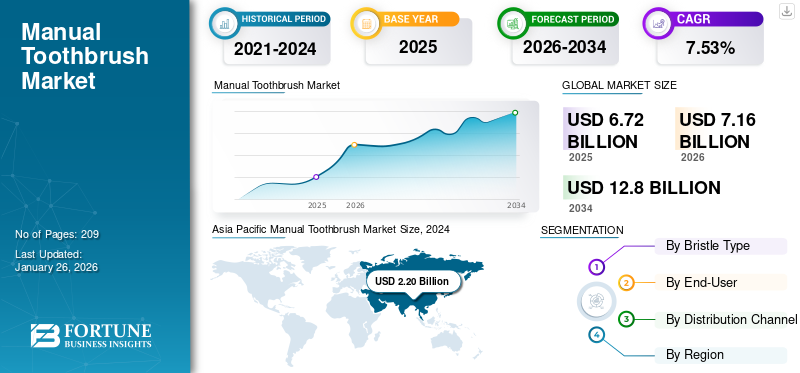
Download Free sample to learn more about this report.
MANUAL TOOTHBRUSH MARKET KEY TAKEAWAYS
 Global Market Size & Forecast
- 2025 Market Size: USD 6.72 billion
- 2026 Market Size: USD 7.16 billion
- 2034 Forecast Market Size: USD 12.80 billion
- CAGR: 7.53% from 2026–2034
 Market Share
- Asia Pacific dominated the market with a 34.81% share in 2024.
- The Ultra Soft Bristles segment is expected to dominate the market in 2025.
- The Adults segment is expected to dominate the market in 2025.
 Key Regional Highlights
Asia Pacific
The region dominated the global market, driven by rising oral health awareness, government hygiene initiatives, increasing disposable incomes, and growing demand for eco-friendly toothbrushes.
North America
The market is expected to register the fastest growth, supported by increasing dental hygiene awareness, frequent toothbrush replacement, and rising prevalence of oral health disorders.
Europe
The market is projected to witness steady growth, fueled by strong retail networks, public oral health campaigns, and increasing demand for sustainable manual toothbrushes.
U.S.
The market is projected to witness steady growth by 2026, driven by the high prevalence of dental disorders and increasing consumer preference for premium oral care products.
Japan
The market is projected to witness steady growth by 2026, supported by rising oral healthcare awareness, an aging population, and increasing demand for high-quality manual toothbrushes.
Read More

MANUAL TOOTHBRUSH MARKET TRENDS
Rising Demand for Eco-Friendly Manual Toothbrushes
Consumers are increasingly prioritizing sustainability, driving demand for eco-friendly manual toothbrushes made from bamboo, corn-starch handles, and biodegradable nylon bristles. This shift reflects heightened awareness of plastic pollution with over a billion plastic toothbrushes discarded annually and aligns with broader environmental concerns. Governments, NGOs and dental professionals are actively advocating for sustainable oral care, while brands innovate with compostable materials and recyclable packaging. This eco-centric trend is especially strong in North America, Europe, and fast-growing in Asia Pacific, as consumers willingly pay a premium to reduce their ecological footprint without compromising dental hygiene.
Download Free sample to learn more about this report.
MARKET DYNAMICS
MARKET DRIVERS
Growing Oral Health Awareness Among Consumers to Drive Market Growth
A key driver fueling the growth of the market is the rising awareness of oral hygiene among consumers globally. Increased health consciousness, along with educational campaigns by dental clinics offices, associations, and healthcare providers, has placed greater emphasis on preventive dental care. Manual brushes, being affordable and widely accessible, are often the first choice for daily oral hygiene. Moreover, in developing regions, where cost and availability are critical factors, manual brushes continue to dominate owing to their simplicity and effectiveness, further supporting demand and contributing to manual toothbrush market growth.
MARKET RESTRAINTS
Growing Competition from Electric Toothbrushes to Hinder Market Expansion
One major factor restraining the growth of the market is the rising consumer shift toward electric toothbrushes. As awareness of oral hygiene increases, many consumers perceive superior electric toothbrushes as offering superior cleaning efficiency compared to manual alternatives. Electric brushes also feature advanced technologies such as timers, pressure sensors, and app connectivity, making them especially appealing to tech-savvy users. Additionally, aggressive marketing by leading brands and dental professionals’ recommendations further accelerates this transition. As a result, demand for manual brushes, particularly in developed markets, is slowing down, posing a challenge to market expansion and limiting future market growth.
MARKET OPPORTUNITIES
Collaboration with Dental Practitioners to Offer Numerous Growth Opportunities
Collaborations and partnerships with dental professionals provide potential growth opportunities for manufacturers. By leveraging the credibility and expertise of dentists, dental therapists, dental assistants, dental hygienists, and other associated professionals, manufacturers can enhance product visibility and promote effective oral hygiene practices. For instance, according to the American Dental Association (ADA), over 60% of the population considers their dentist’s recommendation the most important factor when selecting oral care products. This highlights the influential role dental professionals play in shaping consumer preferences and purchase decisions.
Segmentation Analysis
By Bristle Type
Growing Demand for Soft-Bristled Brushes Among the Elderly Population Boosted the Ultra Soft Bristles Segment Growth
Based on bristle type, the market is segmented into ultra soft, medium, and firm.
The ultra soft toothbrushes segment accounted for the largest manual toothbrush market share in 2024. These toothbrushes are suitable for individuals of all age groups, from toddlers to geriatrics, due to their gentle bristles, which clean gums and teeth comfortably. The rising inclination of children and the elderly for ultra soft bristles brushes is driving global demand in this segment.
The medium segment is expected to grow at the fastest CAGR. These toothbrushes strike a balance between soft and firm bristle-based brushes, providing a deep yet gentle cleaning experience without irritating the gums. Their versatility makes them a popular choice across a wide spectrum of consumers.
By End-User
Rising Prevalence of Oral Health Disorders Encouraged the Adults Segment Growth
Based on end-user, the market is segmented into adults and children.
The adults segment accounted for the highest revenue share of the market in 2024. The growing product demand among young individuals and senior citizens, coupled with the rising prevalence of oral health disorders, is supporting the growth of the segment. A majority of the adult population experiences dental concerns, including early tooth decay, oral cavities, and gingivitis. To prevent these conditions and preserve oral hygiene, many adults brush their teeth at least twice a day, sustaining steady product demand.
The children segment is projected to expand at a considerable pace during the forecast period. Rising child population globally and growing parental concerns for children's overall well-being are likely to drive the segment’s growth. For instance, according to Childstats.gov, in 2022, there were about 72.5 million children across the U.S., and this number is projected to rise to 78.2 million by 2050. Moreover, schools and colleges across countries are implementing various campaigns and programs to promote personal hygiene among students, further boosting the segment growth.
By Distribution Channel
Supermarkets & Hypermarkets Segment Led due to Growing Penetration of Retail Stores
Based on distribution channel, the market is segmented into supermarkets & hypermarkets, convenience stores, department stores, online retail, and others.
The supermarkets & hypermarkets segment dominated the market in 2024 due to the growing penetration of retail stores across several countries. These retail establishments allow end-users to explore, compare, and check product quality in person at the time of purchase, enabling them to make an informed decision. Customers prefer to buy toothbrushes from these offline stores during their routine grocery shopping due to the convenience and easy accessibility they offer.
The online retail segment is projected to grow at the fastest CAGR during the study period. Online shopping offers a one-stop, hassle-free, and user-friendly experience. Additionally, digital promotion of products, supported by customer reviews and usage videos from well-known brands, including Oral-B and Colgate, has significantly influenced consumer purchasing behavior, encouraging more people to buy toothbrushes online and fueling segment growth.
Manual Toothbrush Market Regional Outlook
By geography, the market is categorized into North America, Europe, Asia Pacific, South America, and the Middle East & Africa.
Asia Pacific
Asia Pacific Manual Toothbrush Market Size, 2024 (USD Billion)
To get more information on the regional analysis of this market, Download Free sample
Asia Pacific held the major share and maintained a leading position in 2024. Key factors fueling market growth include rising oral health awareness, government-led hygiene initiatives, and increasing disposable incomes across populous nations such as India and China. Consumer demand for affordable, effective oral care solutions, particularly soft-bristle types, is on the rise. Additionally, the expansion of e-commerce platforms and a shift toward sustainability, eco-friendly materials such as bamboo, are reshaping consumer purchasing behaviors, further propelling market development.
North America
North America contributed a considerable market share and is expected to grow at the fastest CAGR during the forecast period. Growing awareness regarding dental hygiene is foreseen to drive market growth in the region. The clinical efficacy and oral health benefits associated with the use of a standard toothbrush help in preventing periodontal diseases. Moreover, a toothbrush ideally cannot be used for over three months, from a hygiene perspective. This leads to frequent purchases of the product among consumers, supporting regional growth.
The U.S. is a major contributor to the North American market due to the high incidence of oral infection and other dental disorders, which can be attributed to improper dietary habits and busy working schedules. This has led to an increased preference for good-quality oral care products. For instance, as per the National Institute of Dental and Craniofacial Research, a U.S. government research agency, as of April 2022, approximately 90% of individuals aged 20 to 64 years had experienced tooth decay, and nearly 50% of individuals aged 45 to 64 years suffered from gum disease.
Europe
Europe ranked second in the global market, driven by increasing demand for cost-effective dental care products and strong retail distribution networks. Public health initiatives promoting regular brushing and the availability of eco-friendly and biodegradable toothbrush options also boost market expansion. Additionally, the presence of established brands, frequent product innovations, and a growing population of children and elderly individuals who prefer manual products over electric ones support sustained demand across the region.
South America and the Middle East & Africa
The market in the rest of the world region, including South America and the Middle East & Africa, is projected to experience notable growth. Populace in these regions is being educated through awareness campaigns and events that emphasize the importance of good oral health and efficient oral care products. Proper functioning of the body, enhanced confidence levels, and personality enhancement add to the benefits of good oral care practices, which have increased product adoption amongst individuals in the region.
COMPETITIVE LANDSCAPE
Key Industry Players
Key Players Focus on Developing Budget-friendly Product Lines to Maintain Customer Retention
Key players in the market include Procter & Gamble, Colgate-Palmolive, Unilever, Johnson & Johnson, Dr. Fresh, Dr. Colins, and Boie USA. Despite the growing adoption of electric toothbrushes, the manual segment remains dynamic. It’s mainly driven by affordability, accessibility, and ingrained consumer habits, especially in emerging markets. The market features a mix of global giants and regional players, along with private-label brands.
Price remains a critical differentiator with companies competing through strategies such as offering value packs, bundling toothbrushes with toothpaste, or creating budget-friendly product lines. Manufacturers are also competing by frequently launching toothbrushes with new features such as angled bristles, tongue cleaners, gum-massaging elements, and sustainable end-users. Furthermore, major brands invest heavily in marketing to foster brand loyalty, as consumer trust and brand heritage are crucial to customer retention. Securing retail shelf space in supermarkets/ hypermarkets, pharmacies/drugstores, and convenience stores is a key competitive edge. Wide distribution networks, especially in rural areas or emerging regions, have been proven to work in favor of market players to gain further market share.
LIST OF KEY MANUAL TOOTHBRUSH COMPANIES PROFILED
- Procter & Gamble (U.S.)
- Colgate-Palmolive (U.S.)
- Unilever (U.S.)
- Johnson & Johnson (U.S.)
- GlaxoSmithKline plc (U.K.)
- Dr. Fresh Inc. (U.S.)
- Perfect Group Corp. (China)
- Dr. Colins (U.S.)
- Boie USA (U.S.)
- Kaneda Keitei (Switzerland)
KEY INDUSTRY DEVELOPMENTS
- September 2024: FRESH 32, a producer of oral care products based in Slovenia, designed and launched replaceable, 100% recyclable toothbrush heads made using Desmopan thermoplastic polyurethanes (TPUs) offered by Covestro. These interchangeable brush heads are lightweight, durable, and resistant to abrasion and microbial growth, contributing to reduced plastic waste.
- November 2023: Colgate-Palmolive, an American multinational consumer products company, unveiled a brand new bamboo toothbrush featuring recyclable packaging, highlighting its obligation to sustainability eco-friendly oral products. This bamboo made toothbrush holds natural antimicrobial properties making it an excellent material for oral care and helps keep the product hygienic over its lifespan. This move is intended to better caters the needs of co-conscious consumers helping company gain stronger market position.
- October 2021: Oral-B, a toothbrush brand owned by Procter & Gamble, announced the launch of DROP SWAP SMILE, a countrywide initiative together with Shaver Shop and Veolia. The program offers Australians a more sustainable option for disposing of used toothbrushes, aiming to promote responsible oral care waste management.
- September 2021: GSK Consumer Healthcare (GSKCH), a joint venture between GSK and Pfizer, launched carbon neutral toothbrush, Dr.BEST GreenClean toothbrush, under its sustainability movement in the oral care industry. This newly launched toothbrush handle is made using renewable cellulose a wood-based bioplastic, derived from birch, pine, and spruce trees in sustainable forests. Also, the bristles are made of 100% renewable castor oil and is offered in 100% plastic free packaging.
- February 2021: Colgate-Palmolive, a U.S.-based consumer goods company, launched a manual toothbrush with a replaceable head and an aluminum handle to curb plastic waste. This newly launched product comprises 80% less plastic compared to the brand’s previous models. The 100% reusable aluminum handle is available in silver and navy colors and is lightweight.
REPORT COVERAGE
The global manual toothbrush market research report provides market size and forecast for all segments included in the report. It includes details of key market dynamics and emerging trends. It offers information on the key regions/countries, key industry developments, new product launches, details on partnerships, mergers & acquisitions, and the number of manual toothbrush manufacturers in key countries. The report covers a detailed competitive landscape with information on the market share and profiles of key players.
Request for Customization to gain extensive market insights.
Report Scope & Segmentation
|
ATTRIBUTE |
DETAILS |
|
Study Period |
2021-2034 |
|
Base Year |
2025 |
|
Estimated Year |
2026 |
|
Forecast Period |
2026-2034 |
|
Historical Period |
2021-2024 |
|
Growth Rate |
CAGR of 7.53% from 2026-2034 |
|
Unit |
Value (USD Billion) |
|
Segmentation |
By Bristle Type
|
|
By End-User
|
|
|
By Distribution Channel
|
|
|
By Region
|
Frequently Asked Questions
Fortune Business Insights says that the global market value stood at USD 7.16 billion in 2026 and is projected to reach USD 12.8 billion by 2034.
In 2025, the market value stood at USD 6.72 billion.
The manual toothbrush market is forecasted to grow at a CAGR of 7.53% during the forecast period.
By bristle type, the ultra soft segment led the market.
Increasing dental hygiene awareness, rising dental issues, and demand for affordable oral care solutions are the key factors driving the growth of the market.
Procter & Gamble, Colgate-Palmolive, Unilever, Johnson & Johnson, Dr. Fresh, Dr. Colins, and Boie USA are the top players in the market.
Asia Pacific dominated the market in 2025.
Affordability, easy accessibility, and consumer habits especially in emerging markets along with the rising focus on sustainability materials integration in the product are likely to favor increased adoption.



- 2021-2034
- 2025
- 2021-2024
- 209
-
(Offer valid till 31st Aug 2026)
Get 30-60 hrs Free Customization
Expand Regional and Country Coverage, Segments Analysis, Company Profiles, Competitive Benchmarking, and End-user Insights.



















Related Reports
-
US +1 833 909 2966 ( Toll Free )
-
Get In Touch With Us