Gallbladder Cancer Treatment Market Size, Share & Industry Analysis, By Drug (Gemcitabine, Cisplatin, Durvalumab, Pembrolizumab, and Others), By Drug Class (Antimetabolites, Platinum Compounds, PD-1 Inhibitors, PD-L1 Inhibitors, and Antibody-Drug Conjugates), By Therapy (Chemotherapy, Immunotherapy, and Targeted Therapy), By Route of Administration (Parenteral and Oral), By Age Group (Adults and Pediatric), By Distribution Channel (Hospital Pharmacies, Specialty Pharmacies, and Retail Pharmacies), and Regional Forecast, 2026-2034
 Download Free Sample
Gallbladder Cancer Treatment Market Size and Future Outlook
 Listen to Audio Version
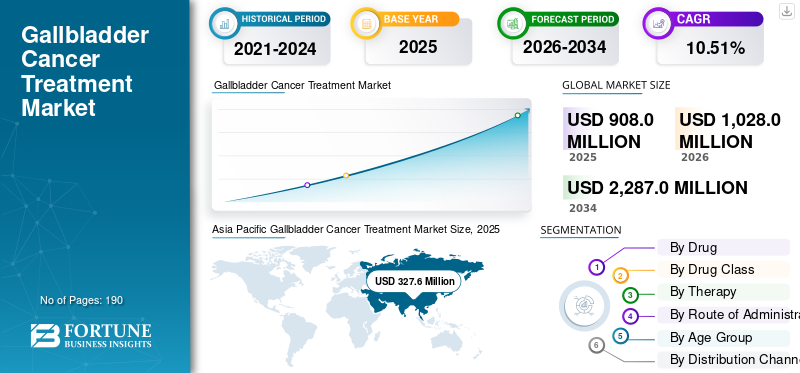
The gallbladder cancer treatment market size was valued at USD 908.0 million in 2025 and is projected to grow from USD 1,028.0 million in 2026 to USD 2,287.0 million by 2034, exhibiting a CAGR of 10.51% during the forecast period. Asia Pacific dominated the gallbladder cancer treatment market with a market share of 36.08% in 2025.
The market is growing as the disease is frequently diagnosed at an advanced stage due to limited presence of early symptoms. Patients with unresectable, recurrent, or metastatic disease commonly require systemic therapies, including chemotherapy, immunotherapy, targeted therapy, and combination treatment regimens, supporting market growth. The market is also witnessing a shift from conventional chemotherapy toward biomarker-based therapies that target specific molecular abnormalities, such as HER2 expression. This shift is encouraging pharmaceutical companies to invest in bispecific antibodies, antibody-drug conjugates, immune checkpoint inhibitors, and other advanced therapies, thereby expanding treatment options and strengthening market growth.
- For instance, in May 2025, Zymeworks Inc. received approval from the National Medical Products Administration (NMPA) in China for zanidatamab for the treatment of patients with previously treated, unresectable or metastatic HER2-positive (HER2+) biliary tract cancer (BTC).
Furthermore, key players, such as AstraZeneca plc, Merck & Co., Inc., Pfizer Inc., and Fresenius Kabi AG, are actively participating in new product launches, strategic collaborations, acquisitions, and investment initiatives to expand market presence.
Download Free sample to learn more about this report.
GALLBLADDER CANCER TREATMENT MARKET TRENDS
Increasing Pharmaceutical Investment in Treatments for Rare and Advanced Cancers is a Prominent Market Trend
The market is witnessing increasing pharmaceutical investment due to the high unmet treatment need among patients with advanced or metastatic disease. Although gallbladder cancer has a relatively small patient population, its aggressive progression, late diagnosis, and limited treatment alternatives are encouraging companies to develop therapies for broader biliary tract cancer populations. Pharmaceutical companies are increasingly evaluating targeted antibodies, immunotherapy combinations, novel drug-delivery systems, and biomarker-based treatments to improve patient outcomes. Regulatory support for therapies addressing rare and serious diseases is further encouraging companies to advance new candidates through clinical development. This trend is expected to expand the treatment pipeline and strengthen the long-term growth of the market.
- For instance, in July 2025, FUJIFILM Pharmaceuticals U.S.A. received orphan drug designation from the U.S. FDA for FF-10832, an investigational liposomal formulation of gemcitabine, for the treatment of biliary tract cancer. The development reflects growing pharmaceutical investment in advanced drug-delivery technologies for rare cancers, including gallbladder cancer.
MARKET DYNAMICS
MARKET DRIVERS
Download Free sample to learn more about this report.
Expansion of First-line Chemo-Immunotherapy to Drive Market Growth
The increasing use of chemo-immunotherapy as a first-line treatment is expected to drive the gallbladder cancer treatment market growth. Patients with unresectable, locally advanced, or metastatic gallbladder cancer have traditionally relied on gemcitabine- and cisplatin-based chemotherapy, which provides limited long-term survival benefits. Adding immune checkpoint inhibitors to chemotherapy can improve antitumor immune response and extend survival compared to chemotherapy alone. As these combination regimens become integrated into treatment guidelines and adopted across additional countries, the number of patients receiving immunotherapy earlier in the treatment pathway is expected to increase. This expansion will raise the utilization of high-value immunotherapy products and strengthen overall market revenue.
- For instance, in July 2026, Phanes Therapeutics, Inc. expanded their clinical trial collaboration with Merck & Co., Inc., to study spevatamig in combination with Merck's anti-PD-1 therapy, KEYTRUDA (pembrolizumab), and chemotherapy in 1L BTC. Spevatamig is Phanes' anti-CLDN18.2/CD47 bispecific antibody that functions as an innate immunity enhancer (I₂E), an emerging class of immuno-oncology (IO) agents.
Market Drivers - Impact & CAGR Contribution (2026–2034)
| Rank | Market Drivers | Overall Impact Rank | CAGR Contribution (2026-2034) | Impact: 2026-2028 | Impact: 2029-2031 | Impact: 2032-2034 |
|---|---|---|---|---|---|---|
| 1 | Rising global cancer burden expands the eligible treatment pool | High | 3.4% | High | High | High |
| 2 | Expansion of the approved biosimilar portfolio increases competitive supply. | High | 2.8% | High | High | High |
| 3 | Price discounts support payer-driven switching and treatment access | High | 2.5% | High | High | Medium |
| 4 | Institutional reimbursement and procurement frameworks normalize biosimilar use. | Medium-High | 2.2% | Medium | High | High |
| 5 | Loss of exclusivity for checkpoint inhibitors opens a second growth phase | Medium | 2.0% | Medium | Medium | High |
| 6 | Others | Low | 1.7% | Low | Low | Low |
| Total Positive Growth Contribution | 14.60% | |||||
Source: Fortune Business Insights
MARKET RESTRAINTS
Low Disease Incidence and Late-stage Presentation to Restrict Market Expansion
The relatively low incidence of gallbladder cancer is expected to limit the size of the commercially addressable patient population and reduce the number of patients available for dedicated clinical trials. Additionally, the disease frequently develops without clear early symptoms and is commonly diagnosed after local invasion or distant metastasis has occurred. At this stage, many patients are no longer eligible for potentially curative surgical resection. They may have poor health conditions that restrict the use of intensive chemotherapy, immunotherapy, or targeted treatment combinations. These factors may slow product development, treatment adoption, and overall market revenue growth.
- For instance, in May 2026, a MedicalXpress article based on research from Boston University highlighted that gallbladder cancer is characterized by silent early progression and is frequently diagnosed at a late stage. The article reported that only around 10%–20% of patients are eligible for curative surgical resection at diagnosis, while the five-year survival rate is often below 10%. This late presentation and small treatment-eligible population restrict the number of patients who can receive curative or advanced therapies, thereby limiting market expansion.
Market Restraints - Impact & Negative CAGR Contribution (2026–2034)
| Rank | Market Restraints | Expected Impact on Market Growth | Negative CAGR Contribution (2026-2034) | Impact: 2026-2028 | Impact: 2029-2031 | Impact: 2032-2034 |
|---|---|---|---|---|---|---|
| 1 | Aggressive price erosion limits manufacturer-level value growth | High | 1.6% | High | High | Medium |
| 2 | Complex biologic manufacturing raises entry barriers and supply risk | Medium-High | 1.1% | High | Medium | Medium |
| 3 | Patent and settlement timing can delay commercial entry | Medium | 0.9% | Medium | Medium | Low |
| 4 | Others | Low | 0.5% | Low | Low | Low |
| Total Negative Growth Impact | 4.10% | |||||
Source: Fortune Business Insights
MARKET OPPORTUNITIES
Movement of Targeted Therapies into Earlier Treatment Lines to Create Growth Opportunities
The movement of targeted therapies from later-line treatment into first-line settings is expected to create significant growth opportunities in the market. Currently, several biomarker-directed therapies are primarily used in previously treated patients after disease progression. Evaluating these therapies earlier, when patients generally have better health and treatment tolerance, could expand the eligible patient population and improve the duration of therapy. Combining HER2-targeted antibodies and other precision medicines with chemotherapy or immunotherapy may also improve response rates compared to conventional treatment alone. This transition would increase demand for molecular profiling, companion diagnostic testing, and high-value targeted products. Successful first-line clinical trials and subsequent regulatory approvals could therefore broaden product indications and generate additional revenue opportunities for market participants.
- For instance, in November 2025, Jazz Pharmaceuticals reported that it was continuing the Phase III HERIZON-BTC-302 trial to evaluate Ziihera (zanidatamab) with cisplatin and gemcitabine, with or without a PD-1/PD-L1 inhibitor, as a first-line treatment for adults with HER2-positive biliary tract cancer. The development represents movement of zanidatamab from its approved use in previously treated patients into an earlier treatment setting, which could expand the eligible patient population and increase the use of biomarker-directed therapies in gallbladder cancer.
MARKET CHALLENGES
Small and Geographically Concentrated Patient Population to Challenge Market Development
The small and geographically uneven distribution of gallbladder cancer patients presents a major challenge for clinical development. Many developed markets have a limited number of eligible patients. This makes it difficult for pharmaceutical companies to recruit sufficient participants through individual hospitals or countries. Patient eligibility further becomes restricted when trials require specific biomarkers, prior treatments, disease stages, or adequate health status. Consequently, sponsors may need to conduct complex multinational trials involving numerous clinical sites, increasing development costs, extending recruitment timelines, and delaying regulatory submissions. Limited representation from high-incidence, resource-constrained regions may also reduce the applicability of trial findings across diverse patient populations.
- For instance, in January 2025, University College London launched the international SAFIR-ABC10 precision-medicine trial for biliary tract cancers, including gallbladder cancer. The study aimed to recruit around 800 patients worldwide and involves research groups across the U.K., France, and Belgium. The need to enroll multiple biliary cancer subtypes across an international network illustrates the difficulty of identifying sufficient biomarker-eligible gallbladder cancer patients through individual countries or clinical centers, which can increase trial complexity and extend development timelines.
Segmentation Analysis
By Drug
Durvalumab Dominated Due to its Early Entry into First-line Chemo-immunotherapy
Based on the drug, the market is categorized into gemcitabine, cisplatin, durvalumab, pembrolizumab, capecitabine, oxaliplatin, fluorouracil, zanidatamab, trastuzumab deruxtecan, and others.
The durvalumab segment dominated the market due to its established use with gemcitabine and cisplatin for previously untreated, locally advanced, or metastatic biliary tract cancer, including gallbladder cancer. Its earlier regulatory entry provided a first-mover advantage and enabled the therapy to become widely incorporated into first-line treatment practices. Durvalumab is administered during the chemotherapy phase and may subsequently be continued as maintenance monotherapy, extending the treatment duration and increasing revenue per eligible patient. These factors supported the higher adoption and commercial contribution of durvalumab compared to newer targeted and immunotherapy products.
- For instance, in April 2024, AstraZeneca reported three-year follow-up results from the TOPAZ-1 trial, showing that durvalumab plus chemotherapy reduced the risk of death by 26%. Around 14.6% of patients receiving the combination were alive at three years, compared with 6.9% receiving chemotherapy alone, reinforcing its position in first-line advanced biliary tract cancer treatment.
The pembrolizumab segment is expected to grow at a CAGR of 13.29% over the forecast period.
To know how our report can help streamline your business, Speak to Analyst
By Drug Class
Antimetabolites Leads Owing to Gemcitabine’s Role as the Core Treatment Backbone
Based on drug class, the market is segmented into antimetabolites, platinum compounds, PD-1 inhibitors, PD-L1 inhibitors, bispecific antibodies, antibody-drug conjugates, topoisomerase inhibitors, taxanes, and others.
In 2025, antimetabolites dominated the market primarily due to the extensive use of gemcitabine in systemic gallbladder cancer treatment. Gemcitabine combined with cisplatin has remained the principal chemotherapy backbone for patients with unresectable or metastatic disease. The drug is also retained in newer chemo-immunotherapy regimens involving durvalumab or pembrolizumab, allowing the segment to benefit from the adoption of both conventional and advanced treatments. Capecitabine and fluorouracil further increase antimetabolite utilization across adjuvant, combination, and subsequent-line settings. Therefore, broad patient eligibility, repeated treatment cycles, and use across multiple regimens supported the segment’s leading market share.
- For instance, in October 2023, Merck announced U.S. FDA approval of Keytruda in combination with the antimetabolite gemcitabine and cisplatin for locally advanced, unresectable, or metastatic biliary tract cancer. The approval retained gemcitabine as a core component of the new first-line chemo-immunotherapy regimen.
The PD-1 inhibitors segment is projected to grow at a 13.29% CAGR during the forecast period.
By Therapy
Chemotherapy Dominated Due to Its Broad Use Across the Treatment Pathway
Based on therapy, the market is segmented into chemotherapy, immunotherapy, targeted therapy, and others.
In 2025, chemotherapy segment dominated the market as it remains a central treatment option for patients who are not eligible for curative surgery or whose disease has progressed. Key therapies such as gemcitabine and cisplatin are widely used for advanced disease, while capecitabine and fluorouracil-based approaches may be considered in adjuvant or alternative treatment settings. Consequently, the expansion of chemo-immunotherapy has increased rather than eliminating the use of cytotoxic drugs. The broad availability of generic chemotherapy products and established physician experience further supported the segment’s dominance.
- For instance, in January 2024, NICE recommended durvalumab in combination with gemcitabine and cisplatin for adults with locally advanced, unresectable, or metastatic biliary tract cancer. The recommendation demonstrated that chemotherapy continues to form the treatment backbone even after the introduction of immunotherapy.
The immunotherapy segment is projected to grow at a 11.35% CAGR during the forecast period.
By Route of Administration
Controlled Dosing and Supportive Medication Use Led to Parenteral Segment Dominance
Based on the route of administration, the market is segmented into parenteral and oral.
In 2025, the parenteral segment accounted for the largest gallbladder cancer treatment market share. Most of the key therapies used for advanced gallbladder cancer are delivered through parenteral infusion. Gemcitabine, cisplatin, oxaliplatin, durvalumab, pembrolizumab, zanidatamab, and trastuzumab deruxtecan are primarily administered parenterally. Advanced-stage patients frequently receive multi-drug regimens that require scheduled infusion cycles, supporting repeated utilization of injectable products. Parenteral administration also enables controlled dosing, supportive medication use, and immediate clinical management of infusion-related reactions. As a result, the strong dependence on infusion-based chemotherapy, immunotherapy, and targeted therapy supported the segment’s leading share.
- For instance, in November 2024, Jazz Pharmaceuticals announced U.S. FDA approval of Ziihera, a 50 mg/mL formulation for intravenous use, for adults with previously treated, unresectable or metastatic HER2-positive biliary tract cancer. The approval added another high-value injectable therapy to the treatment landscape.
The oral segment is projected to grow at a CAGR of 9.46% over the forecast period.
By Age Group
Adults Segment Dominated Due to Higher Disease Incidence and Stronger Commercial Treatment Availability
Based on the age group, the market is segmented into pediatrics and adults.
The adults segment dominated the market in 2025. This is due to gallbladder cancer occurs predominantly among middle-aged and older individuals. Also, major clinical trials and regulatory approvals for chemotherapy, immunotherapy, and targeted therapies have primarily focused on adult patients. This has created a broader evidence base, greater availability of approved treatments, and higher therapy utilization among adults. The combination of higher disease incidence and stronger commercial treatment availability supported the segment’s dominant market share.
- For instance, in 2022, Cancer Research U.K. reported that gallbladder cancer incidence rates are highest among people aged 85–89, with this age group accounting for approximately 13% of newly diagnosed cases in the U.K. The data demonstrate that the treatment-eligible population is heavily concentrated among adults and older patients.
The pediatrics segment is projected to grow at a CAGR of 7.43% during the forecast period.
By Distribution Channel
Specialist Infusion and Monitoring Requirements Leads to Dominance of Hospital Pharmacies
Based on the distribution channel, the market is segmented into hospital pharmacies, specialty pharmacies, drug stores & retail pharmacies, and online pharmacies.
In 2025, hospital pharmacies dominated the distribution-channel segment. Most gallbladder cancer therapies are initiated and administered within hospitals and specialist cancer centers. These therapies require preparation under controlled conditions, infusion scheduling, and monitoring by oncology professionals. Patients with advanced disease may also require management of biliary obstruction, treatment-related toxicity, hydration, antiemetic medication, or emergency supportive care. These clinical requirements concentrate drug procurement and dispensing within hospital pharmacy systems. Moreover, high-cost oncology medicines are commonly purchased through institutional contracts and administered under specialist multidisciplinary care, further strengthening the segment’s dominance.
- For instance, in September 2024, NHS England published a specialist service specification for hepato-pancreatic biliary cancers, including gallbladder cancer. The specification assigned specialist cancer centers responsibility for diagnostic review, treatment planning, procedures, and management of recurrent disease, highlighting the central role of hospital-based care in treatment delivery.
The online pharmacies segment is projected to grow at a CAGR of 17.54% over the forecast period.
Gallbladder Cancer Treatment Market Regional Outlook
By geography, the market is categorized into Europe, North America, Asia Pacific, Latin America, and Middle East & Africa.
North America
North America was valued at USD 221.9 million in 2024 and maintained its growth momentum with a second position in 2025 at USD 277.6 million. Market growth is supported by the adoption of first-line chemo-immunotherapy and growing molecular testing for advanced gallbladder cancer. The availability of durvalumab, pembrolizumab, and HER2-targeted treatments is expanding therapy use and expenditure per patient.
U.S. Gallbladder Cancer Treatment Market
Given North America's substantial contribution and the U.S. dominance in the region, the U.S. market is estimated at around USD 292.0 million in 2026, accounting for roughly 28.40% of the global market.
Europe
Europe is projected to grow at 8.22% CAGR over the forecast period, the third-highest among all regions, and reach a valuation of USD 269.4 million by 2026. Increasing regulatory approval and reimbursement of immunotherapy-based combinations are improving access to advanced treatment.
U.K. Gallbladder Cancer Treatment Market
The U.K. market is estimated at USD 44.2 million in 2026, accounting for roughly 4.30% of the global market.
Germany Gallbladder Cancer Treatment Market
Germany's market is projected to reach approximately USD 56.8 million in 2026, equivalent to around 5.52% of the global market.
Asia Pacific
Asia Pacific Gallbladder Cancer Treatment Market Size, 2025 (USD Million)
To get more information on the regional analysis of this market, Download Free sample
Asia Pacific dominated the market in 2025 and is estimated to reach USD 376.4 million in 2026. The region witnesses a comparatively high gallbladder cancer burden. Improving diagnosis, advanced healthcare infrastructure, and access to chemotherapy, immunotherapy, and targeted therapies are expected to propel regional growth.
Japan Gallbladder Cancer Treatment Market
The Japanese market in 2026 is estimated at around USD 78.5 million, accounting for approximately 7.64% of the global market.
China Gallbladder Cancer Treatment Market
China's market is projected to be among the largest worldwide, with 2026 revenues estimated at around USD 114.3 million, accounting for approximately 11.12% of global sales.
India Gallbladder Cancer Treatment Market
The Indian market is estimated at around USD 74.5 million in 2026, accounting for roughly 7.24% of global revenue.
Latin America and the Middle East & Africa
The Latin America region is expected to witness significant growth during the forecast period and is estimated to reach a valuation of USD 44.5 million in 2026. High-incidence pockets, increasing cancer detection, and expanding specialist oncology services are some of the key factors supporting treatment demand. In the Middle East & Africa, the GCC is set to reach USD 9.7 million in 2026.
South Africa Gallbladder Cancer Treatment Market
The South African market is projected to reach approximately USD 6.4 million by 2026, accounting for roughly 0.62% of global revenue.
COMPETITIVE LANDSCAPE
Key Industry Players
Product Approvals and Strategic Partnerships among Key Companies to Intensify Market Competition
The strong presence of global oncology companies, generic injectable manufacturers, and regional pharmaceutical suppliers characterizes the market. Companies are focusing on strengthening their product portfolios through regulatory approvals, geographic expansion, first-line combination studies, new drug formulations, and strategic licensing agreements. The growing competition between chemo-immunotherapy products, HER2-targeted therapies, and established generic chemotherapy drugs is encouraging companies to expand treatment access and capture a larger eligible patient population.
- For instance, in July 2025, Zymeworks collaborated with Jazz Pharmaceuticals and BeOne Medicines for the development and commercialization of zanidatamab across different global territories. Through these partnerships, the therapy received approvals in the U.S., Europe, and China for previously treated HER2-positive biliary tract cancer, demonstrating how strategic collaborations are supporting faster geographic expansion of targeted therapies.
Major players such as AstraZeneca, Merck & Co., Jazz Pharmaceuticals, Daiichi Sankyo, Roche, Eli Lilly Company are competing through product innovation, clinical development, generic availability, partnerships, and geographic expansion. Companies with approved first-line therapies, strong clinical evidence, established hospital distribution networks, and access to biomarker-selected patients are expected to maintain a leading position in the market.
LIST OF KEY GALLBLADDER CANCER TREATMENT COMPANIES PROFILED
- AstraZeneca plc (U.K.)
- Merck & Co., Inc. (U.S.)
- Pfizer Inc. (U.S.)
- Fresenius Kabi AG (Germany)
- Teva Pharmaceutical Industries Ltd. (Israel)
- Sandoz Group AG (Switzerland)
- Hikma Pharmaceuticals PLC (U.K.)
- Accord Healthcare (U.K.)
- Sun Pharmaceutical Industries Ltd. (India)
- Eli Lilly and Company (U.S.)
- Reddy’s Laboratories Ltd. (India)
KEY INDUSTRY DEVELOPMENTS
- September 2025: Daiichi Sankyo received marketing authorization from the European Medicines Agency (EMA) for the Type II Variation for ENHERTU (trastuzumab deruxtecan) for the treatment of adult patients with HER2-positive (immunohistochemistry [IHC] 3+) unresectable or metastatic solid tumors who have received prior treatment and have no satisfactory alternative treatment options.
- September 2025: Merck & Co., Inc., received approval from the U.S. FDA for KEYTRUDA QLEX (pembrolizumab and berahyaluronidase alfa-pmph) injection for subcutaneous administration in adults across most solid tumor indications for KEYTRUDA (pembrolizumab).
- July 2025: CivicaScript, LLC, launched its generic capecitabine. Capecitabine is a nucleoside metabolic inhibitor indicated for certain types of colorectal, breast, gastric, esophageal, gastroesophageal junction, or pancreatic cancer.
- July 2025: Jazz Pharmaceuticals plc received conditional marketing authorization from the European Commission for Ziihera (zanidatamab), a dual human epidermal growth factor receptor 2 (HER2)-targeted bispecific antibody, as monotherapy for the treatment of adults with unresectable locally advanced or metastatic HER2-positive (IHC 3+) biliary tract cancer (BTC) previously treated with at least one prior line of systemic therapy.
- May 2025: Zymeworks Inc. received approval from the National Medical Products Administration (NMPA) in China for zanidatamab for the treatment of patients with previously treated, unresectable or metastatic HER2-positive (HER2+) biliary tract cancer (BTC).
REPORT COVERAGE
The gallbladder cancer treatment market report provides a detailed assessment of all market segments, highlighting key drivers, trends, opportunities, restraints, and challenges shaping industry growth. It also covers technological advancements in gallbladder cancer treatment, major industry developments, market share analysis, and comprehensive profiles of leading companies. The report also evaluates drug class trends, age group, branded and generic adoption, age group dynamics, and distribution channel performance across key regions. It includes market analysis, including pipeline developments, regulatory approvals, product launches, pricing and reimbursement trends, and competitive strategies adopted by leading pharmaceutical companies. The study also highlights regional growth patterns across North America, Europe, Asia Pacific, Latin America, and the Middle East & Africa, along with key factors supporting adoption in each region.
Request for Customization to gain extensive market insights.
Report Scope & Segmentation
| ATTRIBUTE | DETAILS |
| Study Period | 2021-2034 |
| Base Year | 2025 |
| Estimated Year | 2026 |
| Forecast Period | 2026-2034 |
| Historical Period | 2021-2024 |
| Growth Rate | CAGR of 10.51% from 2026 to 2034 |
| Unit | Value (USD Million) |
| Segmentation | By Drug, Drug Class, Therapy, Route of Administration, Age Group, Distribution Channel, and Region |
| By Drug |
|
| By Drug Class |
|
| By Therapy |
|
| By Route of Administration |
|
| By Age Group |
|
| By Distribution Channel |
|
| By Region |
|
Research Methodology
1. Bottom Up Approaches
Approach 1: Revenues and Market Share of Major Gallbladder Cancer Treatment Players
- Collection of oncology product revenues from annual reports, SEC filings, investor presentations, earnings transcripts, product disclosures, company websites, and regulatory filings of key companies such as AstraZeneca, Merck & Co., Jazz Pharmaceuticals, Daiichi Sankyo, Pfizer, Fresenius Kabi, Eli Lilly, Roche, Teva, Hikma, Sandoz, Intas/Accord, Sun Pharma, Dr. Reddy’s, and Viatris.
- Identification of revenues generated from relevant products, including durvalumab, pembrolizumab, zanidatamab, trastuzumab deruxtecan, gemcitabine, cisplatin, capecitabine, oxaliplatin, fluorouracil, and other applicable therapies.
- Allocation of broader biliary tract cancer product sales to gallbladder cancer based on the gallbladder cancer share of trial populations, epidemiological distribution, approved indication coverage, treatment utilization, and geographic access.
- Adjustment of company revenues for branded versus generic product mix, treatment-line positioning, average therapy duration, market launch timing, patent status, rebates, tender discounts, and country-level availability.
- Assessment of each company’s oncology manufacturing footprint, regulatory approvals, hospital procurement participation, specialty pharmacy presence, distribution capabilities, and geographic reach.
- Estimation of company-level gallbladder cancer treatment revenues and market shares for 2021–2025.
Approach 2: Product-Level Drug Sales and Treatment Utilization Analysis
- Identification of branded and generic gallbladder cancer treatment products marketed by major pharmaceutical and biotechnology companies.
- Collection of product-level sales, prescription volumes, hospital procurement volumes, vial and tablet consumption, dosage strength, dosing frequency, treatment cycles, and average treatment duration.
- Coverage of major products such as Imfinzi, Keytruda, Ziihera, Enhertu, gemcitabine, cisplatin, capecitabine, oxaliplatin, fluorouracil, irinotecan, paclitaxel, docetaxel, and other guideline-supported treatments.
- Mapping of product utilization across chemotherapy, immunotherapy, targeted therapy, and other systemic treatment categories.
- Estimation of product demand by route of administration, including parenteral and oral therapies, and by distribution channel, including hospital pharmacies, specialty pharmacies, drug stores and retail pharmacies, and online pharmacies.
- Adjustment for treatment discontinuation, dose reductions, incomplete cycles, vial wastage, generic substitution, hospital tendering, and product-specific access limitations.
- Multiplication of annual treatment units by manufacturer selling prices, ex-factory prices, or net hospital procurement prices to derive product-level market revenues.
- Aggregation of product-level revenues across countries and regions to determine the global market.
- Assessment of late-stage clinical pipeline candidates, expected label expansions, and potential product launches, while excluding non-commercial pipeline revenue from the historical and base-year market.
Approach 3: Epidemiology and Treated Patient Model
- Assessment of annual gallbladder cancer incidence, prevalence, mortality, diagnosis rates, and stage-at-diagnosis across the U.S., Canada, Europe, Japan, China, India, Australia, Southeast Asia, Latin America, the GCC, South Africa, and other countries within scope.
- Estimation of the diagnosed and treatment-eligible population after accounting for localized resectable disease, adjuvant treatment eligibility, unresectable disease, metastatic disease, recurrent disease, performance status, and treatment contraindications.
- Mapping of treated patients to chemotherapy, immunotherapy, targeted therapy, and other systemic treatments based on regulatory approvals, clinical guidelines, physician prescribing practices, biomarker eligibility, reimbursement, and drug availability.
- Estimation of the number of patients receiving gemcitabine, cisplatin, durvalumab, pembrolizumab, capecitabine, oxaliplatin, fluorouracil, zanidatamab, trastuzumab deruxtecan, and other treatments.
- Calculation of annual drug consumption per patient using dosage, treatment cycle, body-surface area, treatment duration, maintenance therapy, dose intensity, and discontinuation assumptions.
- Multiplication of treated-patient volumes by annual manufacturer-level pharmaceutical expenditure per patient to calculate country-level market values.
- Aggregation of country-level estimates to regional and global market values for 2021–2025.
- Forecasting of treated-patient growth through 2034 using incidence trends, aging population, diagnostic improvement, systemic treatment penetration, biomarker testing, immunotherapy adoption, targeted therapy uptake, and access expansion.
2. Top Down Approaches
Approach 1: Parent Market and Addressable Oncology Expenditure Analysis
- Analysis of the global oncology pharmaceutical market, gastrointestinal cancer drug market, hepatobiliary cancer treatment market, and biliary tract cancer treatment expenditure as the relevant parent-market layers.
- Estimation of the pharmaceutical share of total cancer-treatment expenditure after excluding surgery, radiotherapy, diagnostic services, hospitalization, physician fees, infusion charges, and supportive-care revenues.
- Allocation of biliary tract cancer pharmaceutical expenditure across gallbladder cancer, intrahepatic cholangiocarcinoma, extrahepatic cholangiocarcinoma, and other biliary tract malignancies using incidence, diagnosed-patient distribution, treatment eligibility, regimen utilization, and average treatment cost.
- Estimation of the gallbladder cancer-attributable share of high-value biliary tract cancer therapies such as durvalumab, pembrolizumab, zanidatamab, and trastuzumab deruxtecan.
- Adjustment for country-specific oncology expenditure, reimbursement access, immunotherapy penetration, targeted therapy availability, generic chemotherapy usage, hospital infrastructure, and manufacturer pricing.
- Calculation of regional shares for North America, Europe, Asia Pacific, Latin America, and the Middle East & Africa.
3. List of Key Sources
- Validated epidemiological and regulatory inputs from FDA, NCI, SEER, EMA, PMDA, NMPA, CDSCO, TGA, WHO, IARC, GLOBOCAN, and national cancer registries.
- Clinical and treatment inputs from ASCO, ESMO, NCCN, ClinicalTrials.gov, PubMed, peer-reviewed oncology journals, published trial results, and treatment guidelines.
- Company information from annual reports, SEC filings, investor presentations, earnings transcripts, product sales disclosures, prescribing information, and press releases.
- Market validation through drug approvals, label expansions, product launches, manufacturer pricing, hospital tenders, reimbursement changes, formulary inclusion, generic launches, and patent expirations.
4. Primary Interviews
Supply Side Interviews: 60%
- Key respondents: Discussions with pharmaceutical and biotechnology companies, oncology drug manufacturers, generic drug suppliers, wholesalers, specialty pharmacies, and distributors operating in the gallbladder cancer treatment market to gather insights on market size, growth rate, product sales, pricing, distribution, competitive dynamics, and regional demand. Key respondents include sales executives, marketing managers, business development managers, market-access professionals, sales VPs, distributors, and others.
- Demand Side Interviews: 40%
- Key Respondents: Discussions with medical oncologists, gastrointestinal oncologists, hospital pharmacists, cancer-center procurement teams, payers, and healthcare providers to analyze preferred gallbladder cancer treatment regimens, therapy penetration, treated-patient volumes, treatment duration, product utilization, reimbursement access, and annual drug cost per patient across different countries and regions.
Frequently Asked Questions
According to Fortune Business Insights, the global market value stood at USD 908.0 million in 2025 and is projected to reach USD 2,287.0 million by 2034.
In 2025, Asia Pacific market value stood at USD 327.6 million.
The market is expected to grow at a CAGR of 10.51% over the forecast period of 2026-2034.
The Durvalumab drug segment is expected to lead the market.
Rising global cancer burden expands the eligible treatment pool is driving market growth.
AstraZeneca plc, Merck & Co., Inc., Pfizer Inc., and Fresenius Kabi AG are among the major players in the global market.
Asia Pacific accounted for the largest market share in 2025.



- 2021-2034
- 2025
- 2021-2024
- 190
Get 30-60 hrs Free Customization
Expand Regional and Country Coverage, Segments Analysis, Company Profiles, Competitive Benchmarking, and End-user Insights.













.webp)






-
US +1 833 909 2966 ( Toll Free )
-
Get In Touch With Us