Gastric Cancer Therapeutics Market Size, Share & Industry Analysis, By Drug (Nivolumab, Pembrolizumab, Trastuzumab Deruxtecan, Trastuzumab, Ramucirumab, Zolbetuximab), By Product Type (Cytotoxic Chemotherapy, Immune Checkpoint Inhibitors), By Cancer Type (Gastric Adenocarcinoma, Gastroesophageal Junction Adenocarcinoma), By Age Group (Pediatric and Adults), By Type (Branded, Generic, Biosimilars), By Therapy (Targeted Therapy, Immunotherapy, Chemotherapy), By Route of Administration (Oral, Parenteral), By Distribution Channel (Pharmacies, Drug Stores), and Regional Forecast, 2026-2034
 Download Free Sample
 Gastric Cancer Therapeutics Market Size and Future Outlook
 Listen to Audio Version
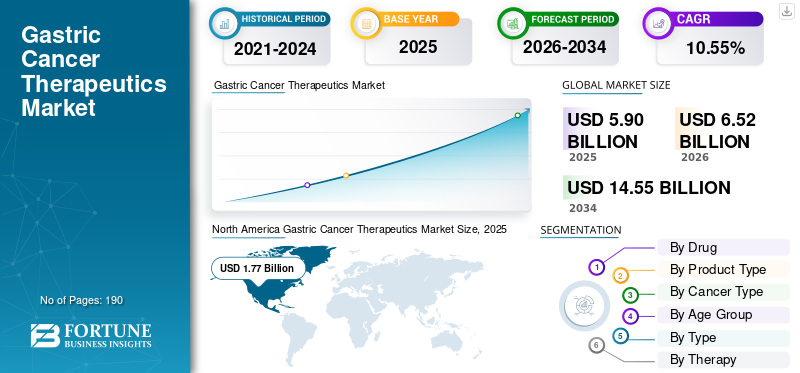
The gastric cancer therapeutics market size was valued at USD 5.90 billion in 2025. The market is projected to grow from USD 6.52 billion in 2026 to USD 14.55 billion by 2034, exhibiting a CAGR of 10.55% during the forecast period. North America dominated the gastric cancer therapeutics market with a market share of 30% in 2025.
The market includes drugs used to treat gastric and gastroesophageal junction cancers, and emerging biomarker-based treatments. The market is gradually shifting toward personalized treatment approaches, as physicians increasingly use biomarkers to select suitable therapies. This shift is improving treatment precision, expanding the role of branded oncology drugs, and encouraging companies to develop advanced combination therapies for patients with locally advanced, unresectable, or metastatic disease. Additionally, the high number of patients diagnosed at advanced cancer stages is increasing the need for therapies that can improve survival outcomes and delay disease progression.
Growing adoption of companion diagnostics is also helping clinicians identify eligible patients for targeted treatments more effectively. As a result, pharmaceutical companies are strengthening their oncology pipelines and investing in differentiated product types to capture opportunities across biomarker-defined patient groups.
- For instance, in October 2024, Astellas Pharma announced that the U.S. FDA approved VYLOY (zolbetuximab-clzb) in combination with chemotherapy for adults with advanced gastric and gastroesophageal junction cancer whose tumors are CLDN18.2 positive. The approval made VYLOY the first CLDN18.2-targeted treatment approved in the U.S. for this patient group, showing the growing importance of biomarker-led therapy in gastric cancer treatment.
Furthermore, major players, such as Merck & Co., Inc., Bristol Myers Squibb, Daiichi Sankyo Company, Limited, and AstraZeneca plc, are actively pursuing strategic collaborations and acquisitions, as well as investment initiatives to expand their offerings, enhance market access, and strengthen market presence.
Download Free sample to learn more about this report.
GASTRIC CANCER THERAPEUTICS MARKET KEY TAKEAWAYS
 Global Market Size & Forecast
- 2025 Market Size: USD 5.90 billion
- 2026 Market Size: USD 6.52 billion
- 2034 Forecast Market Size: USD 14.55 billion
- CAGR: 10.55% from 2026–2034
 Market Share
- North America dominated the market with a 30% share in 2025.
- The Fluoropyrimidines segment held the largest market share in 2025.
- The Cytotoxic Chemotherapy segment held the largest market share in 2025.
 Key Regional Highlights
North America
Reached USD 1.77 billion in 2025, driven by strong adoption of branded immunotherapies, targeted therapies, and biomarker testing.
Europe
Projected to reach USD 1.61 billion by 2026, growing at a 9.62% CAGR, supported by increasing use of precision oncology and wider access to targeted therapies.
Asia Pacific
Projected to reach USD 2.39 billion by 2026, driven by a high gastric cancer burden, improving diagnosis, and expanding access to innovative therapies.
U.S.
The market is projected to reach USD 1.81 billion by 2026, accounting for 27.69% of the global market.
Japan
The market is projected to reach USD 0.61 billion by 2026, accounting for 9.73% of the global market.
Read More

GASTRIC CANCER THERAPEUTICS MARKET TRENDS
Strong Pipeline Development for Targeted and Precision Oncology Therapies to Support Market Expansion
The market witnessed predominant shift toward targeted and precision oncology therapies. Since many gastric cancer patients are diagnosed at advanced or metastatic stages, there is a continued need for therapies that can offer better disease control beyond standard chemotherapy. This is encouraging pharmaceutical companies to expand their clinical pipelines with monoclonal antibodies, immune checkpoint inhibitors, antibody-drug conjugates, and biomarker-specific combination regimens. As these pipeline therapies are designed for clearly defined patient subgroups, they can improve treatment selection, support premium pricing, and strengthen commercial opportunities for companies operating in this market.
- For instance, in October 2025, Takeda Pharmaceutical Company Limited collaborated with Innovent Biologics for the development, manufacturing and commercialization of two late-stage oncology medicines, IBI363 and IBI343, worldwide outside of Greater China. IBI343 is being evaluated in gastric and pancreatic cancers.
MARKET DYNAMICS
MARKET DRIVERS
Download Free sample to learn more about this report.
Growing Diagnosis of Advanced-Stage Disease to Drive Demand for Effective Treatment Options
The gastric cancer therapeutics market growth is driven by large share of patients are diagnosed when the disease has already reached locally advanced, unresectable, or metastatic stages. Since gastric cancer symptoms often resemble common stomach-related conditions, diagnosis may be delayed, which increases the need for therapies that can control disease progression and improve survival outcomes. This is driving higher use of systemic treatments such as chemotherapy combinations, immunotherapy, targeted therapy, and antibody-drug conjugates. As treatment goals in advanced disease focus on extending survival and maintaining quality of life, pharmaceutical companies are increasingly developing biomarker-led therapies for patient groups such as HER2-positive, PD-L1-positive, CLDN18.2-positive, and FGFR2b-positive gastric cancers. Therefore, the rising advanced-stage treatment pool is directly supporting demand for more effective and differentiated gastric cancer therapeutics.
- For instance, in June 2025, Amgen announced positive topline Phase 3 results for bemarituzumab in first-line gastric cancer. The company stated that bemarituzumab plus Chemotherapy showed a statistically significant and clinically meaningful improvement in overall survival versus placebo plus Chemotherapy in patients with unresectable locally advanced or metastatic gastric or gastroesophageal junction cancer with FGFR2b overexpression and non-HER2-positive disease.
MARKET RESTRAINTS
Reimbursement and Access Barriers to Limit Adoption of High-Cost Gastric Cancer Therapies
The market is constrained by reimbursement and access barriers, particularly as treatment is shifting toward costly immunotherapies, targeted therapies, and antibody-drug conjugates. These advanced drugs can improve outcomes in selected patient groups, but their high price increases pressure on public and private payers. As a result, even after regulatory approval, patient access may remain limited due to delayed reimbursement decisions, strict eligibility criteria, and uneven coverage across countries. This directly affects market growth as many patients may not receive newer therapies on time, particularly in low- and middle-income countries and underfunded healthcare systems. In addition, biomarker-led treatment often requires companion diagnostics, which adds another cost layer and further limits adoption in regions with weak testing and reimbursement infrastructure.
- For instance, in March 2025, NICE did not recommend Astellas’ VYLOY (zolbetuximab) with Chemotherapy for untreated, locally advanced, unresectable, or metastatic CLDN18.2-positive, HER2-negative gastric or gastroesophageal junction adenocarcinoma in adults. NICE noted that, while clinical evidence showed improved progression-free and overall survival compared with placebo plus Chemotherapy, the treatment had not been directly compared with nivolumab or pembrolizumab combinations, and its cost-effectiveness estimate was not within the range NICE usually considers acceptable for NHS resources. This supports the restraint that high therapy costs, cost-effectiveness uncertainty, and reimbursement barriers can limit broader adoption of advanced gastric cancer therapeutics.
MARKET OPPORTUNITIES
Rising Opportunity for Biomarker-Driven Therapies in Targeted Patient Groups Strengthens Market Growth
The market is noticing strong growth opportunities as treatment is increasingly moving toward biomarker-driven patient selection. Gastric cancer is not a single uniform disease, and patients may respond differently depending on biomarkers such as HER2, PD-L1, CLDN18.2, MSI/MMR, and FGFR2b. As a result, companies are developing therapies for clearly defined patient groups, which helps improve treatment precision and increases the chances of better clinical outcomes. This shift also supports premium product positioning, as targeted therapies and antibody-drug conjugates are generally used in patients who are more likely to benefit from them. In addition, wider use of companion diagnostics is expected to expand the eligible treatment pool and support faster adoption of precision oncology drugs in advanced gastric and gastroesophageal junction cancer.
- For instance, in November 2025, AstraZeneca announced that the U.S. FDA approved IMFINZI (durvalumab) in combination with FLOT chemotherapy as a neoadjuvant and adjuvant treatment, followed by IMFINZI alone, for adults with resectable gastric or gastroesophageal junction adenocarcinoma. As this regimen includes chemotherapy and immunotherapy delivered under specialist oncology supervision around surgery, it supports the continued importance of hospital-based cancer care and hospital pharmacy channels in the market.
MARKET CHALLENGES
Treatment Resistance and Disease Progression to Challenge Long-Term Clinical Benefit
The market faces a major challenge from treatment resistance and disease progression, especially in patients with advanced or metastatic disease. Although chemotherapy, immunotherapy, targeted therapy, and antibody-drug conjugates have improved treatment options, many patients either do not respond adequately or develop resistance after an initial response. This reduces the long-term effectiveness of available therapies and increases the need for multiple treatment lines, potentially raising treatment costs and adding clinical burden. Gastric cancer is also biologically heterogeneous, highlighting that tumor behavior and biomarker expression can differ across patients and even change during treatment. As a result, companies must continue investing in new combinations, resistance-overcoming mechanisms, and next-generation targeted therapies, which makes product development more complex and costly.
- For instance, in February 2025, Cell Death and Disease published an article titled ‘Overcoming immunotherapy resistance in gastric cancer: insights into mechanisms and emerging strategies’ that reported that although immune checkpoint inhibitors targeting PD-1/PD-L1 have become a promising treatment approach in gastric cancer, a significant proportion of patients show primary or acquired resistance, limiting the overall efficacy of immunotherapy.
Segmentation Analysis
By Drug
Surging Use of Fluoropyrimidines in Combination Regimens to Support Segment Dominance
Based on the drug, the market is categorized into nivolumab, pembrolizumab, trastuzumab deruxtecan, trastuzumab, ramucirumab, zolbetuximab, fluoropyrimidines, and others.
By drug, fluoropyrimidines dominates the market. They form the backbone of several first-line and later-line treatment regimens. Drugs such as 5-FU and capecitabine are widely used with platinum agents, immunotherapies, HER2-directed therapies, and newer targeted drugs. Since most patients require systemic therapy at advanced stages, physicians continue to depend on fluoropyrimidine-based combinations due to established clinical use, broad availability, and inclusion in major treatment protocols. This makes the product type a core component of gastric and GEJ cancer treatment across developed and emerging markets.
- For instance, in March 2025, Daiichi Sankyo announced the initiation of the DESTINY-Gastric05 Phase 3 trial evaluating ENHERTU in combination with fluoropyrimidine chemotherapy and KEYTRUDA in previously untreated HER2-positive advanced gastric cancer. This shows the continued role of fluoropyrimidines even in next-generation targeted and immunotherapy-based regimens.
The zolbetuximab segment is expected to grow at a CAGR of 27.15% over the forecast period.
To know how our report can help streamline your business, Speak to Analyst
By Product Type
Broad Applicability of Cytotoxic Chemotherapy Contributes to the Segment’s Dominance
Based on product type, the market is segmented into cytotoxic chemotherapy, immune checkpoint inhibitors, HER2-targeted therapies, VEGF/VEGFR-targeted therapies, CLDN18.2-targeted therapies, nucleoside analogue combinations, and others.
In 2025, cytotoxic chemotherapy captured largest gastric cancer therapeutics market share as it remains the base treatment option for a large number of gastric cancer patients, especially in advanced and metastatic disease. Even with the rapid rise of immunotherapy and targeted therapy, most approved regimens still combine these newer drugs with fluoropyrimidine- and platinum-based chemotherapy. This is due to chemotherapy providing broad tumor-killing activity and used across wider patient groups, including those without actionable biomarkers. As a result, cytotoxic chemotherapy continues to generate strong treatment volume and remains central to gastric cancer management.
- For instance, in September 2024, Astellas announced European Commission approval of VYLOY in combination with fluoropyrimidine- and platinum-containing chemotherapy for first-line treatment of advanced gastric and GEJ cancer. This highlights that even novel targeted drugs continue to depend on chemotherapy combinations for broader clinical use.
The CLDN18.2-targeted therapies segment is projected to grow at a 27.46% CAGR during the forecast period.
By Cancer Type
High Disease Burden of Gastric Adenocarcinoma to Drive Strong Segment Growth
Based on cancer type, the market is segmented into gastric adenocarcinoma, gastroesophageal junction adenocarcinoma, gastric neuroendocrine neoplasms, gastric lymphoma, and others.
The gastric adenocarcinoma segment dominates the market as it accounts for the major share of gastric cancer cases and is the primary focus of most approved drug labels and clinical development programs. Most systemic therapies, including chemotherapy, immunotherapy, HER2-targeted drugs, CLDN18.2-targeted therapy, and ADCs, are developed mainly for gastric or gastroesophageal junction adenocarcinoma. Since this cancer type has a high advanced-stage treatment burden, it drives the highest drug utilization and commercial focus. Therefore, companies prioritize gastric adenocarcinoma while designing clinical trials and launching new therapies.
- For instance, in October 2024, Astellas plc received U.S. FDA approval of VYLOY in combination with chemotherapy for adults with locally advanced unresectable or metastatic HER2-negative gastric or GEJ adenocarcinoma whose tumors are CLDN18.2-positive. This approval directly reflects the strong commercial and clinical focus on gastric
The gastric neuroendocrine neoplasms segment is projected to grow at a CAGR of 11.60% during the forecast period.
By Age Group
Higher Adult Patient Pool to Support Dominance of the Segment
Based on the age group, the market is segmented into pediatric and adult.
The adults segment dominates the market as gastric cancer is mainly diagnosed in the adult and older adult population, while pediatric cases are rare. As a result, almost all approved therapies, clinical trials, treatment guidelines, and commercial drug launches are focused on adult patients. The higher adult patient pool increases demand for systemic therapies, hospital-based cancer care, biomarker testing, and long-term treatment sequencing. This directly supports stronger revenue contribution from the adult segment compared to the pediatric segment.
- For instance, in January 2025, BeiGene announced that the U.S. FDA approved TEVIMBRA in combination with Chemotherapy for first-line treatment of PD-L1-positive adult patients with unresectable or metastatic gastric or GEJ cancers. This shows that recent approvals are mainly targeted toward adult patient populations.
The pediatric segment is projected to grow at a CAGR of 7.67% during the forecast period.
By Type
Rising Adoption of Branded Precision Oncology Drugs to Strengthen Segment Leadership
Based on type, the market is segmented into branded, generic and biosimilars.
In 2025, branded drugs dominated the market driven by patented oncology therapies such as immune checkpoint inhibitors, HER2-directed ADCs, CLDN18.2-targeted antibodies, and other premium biologics. These therapies are usually protected by exclusivity, supported by clinical trial data, and priced higher than generic chemotherapy drugs. As treatment shifts toward biomarker-led and combination regimens, branded drugs are gaining greater use in first- and later-line settings for advanced disease. This increases the value contribution of branded products even when generic chemotherapy remains widely used by volume.
- For instance, in April 2024, Merck & Co., Inc. received approval from Health Canada for KEYTRUDA in combination with fluoropyrimidine- and platinum-containing Chemotherapy as first-line treatment for adult patients with locally advanced unresectable or metastatic HER2-negative gastric or GEJ adenocarcinoma. This supports the growing role of branded immunotherapy combinations in the market.
The generic segment is projected to grow at a CAGR of 10.40% over the forecast period.
By Therapy
Central Role of Chemotherapy in Gastric Cancer Treatment to Drive Segmental Growth
Based on therapy, the market is segmented into targeted therapy, immunotherapy, chemotherapy, and others.
In 2025, chemotherapy dominated the market as it is used across multiple lines of treatment and remains the foundation for most combination regimens. Many patients are not eligible for targeted therapy unless they test positive for specific biomarkers, but chemotherapy can be used across a much broader patient population. It is also commonly combined with immunotherapy, trastuzumab, zolbetuximab, and other advanced drugs, which maintains its clinical relevance. Therefore, chemotherapy continues to dominate due to its broad applicability, established physician familiarity, and central role in advanced gastric cancer treatment protocols.
- For instance, in December 2024, BeiGene, Ltd. received approval from the U.S. FDA for TEVIMBRA (tislelizumab-jsgr), in combination with platinum and fluoropyrimidine-based chemotherapy, for the first-line treatment of unresectable or metastatic HER2-negative gastric or gastroesophageal junction adenocarcinoma (G/GEJ) in adults whose tumors express PD-L1 (≥1).
The targeted therapy segment is projected to grow at a CAGR of 12.77% over the forecast period.
By Route of Administration
High Use of Injectable Oncology Therapies to Support Parenteral Route Dominance
Based on the route of administration, the market is segmented into oral and parenteral.
In 2025, parenteral administration dominated the market as many high-value gastric cancer therapies are delivered intravenously or by injection in supervised oncology settings. Immunotherapies, monoclonal antibodies, ADCs, VEGF/VEGFR-targeted therapies, HER2-directed therapies, and CLDN18.2-targeted drugs are usually administered in a hospital or infusion center. Since advanced gastric cancer treatment often involves combination regimens and close patient monitoring, parenteral delivery remains preferred for safety management and dose control. This keeps the segment ahead of oral therapies despite the availability of selected oral chemotherapy and later-line drugs.
- For instance, in May 2025, Bristol Myers Squibb Canada announced approval of a subcutaneous formulation of OPDIVO across multiple tumor types, including gastric cancer, giving clinicians and patients an additional treatment delivery option. This supports the strong role of injectable and parenteral oncology therapies in gastric cancer care.
The oral segment is projected to grow at a CAGR of 7.87% over the forecast period.
By Distribution Channel
Hospital-Based Oncology Care to Drive Dominance of Hospital Pharmacies Segment
Based on distribution channel, the market is segmented into hospital pharmacies, specialty pharmacies, drug stores & retail pharmacies, and online pharmacies.
In 2025, hospital pharmacies dominated the market as gastric cancer treatment is largely managed in oncology hospitals, cancer centers, and infusion units. Most advanced therapies require specialist supervision, biomarker confirmation, infusion support, adverse-event monitoring, and coordination with chemotherapy cycles. Since high-cost branded biologics and combination regimens are commonly administered in hospital settings, hospitals remain the main dispensing and treatment access point. This is especially important for patients with advanced or metastatic disease, where treatment decisions are closely linked to oncologist-led care pathways.
- For instance, in November 2025, GlycoNex, Inc. launched a collaborative research agreement with Hokkaido University Hospital to support the development of its next-generation Antibody-Drug Conjugate (ADC), GNX1021, in gastric cancer patients and to lay the groundwork for future clinical trials in Japan. Through the collaboration, the two parties will conduct a retrospective study to evaluate the expression of the branched Lewis B/Y (bLeB/Y) glycan antigen in gastric cancer patients and assess its association with established clinical biomarkers.
The online pharmacies segment is projected to grow at a CAGR of 14.87% over the forecast period.
Gastric Cancer Therapeutics Market Regional Outlook
By geography, the market is categorized into Europe, North America, Asia Pacific, Latin America, and the Middle East & Africa.
North America
North America Gastric Cancer Therapeutics Market Size, 2025 (USD Billion)
To get more information on the regional analysis of this market, Download Free sample
North America held the dominant share in 2024 at USD 1.61 billion and maintained its leading position in 2025 at USD 1.77 billion. The market is growing due to strong adoption of branded immunotherapies, targeted therapies, and biomarker testing in advanced gastric and GEJ cancer. The presence of leading oncology companies and active clinical trial networks further supports regional growth.
U.S. Gastric Cancer Therapeutics Market
Given North America's substantial contribution and the U.S. dominance in the region, the U.S. market is estimated at around USD 1.81 billion in 2026, accounting for roughly 27.69% of the global market.
Europe
Europe is projected to grow at a CAGR of 9.62% over the coming years, the second-highest among all regions, and reach a valuation of USD 1.61 billion by 2026. Growth in European markets is supported by increasing use of precision oncology, HER2 testing, PD-L1 testing, and wider access to approved targeted therapies through structured healthcare systems.
U.K. Gastric Cancer Therapeutics Market
The U.K. market is estimated at USD 0.32 billion in 2026, accounting for roughly 4.94% of the global market.
Germany Gastric Cancer Therapeutics Market
Germany's market is projected to reach approximately USD 0.35 billion in 2026, equivalent to around 5.42% of the global market.
Asia Pacific
Asia Pacific is estimated to reach USD 2.39 billion in 2026 and secure third place in the market. Asia Pacific is growing strongly due to the high incidence of gastric cancer, large patient pools, improved cancer diagnosis, and the rising availability of innovative therapies, which are driving treatment demand. Local and global companies are also prioritizing the region for clinical trials and product launches.
Japan Gastric Cancer Therapeutics Market
The Japanese market, in 2026, is estimated at around USD 0.61 billion, accounting for approximately 9.73% of the global market.
China Gastric Cancer Therapeutics Market
China's market is projected to be among the largest worldwide, with 2026 revenues estimated at around USD 0.93 billion, accounting for approximately 14.25% of global sales.
India Gastric Cancer Therapeutics Market
The Indian market is estimated at around USD 0.20 billion in 2026, accounting for roughly 3.13% of global revenue.
Latin America and the Middle East & Africa
The Latin America and Middle East & Africa regions are expected to witness significant growth in this market during the forecast period. The market in Latin America is estimated to reach a valuation of USD 0.35 billion in 2026. Market growth in the regions is driven by improving oncology infrastructure, rising awareness of gastric cancer, and gradual access to branded cancer therapies. Increasing diagnosis of advanced-stage disease is supporting demand for systemic treatment. In the Middle East & Africa, the GCC is set to reach USD 0.11 billion in 2026.
South Africa Gastric Cancer Therapeutics Market
The South African market is projected to reach approximately USD 0.04 billion by 2026, accounting for roughly 0.62% of global revenue.
COMPETITIVE LANDSCAPE
Key Industry Players
New Product Launches among Key Companies to Propel Market Competition
The gastric cancer therapeutics market is moderately competitive, led by established oncology companies, targeted-therapy developers, immunotherapy manufacturers, and antibody-drug conjugate innovators. Major players such as Merck & Co, In., Bristol Myers Squibb, Astellas Pharma, Inc., Daiichi Sankyo Company, Ltd., AstraZeneca plc, F. Hoffmann-La Roche Ltd, Eli Lilly and Company, BeiGene, Amgen, Jazz Pharmaceuticals, and Zymeworks are focusing on advanced treatment options for gastric and gastroesophageal junction cancers. These companies are increasingly developing biomarker-led therapies, immunotherapy combinations, HER2-directed drugs, CLDN18.2-targeted therapies, FGFR2b-targeted therapies, and ADC-based regimens to improve survival outcomes and strengthen their market position.
- For instance, in December 2025, BioNTech SE collaborated with Bristol Myers Squibb Company and announced the first interim data from a global randomized Phase 2 trial for first-line gastric cancer (ROSETTA GASTRIC-204, NCT07221149), highlighting the increasing role of biomarker-based product launches in the market.
Several companies are adopting product approvals, clinical trial advancements, licensing agreements, and strategic collaborations as key growth strategies to expand their market presence. Similarly, large pharmaceutical companies are strengthening their oncology portfolios by advancing therapies into earlier lines of treatment and developing combinations with chemotherapy, checkpoint inhibitors, and targeted drugs. Pipeline-focused players are also working on newer targets such as FGFR2b and CLDN18.2, which can create additional treatment options for selected patients. The competitive landscape is expected to intensify as healthcare providers increasingly demand therapies that can deliver better survival benefits, support biomarker-based treatment selection, and address resistance in advanced gastric cancer.
LIST OF KEY GASTRIC CANCER THERAPEUTICS COMPANIES PROFILED
- Merck & Co., Inc. (U.S.)
- Bristol Myers Squibb (U.S.)
- Daiichi Sankyo Company, Limited (Japan)
- Astellas Pharma Inc. (U.S.)
- Hoffmann-La Roche Ltd (Switzerland)
- AstraZeneca plc (U.S.)
- Eli Lilly and Company (U.S.)
- BeiGene (China)
- Taiho Oncology (U.S.)
- Sanofi (France)
KEY INDUSTRY DEVELOPMENTS
- March 2026: Daiichi Sankyo Co., Ltd received approval from the Japan Pharmaceuticals and Medical Devices Agency (PMDA) for the update of the ENHERTU (trastuzumab deruxtecan) prescribing information following review of data from the DESTINY-Gastric04 phase 3 trial, which now expands the use of ENHERTU in Japan to include the second-line treatment of patients with HER2-positive unresectable advanced or recurrent gastric cancer.
- March 2026: NovaBridge Biosciences secured U.S. FDA alignment on givastomig’s potential eligibility for an accelerated approval pathway in 1L Her2-, CLDN 18.2+, PD-L1+ GEC patients, building on positive data from the Phase 1b combination trial.
- December 2025: HUTCHMED (China) Limited received a New Drug Application from the China National Medical Products Administration (NMPA) for savolitinib for the treatment of patients with locally advanced or metastatic gastric cancer or gastroesophageal junction (GC/GEJ) adenocarcinoma who have failed at least 2 prior systemic treatments and have MET amplification.
- August 2022: Sanofi collaborated with Innovent Biologics to bring innovative medicines to patients in China with difficult-to-treat cancers. Both companies are committed to accelerating the development and commercialization of two Sanofi key clinical-stage oncology assets: Phase III SAR408701 and Phase II SAR444245 (non-alpha IL-2), in combination with sintilimab, the leading checkpoint inhibitor in China.
- June 2020: MacroGenics, Inc. received Orphan Drug Designation (ODD) from the U.S. FDA to margetuximab, an investigational, Fc-engineered monoclonal antibody targeting HER2 for the treatment of gastric and gastroesophageal junction cancer.
REPORT COVERAGE
The report provides a detailed global gastric cancer therapeutics market analysis and covers key areas, including market size, growth trends, the treatment landscape, and regional outlook. The report further examines key drivers, restraints, market opportunities, competitive landscape, recent product approvals, and strategic initiatives by leading pharmaceutical companies. It also provides segment-level analysis by drug, product type, cancer type, age group, therapy, route of administration, distribution channel, and region.
Request for Customization to gain extensive market insights.
Report Scope & Segmentation
| ATTRIBUTE | DETAILS |
| Study Period | 2021-2034 |
| Base Year | 2025 |
| Estimated Year | 2026 |
| Forecast Period | 2026-2034 |
| Historical Period | 2021-2024 |
| Growth Rate | CAGR of 10.55% from 2026 to 2034 |
| Unit | Value (USD Billion) |
| Segmentation | By Drug, Product Type, Cancer Type, Age Group, Type, Therapy, Route of Administration, Distribution Channel, and Region |
| By Drug |
|
| By Product Type |
|
| By Cancer Type |
|
| By Age Group |
|
| By Type |
|
| By Therapy |
|
| By Route of Administration |
|
| By Distribution Channel |
|
| By Region |
|
Frequently Asked Questions
According to Fortune Business Insights, the global market value stood at USD 5.90 billion in 2025 and is projected to reach USD 14.55 billion by 2034.
In 2025, the North America market value stood at USD 1.77 billion.
The market is expected to grow at a CAGR of 10.55% over the forecast period of 2026-2034.
The Fluoropyrimidines segment is expected to lead the market.
Growing diagnosis of advanced-stage disease to drive demand for effective treatment therapies for gastric cancer.
Merck & Co., Inc., Bristol Myers Squibb, Daiichi Sankyo Company, Limited, and AstraZeneca plc are among the major players in the global market.
North America accounted for the largest share of the market in 2025.



- 2021-2034
- 2025
- 2021-2024
- 190
Get 30-60 hrs Free Customization
Expand Regional and Country Coverage, Segments Analysis, Company Profiles, Competitive Benchmarking, and End-user Insights.













.webp)






Related Reports
-
US +1 833 909 2966 ( Toll Free )
-
Get In Touch With Us